One of the questions asked of me the most as a mother of eight children has been, “You know how this happens, right?” Having so many children was not a plan. When my husband and I married we were both older, and as I was recently diagnosed with a second autoimmune disease, there was uncertainty about how my body would respond to pregnancy. We also weren’t sure if we’d be a fertile couple, even without my health complications. Infertility affects roughly 15 percent of couples and we might’ve been one of them. We were, however, open to children. We had a combined openness and a desire for our marriage to produce fruit.
Openness is a common theme in the recent book by economist and social scientist Catherine Pakaluk titled, Hannah’s Children: The Women Quietly Defying the Birth Dearth. In this book, Mrs. Pakaluk seeks to uncover the reasons why only five percent of women are having five or more children, and why—despite numerous government programs in countries around the world—most women are decidedly not. In fact, most of the world is currently at below-replacement fertility rate.
In our current culture family planning is the norm. If a child is conceived without planning, it is an “accident” or a “surprise.” In the book Peter and Wendy, Mr. Darling considers their financial situation upon the birth of their first child:
For a week or two after Wendy came it was doubtful whether they would be able to keep her, as she was another mouth to feed. Mr. Darling was rightfully proud of her, but he was very honorable, and he sat on the edge of Mrs. Darling’s bed, holding her hand and calculating expenses, while she looked at him imploringly.
But having children isn’t just about monetary calculations, children are experience goods.
Pakaluk states, “‘Experience goods’ is the economist’s label for goods whose total costs and benefits cannot be fully assessed in advance, before being acquired and experienced.”
Pakaluk continues,
. . .women make choices about having children based on costs and benefits, but not in the way we usually understand that phrase. Women compare the subjective personal value of having another child with the subjective personal value of what they will miss out on if they have one. Both sides of the scale include gains and losses.
Children do improve one’s quality of life, but you can’t know that unless you choose to go through the experience of having one. Children get a lot of negative press too, and this affects women’s perception of what their quality of life will be as a mother. One of the women interviewed in Pakaluk’s book perceptively pointed out: “I mean, seriously, children are the scapegoat of this culture…the destroyer of marriages, and individuality and freedom, the suppressor of women – a child. That’s irrational.” Pakaluk adds, “If children are bearing all the negative emotions of the culture, how could they possibly be an object of desire, something you would make sacrifices to obtain?”
Economic incentives won’t be enough to encourage fertility in women when the opportunity costs are so complex, with their very identity at stake, and with enormously negative attitudes about children which do not reflect the depth of joy such a sacrifice of self ultimately yields.
Motherhood both transcends the self and expands the self.
When it comes to having a child, for a woman, that weight is her whole self. That is what she gives up, in a sense, placing herself at the service of a new life. What can answer the weight of your whole self? Rightly only someone you love as much as your own self.
What kind of economic incentive can compensate a woman for giving up her whole self, especially when doing so also lowers her social status.
Johann Kurtz, in a provocative essay titled, “It’s Embarrassing to be a Stay at Home Mom,” suggests that lowered fertility rates are intimately connected to a woman’s lowered status once she becomes a mother. Kurtz writes:
Status describes the perceived standing of the individual within the group. It denotes their social value and their place within the formal and informal hierarchies which comprise a society. It finds expression in the behaviors of deference, access, inclusion, approval, acclaim, respect, and honor (and indeed in their opposites – rejection, ostracization, humiliation, and so forth).
If an educated woman has a child and decides to forgo her career in favor of motherhood, she has wasted her education, given up her career prospects, and deprived the workforce of her efforts. No economic incentive can make up for this lowered status when our current social system so heavily focuses on what one does for a living. Kurtz continues,
Unfortunately, “I’m a mother” is not a good answer to this question [what do you do for a living], because this conveys little status within a success framework, which is usually the operative one. Women are, understandably, hesitant to be continuously humiliated in this way, and will make whatever tradeoffs are necessary to ensure they have a better answer.
And yet, as Pakaluk tenderly investigates, there is a small percentage of women who, despite the demotion of status, choose to make motherhood their vocation. It’s not that these women are immune to the feelings accompanying their decision to buck fertility trends, it’s that in doing so, they unlock a truth deeper than status: meaning.
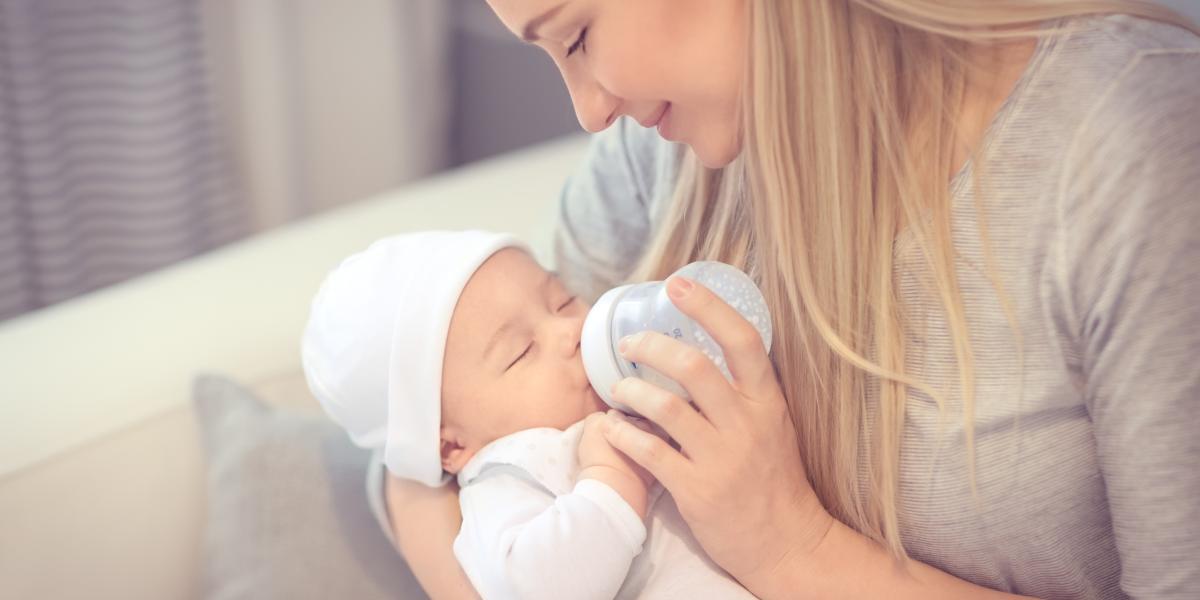
After the birth of my first child, I had the sensation of having unlocked some of the meaning of the universe; that in choosing to become a vessel for life, I had somehow given more life to myself. I rejected the lie that my value was rooted in my career and contribution to the workforce and instead rooted myself in the largely unseen labor of shaping my child’s character, which, in turn, helped to shape my own. This reassignment of identity and value happened after I had given birth, not before.
Motherhood as a vocation isn’t prestigious, though it should be. It’s incredibly tiring, requiring long hours and endless tasks, and the rewards are sometimes a long way off. But the daily grind offers an intimacy that is unlike any other human relationship, other than with one’s spouse. This intimacy is the foundation of a secure attachment, which is ground zero for all other relationships throughout a person’s life. The cost of separation of a mother and child, especially in the first three years, is extensive and often permanent, affecting all future relationships, and by extension, society as a whole.
We’ve been told that the ideal scenario for a woman is to have the support of subsidized child care to allow her to be both mother and career woman, but is it really ideal? Psychoanalyst Erica Komisar argues in her book, Being There: Raising Resilient Children, that mothers are biologically unique in their contribution to the development of healthy children. A mother’s contribution cannot be outsourced to a nanny, a daycare, or even a father. Komisar argues,
. . .we have deprioritized family and delegated raising our children to strangers so we can pursue work outside the home, personal projects which take us away from our families, and self-determined goals for self-satisfaction.
There simply is no substitute for a mother spending time with her children. Komisar states, “when it comes to spending undistracted time with our children versus work or other social commitments, more is more.” Quality time is actually less important than quantity. Children need their mothers in the mundane; that’s where the deeper meaning is found.
When I consider that so many people readily forgo the amazing experience of becoming mothers, I feel incredibly sad. There’s no career on earth that substitute for it, and it cannot be subsidized by the state. No incentive other than those equal to the sacrifice and meaning motherhood bestows would suffice. If you really want to know the answer to the question, “how this happens,” look beyond economics and instead to the women who are, as Pakaluk puts it, “defying the birth dearth.”