No Result
View All Result
SUBMIT YOUR ARTICLES
  • Login
Tuesday, June 16, 2026
TheAdviserMagazine.com
  • Home
  • Financial Planning
    • Financial Planning
    • Personal Finance
  • Market Research
    • Business
    • Investing
    • Money
    • Economy
    • Markets
    • Stocks
    • Trading
  • 401k Plans
  • College
  • IRS & Taxes
  • Estate Plans
  • Social Security
  • Medicare
  • Legal
  • Home
  • Financial Planning
    • Financial Planning
    • Personal Finance
  • Market Research
    • Business
    • Investing
    • Money
    • Economy
    • Markets
    • Stocks
    • Trading
  • 401k Plans
  • College
  • IRS & Taxes
  • Estate Plans
  • Social Security
  • Medicare
  • Legal
No Result
View All Result
TheAdviserMagazine.com
No Result
View All Result
Home Market Research Economy

Would Hasan Piker Steal A Car?

by TheAdviserMagazine
3 weeks ago
in Economy
Reading Time: 3 mins read
A A
Would Hasan Piker Steal A Car?
Share on FacebookShare on TwitterShare on LInkedIn


In a controversial conversation platformed by the New York Times and recently discussed in The Atlantic, streamer Hasan Piker implied that he might steal a car if it carried no consequences. In the interview, author Jia Tolentino also casually admits to shoplifting lemons from Whole Foods. Although petty theft is common, the interview clip spread quickly because the justification for looting felt oddly assertive.

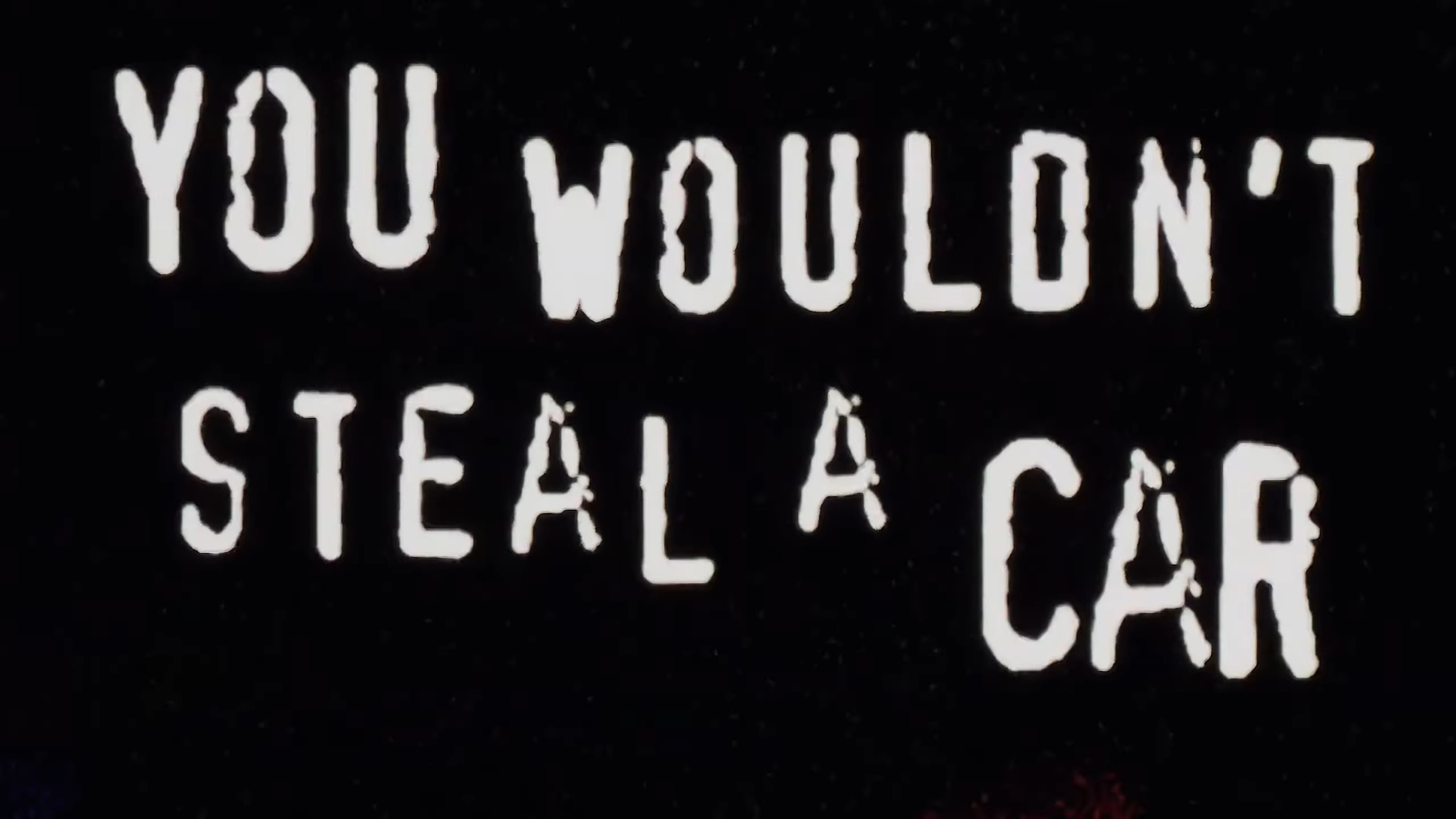
Piker referred to the iconic anti-piracy campaign that sought to use moral vibes (rather than rational arguments) against taking physical property to convince people to further control their impulses and not copy music without paying. The anti-piracy clip “You Wouldn’t Steal a Car” indicates an implicit assumption from 2004 that American society was broadly agreed on the stability of physical property. In other words, most Americans do not think “property is theft.”

In The Property Species, Professor Bart Wilson argues that property is not merely a legal construct but a deeply embedded social practice. Humans develop shared understandings of “mine” and “yours,” and these norms allow cooperation to scale beyond small groups. Property is not just about ownership. It is also about coordination.

From that perspective, the casual dismissal of theft as “not a big deal” is not morally or economically neutral. It chips away at the shared expectations that make exchange possible.

Markets rely on more than prices; they rely on trust that boundaries will be respected. This insight echoes a long tradition. Adam Smith, often invoked for his theory of the invisible hand of markets, also emphasized the importance of justice. Before markets can allocate resources efficiently, people must refrain from taking what is not theirs.

In my recent paper with Bart Wilson, “You Wouldn’t Steal a Car: Moral Intuition for Intellectual Property,” we test how people think about taking different types of goods. As I discussed in “Everyone Take Copies,” laboratory human subjects were quick to label the taking of physical property as “stealing.” The players all considered it unacceptable within their small group. No one wants their stuff taken, and every human has a concept of “mine.”

Much rule-following is done out of a sense of obligation, which might prove hard to recover if lost. Russ Roberts made a similar point years ago in his EconLog column on Napster-aided downloading as theft. He wrote:

“We know that the threat of being caught and punished isn’t the only reason that people pay legally for something rather than stealing it. There are costs of theft other than monetary costs. Some people feel guilty taking something for nothing. Culture and norms can be used to encourage socially beneficial behavior. After all, people leave tips even in restaurants and in taxis where repeat visits cannot explain such generosity. People choose not to litter even on a deserted mountain trail.”

Much of rule-following is voluntary. It is sustained by internalized norms, not external enforcement. That is why casual erosion of those norms should concern us.

What would Piker think of a world where the “microlooting” he claims to approve happens at scale? Ambiguity over property rights has real implications, such as stores raising prices to cover shrinkage or closing in high-crime neighborhoods. These costs are often borne disproportionately by  already disadvantaged populations.

Once norms deteriorate, rebuilding them is hard, both at neighborhood scale and the national level. This is easily visible in countries without strong property systems. Countries with weaker property rights struggle to attract investment and sustain economic growth. The difficulty of reversing that decline is not merely theoretical. It can be seen in the decades-long work of nations actively trying to repair their institutions. Colombia offers one such example. As Omar Hernandez notes in his discussion of the country’s reforms, building reliable property institutions is a long and difficult process.

Hernandez wrote, “Although Colombia has implemented reforms to improve the investment environment and strengthen respect for property, the path to more robust and reliable protection remains long.”

Hernandez, and many development economists, express the desire to move an entire group of people to an equilibrium of stronger property rights and less tolerance for theft.

“For Colombia to move toward a freer and more prosperous system, it is crucial to strengthen the institutions responsible for protecting these rights and to promote transparency in the titling and restitution processes. Only with a solid framework of property rights can the legal certainty needed to incentivize investment and economic development be guaranteed.”



Source link

Tags: CarHasanPikerSteal
ShareTweetShare
Previous Post

BoI governor: The strong shekel is moderating inflation

Next Post

‘All of wealth management is going on sale’: Steward Partners CEO on M&A boom

Related Posts

edit post
Coffee Break: Armed Madhouse – Unicorns versus Dinosaurs

Coffee Break: Armed Madhouse – Unicorns versus Dinosaurs

by TheAdviserMagazine
June 16, 2026
0

A growing chorus of Silicon Valley entrepreneurs, venture capitalists, and technology enthusiasts argues that the American defense establishment is overdue...

edit post
Why Justice Mattered to Rothbard

Why Justice Mattered to Rothbard

by TheAdviserMagazine
June 16, 2026
0

When the South African government first proposed to enact a law permitting them to expropriate any property without compensation, the...

edit post
Fiscal Dominance and the Politicization of Money

Fiscal Dominance and the Politicization of Money

by TheAdviserMagazine
June 16, 2026
0

Fiscal Dominance and the Politicization of Money Much of the contemporary debate about monetary policy focuses on technical questions: whether...

edit post
Netanyahu’s War Is Not Over

Netanyahu’s War Is Not Over

by TheAdviserMagazine
June 16, 2026
0

There is something that does not add up. If the objective is peace, then why was one of the most...

edit post
The Strait Of Hormuz May Reopen But The War Cycle Is Not Finished

The Strait Of Hormuz May Reopen But The War Cycle Is Not Finished

by TheAdviserMagazine
June 16, 2026
0

The financial press is celebrating reports that traders are betting shipping traffic through the Strait of Hormuz could begin returning...

edit post
OpenAI, Amazon Colluding With Trump Against Anthropic

OpenAI, Amazon Colluding With Trump Against Anthropic

by TheAdviserMagazine
June 15, 2026
0

Anthropic has become a target of the Trump regime with the enthusiastic assistance of rival OpenAI and even investor Amazon....

Next Post
edit post
Kulicke & Soffa (KLIC): Advanced Packaging startet die nächste KI-Rallye!

Kulicke & Soffa (KLIC): Advanced Packaging startet die nächste KI-Rallye!

edit post
263. “We make 7k. Why do we feel poor?”

263. “We make $167k. Why do we feel poor?”

  • Trending
  • Comments
  • Latest
edit post
Supreme Court Delivers More Bad Redistricting News for Democrats

Supreme Court Delivers More Bad Redistricting News for Democrats

May 19, 2026
edit post
Florida Roads Become a Battleground for Illegal Immigration

Florida Roads Become a Battleground for Illegal Immigration

June 9, 2026
edit post
The 8 States That Still Tax Social Security in 2026

The 8 States That Still Tax Social Security in 2026

June 6, 2026
edit post
Louisiana’s Age-Tiered Homestead Exemption: 8 Details About the Proposed 2028 Amendment

Louisiana’s Age-Tiered Homestead Exemption: 8 Details About the Proposed 2028 Amendment

June 15, 2026
edit post
It’s Time To Talk About Massie

It’s Time To Talk About Massie

May 23, 2026
edit post
A Tax on Social Media – Blue-State Governments’ Newest Ploy

A Tax on Social Media – Blue-State Governments’ Newest Ploy

June 5, 2026
edit post
SA analyst says falling oil prices could boost Fed rate-cut odds

SA analyst says falling oil prices could boost Fed rate-cut odds

0
edit post
Disney World Just Changed a Popular Free Transportation Perk

Disney World Just Changed a Popular Free Transportation Perk

0
edit post
9 Tech Stocks Still Trading Below Fair Value After the US-Iran Deal

9 Tech Stocks Still Trading Below Fair Value After the US-Iran Deal

0
edit post
How debt and recruiting risks threaten big RIAs

How debt and recruiting risks threaten big RIAs

0
edit post
‘Making China the elephant in the room’: The G7 confronts reliance on U.S. AI and Chinese minerals

‘Making China the elephant in the room’: The G7 confronts reliance on U.S. AI and Chinese minerals

0
edit post
Coffee Break: Armed Madhouse – Unicorns versus Dinosaurs

Coffee Break: Armed Madhouse – Unicorns versus Dinosaurs

0
edit post
SA analyst says falling oil prices could boost Fed rate-cut odds

SA analyst says falling oil prices could boost Fed rate-cut odds

June 16, 2026
edit post
Disney World Just Changed a Popular Free Transportation Perk

Disney World Just Changed a Popular Free Transportation Perk

June 16, 2026
edit post
How debt and recruiting risks threaten big RIAs

How debt and recruiting risks threaten big RIAs

June 16, 2026
edit post
‘Making China the elephant in the room’: The G7 confronts reliance on U.S. AI and Chinese minerals

‘Making China the elephant in the room’: The G7 confronts reliance on U.S. AI and Chinese minerals

June 16, 2026
edit post
Coinbase Adds ACATS Stock Transfers in Push Beyond Crypto

Coinbase Adds ACATS Stock Transfers in Push Beyond Crypto

June 16, 2026
edit post
The new oil? Inside the effort to turn AI computing power into a tradeable commodity

The new oil? Inside the effort to turn AI computing power into a tradeable commodity

June 16, 2026
The Adviser Magazine

The first and only national digital and print magazine that connects individuals, families, and businesses to Fee-Only financial advisers, accountants, attorneys and college guidance counselors.

CATEGORIES

  • 401k Plans
  • Business
  • College
  • Cryptocurrency
  • Economy
  • Estate Plans
  • Financial Planning
  • Investing
  • IRS & Taxes
  • Legal
  • Market Analysis
  • Markets
  • Medicare
  • Money
  • Personal Finance
  • Social Security
  • Startups
  • Stock Market
  • Trading

LATEST UPDATES

  • SA analyst says falling oil prices could boost Fed rate-cut odds
  • Disney World Just Changed a Popular Free Transportation Perk
  • How debt and recruiting risks threaten big RIAs
  • Our Great Privacy Policy
  • Terms of Use, Legal Notices & Disclosures
  • Contact us
  • About Us

© Copyright 2024 All Rights Reserved
See articles for original source and related links to external sites.

Welcome Back!

Login to your account below

Forgotten Password?

Retrieve your password

Please enter your username or email address to reset your password.

Log In
No Result
View All Result
  • Home
  • Financial Planning
    • Financial Planning
    • Personal Finance
  • Market Research
    • Business
    • Investing
    • Money
    • Economy
    • Markets
    • Stocks
    • Trading
  • 401k Plans
  • College
  • IRS & Taxes
  • Estate Plans
  • Social Security
  • Medicare
  • Legal

© Copyright 2024 All Rights Reserved
See articles for original source and related links to external sites.