No Result
View All Result
SUBMIT YOUR ARTICLES
  • Login
Wednesday, July 22, 2026
TheAdviserMagazine.com
  • Home
  • Financial Planning
    • Financial Planning
    • Personal Finance
  • Market Research
    • Business
    • Investing
    • Money
    • Economy
    • Markets
    • Stocks
    • Trading
  • 401k Plans
  • College
  • IRS & Taxes
  • Estate Plans
  • Social Security
  • Medicare
  • Legal
  • Home
  • Financial Planning
    • Financial Planning
    • Personal Finance
  • Market Research
    • Business
    • Investing
    • Money
    • Economy
    • Markets
    • Stocks
    • Trading
  • 401k Plans
  • College
  • IRS & Taxes
  • Estate Plans
  • Social Security
  • Medicare
  • Legal
No Result
View All Result
TheAdviserMagazine.com
No Result
View All Result
Home Market Research Economy

Von Der Leyen And Draghi Plot More Centralization To “Save” Europe

by TheAdviserMagazine
29 minutes ago
in Economy
Reading Time: 5 mins read
A A
Von Der Leyen And Draghi Plot More Centralization To “Save” Europe
Share on FacebookShare on TwitterShare on LInkedIn


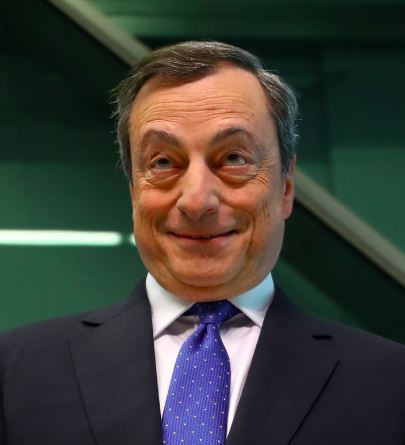
European Commission President Ursula von der Leyen met with Mario Draghi in Brussels to discuss the EU’s competitiveness agenda and the implementation of Draghi’s 2024 report at Draghi’s request. Whenever these two gather behind closed doors to discuss “competitiveness,” the European taxpayer should grab his wallet because Brussels has never encountered a problem it did not believe could be solved with more centralized power, more borrowing, and more government spending.

The Commission claims that it is making “excellent progress” on trade diversification, regulatory simplification, and a new roadmap called “One Europe, One Single Market.” Paula Pinho, von der Leyen’s chief spokesperson, boasted that the Commission, Council, and Parliament are now committed to following a common timetable for implementing many of Draghi’s recommendations.

“One Europe, One Single Market” is another step toward stripping national governments of economic authority and transferring it to Brussels. They call this harmonization because admitting that it is centralization would alarm the public. European nations are expected to surrender more control over taxation, regulation, capital markets, energy, industry, and public spending to unelected officials who helped create the crisis in the first place.

The Draghi report is more than ever valid! Progresses have been made but they are too partial and way too slow when the world is changing fast and furious. Europeans need to


Mario Draghi’s report correctly diagnosed many of Europe’s illnesses. Productivity is stagnant, energy is too expensive, investment is inadequate, markets are fragmented, and innovation is moving to the United States and Asia. Europe is falling behind in artificial intelligence, semiconductors, defense, digital infrastructure, and advanced manufacturing. Yet Draghi will not admit that the European Union’s own policies produced much of this destruction.

Brussels deliberately increased energy costs through Net Zero mandates, carbon taxes, sanctions, and the abandonment of reliable energy. It suffocated industry beneath environmental rules and compliance requirements. It imposed the Digital Services Act, the Digital Markets Act, ESG mandates, supply-chain directives, and endless reporting obligations. It then looked at the wreckage and concluded that Europe suffers from insufficient government management.

Draghi estimates that Europe requires between €750 billion and €800 billion in additional investment every year through 2030. That is approximately 4.4% to 4.7% of the EU’s annual GDP. The proposed spending includes roughly €300 billion for the energy transition, €150 billion for transportation and charging infrastructure, €150 billion for digital technologies, €50 billion for defense and security, and another €100 billion to €150 billion for innovation.

They are not discussing a modest reform program. They are contemplating an economic transformation costing up to €4.8 trillion over six years. Since private capital refuses to invest sufficient amounts under the conditions Brussels created, Draghi wants government to guide, subsidize, guarantee, and de-risk the investment. In other words, the taxpayer absorbs the losses while politically connected corporations collect the profits.

Power requires Europe to move from confederation to federation. At the Katholieke Universiteit Leuven, Mario #Draghi delivered a powerful and timely address that has been widely echoed across European media and political

The European Parliament has estimated that public financing would need to provide approximately €150 billion to €160 billion annually if Europe maintained its traditional 80% private and 20% public investment split. The EU budget cannot provide anything close to that amount. Brussels will therefore demand new “own resources,” expanded EU taxes, financial guarantees, redirected national budgets, or another round of common borrowing.

They always invent a crisis and then use it to push debt that the people never approved. COVID produced NextGenerationEU, which allowed the Commission to borrow hundreds of billions collectively for the first time. What was sold as an exceptional emergency became the blueprint for permanent EU fiscal authority. Those debts must still be repaid, with the repayment burden expected to reach around €30 billion annually beginning in 2028. Now Draghi’s competitiveness agenda provides the excuse for the next debt machine.

Draghi is the same man who promised to do “whatever it takes” to preserve the euro when he headed the European Central Bank. That statement is praised as some act of genius, but it meant that the ECB would suppress bond yields, monetize sovereign risk, and protect the political project regardless of the economic cost. His policies preserved the euro’s institutional structure while encouraging governments to avoid the structural reforms that a genuine market would have forced upon them.

Von der Leyen has operated by the same principle. When her policies fail, she never questions the policy. She demands more authority to enforce it. Europe lost cheap energy, so Brussels proposed massive green subsidies. European companies cannot compete, so Brussels demands a centralized industrial policy. National budgets are drowning in debt, so the Commission wants shared debt. Citizens reject deeper integration, so they rename it “simplification” and “competitiveness.”

In theory, the EU's economic policy is meant to fuse 27 national markets  into one pool of 450m consumers. In practice, it has failed to keep up with  the modern world. Paradoxically,

The Commission points to trade agreements with Mercosur, India, and Switzerland as proof of progress. Trade diversification is sensible, but no collection of agreements will compensate for making production prohibitively expensive inside Europe. A German chemical company cannot compete because von der Leyen signs another document in Brussels while its energy bill remains multiples of what a competitor pays abroad.

The EU’s competitiveness problem is not a shortage of reports. Draghi produced around 380 recommendations, yet a 2025 European Parliament study found that only 11% had been adopted by September of that year. Brussels now celebrates “steady progress” while European businesses continue to close plants, cut employment, and move investment abroad. These people measure success by the number of directives issued and committees formed, not by whether anyone can still afford to manufacture a product.

Europe does not need €800 billion annually in politically directed investment to repair damage caused by politically directed economics. It needs affordable energy, lower taxes, fewer regulations, protection of property rights, and governments willing to allow capital to allocate itself. Innovation cannot be ordered into existence by Ursula von der Leyen. Entrepreneurs do not need another EU fund administered by bureaucrats who have never created a business or met a payroll.

Their “One Europe, One Single Market” roadmap moves Europe closer to fiscal union without democratic consent. Monetary union was created without debt union or political union, producing the structural crisis embedded in the euro from the beginning. Brussels now intends to use every emergency to construct those missing components through the back door.

The productive citizens of Europe will be ordered to finance it all. They will pay through direct taxation, carbon costs, inflation, reduced pensions, financial repression, and the liabilities attached to common EU debt. German workers are already discovering that the state consumes nearly half the economic value of labor. High earners are looking toward Switzerland, Britain, the United States, and the UAE because the reward for productivity inside the EU continues to shrink.

Von der Leyen and Draghi are not rescuing European competitiveness. They are trying to preserve the centralized political structure that destroyed it. Europe was built by its people and its diverse nations. It is being dismantled by bureaucrats who genuinely believe prosperity can be produced through a timetable agreed upon by three EU institutions over lunch in Brussels. These are not economic architects. They are undertakers discussing how to finance the funeral.



Source link

Tags: centralizationDerDraghiEuropeLeyenPlotSaveVon
ShareTweetShare
Previous Post

UK Lawmakers Probe 40% Crypto Transfer Blocks as Banking Scrutiny Widens

Related Posts

edit post
Trump plans high generic-drug tariffs in 2028 to spur U.S. production

Trump plans high generic-drug tariffs in 2028 to spur U.S. production

by TheAdviserMagazine
July 21, 2026
0

U.S. President Donald Trump signs an executive order on researching the effects of psychedelic drugs in medical treatment for veterans,...

edit post
Coffee Break: Armed Madhouse – The Two Faces of Starlink

Coffee Break: Armed Madhouse – The Two Faces of Starlink

by TheAdviserMagazine
July 21, 2026
0

In 2022, as Russian forces advanced into Ukraine, the Starlink satellite communication system became an indispensable wartime asset. Thousands of...

edit post
From Spoiled Sons of Liberty to Surveillance Leviathan: America’s Six Republics and the Myth of Eternal Union

From Spoiled Sons of Liberty to Surveillance Leviathan: America’s Six Republics and the Myth of Eternal Union

by TheAdviserMagazine
July 21, 2026
0

What is the Mises Institute? The Mises Institute is a non-profit organization that exists to promote teaching and research in...

edit post
The High Cost of Just Cause

The High Cost of Just Cause

by TheAdviserMagazine
July 21, 2026
0

This month, amid World Cup fever, New York City implemented a new job-protection law. This law forbids app-based rideshare platforms...

edit post
The Ideology Behind the American Revolution

The Ideology Behind the American Revolution

by TheAdviserMagazine
July 21, 2026
0

In his book The Vision of the Anointed, Thomas Sowell argues that most people’s political opinions are shaped by “a...

edit post
America’s Food Supply Has Become Too Big To Fail – Cyclospora

America’s Food Supply Has Become Too Big To Fail – Cyclospora

by TheAdviserMagazine
July 21, 2026
0

One of the greatest lies in politics is that anyone who opposes excessive government regulation must therefore oppose government enforcement....

  • Trending
  • Comments
  • Latest
edit post
Mass Fraud in Massachusetts Committed by Illegal Immigrants Discovered

Mass Fraud in Massachusetts Committed by Illegal Immigrants Discovered

June 22, 2026
edit post
New Jersey Tax-Relief Events: Three July Dates Near Seniors

New Jersey Tax-Relief Events: Three July Dates Near Seniors

July 13, 2026
edit post
Bristlecone pines growing in the White Mountains of California germinated before the Great Pyramid was built, and the oldest one alive today, nicknamed Methuselah, has been quietly adding rings for 4,855 years in soil so poor almost nothing else survives beside it

Bristlecone pines growing in the White Mountains of California germinated before the Great Pyramid was built, and the oldest one alive today, nicknamed Methuselah, has been quietly adding rings for 4,855 years in soil so poor almost nothing else survives beside it

July 8, 2026
edit post
Retail giant exits U.S. fashion after multi-million-dollar scandal

Retail giant exits U.S. fashion after multi-million-dollar scandal

July 1, 2026
edit post
Same Portfolio. Same Retirement. A 10-Mile Move Costs One Couple ,000 A Year

Same Portfolio. Same Retirement. A 10-Mile Move Costs One Couple $10,000 A Year

June 27, 2026
edit post
Top Democrats Are Trapped in a Catch 22

Top Democrats Are Trapped in a Catch 22

July 6, 2026
edit post
Von Der Leyen And Draghi Plot More Centralization To “Save” Europe

Von Der Leyen And Draghi Plot More Centralization To “Save” Europe

0
edit post
Tata Group stock falls 2% after Q1 net profit jumps 18% to Rs 390 crore

Tata Group stock falls 2% after Q1 net profit jumps 18% to Rs 390 crore

0
edit post
UK Lawmakers Probe 40% Crypto Transfer Blocks as Banking Scrutiny Widens

UK Lawmakers Probe 40% Crypto Transfer Blocks as Banking Scrutiny Widens

0
edit post
Goldman Sachs creates private markets platform to court rich investors

Goldman Sachs creates private markets platform to court rich investors

0
edit post
Ted Cruz Calls Trump Accounts a Path to Social Security Privatization—Economist Disagrees

Ted Cruz Calls Trump Accounts a Path to Social Security Privatization—Economist Disagrees

0
edit post
What Is a Credit Union vs. a Bank

What Is a Credit Union vs. a Bank

0
edit post
Von Der Leyen And Draghi Plot More Centralization To “Save” Europe

Von Der Leyen And Draghi Plot More Centralization To “Save” Europe

July 22, 2026
edit post
UK Lawmakers Probe 40% Crypto Transfer Blocks as Banking Scrutiny Widens

UK Lawmakers Probe 40% Crypto Transfer Blocks as Banking Scrutiny Widens

July 21, 2026
edit post
Tata Group stock falls 2% after Q1 net profit jumps 18% to Rs 390 crore

Tata Group stock falls 2% after Q1 net profit jumps 18% to Rs 390 crore

July 21, 2026
edit post
Trump plans high generic-drug tariffs in 2028 to spur U.S. production

Trump plans high generic-drug tariffs in 2028 to spur U.S. production

July 21, 2026
edit post
East West projects 2026 loan growth of 6% to 8% as it raises NII growth outlook to 7% to 9% (NASDAQ:EWBC)

East West projects 2026 loan growth of 6% to 8% as it raises NII growth outlook to 7% to 9% (NASDAQ:EWBC)

July 21, 2026
edit post
Kazakhstan Signs Network School Deal as Malaysia Revokes License

Kazakhstan Signs Network School Deal as Malaysia Revokes License

July 21, 2026
The Adviser Magazine

The first and only national digital and print magazine that connects individuals, families, and businesses to Fee-Only financial advisers, accountants, attorneys and college guidance counselors.

CATEGORIES

  • 401k Plans
  • Business
  • College
  • Cryptocurrency
  • Economy
  • Estate Plans
  • Financial Planning
  • Investing
  • IRS & Taxes
  • Legal
  • Market Analysis
  • Markets
  • Medicare
  • Money
  • Personal Finance
  • Social Security
  • Startups
  • Stock Market
  • Trading

LATEST UPDATES

  • Von Der Leyen And Draghi Plot More Centralization To “Save” Europe
  • UK Lawmakers Probe 40% Crypto Transfer Blocks as Banking Scrutiny Widens
  • Tata Group stock falls 2% after Q1 net profit jumps 18% to Rs 390 crore
  • Our Great Privacy Policy
  • Terms of Use, Legal Notices & Disclosures
  • Contact us
  • About Us

© Copyright 2024 All Rights Reserved
See articles for original source and related links to external sites.

Welcome Back!

Login to your account below

Forgotten Password?

Retrieve your password

Please enter your username or email address to reset your password.

Log In
No Result
View All Result
  • Home
  • Financial Planning
    • Financial Planning
    • Personal Finance
  • Market Research
    • Business
    • Investing
    • Money
    • Economy
    • Markets
    • Stocks
    • Trading
  • 401k Plans
  • College
  • IRS & Taxes
  • Estate Plans
  • Social Security
  • Medicare
  • Legal

© Copyright 2024 All Rights Reserved
See articles for original source and related links to external sites.