
No Result
View All Result
SUBMIT YOUR ARTICLES
  • Login
Monday, June 22, 2026
TheAdviserMagazine.com
  • Home
  • Financial Planning
    • Financial Planning
    • Personal Finance
  • Market Research
    • Business
    • Investing
    • Money
    • Economy
    • Markets
    • Stocks
    • Trading
  • 401k Plans
  • College
  • IRS & Taxes
  • Estate Plans
  • Social Security
  • Medicare
  • Legal
  • Home
  • Financial Planning
    • Financial Planning
    • Personal Finance
  • Market Research
    • Business
    • Investing
    • Money
    • Economy
    • Markets
    • Stocks
    • Trading
  • 401k Plans
  • College
  • IRS & Taxes
  • Estate Plans
  • Social Security
  • Medicare
  • Legal
No Result
View All Result
TheAdviserMagazine.com
No Result
View All Result
Home Market Research Economy

The Venezuela Military Deployment Is about Cronyism, Not National Security

by TheAdviserMagazine
10 months ago
in Economy
Reading Time: 5 mins read
A A
The Venezuela Military Deployment Is about Cronyism, Not National Security
Share on FacebookShare on TwitterShare on LInkedIn


In recent weeks, four US Navy ships and a nuclear submarine, all carrying thousands of service members, have been deployed by President Trump to the waters off Venezuela’s coast.

Tensions between Trump and the Venezuelan regime led by President Nicolás Maduro are nothing new. In his first term, Trump accelerated Washington’s long-standing strategy of using brutal sanctions to crush the Venezuelan economy while trying to prop up domestic officials aligned with the US government.

However, as is often the case, the Venezuelan people haven’t seen the foreign government helping to destroy their economy, or the domestic figures being backed by it, to be worth supporting. So Maduro remains in power.

Early in this second Trump term, the administration tried to ratchet things up by linking Maduro’s regime to a Venezuelan gang operating in parts of the US called Tren de Aragua. That link was used to justify the government’s national emergency declaration at the southern border by framing the gang’s violence here in the US as a literal invasion by the Venezuelan government.

That specific argument fell apart, however, when it was revealed that the intelligence memo administration officials were relying on for that argument actually said there was no evidence of a link between the gang and Maduro’s government.

The Trump administration has since pivoted and now argues—without any public evidence—that Maduro and his regime are actually the ringleaders of a major drug cartel called the Cartel of the Suns.

So far, much of the reaction to Trump’s recent order to use military assets against foreign drug cartels has been focused on the cartels in Mexico. But the administration has described the recent deployment of naval assets to Venezuela’s coast as part of the same effort. 

In fact, yesterday they claimed those assets struck a vessel carrying drugs. But it’s still a bit out of the way from the areas where the bulk of drug smuggling is believed to take place, which suggests that countering Maduro’s regime may be just as big a priority as Trump’s escalation of the war on drugs.

But if the hostility between the US and Venezuela is nothing new, what explains the recent escalation? Well, the answer appears to be, as it often is, cronyism.

Back before Venezuela became an independent country, it was a Spanish colony. The neighboring territory that would later become the modern country of Guyana was a British colony. The border between these two colonies was not well defined. The jungle in that region is incredibly dense, and it’s not well populated. But to the colonial powers, this border was generally understood to follow the Essequibo River.

That said, the British colony of Guyana controlled a lot of land west of the river, which is now known as the Essequibo region. Meaning, when both Venezuela and Guyana became independent countries, they inherited this border dispute. And the dispute escalated later as resources, like gold and copper deposits, were discovered in the disputed region.

Many Venezuelans, including the Maduro regime, have argued that this entire resource-rich region west of the Essequibo River was always supposed to be part of Venezuela. Like a lot of disputed territories, it’s become a point of focus, especially for the more nationalist factions in the country.

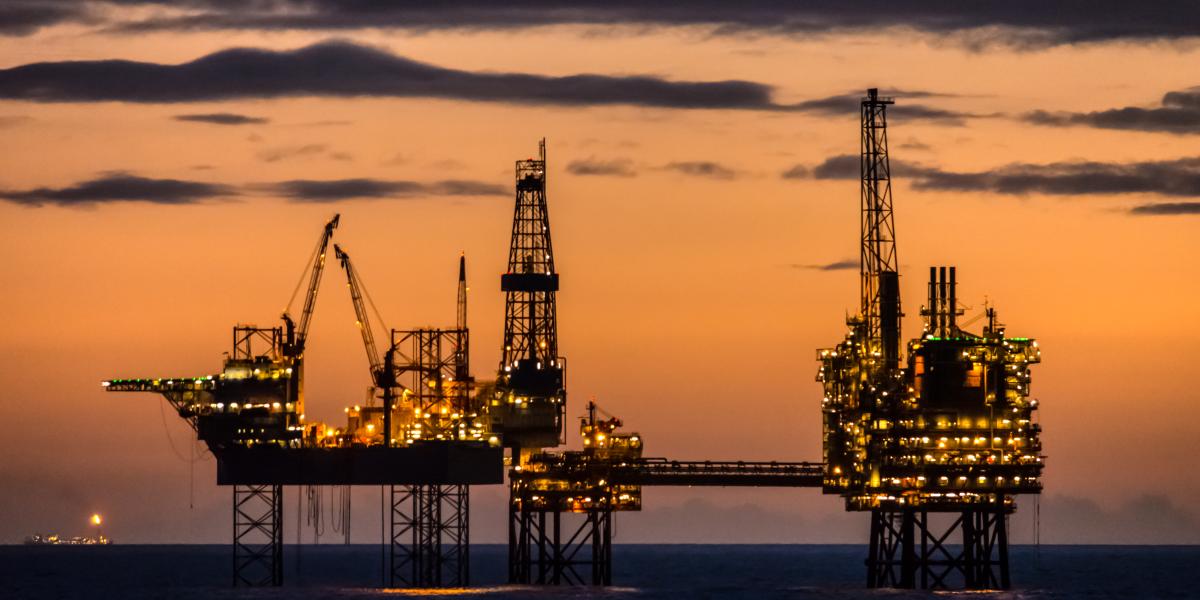
But things really escalated ten years ago, in 2015, when a massive oil deposit was discovered off the Guyanese coast. Now, whoever controlled the Essequibo region could also potentially enjoy control over part or all of this reservoir of at least eleven billion barrels of oil.

Obviously, the Guyanese government has been thrilled by the discovery, which has now put them on track to become the wealthiest country in Latin America on a per capita basis. And the Venezuelan government has become even more motivated to press its claim over the disputed territory.

But the other major players here are the energy companies. And, at the end of the day, these energy companies know there is really only one player powerful enough to determine who gets control of these offshore oil fields: the United States government. So that is where the companies turned.

As Nick Cleveland-Stout and Joseph Bouchard laid out in an excellent report in Responsible Statecraft last week, the battle in DC is largely taking place between ExxonMobil and Chevron.

Exxon discovered this reservoir off the coast of Guyana and has led the exploration and extraction efforts since drilling began in 2019, under the authority of the Guyanese government. However, Exxon pulled all its operations out of Venezuela back in 2007 due to new government regulations. So the company higher-ups obviously see any possibility that control over the oil deposit could switch from the Guyanese to the Venezuelan government as a threat to their current setup.

Chevron, on the other hand, has consistently sought to engage with the Venezuelan government to maintain its access to the world’s most oil-rich territory. It’s on much friendlier terms and is well-positioned to potentially benefit from a partial or total Venezuelan takeover of the oil fields, if Exxon is still unhappy with Maduro’s terms.

So, as Bouchard and Cleveland-Stout demonstrated, in the decade since the reservoir was discovered, both Exxon and Chevron have poured millions of dollars into foreign policy-focused think tanks in DC to try to swing the policy debate over Venezuela in their favor.

Think tanks that get more funding from Exxon are pushing for a maximum pressure campaign against the Maduro regime and for Washington to give Exxon and the Guyanese government what is essentially a war guarantee—that the US will go to war with Venezuela if there is any encroachment on the Essequibo region or the offshore oil fields.

Meanwhile, think tanks that get more funding from Chevron tend to be less hawkish on Venezuela, more understanding of Venezuela’s historical claim on the disputed region, and more willing to point out that Chevron’s deal with the Venezuelan government would mean that the oil would continue to flow into the American market if Maduro took it over.

As the two authors put it, there is “a common refrain among [hawks] that experts who are not sufficiently hawkish on Venezuela are deemed to be shills for Chevron.” But the same could easily be said about the hawks themselves, since many of them are taking Exxon money and arguing that the US should be ready to go to war to ensure that Exxon is the company that gets to sell the oil coming from this deposit.

That is the major dynamic driving Washington’s interest in the Venezuelan-Guyanese territorial dispute. What’s happening right now is simply the latest flare-up of these tensions. The last big one happened in 2023, when Biden was in office.

This is cronyism through and through. The US is the most powerful country in the history of the world due to the unprecedented commitment early Americans had to wealth-building institutions. But now, the officials running our government have decided to use much of that wealth to try to maintain a global empire, meaning it is now the American people’s responsibility to fund the handling of every single territorial dispute of this nature on the planet.

Then, the officials in charge turn around and offer all this power up for sale to the highest bidders. It should surprise nobody that corporations like Exxon view spending a couple million dollars to commandeer some of that power for their own benefit as a worthwhile investment.

What’s less clear is why the American people continue to go along with this.


Source link

Tags: CronyismdeploymentmilitaryNationalSecurityVenezuela
ShareTweetShare
Previous Post

State Comptroller slams gov’t for war failings on civilian matters

Next Post

UHY International adds Grewal Guyatt in Canada

Related Posts

edit post
PRIVATE BLOG – Germany Claims It’s Ready To Fight Russia Tonight

PRIVATE BLOG – Germany Claims It’s Ready To Fight Russia Tonight

by TheAdviserMagazine
June 21, 2026
0

Blog Germany PRIVATE BLOG – Germany Claims It’s Ready to Fight Russia Tonight Posted Jun 21, 2026 by Martin Armstrong...

edit post
The Sunday Morning Movie Presents: Harry Tracy, Desperado (1982) Run Time: 1H 39M Plus NDEs!

The Sunday Morning Movie Presents: Harry Tracy, Desperado (1982) Run Time: 1H 39M Plus NDEs!

by TheAdviserMagazine
June 21, 2026
0

Greetings gentle readers and welcome to another installment of the Sunday Morning Movie. Today it’s a lesser known Western, Harry...

edit post
Zelensky’s Ultimatum To Lukashenko Gives Putin The Chance To Finally Restore Deterrence

Zelensky’s Ultimatum To Lukashenko Gives Putin The Chance To Finally Restore Deterrence

by TheAdviserMagazine
June 21, 2026
0

Conor here: Putin sure seems to have more than enough reasons to turn to some of the measures Korybko mentions...

edit post
Links 6/20/2026 | naked capitalism

Links 6/20/2026 | naked capitalism

by TheAdviserMagazine
June 20, 2026
0

At 1,000 years old, Sherwood Forest’s Major Oak is finally dead Nottingham Post (Micael T) Defining Christian Humanism Comment (Robin...

edit post
Iran War: Iran Insists on All “Deal” Sequencing, Above All Israel Exit of Lebanon, as No Date for Talks Set; Israel Immediately Violates New Lebanon Ceasefire; Strait of Hormuz Open or Not?

Iran War: Iran Insists on All “Deal” Sequencing, Above All Israel Exit of Lebanon, as No Date for Talks Set; Israel Immediately Violates New Lebanon Ceasefire; Strait of Hormuz Open or Not?

by TheAdviserMagazine
June 20, 2026
0

As readers likely know, Israel is doing its best to sabotage the US-Iran “deal” and has scored an initial success,...

edit post
From Scholasticism to Enlightenment Liberalism

From Scholasticism to Enlightenment Liberalism

by TheAdviserMagazine
June 20, 2026
0

In a previous article defending Enlightenment liberalism and its individualistic conception of a universal natural law, I explained that there...

Next Post
edit post
UHY International adds Grewal Guyatt in Canada

UHY International adds Grewal Guyatt in Canada

edit post
Understanding These Roth Rules Is Essential for an Early Retirement

Understanding These Roth Rules Is Essential for an Early Retirement

  • Trending
  • Comments
  • Latest
edit post
New York Seniors: 6 STAR Tax Relief Rules That Could Put a Bigger Check in Your Mailbox

New York Seniors: 6 STAR Tax Relief Rules That Could Put a Bigger Check in Your Mailbox

June 20, 2026
edit post
5 Pennsylvania Rebate Rules Seniors Should Check Before the Property Tax/Rent Deadline

5 Pennsylvania Rebate Rules Seniors Should Check Before the Property Tax/Rent Deadline

June 18, 2026
edit post
Florida Roads Become a Battleground for Illegal Immigration

Florida Roads Become a Battleground for Illegal Immigration

June 9, 2026
edit post
Louisiana’s Age-Tiered Homestead Exemption: 8 Details About the Proposed 2028 Amendment

Louisiana’s Age-Tiered Homestead Exemption: 8 Details About the Proposed 2028 Amendment

June 15, 2026
edit post
The 8 States That Still Tax Social Security in 2026

The 8 States That Still Tax Social Security in 2026

June 6, 2026
edit post
A Tax on Social Media – Blue-State Governments’ Newest Ploy

A Tax on Social Media – Blue-State Governments’ Newest Ploy

June 5, 2026
edit post
Bank of Israel introduces bank fees reform

Bank of Israel introduces bank fees reform

0
edit post
Polygon Dominates Latam: How the Network Processed 9 Million in Stablecoins Last Month

Polygon Dominates Latam: How the Network Processed $309 Million in Stablecoins Last Month

0
edit post
After closing 1,000 restaurants, seafood chain sees clear sailing

After closing 1,000 restaurants, seafood chain sees clear sailing

0
edit post
NRG Energy (NRG) Has a Retail-Power Cash Engine and Generation Option Value Bigger Than a Merchant-Utility Label

NRG Energy (NRG) Has a Retail-Power Cash Engine and Generation Option Value Bigger Than a Merchant-Utility Label

0
edit post
Oil Price Today (June 22): Crude oil rises above  as Iran shuts Strait of Hormuz again. What are experts saying?

Oil Price Today (June 22): Crude oil rises above $80 as Iran shuts Strait of Hormuz again. What are experts saying?

0
edit post
Guide to Volume Incentive Rebates (VIR) Optimization

Guide to Volume Incentive Rebates (VIR) Optimization

0
edit post
Polygon Dominates Latam: How the Network Processed 9 Million in Stablecoins Last Month

Polygon Dominates Latam: How the Network Processed $309 Million in Stablecoins Last Month

June 22, 2026
edit post
Oil Price Today (June 22): Crude oil rises above  as Iran shuts Strait of Hormuz again. What are experts saying?

Oil Price Today (June 22): Crude oil rises above $80 as Iran shuts Strait of Hormuz again. What are experts saying?

June 21, 2026
edit post
After closing 1,000 restaurants, seafood chain sees clear sailing

After closing 1,000 restaurants, seafood chain sees clear sailing

June 21, 2026
edit post
Understanding the Growth of Private Markets

Understanding the Growth of Private Markets

June 21, 2026
edit post
Guide to Volume Incentive Rebates (VIR) Optimization

Guide to Volume Incentive Rebates (VIR) Optimization

June 21, 2026
edit post
Dow futures drop and oil jumps as first day of US-Iran talks sees Trump threaten Tehran on Hormuz

Dow futures drop and oil jumps as first day of US-Iran talks sees Trump threaten Tehran on Hormuz

June 21, 2026
The Adviser Magazine

The first and only national digital and print magazine that connects individuals, families, and businesses to Fee-Only financial advisers, accountants, attorneys and college guidance counselors.

CATEGORIES

  • 401k Plans
  • Business
  • College
  • Cryptocurrency
  • Economy
  • Estate Plans
  • Financial Planning
  • Investing
  • IRS & Taxes
  • Legal
  • Market Analysis
  • Markets
  • Medicare
  • Money
  • Personal Finance
  • Social Security
  • Startups
  • Stock Market
  • Trading

LATEST UPDATES

  • Polygon Dominates Latam: How the Network Processed $309 Million in Stablecoins Last Month
  • Oil Price Today (June 22): Crude oil rises above $80 as Iran shuts Strait of Hormuz again. What are experts saying?
  • After closing 1,000 restaurants, seafood chain sees clear sailing
  • Our Great Privacy Policy
  • Terms of Use, Legal Notices & Disclosures
  • Contact us
  • About Us

© Copyright 2024 All Rights Reserved
See articles for original source and related links to external sites.

Welcome Back!

Login to your account below

Forgotten Password?

Retrieve your password

Please enter your username or email address to reset your password.

Log In
No Result
View All Result
  • Home
  • Financial Planning
    • Financial Planning
    • Personal Finance
  • Market Research
    • Business
    • Investing
    • Money
    • Economy
    • Markets
    • Stocks
    • Trading
  • 401k Plans
  • College
  • IRS & Taxes
  • Estate Plans
  • Social Security
  • Medicare
  • Legal

© Copyright 2024 All Rights Reserved
See articles for original source and related links to external sites.













