No Result
View All Result
SUBMIT YOUR ARTICLES
  • Login
Tuesday, June 2, 2026
TheAdviserMagazine.com
  • Home
  • Financial Planning
    • Financial Planning
    • Personal Finance
  • Market Research
    • Business
    • Investing
    • Money
    • Economy
    • Markets
    • Stocks
    • Trading
  • 401k Plans
  • College
  • IRS & Taxes
  • Estate Plans
  • Social Security
  • Medicare
  • Legal
  • Home
  • Financial Planning
    • Financial Planning
    • Personal Finance
  • Market Research
    • Business
    • Investing
    • Money
    • Economy
    • Markets
    • Stocks
    • Trading
  • 401k Plans
  • College
  • IRS & Taxes
  • Estate Plans
  • Social Security
  • Medicare
  • Legal
No Result
View All Result
TheAdviserMagazine.com
No Result
View All Result
Home Market Research Economy

The Theft of Your Good Deflation

by TheAdviserMagazine
2 months ago
in Economy
Reading Time: 4 mins read
A A
The Theft of Your Good Deflation
Share on FacebookShare on TwitterShare on LInkedIn


Your dollar has lost 96-97 percent of its purchasing power since 1913. This is not bad luck or mysterious market forces. It is the result of deliberate policy choices that steadily, quietly drained your wealth—and convinced you it was being done for your benefit.

The World That Was Stolen

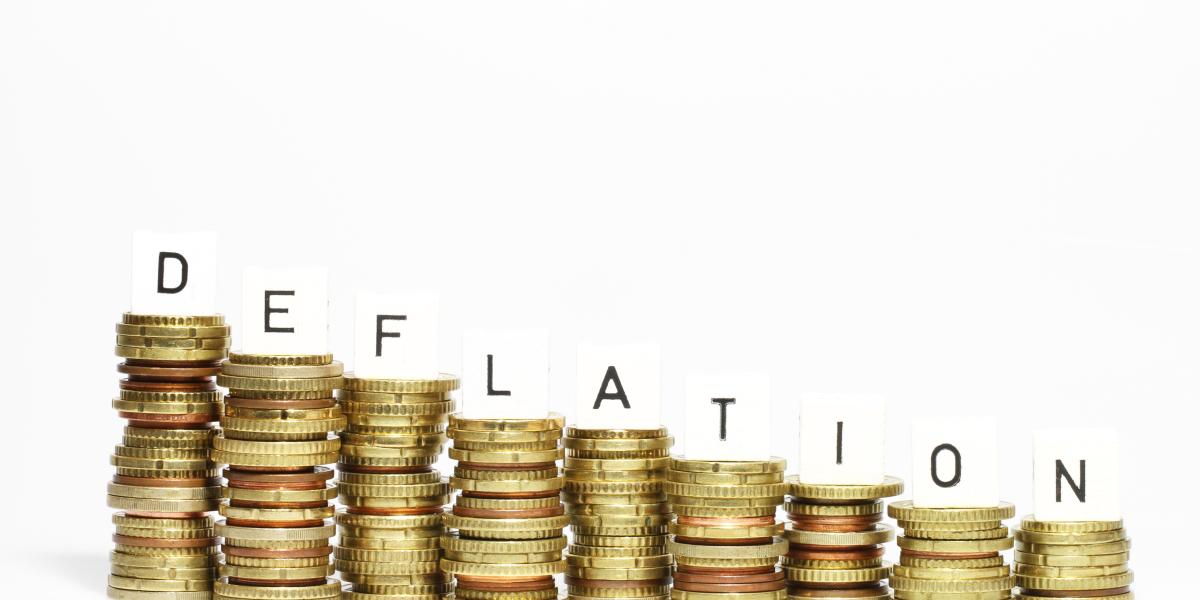
For over a hundred years after America’s founding—roughly 1774 to 1900—prices did not steadily rise. Net cumulative inflation over that entire century was close to zero. Prices often fell, not because of poverty or collapse, but because of human ingenuity: more efficient factories, labor-saving machines, railroads slashing transportation costs, etc. Each new invention meant goods cost less to make and less to buy. Economists call this “good deflation”—the natural, healthy fruit of a productive economy.

Your great-grandfather’s dollar actually gained purchasing power as the decades passed. Imagine working hard and watching the cost of food, clothing, and tools gradually fall—so the same paycheck stretched further every year without a raise. That was the American reality for over a century. Then it was taken. As argued by George Selgin in Less Than Zero, a falling price level in a growing economy is not dangerous, it is the expected and desirable result of increased productivity.

The Great Excuse

The Great Depression gave those in power the justification they needed. We now know—what Federal Reserve Chairs have effectively admitted—that the Depression was not an inevitable market catastrophe. It was caused, deepened, and extended by catastrophically-bad government decisions: destructive monetary policy, trade wars, and tax hikes in the middle of an economic collapse. Without those failures, economists widely believe it would have been a painful but short recession—remembered the way we remember the recession of 1920, which ended quickly because the government largely stayed out of the way.

Instead, the Depression became the defining economic trauma of the 20th century. And that trauma became a political tool. Policymakers saw the Depression’s “bad deflation”—caused by their own failures—and used it to declare that all deflation, forever, was the enemy. They lumped a century of prosperity-driven falling prices together with their self-made disaster, called it all dangerous, and declared that responsible policy meant prices must always rise. The Federal Reserve’s own statements from this era make this policy rationale explicit.

The Crime by the Numbers

American workers are 5–6 times more productive per hour than in 1913. That explosion in productivity should have dramatically increased your dollar’s purchasing power—goods should cost a fraction of what they do now. Instead, the exact opposite happened: You work harder, produce more, and your money buys less every single year. That gap—between what your productivity should have delivered and what inflation actually let you keep—is the precise measure of what was taken.

The Smoking Gun

Then there is Beardsley Ruml. He was Chairman of the Federal Reserve Bank of New York and a key advisor to President Roosevelt—one of the most powerful men in American finance at the exact moment these monetary changes were being locked in place. In the 1940s, he published an article stating plainly: given control of a central banking system and a currency not backed by gold, a sovereign government is finally free of money worries and need no longer levy taxes to fund its spending.

Read that carefully. A government with control of the money supply can create currency from nothing and spend whatever it wants, on whatever it wants, without asking your permission, without passing a tax bill, without ever having to tell you what it is costing you.

For most of American history, the government’s power to spend was chained to its power to tax. Taxing required legislation. Legislation required votes. Votes required facing the public and justifying every dollar. Inflation replaced that accountability entirely. Your wealth is now taken not by a vote in Congress but by the quiet, invisible erosion of every dollar you hold.

Ruml then went further. He proposed what we now call payroll withholding—as he explained in a 1943 radio interview—having employers quietly remove taxes from every paycheck before the money ever reaches your hands. The genius of the scheme, in the darkest sense, was that it solved the government’s collection problem while making the tax nearly invisible. Instead of one annual bill that forced people to sit down, do the math, and feel genuine rage at the total, you simply receive a slightly smaller paycheck every two weeks. The difference between what you earn and what you receive becomes background noise—expected, normal, something you stop thinking about after your first job.

What This Means Today

The costs of things you cannot live without have not merely kept pace with inflation—they have demolished it. Since the 1970s, housing costs have outpaced general inflation by 2-3 times. Medical costs have outpaced it by 3-5 times. College tuition has outpaced general inflation by 4-5 times since 1980. An entire generation has been effectively priced out of homeownership, one serious diagnosis away from bankruptcy, and entering the workforce not just broke but deeply indebted—their future earnings already pledged to lenders before they cashed their first paycheck.

In every one of these sectors—housing, healthcare, education—government involvement, subsidy, and money creation have driven costs skyward while making it nearly impossible for market competition to bring them back down.

Inflation is also the most regressive tax ever devised. It transfers wealth upward—from those who earn money to those who already own things. The working person holding dollars loses; the person holding real estate, stocks, and hard assets wins.

The productivity gains of American workers—your parents, your grandparents, you—should have made life steadily, measurably more affordable. Instead, those gains were quietly redirected. And citizen control over government spending—the most fundamental power in a democracy—was abolished without a single vote.

Beardsley Ruml told you exactly what was happening; he published it, he put his name on it. Nobody was supposed to be paying attention.



Source link

Tags: deflationgoodTheft
ShareTweetShare
Previous Post

The 2026 Property Tax Revolt: These States Move to End Property Taxes

Next Post

Want Guaranteed Rents? These Are the Best College Towns to Invest In Right Now

Related Posts

edit post
A Peptide, a Secretive Scientist, and a Debate Over Evidence

A Peptide, a Secretive Scientist, and a Debate Over Evidence

by TheAdviserMagazine
June 2, 2026
0

Yves here. Yours truly has had more than a little experience with diet, dietary supplement, and alternative medicine fads. When...

edit post
Google’s Debug Project — When Silicon Valley Starts Releasing Insects

Google’s Debug Project — When Silicon Valley Starts Releasing Insects

by TheAdviserMagazine
June 2, 2026
0

Nobody elected Google to manage the ecosystem. Yet here we are. Alphabet, Google’s parent company, has quietly spent the better...

edit post
TICKETS AVAILABLE NOW: Next Generation Conference – July 25

TICKETS AVAILABLE NOW: Next Generation Conference – July 25

by TheAdviserMagazine
June 1, 2026
0

Understanding the World Economy with Martin Armstrong How the world, its economies, and civilization are all connected. Saturday, July 25  (2:00...

edit post
Dem Centrists Pick Their Side, Stand With ICE, Data Centers, and Israel

Dem Centrists Pick Their Side, Stand With ICE, Data Centers, and Israel

by TheAdviserMagazine
June 1, 2026
0

Dem centrists picked their side on the biggest political fights going this past week, choosing money and power over their...

edit post
Get Your Free June Rothbard Giveaway Keynes the Man!

Get Your Free June Rothbard Giveaway Keynes the Man!

by TheAdviserMagazine
June 1, 2026
0

“There is one good thing about Marx: He was not a Keynesian.”—Murray N. RothbardTo further celebrate the Year of Rothbard,...

edit post
Remembering the Mogambo Guru | Mises Institute

Remembering the Mogambo Guru | Mises Institute

by TheAdviserMagazine
June 1, 2026
0

To the Mogambo Guru—pen name of financial analyst Richard Daughty who passed away in 2022—the Federal Reserve were a gang...

Next Post
edit post
Want Guaranteed Rents? These Are the Best College Towns to Invest In Right Now

Want Guaranteed Rents? These Are the Best College Towns to Invest In Right Now

edit post
Analysis Exposes a Relentless Layoff Trend Across American Tech Companies

Analysis Exposes a Relentless Layoff Trend Across American Tech Companies

  • Trending
  • Comments
  • Latest
edit post
Supreme Court Delivers More Bad Redistricting News for Democrats

Supreme Court Delivers More Bad Redistricting News for Democrats

May 19, 2026
edit post
From Maine to Michigan, Democrats Are Making Communism Great Again

From Maine to Michigan, Democrats Are Making Communism Great Again

May 16, 2026
edit post
Gavin Newsom issues ‘final warning’ amid California’s dire housing crisis — what’s at stake for millions of residents

Gavin Newsom issues ‘final warning’ amid California’s dire housing crisis — what’s at stake for millions of residents

May 3, 2026
edit post
Minnesota Wealth Tax | Intangible Personal Property Tax

Minnesota Wealth Tax | Intangible Personal Property Tax

May 6, 2026
edit post
It’s Time To Talk About Massie

It’s Time To Talk About Massie

May 23, 2026
edit post
10 Cheapest High Dividend Stocks With P/E Ratios Under 10

10 Cheapest High Dividend Stocks With P/E Ratios Under 10

April 13, 2026
edit post
Vedanta shares fall after media reports of ED searches at Mumbai, Delhi office

Vedanta shares fall after media reports of ED searches at Mumbai, Delhi office

0
edit post
Baffling. Frustrating. Frightening. What It’s Like To Be Sued Over Medical Debt.

Baffling. Frustrating. Frightening. What It’s Like To Be Sued Over Medical Debt.

0
edit post
Questions to Ask Before Signing a Legal Representation Agreement in Florida

Questions to Ask Before Signing a Legal Representation Agreement in Florida

0
edit post
Berkshire Hathaway buys Taylor Morrison for .8 billion. Buffett touts Abel’s deal-making

Berkshire Hathaway buys Taylor Morrison for $6.8 billion. Buffett touts Abel’s deal-making

0
edit post
A Peptide, a Secretive Scientist, and a Debate Over Evidence

A Peptide, a Secretive Scientist, and a Debate Over Evidence

0
edit post
Robinhood Enters Canada Crypto Market With 0M WonderFi Deal

Robinhood Enters Canada Crypto Market With $180M WonderFi Deal

0
edit post
Vedanta shares fall after media reports of ED searches at Mumbai, Delhi office

Vedanta shares fall after media reports of ED searches at Mumbai, Delhi office

June 2, 2026
edit post
A Peptide, a Secretive Scientist, and a Debate Over Evidence

A Peptide, a Secretive Scientist, and a Debate Over Evidence

June 2, 2026
edit post
Robinhood Enters Canada Crypto Market With 0M WonderFi Deal

Robinhood Enters Canada Crypto Market With $180M WonderFi Deal

June 2, 2026
edit post
It’s not a recession. But Goldman says your paycheck is acting like it

It’s not a recession. But Goldman says your paycheck is acting like it

June 2, 2026
edit post
Google’s Debug Project — When Silicon Valley Starts Releasing Insects

Google’s Debug Project — When Silicon Valley Starts Releasing Insects

June 2, 2026
edit post
Coinbase Takes Next Step In India With Direct INR Support

Coinbase Takes Next Step In India With Direct INR Support

June 2, 2026
The Adviser Magazine

The first and only national digital and print magazine that connects individuals, families, and businesses to Fee-Only financial advisers, accountants, attorneys and college guidance counselors.

CATEGORIES

  • 401k Plans
  • Business
  • College
  • Cryptocurrency
  • Economy
  • Estate Plans
  • Financial Planning
  • Investing
  • IRS & Taxes
  • Legal
  • Market Analysis
  • Markets
  • Medicare
  • Money
  • Personal Finance
  • Social Security
  • Startups
  • Stock Market
  • Trading

LATEST UPDATES

  • Vedanta shares fall after media reports of ED searches at Mumbai, Delhi office
  • A Peptide, a Secretive Scientist, and a Debate Over Evidence
  • Robinhood Enters Canada Crypto Market With $180M WonderFi Deal
  • Our Great Privacy Policy
  • Terms of Use, Legal Notices & Disclosures
  • Contact us
  • About Us

© Copyright 2024 All Rights Reserved
See articles for original source and related links to external sites.

Welcome Back!

Login to your account below

Forgotten Password?

Retrieve your password

Please enter your username or email address to reset your password.

Log In
No Result
View All Result
  • Home
  • Financial Planning
    • Financial Planning
    • Personal Finance
  • Market Research
    • Business
    • Investing
    • Money
    • Economy
    • Markets
    • Stocks
    • Trading
  • 401k Plans
  • College
  • IRS & Taxes
  • Estate Plans
  • Social Security
  • Medicare
  • Legal

© Copyright 2024 All Rights Reserved
See articles for original source and related links to external sites.