No Result
View All Result
SUBMIT YOUR ARTICLES
  • Login
Tuesday, April 21, 2026
TheAdviserMagazine.com
  • Home
  • Financial Planning
    • Financial Planning
    • Personal Finance
  • Market Research
    • Business
    • Investing
    • Money
    • Economy
    • Markets
    • Stocks
    • Trading
  • 401k Plans
  • College
  • IRS & Taxes
  • Estate Plans
  • Social Security
  • Medicare
  • Legal
  • Home
  • Financial Planning
    • Financial Planning
    • Personal Finance
  • Market Research
    • Business
    • Investing
    • Money
    • Economy
    • Markets
    • Stocks
    • Trading
  • 401k Plans
  • College
  • IRS & Taxes
  • Estate Plans
  • Social Security
  • Medicare
  • Legal
No Result
View All Result
TheAdviserMagazine.com
No Result
View All Result
Home Market Research Economy

Straight Whiskey and Dirty Politics

by TheAdviserMagazine
6 months ago
in Economy
Reading Time: 4 mins read
A A
Straight Whiskey and Dirty Politics
Share on FacebookShare on TwitterShare on LInkedIn


In the early 20th century, America was buzzing with Progressive Era reforms aimed at taming the excesses of industrialization. One landmark was the Pure Food and Drugs Act of 1906, hailed as a victory for consumer safety. It banned poisonous ingredients in food and drink, required accurate labeling, and cracked down on imitations. But when it came to whiskey, was it truly about protecting the public from deadly adulterants? Or was it a classic case of dirty politics, where special interests use government power to disadvantage competitors?

Economists have long debated the origins of regulation through two lenses: public interest theory and public choice theory. Public interest theory sees regulation as a noble response to market failures like asymmetric information, where consumers don’t have the expertise to spot hidden dangers. Public choice theory, pioneered by scholars like James Buchanan and Gordon Tullock, flips the script: regulations often emerge from rent seeking, where powerful industry groups lobby for rules that boost their profits at the expense of consumers and competitors. Oftentimes, rent seeking is most successful when there is at least a semblance of a public interest concern to bolster the argument for regulation among those hoping to shape it.

In my recent paper in Public Choice, coauthored with Macy Scheck, “Examining the Public Interest Rationale for Regulating Whiskey with the Pure Food and Drugs Act,”  we explore a case in which the historical evidence leans heavily toward the explanation offered by public choice theory. Straight whiskey distillers, who age their spirits in barrels for flavor, pushed for regulations targeting “rectifiers,” who flavored neutral spirits to mimic aged whiskey more cheaply. The rectifiers were accused of lacing their products with poisons like arsenic, strychnine, and wood alcohol. If true, the regulation was a lifesaver. But was it?

Whiskey consumption boomed in the decades before 1906, without federal oversight. Sales of rectified whiskey were estimated at 50–90% of the market. From 1886 to 1913, U.S. spirit consumption (mostly whiskey) rose steadily, dipping only during the 1893–1897 depression. If rectifiers were routinely poisoning customers, you’d expect markets to collapse as word spread, an example of Akerlof’s “market for lemons” in action. No such collapse occurred. 

Chemical tests from the era tell a similar story. A comprehensive search of historical newspapers uncovered 25 tests of whiskey samples between 1850 and 1906. Poisons turned up infrequently.  Some alarming results came from dubious sources, like temperance activists. One chemist, Hiram Cox, a prohibitionist lecturer, claimed to find strychnine and arsenic galore—but contemporaries debunked his methods as sloppy and biased.

Trade books for rectifiers, which contained recipes, reveal even less malice. These manuals, aimed at professionals blending spirits, rarely list poisons. When poisons did appear, their use was in accordance with the scientific and medical knowledge of the time. Many recipe authors explicitly avoided known toxins, noting it was more profitable to keep customers alive and coming back.

We examined home recipe books for medicine and food. We found that the handful of dangerous substances that were included in whiskey recipes were often recommended in home medical recipes for everything from toothaches to blood disorders. This suggests people, including regulators, did not know of their danger at that time. 

Strychnine was found in niche underground markets where a small number of thrill-seekers demanded its amphetamine-like buzz, or in prohibition states where bootleggers had no viable alternatives. But rectifiers avoided it; it was expensive and bitter.

What about reported deaths and poisonings? That is our final piece of evidence. Newspapers of the day loved sensational stories such as murders or suicides. Yet a keyword search for whiskey-linked fatalities from 1850–1906 yielded slim pickings outside of intentional acts or bootleg mishaps. Wood alcohol, which was listed in no recipes, caused the most issues, but often in isolated cases, like a 1900 New York saloon debacle where 22 died from a mislabeling. 

Overall, adulterated whiskey was hardly a serious safety concern.

Harvey Wiley, the USDA chemist who championed the Pure Food and Drugs Act, admitted under questioning that rectified ingredients weren’t inherently harmful—they just weren’t “natural.” His real motive? Rectified whiskey was a cheap competitor to straight stuff. Wiley’s correspondence, unearthed by historians Jack High and Clayton Coppin, shows straight distillers lobbying hard and framing regulation as a moral crusade while eyeing market share. President Taft’s 1909 compromise allowed “blended whiskey” labels but reserved “straight” for the premium, aged variety— a win for the incumbents.

The lesson? Regulations are rarely the product of pure altruism. As Bruce Yandle’s “Bootleggers and Baptists” model explains, moralists (temperance advocates decrying poison) team up with profiteers (straight distillers seeking barriers to entry) to pass laws that sound virtuous but serve narrow interests. The Pure Food and Drugs Act may have curbed some real abuses elsewhere, but for whiskey, it was more about protecting producers than consumers. Cheers to that? Not quite.


Daniel J. Smith is the Director of the Political Economy Research Institute and Professor of Economics at the Jones College of Business at Middle Tennessee State University. Dan is the North American Co-Editor of The Review of Austrian Economics and the Senior Fellow for Fiscal and Regulatory Policy at the Beacon Center of Tennessee. 


Source link

Tags: DirtyPoliticsstraightWhiskey
ShareTweetShare
Previous Post

AI Could Take Your Job, But It Can’t Take Your Real Estate

Next Post

This is How “Hard Money” Loans Work (Banks for Investors) (Rookie Reply)

Related Posts

edit post
Peaceful Nationalism as a Foundation for Economic Liberalism

Peaceful Nationalism as a Foundation for Economic Liberalism

by TheAdviserMagazine
April 21, 2026
0

Political controversy has arisen in recent debates on immigration concerning the compatibility between economic liberalism and restrictions on the free...

edit post
Policy Dominance in Argentina – Econlib

Policy Dominance in Argentina – Econlib

by TheAdviserMagazine
April 21, 2026
0

There are at least two meanings for “dominance” in relation to monetary and fiscal policy. The first one, proposed by...

edit post
‘New cards on the battlefield’: U.S., Iran ratchet up rhetoric with peace talks in limbo

‘New cards on the battlefield’: U.S., Iran ratchet up rhetoric with peace talks in limbo

by TheAdviserMagazine
April 21, 2026
0

The front page of the Javan newspaper (L) and the front page of the Jam Jam newspaper, which features a...

edit post
Canada Turns Against Its Lifeline While Its Leader Invests In It

Canada Turns Against Its Lifeline While Its Leader Invests In It

by TheAdviserMagazine
April 21, 2026
0

Mark Carney has now openly declared that Canada can no longer rely on the United States, stating that the relationship...

edit post
Zelensky Demands Ukrainian Men Abroad Return To Fight His War

Zelensky Demands Ukrainian Men Abroad Return To Fight His War

by TheAdviserMagazine
April 21, 2026
0

Volodymyr Zelensky has stated that Ukrainian men of conscription age who left the country, many in violation of his wartime...

edit post
Market Talk – April 20, 2026

Market Talk – April 20, 2026

by TheAdviserMagazine
April 20, 2026
0

ASIA: The major Asian stock markets had a green day today: • NIKKEI 225 increased 348.99 points or 0.60% to...

Next Post
edit post
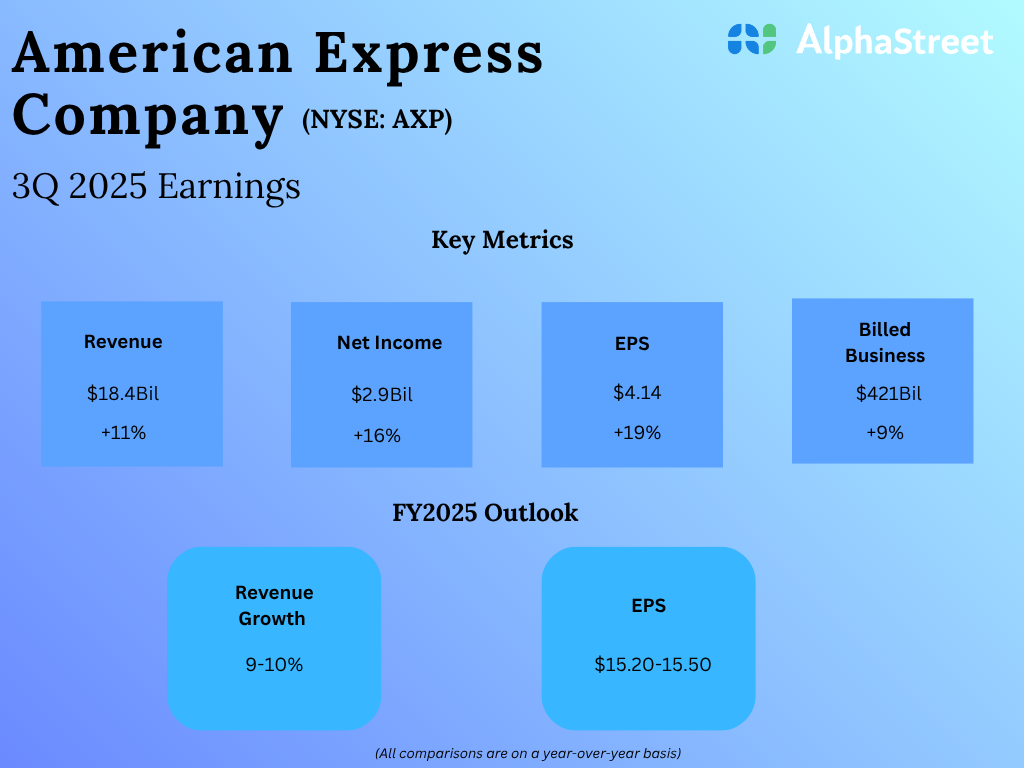
AXP Earnings: All you need to know about American Express’ Q3 2025 earnings results

AXP Earnings: All you need to know about American Express’ Q3 2025 earnings results

edit post
Plummeting bank stocks lead global selloff as fear of private credit ‘contagion’ hits across equities and the dollar

Plummeting bank stocks lead global selloff as fear of private credit ‘contagion’ hits across equities and the dollar

  • Trending
  • Comments
  • Latest
edit post
Massachusetts loses billions in income after millionaire tax

Massachusetts loses billions in income after millionaire tax

March 24, 2026
edit post
Illinois’ Paid Leave for All Workers Act Takes Effect — Every Employee Now Gets Guaranteed Time Off

Illinois’ Paid Leave for All Workers Act Takes Effect — Every Employee Now Gets Guaranteed Time Off

March 27, 2026
edit post
Virginia Permits ADULT MIGRANT MEN To Attend High School

Virginia Permits ADULT MIGRANT MEN To Attend High School

March 30, 2026
edit post
A 58-year-old left NYC for Miami to save on taxes — then retired early thanks to hidden savings. Here’s the math

A 58-year-old left NYC for Miami to save on taxes — then retired early thanks to hidden savings. Here’s the math

March 30, 2026
edit post
Tax Flight Accelerates In Massachusetts

Tax Flight Accelerates In Massachusetts

April 6, 2026
edit post
Property Tax Relief & Income Tax Relief

Property Tax Relief & Income Tax Relief

April 1, 2026
edit post
Your credit card’s 0% intro APR is ending soon. How to avoid a costly surprise.

Your credit card’s 0% intro APR is ending soon. How to avoid a costly surprise.

0
edit post
The Quiet Way Grocery Brands Are Charging You More for Less

The Quiet Way Grocery Brands Are Charging You More for Less

0
edit post
10 Outdated Things Boomers Refuse To Give Up (And Still Buy)

10 Outdated Things Boomers Refuse To Give Up (And Still Buy)

0
edit post
StudyIn acquires Canadian international education consultancy OzTREKK

StudyIn acquires Canadian international education consultancy OzTREKK

0
edit post
Social Security Updates Recently Announced Identity Proofing Requirements | Social Security Matters

Social Security Updates Recently Announced Identity Proofing Requirements | Social Security Matters

0
edit post
Adani Power shares zoom nearly 40% in just 13 sessions. Should you book profits now?

Adani Power shares zoom nearly 40% in just 13 sessions. Should you book profits now?

0
edit post
Top 3 Reasons Cardano Price Could Reclaim alt=

Top 3 Reasons Cardano Price Could Reclaim $0.30 as CME Futures Volumes Surge

April 21, 2026
edit post
Trump officials whisper that his Truth Social posts about Iran risk killing peace talks

Trump officials whisper that his Truth Social posts about Iran risk killing peace talks

April 21, 2026
edit post
The Quiet Way Grocery Brands Are Charging You More for Less

The Quiet Way Grocery Brands Are Charging You More for Less

April 21, 2026
edit post
New York sues Coinbase and Gemini Titan, calls their prediction markets illegal gambling

New York sues Coinbase and Gemini Titan, calls their prediction markets illegal gambling

April 21, 2026
edit post
10 Outdated Things Boomers Refuse To Give Up (And Still Buy)

10 Outdated Things Boomers Refuse To Give Up (And Still Buy)

April 21, 2026
edit post
Tata Investment Q4 Results: Profit jumps 69% YoY to Rs 64 crore; co declares Rs 3.4 dividend

Tata Investment Q4 Results: Profit jumps 69% YoY to Rs 64 crore; co declares Rs 3.4 dividend

April 21, 2026
The Adviser Magazine

The first and only national digital and print magazine that connects individuals, families, and businesses to Fee-Only financial advisers, accountants, attorneys and college guidance counselors.

CATEGORIES

  • 401k Plans
  • Business
  • College
  • Cryptocurrency
  • Economy
  • Estate Plans
  • Financial Planning
  • Investing
  • IRS & Taxes
  • Legal
  • Market Analysis
  • Markets
  • Medicare
  • Money
  • Personal Finance
  • Social Security
  • Startups
  • Stock Market
  • Trading

LATEST UPDATES

  • Top 3 Reasons Cardano Price Could Reclaim $0.30 as CME Futures Volumes Surge
  • Trump officials whisper that his Truth Social posts about Iran risk killing peace talks
  • The Quiet Way Grocery Brands Are Charging You More for Less
  • Our Great Privacy Policy
  • Terms of Use, Legal Notices & Disclosures
  • Contact us
  • About Us

© Copyright 2024 All Rights Reserved
See articles for original source and related links to external sites.

Welcome Back!

Login to your account below

Forgotten Password?

Retrieve your password

Please enter your username or email address to reset your password.

Log In
No Result
View All Result
  • Home
  • Financial Planning
    • Financial Planning
    • Personal Finance
  • Market Research
    • Business
    • Investing
    • Money
    • Economy
    • Markets
    • Stocks
    • Trading
  • 401k Plans
  • College
  • IRS & Taxes
  • Estate Plans
  • Social Security
  • Medicare
  • Legal

© Copyright 2024 All Rights Reserved
See articles for original source and related links to external sites.