No Result
View All Result
SUBMIT YOUR ARTICLES
  • Login
Friday, May 29, 2026
TheAdviserMagazine.com
  • Home
  • Financial Planning
    • Financial Planning
    • Personal Finance
  • Market Research
    • Business
    • Investing
    • Money
    • Economy
    • Markets
    • Stocks
    • Trading
  • 401k Plans
  • College
  • IRS & Taxes
  • Estate Plans
  • Social Security
  • Medicare
  • Legal
  • Home
  • Financial Planning
    • Financial Planning
    • Personal Finance
  • Market Research
    • Business
    • Investing
    • Money
    • Economy
    • Markets
    • Stocks
    • Trading
  • 401k Plans
  • College
  • IRS & Taxes
  • Estate Plans
  • Social Security
  • Medicare
  • Legal
No Result
View All Result
TheAdviserMagazine.com
No Result
View All Result
Home Market Research Economy

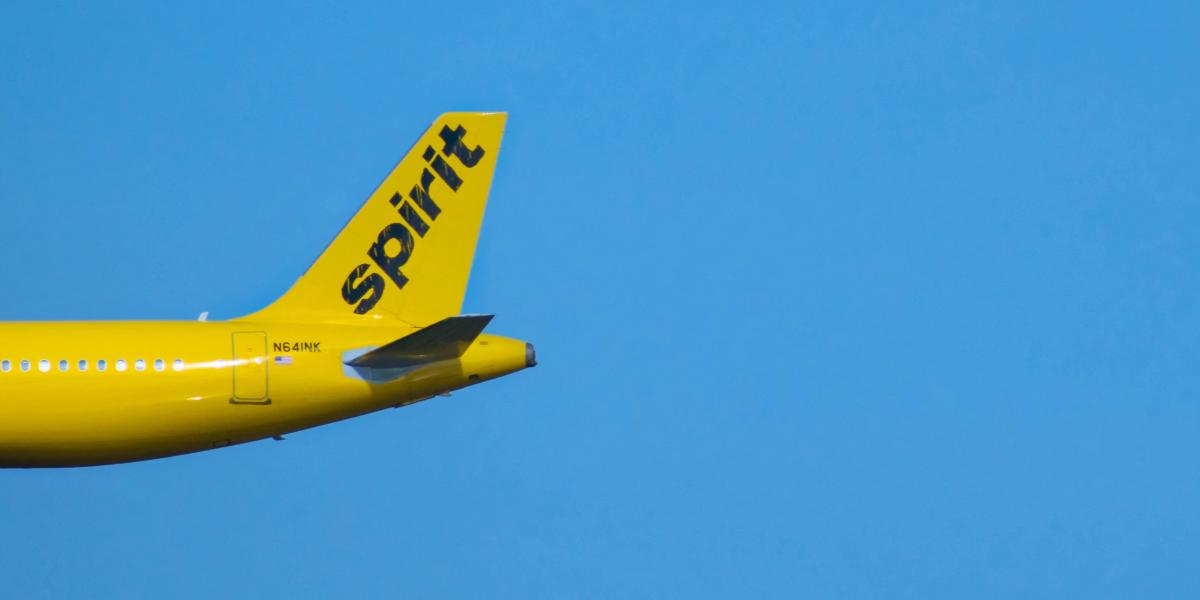
Spirit Airlines and the Destructive Misdiagnosis Behind Antitrust Populism

by TheAdviserMagazine
3 weeks ago
in Economy
Reading Time: 5 mins read
A A
Spirit Airlines and the Destructive Misdiagnosis Behind Antitrust Populism
Share on FacebookShare on TwitterShare on LInkedIn


On Saturday, Spirit Airlines officially shut down all operations.

The announcement came after negotiations for a nine-figure government bailout fell through. The budget airline was unable to continue business with the soaring price of jet fuel that has resulted from Trump’s war on Iran. But that was merely an accelerant. Spirit’s financial trouble goes back to the covid years.

All airlines were hit hard by the covid lockdowns. But even after most travel resumed and government bailouts were paid out, Spirit was unable to bounce back. That was largely because the economic effects of the lockdowns and inflation hit its customer base especially hard.

Also, the airline had a lot of debt that needed to be paid off and was struggling as price inflation on various inputs made its ultra-low-cost model harder to sustain.

Then, in 2022, a potential lifeline appeared in the form of a proposed merger between Spirit and JetBlue. After a few months of negotiations, a deal was reached in which JetBlue would buy Spirit for $3.8 billion. Spirit’s fleet and various assets would be absorbed by JetBlue, increasing its market share to the point where it would just begin to compete with the so-called “Big Four” (United, Delta, American, and Southwest).

But it would never happen.

In 2023, the Biden administration sued to block the merger on antitrust grounds. The government reasoned that the deal threatened competition in the airline industry because it would remove Spirit’s ultra-low prices from several routes, to the benefit of the Big Four.

The lawsuit was part of the Biden administration’s broader effort to pursue a so-called “neo-Brandeisian” approach to antitrust. The neo-Brandeisians believe in focusing primarily on market share, or the size of a firm within a specific industry, when determining if a company needs to be broken up.

This approach has enjoyed a surge in popularity among populists on both the left and right in recent years because the emphasis on size, rather than specific business practices or prices, has been seen as a useful way to go after some of the big villains of Big Business, such as Amazon, RealPage, and Ticketmaster.

To cash in on the excitement about this “new approach” to combating the excesses of Big Business, the Biden administration appointed neo-Brandeisian figures like Lina Khan to the FTC and Jonathan Kanter to the DOJ.

As a result, the administration was far more active on the antitrust front than any of its recent predecessors—arguably more than any antitrust coalition since the late 1970s. However, these antitrust ideologues hit roadblocks when trying to break up the big firms on their target list. So, much of their efforts were redirected towards blocking and derailing mergers. A strict rewrite of the government’s official Merger Guidelines was the big neo-Brandeisian victory of the Biden years, and it has remained in place—in part because this philosophy enjoys some support from several populist right-wingers in the Trump administration.

The merger between JetBlue and Spirit Airlines was simply one casualty in that campaign. It may not have prevented a consolidation that would have dominated the airline market. But, to the neo-Brandeisians, it forced Spirit to continue putting pressure on the Big Four with their ultra-low ticket prices.

The problem, of course, is that those ultra-low ticket prices were unsustainable in the post-covid economy that the government’s pandemic policies had created. Spirit continued to struggle. It suffered heavy economic losses, declared bankruptcy twice, and was finally put entirely out of business over the weekend as the price of jet fuel skyrockets.

So now, Spirit’s price pressure is entirely gone, and all of its planes and assets will be absorbed, not by a small competitor of the Big Four, but likely by the top airlines themselves. This is, assuming they’re genuine about their aims, the exact opposite of what the populist antitrusters were trying to bring about.

But that isn’t surprising at all. The neo-Brandeisians have zeroed in on and committed to a flawed and destructively blunt tool—antitrust—and are attempting to use it to solve a problem they have misdiagnosed.

There are, to be sure, a lot of reasons to oppose Big Business. In the years since the financial crisis, especially, many Americans have been waking up to the fact that the economy is structured and warped to benefit the firms and executives at the top of most industries. And they’re right.

But that is not some natural outgrowth of free-market competition or the result of “market share” tipping out of balance a bit, requiring nothing more than some government tinkering. It is because, for over a hundred years by this point, Big Business has been using government power to destroy their competitors and to immunize themselves from potential future competition. And that includes air travel.

The federal government and top airlines have worked together, from the beginning, to ensure that a small number of government-favored companies dominate the industry. That started in the 1930s when, just as passenger air travel was beginning to grow out of the airmail industry, the Postmaster General unilaterally reorganized routes and industry shares to divide the majority of the market between four companies of his choosing.

The specific airlines that have dominated under this government-compelled oligopoly have evolved over time, but that level of artificial concentration has remained because the underlying regulatory structure that created it is still in place.

In addition to that, today, air traffic control is monopolized by the FAA and limited to government-favored airlines. In fact, an airline cannot take off or land at a commercial airport at all without first receiving a “slot” from the FAA.

Even the airports themselves are owned by local governments, meaning the allocation of the airport amenities, resources, and services that airlines need is determined by political officials rather than market forces.

The government’s monopolization of airline security also removes any need for airlines to compete to provide a safer yet more convenient flying experience than their competitors. And the government makes it illegal for any international airlines to fly domestic routes, further shielding American companies from genuine market competition.

Importantly, as with other industries, this airline-specific regulatory system was not originally built up to serve the interests of American consumers and only later corrupted by a small handful of large companies. It was built up to its current form in order to benefit the small group of airlines the government favors at the moment—airlines that have been more than happy to later share the wealth with their allies in government.

Which is why the only way to meaningfully fix the airline industry, break up this artificial concentration, and force these companies to genuinely put the interest of customers first is to eliminate the government interventions they use to artificially constrain competition and warp the industry to their favor.

Because they not only ignored the true underlying problem but also attempted to roll out even more government interventions, the self-identified populist, anti-Big Business neo-Brandeisians didn’t merely fail to take on the big airlines. Their efforts were siphoned into an antitrust intervention that has now greatly benefited the very oligopoly they were trying to defeat. And, once again, it’s American consumers who will pay the price.



Source link

Tags: AirlinesantitrustDestructiveMisdiagnosisPopulismSpirit
ShareTweetShare
Previous Post

Can Bitcoin break a new 2026 high this week

Next Post

If You’re Worried About Money, Hear This w/How to Money

Related Posts

edit post
“Creating a Nation”: The Declaration of Independence and the Nation Anachronism

“Creating a Nation”: The Declaration of Independence and the Nation Anachronism

by TheAdviserMagazine
May 29, 2026
0

“Four score and seven years ago our fathers brought forth on this continent, a new nation,. . .”—Abraham Lincoln, “The...

edit post
Sam’s Links: May Edition – Econlib

Sam’s Links: May Edition – Econlib

by TheAdviserMagazine
May 29, 2026
0

Sam Enright works on innovation policy at Progress Ireland, an independent policy think tank in Dublin, and runs a publication...

edit post
It’s Not Just High Gas Prices – Inflation Is Now Spreading Through the US Economy

It’s Not Just High Gas Prices – Inflation Is Now Spreading Through the US Economy

by TheAdviserMagazine
May 29, 2026
0

Yves here. While this article makes some useful observations, it also serves as yet another reminder of the blinkered view...

edit post
NY Fed: 14% Of US Households Experience Food Insecurity

NY Fed: 14% Of US Households Experience Food Insecurity

by TheAdviserMagazine
May 29, 2026
0

The government keeps telling people the economy is strong because the stock market keeps making new highs. That is the...

edit post
Is the AI Data Center Boom Building the Infrastructure for Tokenization and Control?

Is the AI Data Center Boom Building the Infrastructure for Tokenization and Control?

by TheAdviserMagazine
May 28, 2026
0

The math does not add up and the logic is not sound. That could be the summary of the current...

edit post
Justice Clarence Thomas Is Right about Progressivism

Justice Clarence Thomas Is Right about Progressivism

by TheAdviserMagazine
May 28, 2026
0

In a recent speech at the University of Texas Law School, Justice Clarence Thomas attacked the political doctrines of progressivism,...

Next Post
edit post
If You’re Worried About Money, Hear This w/How to Money

If You’re Worried About Money, Hear This w/How to Money

edit post
How to Make More Money with Assisted Living Rentals (Same Property, 6X Rent)

How to Make More Money with Assisted Living Rentals (Same Property, 6X Rent)

  • Trending
  • Comments
  • Latest
edit post
Supreme Court Delivers More Bad Redistricting News for Democrats

Supreme Court Delivers More Bad Redistricting News for Democrats

May 19, 2026
edit post
From Maine to Michigan, Democrats Are Making Communism Great Again

From Maine to Michigan, Democrats Are Making Communism Great Again

May 16, 2026
edit post
Gavin Newsom issues ‘final warning’ amid California’s dire housing crisis — what’s at stake for millions of residents

Gavin Newsom issues ‘final warning’ amid California’s dire housing crisis — what’s at stake for millions of residents

May 3, 2026
edit post
Minnesota Wealth Tax | Intangible Personal Property Tax

Minnesota Wealth Tax | Intangible Personal Property Tax

May 6, 2026
edit post
It’s Time To Talk About Massie

It’s Time To Talk About Massie

May 23, 2026
edit post
10 Cheapest High Dividend Stocks With P/E Ratios Under 10

10 Cheapest High Dividend Stocks With P/E Ratios Under 10

April 13, 2026
edit post
Global Athletic Retailer Case Study

Global Athletic Retailer Case Study

0
edit post
Sebi eases nomination rules for demat accounts, mutual funds. Check full details

Sebi eases nomination rules for demat accounts, mutual funds. Check full details

0
edit post
How to Pay (Much) Less in Taxes as a Real Estate Investor (Rookie Reply)

How to Pay (Much) Less in Taxes as a Real Estate Investor (Rookie Reply)

0
edit post
Kalshi adds perpetual futures for U.S. traders following thumbs-up from key regulator

Kalshi adds perpetual futures for U.S. traders following thumbs-up from key regulator

0
edit post
6 Green Flags Most Real Estate Investors Miss

6 Green Flags Most Real Estate Investors Miss

0
edit post
Sam’s Links: May Edition – Econlib

Sam’s Links: May Edition – Econlib

0
edit post
Global Athletic Retailer Case Study

Global Athletic Retailer Case Study

May 29, 2026
edit post
Kalshi adds perpetual futures for U.S. traders following thumbs-up from key regulator

Kalshi adds perpetual futures for U.S. traders following thumbs-up from key regulator

May 29, 2026
edit post
Can Ethereum Reclaim Its 2021 Highs Against Bitcoin As Fundamentals Strengthen?

Can Ethereum Reclaim Its 2021 Highs Against Bitcoin As Fundamentals Strengthen?

May 29, 2026
edit post
Bissell SpinWave + Vac All-in-One Spin Mop and Vacuum only 4.98 shipped (Reg. 0!)

Bissell SpinWave + Vac All-in-One Spin Mop and Vacuum only $134.98 shipped (Reg. $250!)

May 29, 2026
edit post
Medtronic (MDT) Q4 2026 Preview: EPS Est. .55, Reports June 3

Medtronic (MDT) Q4 2026 Preview: EPS Est. $1.55, Reports June 3

May 29, 2026
edit post
Sebi eases nomination rules for demat accounts, mutual funds. Check full details

Sebi eases nomination rules for demat accounts, mutual funds. Check full details

May 29, 2026
The Adviser Magazine

The first and only national digital and print magazine that connects individuals, families, and businesses to Fee-Only financial advisers, accountants, attorneys and college guidance counselors.

CATEGORIES

  • 401k Plans
  • Business
  • College
  • Cryptocurrency
  • Economy
  • Estate Plans
  • Financial Planning
  • Investing
  • IRS & Taxes
  • Legal
  • Market Analysis
  • Markets
  • Medicare
  • Money
  • Personal Finance
  • Social Security
  • Startups
  • Stock Market
  • Trading

LATEST UPDATES

  • Global Athletic Retailer Case Study
  • Kalshi adds perpetual futures for U.S. traders following thumbs-up from key regulator
  • Can Ethereum Reclaim Its 2021 Highs Against Bitcoin As Fundamentals Strengthen?
  • Our Great Privacy Policy
  • Terms of Use, Legal Notices & Disclosures
  • Contact us
  • About Us

© Copyright 2024 All Rights Reserved
See articles for original source and related links to external sites.

Welcome Back!

Login to your account below

Forgotten Password?

Retrieve your password

Please enter your username or email address to reset your password.

Log In
No Result
View All Result
  • Home
  • Financial Planning
    • Financial Planning
    • Personal Finance
  • Market Research
    • Business
    • Investing
    • Money
    • Economy
    • Markets
    • Stocks
    • Trading
  • 401k Plans
  • College
  • IRS & Taxes
  • Estate Plans
  • Social Security
  • Medicare
  • Legal

© Copyright 2024 All Rights Reserved
See articles for original source and related links to external sites.