No Result
View All Result
SUBMIT YOUR ARTICLES
  • Login
Friday, April 24, 2026
TheAdviserMagazine.com
  • Home
  • Financial Planning
    • Financial Planning
    • Personal Finance
  • Market Research
    • Business
    • Investing
    • Money
    • Economy
    • Markets
    • Stocks
    • Trading
  • 401k Plans
  • College
  • IRS & Taxes
  • Estate Plans
  • Social Security
  • Medicare
  • Legal
  • Home
  • Financial Planning
    • Financial Planning
    • Personal Finance
  • Market Research
    • Business
    • Investing
    • Money
    • Economy
    • Markets
    • Stocks
    • Trading
  • 401k Plans
  • College
  • IRS & Taxes
  • Estate Plans
  • Social Security
  • Medicare
  • Legal
No Result
View All Result
TheAdviserMagazine.com
No Result
View All Result
Home Market Research Economy

Obamacare Was Not a Failure

by TheAdviserMagazine
5 months ago
in Economy
Reading Time: 5 mins read
A A
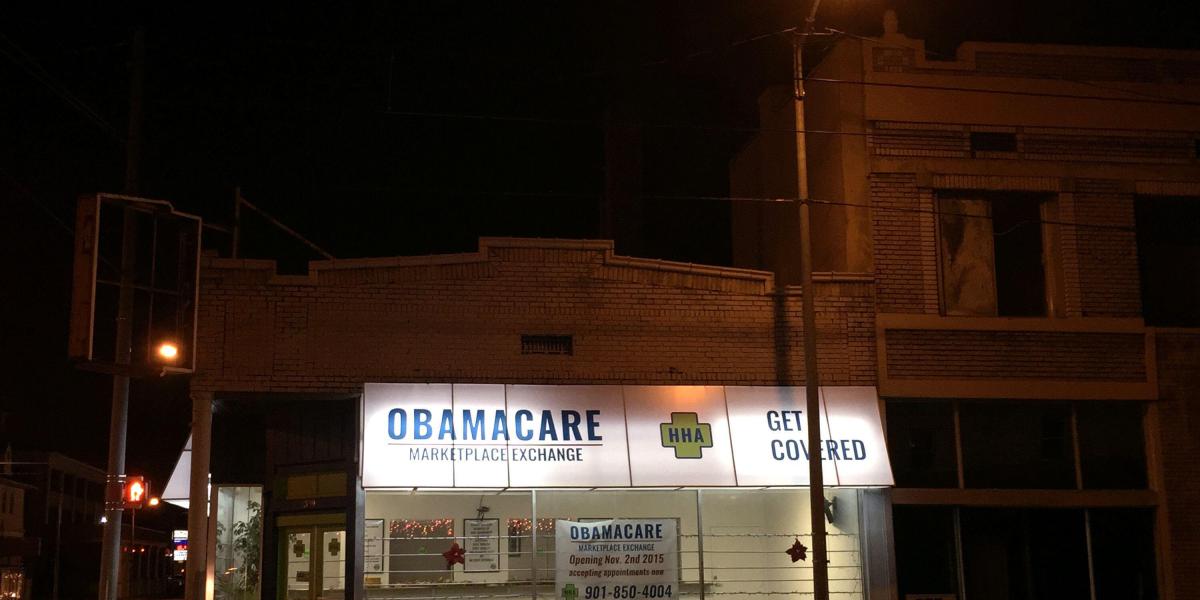
Obamacare Was Not a Failure
Share on FacebookShare on TwitterShare on LInkedIn


“You have turned, Mr. President, the right of every American to have access to decent healthcare into reality for the first time in American history.”

Those are the words then-Vice President Joe Biden said to President Obama in the East Room of the White House on March 23, 2010, as he prepared to sign the Patient Protection and Affordable Care Act—or Obamacare—into law.

The signing ceremony was jubilant as party leaders celebrated their legislative victory. And across the country, their joy was shared by millions of Obama’s supporters who were convinced that the man they voted for had actually delivered the kind of meaningful reform every politician promises, but few make good on.

Americans listened to Joe Biden proclaim that every American would now have access to decent healthcare. And they listened to Obama recount stories of people he had brought to the ceremony who had gone untreated for various serious medical conditions because they could not afford it, and then suggest that, because of the bill he was about to sign, those stories would be a thing of the past.

I think it’s safe to assume that the Obama supporters who were watching that day would never have imagined that, fifteen years later, Congress would be battling over the extension of several temporary “emergency” subsidies that had had to be put in place to keep Obamacare afloat as healthcare and health insurance costs soared to heights that would have been considered unimaginable to anyone living in 2010. But here we are.

As Congress fights over not whether but how to extend these covid-era ACA subsidies, it can be tempting to call Obamacare a failure. I mean, how else would you describe an “affordable care” act that made healthcare and health insurance less affordable while requiring a constant influx of new tax dollars to keep it from falling apart?

That’s a reasonable conclusion. But the problem with it is that it takes the political class at its word and accepts that Obamacare was genuinely meant to make healthcare more affordable and accessible to the American people. It wasn’t.

To understand the true purpose that Obamacare served, you have to first go back and understand why government first intervened in the healthcare market a little over a century ago.

It was not, as the progressive creation myths many of us are taught in school suggest, to protect Americans from maniacal doctors or food and drug companies that were trying to kill them. Nor was it to help Americans afford healthcare—prices back then weren’t anywhere near the absurd levels we see today.

The reason government began intervening in healthcare was because some industry insiders and interest groups recognized that they could achieve and protect a level of market dominance practically unseen up to that point if they stopped merely trying to offer customers more value than their competitors and instead used government power to warp the healthcare industry to their benefit.

That began when a physicians’ interest group maneuvered its way into setting the accreditation standards for American medical schools. That position of influence allowed the group to ban programs that didn’t align with its specific medical philosophy, leading to the forced closure of nearly half the country’s medical schools.

This created an artificial shortage of doctors, which kicked off the affordability crisis that has defined American healthcare ever since.

Of course, the problem was still quite limited in the early days. But as other related industries—especially pharmaceuticals—began falling prey to the same crony dynamic at the heart of the Progressive Era, healthcare quickly began to grow more expensive.

Then, in the middle of the twentieth century, the health insurance industry followed the lead of healthcare providers and pharmaceutical companies and lobbied government officials for rules and regulations that benefited insurance companies’ bottom lines.

That effort culminated in a reworking of the tax code under President Truman. The government made employer-provided health insurance tax-deductible while it continued to tax other forms of employee compensation and other means of paying for care. In other words, the government used the tax code to change how Americans paid for healthcare. It didn’t take long for employer-provided insurance plans to become the dominant arrangement and for health insurance to morph away from actual insurance.

Shortly after that happened, the government significantly ramped up demand for the artificially-constrained supply of medical care with the passage of Medicare and Medicaid, leading to an easily-predictable explosion in the price of healthcare.

And, as fewer and fewer people could afford healthcare at these higher prices, more government assistance was required, which meant more demand, higher prices, more need for government support, and so on.

This was not good for everyday Americans, but it was excellent for healthcare providers and drug companies whose revenues were ballooning as more and more cash poured into the healthcare system.

And it was great for the health “insurance” companies. All the taxes on competing means of payment effectively acted as a subsidy, putting the industry in a strong position to benefit from the mounting crisis because, in addition to facilitating most of the country’s healthcare spending, they helped these providers grow far beyond the typical bounds of insurance.

In a free market, insurance serves as a means to trade risk. It works well for accidents and calamities that are hard to predict individually but relatively easy to predict in bulk, like car accidents, house fires, and unexpected family deaths. But with the government incentivizing people to buy healthcare through insurance plans, those plans began to grow to cover easily-predictable occurrences like annual physicals.

So, zooming out, industry leaders and interest groups joined forces with government officials to use government interventions to create a healthcare system designed to move as much money as possible to healthcare providers, pharmaceutical companies, and the insurance industry. That is, and has always been, the main motivation behind the federal government’s healthcare policy.

But, as with any scheme like this, the party cannot last forever. It only works as long as money keeps coming in. For an important service like healthcare, which most people don’t consider optional, the threshold is pretty high. But there is still a point where premiums grow too high, fewer employers or individual buyers are willing to buy insurance, and the flow of money into the healthcare system starts to falter.

According to the government’s own census data, that tipping point was reached in the early 2000s. For the first time since the scam had really kicked off, the number of people with health insurance began to fall each year. The industry—which had apparently assumed the flow of money would never stop increasing—began to panic. Something had to be done.

And that something was Obamacare.

Despite all the talk of affordability and access used to sell the bill to the public, the Affordable Care Act is best understood as a ploy by the healthcare industry and the government to keep the party going.

Obamacare required all 50 million uninsured Americans to obtain insurance and greatly expanded what these “insurance” companies covered. Demand for healthcare shot back up, and the vicious cycle started back up again.

As any competent economist was saying before the bill was even passed, ramping demand back up would not make healthcare more “affordable,” it would only raise prices. And that’s exactly what happened.

Of course, as prices rose higher and health “insurance” moved further and further away from actual insurance, it’s made the American people even more dependent on the government for healthcare, which is how we’ve arrived at our current situation where extra, “temporary” subsidies rolled out during an official national emergency need to be made permanent to keep everything going.

So, if you want to take the political establishment at their word, the best you can say is that Obamacare kicked the can down the road and made the healthcare affordability crisis worse in exchange for a bit of temporary relief for some uninsured Americans.

But if you view the ACA within the context of the last century of American healthcare policy, it reversed the faltering demand for healthcare and health insurance, accelerated the racket moving as much money as possible into the industry, and quickly became a new political third rail that the “opposition” party refuses to even consider rolling back. It’s hard to view that as anything other than a meaningful success.



Source link

Tags: failureObamacare
ShareTweetShare
Previous Post

Silver hits $60 per ounce for first time, gold rises ahead of Fed rate decision

Next Post

Erste Group Upgrades IBM to ‘Buy’ on Strong Q3 and Red Hat-Led Growth

Related Posts

edit post
Market Talk – April 23, 2026

Market Talk – April 23, 2026

by TheAdviserMagazine
April 23, 2026
0

ASIA: The major Asian stock markets had a negative day today: • NIKKEI 225 decreased 445.63 points or -0.75% to...

edit post
Palantir’s Manifesto Is the Agenda of the New Class Reconfiguring the System’s Power Structure

Palantir’s Manifesto Is the Agenda of the New Class Reconfiguring the System’s Power Structure

by TheAdviserMagazine
April 23, 2026
0

The Internet has erupted in condemnation of Palantir’s manifesto. Understandably so. It is the open declaration of a private company...

edit post
A Look Behind the Fed’s Curtains

A Look Behind the Fed’s Curtains

by TheAdviserMagazine
April 23, 2026
0

Fed Governor Christopher Waller visited Auburn University on Friday, and I had the unusual opportunity not only to hear his...

edit post
Iran’s economy in charts: Hyperinflation and depreciating rial

Iran’s economy in charts: Hyperinflation and depreciating rial

by TheAdviserMagazine
April 23, 2026
0

An Iranian salesperson sits beside a portrait of Iran's late Supreme Leader Ayatollah Ali Khamenei at his fruit shop in...

edit post
A More Troubling Picture of Sea Level Rise Comes Into View

A More Troubling Picture of Sea Level Rise Comes Into View

by TheAdviserMagazine
April 23, 2026
0

Yves here. Perhaps I am not sufficiently up on research or the news, but I have not seen anywhere near...

edit post
The Next Food Pyramid: Lab-Grown Meat and the New Moral Orthodoxy

The Next Food Pyramid: Lab-Grown Meat and the New Moral Orthodoxy

by TheAdviserMagazine
April 23, 2026
0

The honest version of this history is not that Seventh-day Adventists single-handedly invented the USDA’s 1992 Food Guide Pyramid. It...

Next Post
edit post
Erste Group Upgrades IBM to ‘Buy’ on Strong Q3 and Red Hat-Led Growth

Erste Group Upgrades IBM to ‘Buy’ on Strong Q3 and Red Hat-Led Growth

edit post
Israel Police issue tender for smart speed cameras

Israel Police issue tender for smart speed cameras

  • Trending
  • Comments
  • Latest
edit post
Illinois’ Paid Leave for All Workers Act Takes Effect — Every Employee Now Gets Guaranteed Time Off

Illinois’ Paid Leave for All Workers Act Takes Effect — Every Employee Now Gets Guaranteed Time Off

March 27, 2026
edit post
Virginia Permits ADULT MIGRANT MEN To Attend High School

Virginia Permits ADULT MIGRANT MEN To Attend High School

March 30, 2026
edit post
A 58-year-old left NYC for Miami to save on taxes — then retired early thanks to hidden savings. Here’s the math

A 58-year-old left NYC for Miami to save on taxes — then retired early thanks to hidden savings. Here’s the math

March 30, 2026
edit post
Tax Flight Accelerates In Massachusetts

Tax Flight Accelerates In Massachusetts

April 6, 2026
edit post
Property Tax Relief & Income Tax Relief

Property Tax Relief & Income Tax Relief

April 1, 2026
edit post
Hospitals in This State Routinely Sue Patients Over Unpaid Bills

Hospitals in This State Routinely Sue Patients Over Unpaid Bills

March 27, 2026
edit post
JPMorgan issues blunt warning as investors move to safety

JPMorgan issues blunt warning as investors move to safety

0
edit post
The Next Food Pyramid: Lab-Grown Meat and the New Moral Orthodoxy

The Next Food Pyramid: Lab-Grown Meat and the New Moral Orthodoxy

0
edit post
Probal Sen flags muted quarter for Reliance as O2C weakness weighs

Probal Sen flags muted quarter for Reliance as O2C weakness weighs

0
edit post
Bitcoin Dips As Strategy Total Holdings Reach 709k

Bitcoin Dips As Strategy Total Holdings Reach 709k

0
edit post
*HOT* Smartwool and Darn Tough Socks as low as .73!

*HOT* Smartwool and Darn Tough Socks as low as $12.73!

0
edit post
I’m 66 and my adult son sent me a text last Sunday that just said “thinking of you, hope your weekend is nice” — and I read it four times trying to understand why it had landed so hard — and I finally realized it was because he wasn’t asking me for anything, he was just reaching, and I’d apparently reached a point in my life where being reached for without purpose felt like receiving a gift in a language I’d forgotten I spoke

I’m 66 and my adult son sent me a text last Sunday that just said “thinking of you, hope your weekend is nice” — and I read it four times trying to understand why it had landed so hard — and I finally realized it was because he wasn’t asking me for anything, he was just reaching, and I’d apparently reached a point in my life where being reached for without purpose felt like receiving a gift in a language I’d forgotten I spoke

0
edit post
Probal Sen flags muted quarter for Reliance as O2C weakness weighs

Probal Sen flags muted quarter for Reliance as O2C weakness weighs

April 24, 2026
edit post
Your Go-To Payment App May Not Work Abroad. What to Use Instead

Your Go-To Payment App May Not Work Abroad. What to Use Instead

April 24, 2026
edit post
I’m 66 and my adult son sent me a text last Sunday that just said “thinking of you, hope your weekend is nice” — and I read it four times trying to understand why it had landed so hard — and I finally realized it was because he wasn’t asking me for anything, he was just reaching, and I’d apparently reached a point in my life where being reached for without purpose felt like receiving a gift in a language I’d forgotten I spoke

I’m 66 and my adult son sent me a text last Sunday that just said “thinking of you, hope your weekend is nice” — and I read it four times trying to understand why it had landed so hard — and I finally realized it was because he wasn’t asking me for anything, he was just reaching, and I’d apparently reached a point in my life where being reached for without purpose felt like receiving a gift in a language I’d forgotten I spoke

April 24, 2026
edit post
AppFolio raises 2026 outlook to .110B-.125B revenue and 26%-28% non-GAAP operating margin as AI adoption scales (NASDAQ:APPF)

AppFolio raises 2026 outlook to $1.110B-$1.125B revenue and 26%-28% non-GAAP operating margin as AI adoption scales (NASDAQ:APPF)

April 24, 2026
edit post
Metaplanet to raise M for Bitcoin, aims for 100,000 BTC by 2026

Metaplanet to raise $50M for Bitcoin, aims for 100,000 BTC by 2026

April 24, 2026
edit post
College to Career: How Faculty Can Help Students Translate Their Humanities Education – Faculty Focus

College to Career: How Faculty Can Help Students Translate Their Humanities Education – Faculty Focus

April 24, 2026
The Adviser Magazine

The first and only national digital and print magazine that connects individuals, families, and businesses to Fee-Only financial advisers, accountants, attorneys and college guidance counselors.

CATEGORIES

  • 401k Plans
  • Business
  • College
  • Cryptocurrency
  • Economy
  • Estate Plans
  • Financial Planning
  • Investing
  • IRS & Taxes
  • Legal
  • Market Analysis
  • Markets
  • Medicare
  • Money
  • Personal Finance
  • Social Security
  • Startups
  • Stock Market
  • Trading

LATEST UPDATES

  • Probal Sen flags muted quarter for Reliance as O2C weakness weighs
  • Your Go-To Payment App May Not Work Abroad. What to Use Instead
  • I’m 66 and my adult son sent me a text last Sunday that just said “thinking of you, hope your weekend is nice” — and I read it four times trying to understand why it had landed so hard — and I finally realized it was because he wasn’t asking me for anything, he was just reaching, and I’d apparently reached a point in my life where being reached for without purpose felt like receiving a gift in a language I’d forgotten I spoke
  • Our Great Privacy Policy
  • Terms of Use, Legal Notices & Disclosures
  • Contact us
  • About Us

© Copyright 2024 All Rights Reserved
See articles for original source and related links to external sites.

Welcome Back!

Login to your account below

Forgotten Password?

Retrieve your password

Please enter your username or email address to reset your password.

Log In
No Result
View All Result
  • Home
  • Financial Planning
    • Financial Planning
    • Personal Finance
  • Market Research
    • Business
    • Investing
    • Money
    • Economy
    • Markets
    • Stocks
    • Trading
  • 401k Plans
  • College
  • IRS & Taxes
  • Estate Plans
  • Social Security
  • Medicare
  • Legal

© Copyright 2024 All Rights Reserved
See articles for original source and related links to external sites.