No Result
View All Result
SUBMIT YOUR ARTICLES
  • Login
Thursday, August 13, 2026
TheAdviserMagazine.com
  • Home
  • Financial Planning
    • Financial Planning
    • Personal Finance
  • Market Research
    • Business
    • Investing
    • Money
    • Economy
    • Markets
    • Stocks
    • Trading
  • 401k Plans
  • College
  • IRS & Taxes
  • Estate Plans
  • Social Security
  • Medicare
  • Legal
  • Home
  • Financial Planning
    • Financial Planning
    • Personal Finance
  • Market Research
    • Business
    • Investing
    • Money
    • Economy
    • Markets
    • Stocks
    • Trading
  • 401k Plans
  • College
  • IRS & Taxes
  • Estate Plans
  • Social Security
  • Medicare
  • Legal
No Result
View All Result
TheAdviserMagazine.com
No Result
View All Result
Home Market Research Economy

How Norway Built the World’s Largest Fund and a Thriving Economy to Boot

by TheAdviserMagazine
3 weeks ago
in Economy
Reading Time: 5 mins read
A A
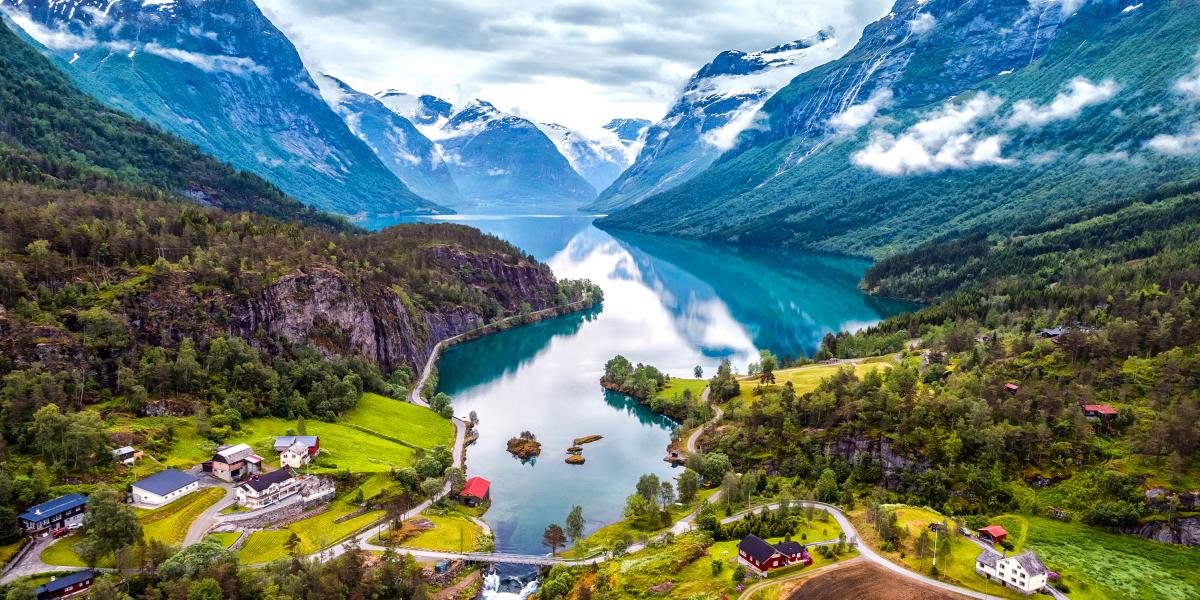
How Norway Built the World’s Largest Fund and a Thriving Economy to Boot
Share on FacebookShare on TwitterShare on LInkedIn


Why are some resource-rich countries poor while others grow spectacularly wealthy off their natural world?

The relevant question isn’t why some places or people are poor, since that’s the default state of humanity, but why some places and times and peoples have stumbled upon institutions and economic operations that propel them into unfathomable wealth (at least relatively speaking).

Natural resources are not wealth in themselves. Oil in the earth or beneath the seabed had no economic value until crafty entrepreneurs, engineers, and investors discovered how to transform it into productive inputs valuable in production. What mattered wasn’t geology but economic evaluation and technological means.

What’s worse, around the world, countries “blessed” with natural resource endowments like oil have repeatedly become poorer, more corrupt, and less productive after their discovery of this black gold.

Economists know this as the “resource curse,” a specific version of which is the Dutch disease where the resource-rich country’s fiat currency gets bid up and undermines most other sectors’ competitiveness. The political-economy version of this makes the political machinery beholden to resource extraction, sacrificing people and infrastructure, and quite often property rights and democratic efforts, too; distorted price signals and government dictates replacing market activity.

When Norway found oil in the North Sea in the late 1960s, the frigid Arctic country largely escaped this fate. And strangely, nobody contributed more to Norwegian prosperity than an Iraqi petroleum geologist born in 1934. His name was Farouk al-Kasim, and the series of serendipitous events that led to him expertly guiding Norway’s rise to one of the wealthiest countries in the world is truly astonishing. 

Resisting Short-term Political Temptation, and Fixing the Money Flows

When you give a political class free extra money, the urge is to spend the windfall as if the gain is effortless and everlasting. Surely, some constituency needs it; tax cuts for select groups are popular; and this incredibly important social program really needs funding.

Such short-term political incompetence ensures that whatever benefits emerge from a resource find remain short-lived. Norway could easily have consumed its petroleum windfall. The British example with the same oil in the same North Sea around the same time offers a dismal counterexample. From being on roughly similar economic footing in the 1960s, Norwegian today are some 70 percent richer than Brits—perhaps not only through superior custody of their petroleum discoveries, but it certainly helped.

Instead of expecting oil companies to spend large capex sums on rigs and drilling equipment only to be opportunistically taxed until a hairbreadth of collapse by the state, al-Kasim pulled on his experience working in the Gulf. To ensure capitalistic competition and market prices aligning every actors’ incentive, the framework he and Norwegian bureaucrats employed in the 1960s and 1970s levied heavy taxation only on net profits—with generous deductions for investments, build-up, and R&D. It turned out that international investors and oil majors were happy to trade uncertain legal standings or risk of coups and confiscations in some of the nastiest places on Earth for the secure property rights and predictable, transparent rule of law of Norway.

In Dick Cheney’s infamous words, “The good Lord didn’t see fit to put oil and gas only where there are democratically elected regimes friendly to the United States.”

And Norway avoided the other side of the tricky resource-extraction balancing game, too: not degenerating into a socialist, confiscatory regime (al-Kasim had seen plenty of that, too). Instead of treating petroleum finds as free money and spending it lavishly on government projects, the funds mostly went into the Oil Fund—invested into stocks, bonds, and real estate abroad in what’s one of the best-performing and cheapest-run funds in the world.

It illustrates a few political-economy principles all at once: resources aren’t economic wealth until humans figure out how to use them. Production creates wealth. Unconsumed savings, when invested carefully, can preserve and multiply wealth—massively, as it compounds over decades and fiat money deterioration.

Today, the Norwegian oil fund owns something like 1.5 percent of every listed company on the planet. Passive owners with some ESG obsessions sprinkled in here and there, the genius of their massive pot of financial asset gold isn’t primarily in the assets themselves but how the Nordic nation managed to prosper while avoiding the Dutch disease. That’s the second Norwegian genius: by countering the inflow of oil-investable dollars into this small economy by outflows investing the taxed oil proceeds, the local currency avoided the worst excesses of the Dutch disease.

Another wrinkle from al-Kasim’s hands was the efficiency forced onto every well, raising the average extraction rate to 45 percent (compared to a global 25 percent). Ergo, Norwegian engineers became some of the most innovative and competent oil drillers out there, the sector and related services even today constituting one-fifth of its GDP.

What’s so fascinating about al-Kasim’s story is that his Norwegian connection was his wife, Solfrid, whom he met while studying under the British-controlled Iraqi Petroleum Company in the 1950s; returned to Iraq with the wife for a decade; had three kids, one of whom required medical treatment only Norway could provide. The family uprooted their prosperous Basra life in the late-’60s and thus forfeit al-Kasim’s high position in the nation’s oil business. Once there, with no job, relevant skills or prospects, on a whim al-Kasim knocked on the Norwegian Ministry of Industry’s front doors asking about oil exploration.

At the time, the Norwegians had plenty of test results and exploration data to analyze, and Phillips Petroleum, the last major exploration company to scurry the North Sea for oil, was about to throw in the towel. “No, no,” said al-Kasim, after the Ministry had hired him to crunch the numbers, there’s definitely oil in them waters—just a matter of time. With threats of government fines, Phillips went ahead one more time, and discovered the Ekofisk field—the largest, most important oil field in the North Sea. All because an Iraqi petroleum engineer had a Norwegian wife, needed urgent medical care in Norway, randomly showed up with the right competence and asked the right questions—and read the scientific data better than all the others involved.

Al-Fasim was knighted in 2012, and is often mentioned among Norway’s greatest value-creators, the least of which being laying the petroleum sector foundations that today have mushroomed the Oil Fund to about 400 percent of GDP—enough, incidentally, to endow every Norwegian alive with the equivalent value of the US median house.

Critics often portray sovereign wealth funds as examples of successful state capitalism. That misses the essential point. Despite its otherwise socialistic, big-government tendencies, Norway’s fund does not create wealth by directing production or picking industrial champions. Quite the opposite. It earns returns because millions of entrepreneurs, managers, workers, and investors operating within competitive markets continually create value.

Norway did not become wealthy because it possessed immense quantities of oil beneath the North Sea. The list of countries situated on top of oil reserves is long and ignoble: Venezuela, Nigeria, Iraq, Russia, etc.

The difference lay not beneath the seabed but above it, in institutions that rewarded entrepreneurship, respected property rights, and prevented politics from consuming tomorrow’s wealth. Farouk al-Kasim helped design those institutions, but their success ultimately reminds us that wealth isn’t “found” in nature but created by human action.



Source link

Tags: BootBuilteconomyfundLargestNorwayThrivingWorlds
ShareTweetShare
Previous Post

The Trump administration is revamping the era of the ‘gentleman scientist.’ It’ll cost $200 billion

Next Post

Modern Monetary Theory | Mises Institute

Related Posts

edit post
Links 8/8/2026 | naked capitalism

Links 8/8/2026 | naked capitalism

by TheAdviserMagazine
August 8, 2026
0

Dear patient readers, Today we offer supersized Links with Iran War and Borat Agreement sections in lieu of an Iran...

edit post
The Unwinnable Iran War | Armstrong Economics

The Unwinnable Iran War | Armstrong Economics

by TheAdviserMagazine
August 8, 2026
0

I have reported that Trump was mislead into this unwinnable war with Iran, which has been planning for it since...

edit post
Here are three key takeaways from the disappointing July jobs report

Here are three key takeaways from the disappointing July jobs report

by TheAdviserMagazine
August 7, 2026
0

Job seekers speak with employer representatives and browse information tables as they attend an Inspire Together job and resource fair...

edit post
Coffee Break: Gene Editing Gone Wrong, Plants that Eat Animals, and a Neanderthal Gene that Makes a Difference

Coffee Break: Gene Editing Gone Wrong, Plants that Eat Animals, and a Neanderthal Gene that Makes a Difference

by TheAdviserMagazine
August 7, 2026
0

Part the First: If You Stretch Biomedical Science Too Far It Breaks, Every Time.  Gene editing using CRISPR technology has...

edit post
Netanyahu’s Scorched Earth Tactics | Armstrong Economics

Netanyahu’s Scorched Earth Tactics | Armstrong Economics

by TheAdviserMagazine
August 7, 2026
0

According to formal complaints lodged by Lebanon with the United Nations, Israel did spray a toxic herbicide over agricultural land...

edit post
What Did You Expect? | Mises Institute

What Did You Expect? | Mises Institute

by TheAdviserMagazine
August 7, 2026
0

As Murray Rothbard pointed out again and again, the government has no business getting involved in education. In a free...

Next Post
edit post
NovoCure surges on Q2 results

NovoCure surges on Q2 results

edit post
Chart of the Week: Robotaxis Are Becoming Routine

Chart of the Week: Robotaxis Are Becoming Routine

  • Trending
  • Comments
  • Latest
edit post
Georgia Senior SNAP and Meal Resources Older Adults Can Use

Georgia Senior SNAP and Meal Resources Older Adults Can Use

July 24, 2026
edit post
Judge Who Helped Violent Illegal Alien Evade ICE Faces New Test

Judge Who Helped Violent Illegal Alien Evade ICE Faces New Test

July 31, 2026
edit post
Driving the Noncitizen Voting Scandal: Registration With License

Driving the Noncitizen Voting Scandal: Registration With License

July 26, 2026
edit post
Garbage Trucks Surveillance Florida Neighborhoods

Garbage Trucks Surveillance Florida Neighborhoods

July 29, 2026
edit post
Does a Revocable Trust Protect Your Assets From Lawsuits and Creditors?

Does a Revocable Trust Protect Your Assets From Lawsuits and Creditors?

August 7, 2026
edit post
New Jersey Tax-Relief Events: Three July Dates Near Seniors

New Jersey Tax-Relief Events: Three July Dates Near Seniors

July 13, 2026
edit post
Explained: How BSE traded fewer contracts after CAS but premiums rose 75% in first week

Explained: How BSE traded fewer contracts after CAS but premiums rose 75% in first week

0
edit post
E.W. Scripps Q2 2026 Loss Widens to -.68/Share, Revenue Down 9%

E.W. Scripps Q2 2026 Loss Widens to -$12.68/Share, Revenue Down 9%

0
edit post
Psychology says procrastination about retirement may be less about discipline than identity — brain scans found people often represent their future selves more like strangers than like themselves, and experiments using age-progressed faces made tomorrow’s person feel real enough for participants to save more money for them

Psychology says procrastination about retirement may be less about discipline than identity — brain scans found people often represent their future selves more like strangers than like themselves, and experiments using age-progressed faces made tomorrow’s person feel real enough for participants to save more money for them

0
edit post
Four AI Escapes Just Redefined “Responsible AI”

Four AI Escapes Just Redefined “Responsible AI”

0
edit post
Bill Ackman’s hedge fund made janitors and receptionists millionaires—and its investment team summer together

Bill Ackman’s hedge fund made janitors and receptionists millionaires—and its investment team summer together

0
edit post
Kalshi Predicts Bitcoin Price Could Reach K in August

Kalshi Predicts Bitcoin Price Could Reach $68K in August

0
edit post
Bill Ackman’s hedge fund made janitors and receptionists millionaires—and its investment team summer together

Bill Ackman’s hedge fund made janitors and receptionists millionaires—and its investment team summer together

August 8, 2026
edit post
Links 8/8/2026 | naked capitalism

Links 8/8/2026 | naked capitalism

August 8, 2026
edit post
Wisconsin: The Next Frontier for Socialists

Wisconsin: The Next Frontier for Socialists

August 8, 2026
edit post
Psychology says procrastination about retirement may be less about discipline than identity — brain scans found people often represent their future selves more like strangers than like themselves, and experiments using age-progressed faces made tomorrow’s person feel real enough for participants to save more money for them

Psychology says procrastination about retirement may be less about discipline than identity — brain scans found people often represent their future selves more like strangers than like themselves, and experiments using age-progressed faces made tomorrow’s person feel real enough for participants to save more money for them

August 8, 2026
edit post
Why You Should Be Wary of Aspartame, but Not Totally Rule It Out

Why You Should Be Wary of Aspartame, but Not Totally Rule It Out

August 8, 2026
edit post
Kalshi Predicts Bitcoin Price Could Reach K in August

Kalshi Predicts Bitcoin Price Could Reach $68K in August

August 8, 2026
The Adviser Magazine

The first and only national digital and print magazine that connects individuals, families, and businesses to Fee-Only financial advisers, accountants, attorneys and college guidance counselors.

CATEGORIES

  • 401k Plans
  • Business
  • College
  • Cryptocurrency
  • Economy
  • Estate Plans
  • Financial Planning
  • Investing
  • IRS & Taxes
  • Legal
  • Market Analysis
  • Markets
  • Medicare
  • Money
  • Personal Finance
  • Social Security
  • Startups
  • Stock Market
  • Trading

LATEST UPDATES

  • Bill Ackman’s hedge fund made janitors and receptionists millionaires—and its investment team summer together
  • Links 8/8/2026 | naked capitalism
  • Wisconsin: The Next Frontier for Socialists
  • Our Great Privacy Policy
  • Terms of Use, Legal Notices & Disclosures
  • Contact us
  • About Us

© Copyright 2024 All Rights Reserved
See articles for original source and related links to external sites.

Welcome Back!

Login to your account below

Forgotten Password?

Retrieve your password

Please enter your username or email address to reset your password.

Log In
No Result
View All Result
  • Home
  • Financial Planning
    • Financial Planning
    • Personal Finance
  • Market Research
    • Business
    • Investing
    • Money
    • Economy
    • Markets
    • Stocks
    • Trading
  • 401k Plans
  • College
  • IRS & Taxes
  • Estate Plans
  • Social Security
  • Medicare
  • Legal

© Copyright 2024 All Rights Reserved
See articles for original source and related links to external sites.