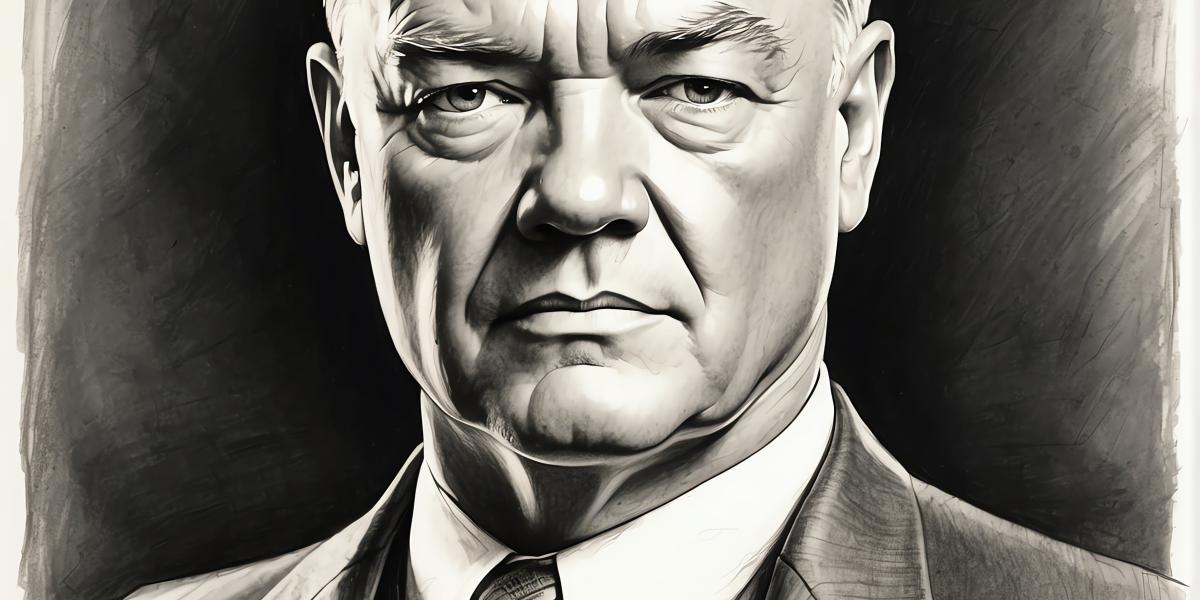
In Southern California, the I-15 freeway leads from Southern California to Las Vegas. It is not unusual for cars to travel at 80+ miles per hour on this road. My Granddad Bill told me once that he and my grandma were driving home from a trip to Las Vegas and were passed by another car “like we were sitting still.” To guesstimate how fast the other car was going, my granddad looked down and saw that he was already going 110 mph without even realizing it. However, to that car, my grandparents’ car must have appeared like it was barely moving at all relative to someone moving much faster. That story illustrates how Herbert Hoover—provably one of the most progressive, interventionist presidents to his time and the progenitor of the New Deal—became known as a do-nothing, free market non-interventionist.
Hoover the Interventionist
Both Hoover and Roosevelt believed that heavy and immediate government intervention was necessary to bring recovery from the Great Depression. Both of their administrations oversaw unprecedented governmental interventions in the economy; neither of them realized the hoped-for recovery, and both facilitated programs that demonstrably hampered economic growth. Strangely, Herbert Hoover has come to be known as a proponent of laissez-faire and non-intervention when, in fact, he wanted an immediate government response to the Great Depression and his actions laid the foundations for the later Roosevelt New Deal programs. Steven Horwitz writes,
This argument [of Hoover’s inaction] is part and parcel of the set of beliefs about the Great Depression that I have dubbed the “high school history” version of that event. (It includes the claims that laissez faire caused it, Hoover’s inaction worsened it, the New Deal did wonders, and World War II got us all the way out.)
In the statement above, we have what are some of the most common myths concerning the Great Depression. Hortwiz calls this representation of Hoover “utterly false,” and he is absolutely right. In fact, Hoover tells us so in his own words and actions. For example, after describing on one page the faction of his cabinet whom he termed the “leave it alone liquidationists”—with whom he differed—on the next page Hoover expressed his own opinion,
But other members of the Administration, also having economic responsibilities…believed with me that we should use the powers of government to cushion the situation.
The record will show that we went into action within ten days and were steadily organizing each week and month thereafter to meet the changing tides—mostly for the worse. In this earlier stage we determined that the Federal government should use all of its powers.
Historians—and those who repeat their “mistake”—quote Hoover’s own memoir in order to put words into Hoover’s mouth that he did not say and with which he disagreed. At best, this is inexcusable historical incompetence; at worst, it is intentional gross misrepresentation.
According to Hoover, the business community, bankers, labor, and government cooperated in mitigation measures that had never been attempted before, especially utilizing the powers of the Federal Reserve. So unprecedented was this government intervention into the economy that Hoover said (also quoted in Rothbard),
…the primary question at once arose as to whether the President and the Federal government should undertake to investigate and remedy the evils…. No President before had ever believed that there was a governmental responsibility in such cases. No matter what the urging on previous occasions, Presidents steadfastly had maintained that the Federal government was apart from such eruptions…therefore, we had to pioneer a new field.
Toward the end of his administration, and as the Great Depression dragged on, Herbert Hoover apparently indicated that he had lost some faith in the efficacy of his prescribed interventions. According to Hoover—as he accepted the Republican nomination for reelection in 1932—the worst possible response to the Great Depression would have been inaction,
Two courses were open to us. We might have done nothing. That would have been utter ruin. Instead, we met the situation with proposals to private business and to the Congress of the most gigantic program of economic defense and counterattack ever evolved in the history of the Republic. We put that program in action. (emphasis added)
Hoover was an economic interventionist—and that was the problem! Both his and FDR’s interventions prolonged the depression so that it became the long-lasting Great Depression. If we follow the logic of those who believe inaction caused and worsened the Great Depression, then we would expect worse and longer depressions from previous periods of American history when even more inactive non-responders were at the helm. Interestingly, it seems that the Herbert Hoover Presidential Library and Museum is at least catching up with some of the facts almost a century later,
Praise for the President’s intervention was widespread; the New York Times commented, “No one in his place could have done more. Very few of his predecessors could have done as much.” Together, government and business spent more in the first half of 1930 than in the entire previous year.
How the Myth Got Started
Where did this myth originate? If it is so widely believed, yet patently and obviously untrue, where does it come from? Ironically and simply, Herbert Hoover simply did not want to go far enough for certain progressives and central planners. Rothbard chronicles this toward the end of his Progressive Era, but there are several aspects to the story. The summary is Hoover gained this undeserved reputation through the unrealistic sensation of government austerity, Democratic campaign messaging against him, uncritical repetition of Democratic campaign messaging by historians, and because—as often happens—other progressive interventionists outran him, which made him seem like a non-interventionist by relative comparison.
First, as articulated by Horwitz, is what he calls the “austerity” or budget-cutting myth—the claim that dramatic budget cuts and decreases in government spending are taking place when, in actuality, spending and budget cuts have been small or virtually non-existent. What is often called “austerity” or “budget cuts” typically just mean that spending and budgets have not increased at their previous pace. In the Depression, Hoover’s government was spending and active, but the Depression persisted and felt like austerity.
Next, attacking Hoover’s reputation was a Democratic campaign strategy. From both primary and secondary evidence, the reputation of Hoover as a “do-nothing” president originated from opposition campaign framing employed by FDR’s Democratic National Committee under the publicity director Charles Michelson—“the first full-time publicity director…ever employed by a political party.” Following Hoover’s landslide victory in 1928, Jouett Shouse—chair of the Democratic Executive Committee—hired Michelson and, through him, “advanced an agenda to provide Democrats with continuous information attacking the Hoover administration.” One author explains,
Michelson issued regular newsletters to Democrats on how to message attacks on Hoover and Hoover administration policies. One writer indicated that “Michelson more than any other person was responsible for creating the depression image of the Hoover Administration which plagued the Republican party for years afterward.”
The same author continues elsewhere,
Much of the negativity connecting Herbert Hoover to the Great Depression was a relentless effort on the part of Charles Michelson a publicist hired by the Democratic National Committee in 1930 to attack Hoover’s policies and person. It was Michelson who created a series of disparaging phrases that associate the worst aspects of the depression to Hoover: shanty towns were Hoovervilles; empty pocket turned inside out was a Hoover flag; newspapers used to keep homeless individuals warm were Hoover blankets. Because these phrases are catchy and creative they successfully created an indelible image in the public’s mind that the worst effects of the depression were Hoover’s fault. Scholarship over the past several decades has modified Michelson’s harsh inventive spin on history.
Following that, came the role of the historians. The first waves of academic histories simply adopted the political propaganda of the Democratic and Roosevelt campaign as objective history. According to an excellent historiographical and bibliographical essay on this topic, “The most highly regarded man of his generation when elected president, Herbert Hoover was vilified when he left office.” The same article continues,
The public considered him aloof from the Great Depression that ravaged America, too inept and callous to generate economic recovery and provide relief to needy citizens. Historians contributed to Hoover’s image as an irresponsible reactionary who lacked a sense of humanity. That image has gradually and largely been supplanted in historical writing as historians now often describe a humane reformer with an idealistic vision of America.
Five historians sought to defend Hoover in The Hoover Policies (1937), arguing that there has been “a fog of misrepresentation and calumny” which obscured the Hoover years. O’Brien and Rosen reported that these Hoover historians “expressed faith that history would verify that Hoover, who had responded with originality and decisiveness to the Great Depression, was one of the ablest chief executives in modern American history.” Obviously, this was not the case. While Hoover had his defenders, this was not typical,
In opposition to the small and uninfluential circle of defenders, the preponderance of polemicists, journalists, and historians zealously castigated Hoover. The acrimonious 1932 presidential election evoked a rash of malicious books. They agreed with each other that the president was a danger to the Republic,…
These contemporary impressions of Hoover were transmitted and incorporated into the first generation of history. Ideologically liberal, politically partisan, and often personally influenced by the vicissitudes of the Great Depression, the bulk of historians reiterated and embellished the contemporary characterizations of Hoover in the 1940s and early 1950s…. The history profession was basically united in its derogatory interpretation of Hoover.
Even in an exception during this period—Hofstadter’s Political Tradition (1948)—Hoover was still represented as the “last presidential spokesman of the hallowed doctrines of laissez-faire liberalism.” This bias from the historians made its way into the textbooks in which interpretations of “Hoover ranged from highly critical through ambivalent to almost nonexistent.” In fact, “The bias of the history profession was transparent in most textbooks.” Further, O’Brien and Rosen explain candidly the role of a progressive interpretation of history in shaping Hoover’s image,
The vehemence that most historians expressed toward Hoover was consistent with their “Progressive” interpretation of history. “Progressive” historians considered clashes of principle and philosophy between factions and classes endemic to the American past. They interpreted history in terms of conflict between selfless, idealistic reformers and selfish, predatory interests, usually business and its minions. Nearly all historians readily identified with the representatives of reform, and they were uninhibited about it in their writing. Fortuitous circumstances made it plausible for them to represent Hoover as the nemesis of democracy and economic justice and conversely to effuse over FDR and the New Deal.
Unfortunately, while many historians have come nearer to the truth regarding Hoover’s activism and progressivism, they often fail to draw the simple connection between the interventionism of Hoover and FDR and the prolongation of the Great Depression. Hoover’s reputation has been somewhat rehabilitated because historians have discovered the truth that he was more progressive than previously believed (i.e., one of the “good guys”) instead of realizing the counterproductive nature of Hoover’s activist policies. They attempt to dignify Hoover’s tarnished legacy and regroup him with FDR instead of demoting FDR’s glorified legacy through recognition of their dual failure. In truth, Hoover deserves his share of the blame for the prolongation of the Great Depression but he has been rightly blamed for the wrong reason.
Lastly, as explained by Rothbard, Hoover had limits and did not want to go as far as or at the pace of other progressives, therefore, to them, Hoover seemed to be doing nothing. Many progressives were pushing forward toward versions of a planned economy, noting the rise of communism and fascism in other countries. Though a progressive reformer, Hoover was not willing to carry his policies that far. Rothbard wrote concerning Hoover,
It is not unusual for revolutions to devour their fathers and pioneers. As a revolutionary process accelerates, the early leaders begin to draw back from the implicit logic of their own life work and to leap off the accelerating bandwagon that they themselves had helped to launch. So it was with Herbert Hoover. All his life he had been a dedicated corporatist; but all his life he had also liked to cloak his corporate-state coercion in cloudy voluntarist generalities. All his life he had sought and employed the mailed fist of coercion inside the velvet glove of traditional voluntarist rhetoric. But now his old friends and associates…were in effect urging him to throw off the voluntarist cloak and to adopt the naked economy of fascism. This Herbert Hoover could not do; and as he saw the new trend he began to fight it, without at all abandoning any of his previous positions. Herbert Hoover was being polarized completely out of the accelerating drive toward statism; by merely advancing at a far slower pace, the former “progressive” corporatist was now becoming a timid moderate in relation to the swift rush of the ideological current. The former leader and molder of opinion was becoming passé….
Franklin Roosevelt was to have no such scruples. Hoover’s decision had vital political consequences:… To the angry liberals, Hoover’s caution looked very much like old-fashioned laissez-faire. Hence Herbert Hoover’s pervasive entry into the public mind as a doughty champion of laissez-faire individualism. It was an ironic ending to the career of one of the great pioneers of American state corporatism.
And thus, how Herbert Hoover received his undeserved reputation as a free market president. For progressives, their interpretation of the Great Depression and Hoover provides a powerful—though fictitious and inaccurate—morality tale of market failure and the dangers of unregulated capitalism. Therefore, it is crucial to correct the record. However, even as the record is corrected, don’t be surprised when the message is “Turns out Hoover was a better guy than we thought!” rather than recognizing the interventions of the Hoover-FDR administrations as key to the unnecessary prolongation of the Great Depression.