“A lie,” the proverb goes, “travels halfway around the world while the truth is still putting on its shoes.” Whoever first said it, the line captures why socialism persists. Ludwig von Mises refuted socialism in his book Socialism: An Economic and Sociological Analysis. Socialism still bitterly hangs on thanks to falsehoods that prey on the frustrations of many people. This disconnection from reality in Marxism is so vulnerable to scrutiny that Marx relied heavily on Hegelian dialectics to obscure the meaning of truth itself. Ignoring reality gives them temporary advantages, but we have something much stronger and more durable—the truth.
The question is simple: how does an ideology devoid of truth survive so long? Most arguments against socialism do a good job of explaining what socialism claims. Then they show what socialism gets wrong economically, morally, and philosophically. Most consider the job done and leave the argument there. But to grasp why an idea survives even through the intense scrutiny that socialism has been subjected to, we need to understand how socialism utilizes tools and techniques of persuasion to cling to political discourse. To do this we can learn some of the classical tools of arguments, how socialists use them, and how we can develop our own persuasive arguments utilizing all the techniques.
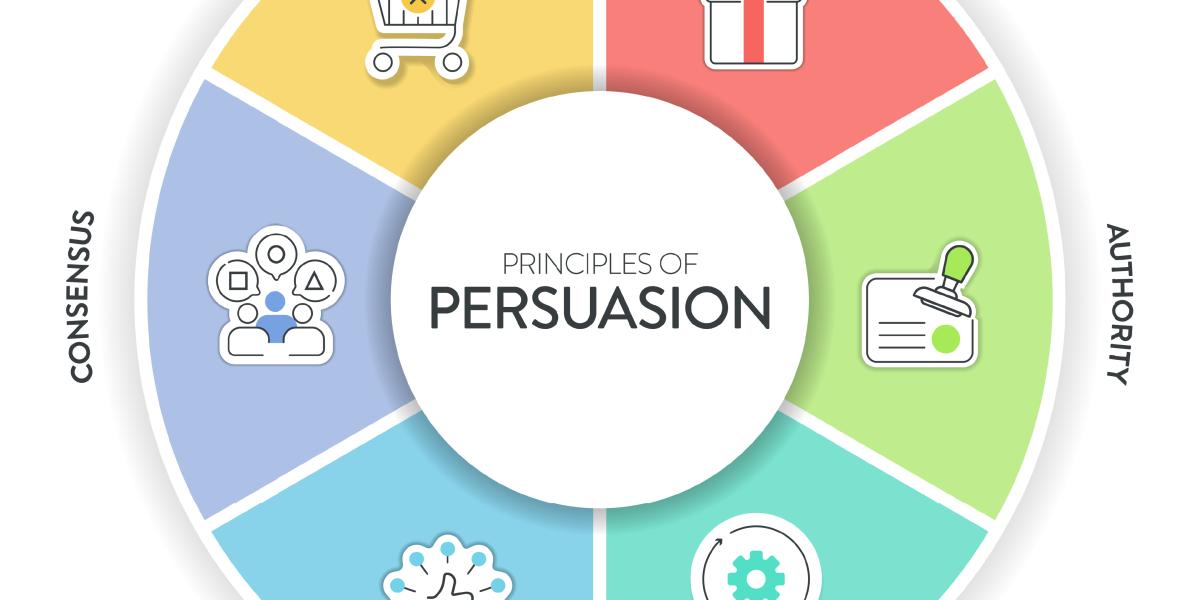
Aristotle described three appeals, known today as the rhetorical triangle. They are ethos, or the credibility of the speaker; pathos, or the values and emotions of the audience; and logos, the reasoning behind the argument. In order to construct an effective argument, all three pillars are required. In the case of socialism the primary argument is that there are two classes—an underclass they refer to as a proletariat and an overclass that refers to the bourgeois—and the reason the proletariat lacks the resources and assets of the bourgeois is because the bourgeois are stealing from them by exploitation. This argument has been discredited time and time again by many great minds. But as an example of using the three appeals to construct a persuasive argument, there’s a lot to learn from Marx’s rhetorical construction.
Marx and Engels both undeniably used ethos to support their argument on behalf of socialism. Their upper-class status and behavior seem hypocritical to us, however, their elite positions would just as likely bolster their ethos to the 19th-century audience. To them, Marx and Engels’s position made them akin to whistleblowers exposing the secrets of their class, which enhanced their credibility rather than damaging it. They understood that credibility is just as much about their audience as it is about their real credentials.
While the ethos of their argument was effective, the most powerful element was pathos. The target emotion of this argumentation was, and still is, envy. Marx was fully aware of the dark threads he was pulling in the hearts of his readers. The living conditions for workers at the time were brutal. Marxism provided a simple reason to explain those harsh conditions and given a target that will stir their envy. Marx provided enough motivation to join a political movement that promised to rectify the reason. It didn’t only work on the poor, as with today, wealthier intellectuals were able to accept the argument made by Marx with a veneer of social charity to hide their own envy toward wealthy industrialists. They targeted emotions and hooked their audiences with an appeal to their personal circumstances, which is highly persuasive on an individual level.
And finally, logos. This is by far the weakest pillar of their argument, and why economists like Mises had the most success dismantling the socialist position. We can see that the content of the argument runs afoul of basic economic concepts—value, time and the role of the capitalist, economic calculation, the knowledge problem, and many others. Marx created a story about how the poor are always exploited by the rich. He pointed at what appeared to be exploitation done by the rich and claimed that the state of the world was the evidence for his logic. The lesson is that even flimsy or oversimplified logic can persuade if it’s backed by strong ethos and pathos.
We can see how most libertarians’ approach persuasion differently, how we almost flip the rhetorical triangle. Where socialists begin with pathos and ethos, libertarians and economists often begin with logos. This makes sense, given a century of debating socialists has shown that logic is the best tool against them. Targeting their weakest point with our strongest has let us win in the arena of debate, but it fails us on other battlefields of persuasion. This style has left our pathos weak and our ethos underdeveloped. To broaden the reach of the movement, arguments should fully leverage all three pillars without ever needing to compromise on the truth.
The first step is to recognize that persuasion begins with the audience, not with abstract principles. That’s the essence of pathos. “Pareto efficiency” doesn’t stir hearts. “Resource misallocation” doesn’t rally anyone. But being able to point to the real cause of crushing medical costs that forces families to choose between financial stability and survival, that is a call to action. Pointing to the zoning board that keeps homes in your town unaffordable, that is a reason to join a movement. We need to reach the hearts of the people and tell them that there are real solutions to the problems they encounter every day.
Once we’ve shown the people we understand their plight, the next step is to show them that we know what we’re talking about. Without going into too much detail, the average person doesn’t hold institutions in high regard, economists in particular have taken a massive credibility hit. It requires us to build credibility the old-fashioned way. The first step is repeatable success. Our ideology doesn’t require large-scale victories, demonstrating how towns or businesses thrive under lower regulation is enough to demonstrate results. The second step is demonstrating knowledge. Succinctly answering questions and providing specific facts signals expertise. With this we can create strong advocates for the positions from people who are affected by these bad policies. The struggle of small business owners and small landlords with regulation gives them firsthand experience, which establishes their credibility.
While facts and logic may be on our side, dropping a dissertation on free markets when someone only vaguely believes that regulations are more helpful than harmful will make you sound out of touch and you’ll lose before the conversation even begins. Being able to determine just how much information is necessary in a conversation to guide someone to the wider philosophy is a skill that takes time to develop.
Lastly, here’s one example of everything in practice—slogans. Socialism has a rich history of slogans: “Not real communism,” “Eat the rich,” “Profit is theft,” being just a few. These aren’t arguments in themselves, but they’re concise hooks that capture ethos, pathos, and logos in a single line. They resonate emotionally, signal alignment with a movement, and serve as shorthand for ideas that can be unpacked in conversation. In debate, slogans act as a shield. Slogans oversimplify your position enough to protect it from immediate attack while inviting deeper discussion.
Libertarianism does have a few good and famous slogans. The one that immediately comes to mind is “Don’t tread on me.” As a slogan, it demonstrates persuasion in action. It has pathos—stirring emotion by evoking the struggle for liberty; it has ethos—by signaling alignment with enduring revolutionary principles; and the logos communicates the rights to life, liberty, and property over which the Revolution began. In one line, it encapsulates ideas that can be unpacked and argued, just like the socialist slogans we discussed. If I were to make one up, it would be a counter-socialist slogan, something like, “Prosperity over envy” or “Thou shalt not steal…even by majority vote.” Its pathos is that we want what’s best for as many people as possible, its ethos is that we understand what drives the desires of our opponent, and its logos lie in our arguments that markets are the best solution to this complex problem.