No Result
View All Result
SUBMIT YOUR ARTICLES
  • Login
Monday, May 11, 2026
TheAdviserMagazine.com
  • Home
  • Financial Planning
    • Financial Planning
    • Personal Finance
  • Market Research
    • Business
    • Investing
    • Money
    • Economy
    • Markets
    • Stocks
    • Trading
  • 401k Plans
  • College
  • IRS & Taxes
  • Estate Plans
  • Social Security
  • Medicare
  • Legal
  • Home
  • Financial Planning
    • Financial Planning
    • Personal Finance
  • Market Research
    • Business
    • Investing
    • Money
    • Economy
    • Markets
    • Stocks
    • Trading
  • 401k Plans
  • College
  • IRS & Taxes
  • Estate Plans
  • Social Security
  • Medicare
  • Legal
No Result
View All Result
TheAdviserMagazine.com
No Result
View All Result
Home Market Research Business

The Super Bowl reveals a dangerous gap in corporate strategy 

by TheAdviserMagazine
3 months ago
in Business
Reading Time: 4 mins read
A A
The Super Bowl reveals a dangerous gap in corporate strategy 
Share on FacebookShare on TwitterShare on LInkedIn


This year’s Super Bowl highlighted a striking reality: companies are willing to spend record sums for cultural relevance they often lack the organizational capability to sustain.

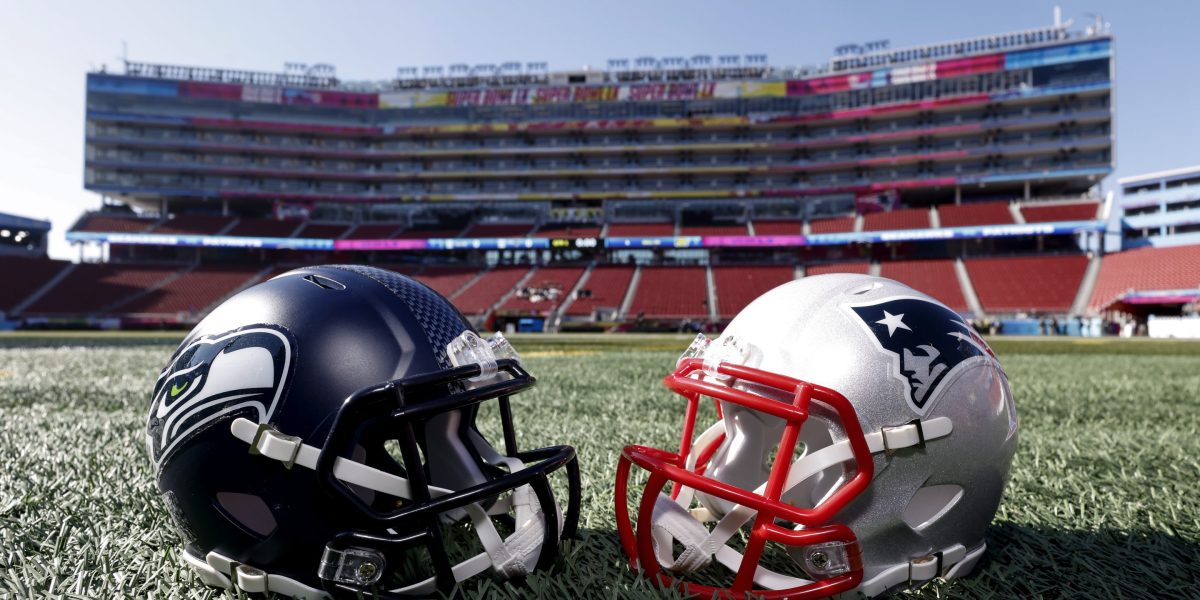
With viewership projected to rival last year’s 127-plus million U.S. audience, yesterday’s Super Bowl LX reinforced the event’s unrivaled power to concentrate mass attention as the Seahawks and Patriots took the field and Bad Bunny delivered a halftime performance engineered to dominate global conversation. Brands paid NBCUniversal as much as $10 million for just 30 seconds of airtime — the most expensive advertising real estate in the world. Roughly 40 percent of advertisers were first-time Super Bowl participants, underscoring how aggressively companies are pursuing cultural visibility — even as many organizations still struggle to translate cultural moments into sustained growth. 

For a few hours, those investments delivered exactly what marketers hoped for: attention, buzz, and viral engagement.

For most companies, however, the days following the Super Bowl reveal a predictable reality. Cultural momentum fades. Sales lift proves temporary. Leadership teams are left asking why the largest marketing stage in the world rarely produces lasting growth.

The answer has little to do with creative quality or breadth of media reach. It reflects a deeper structural problem inside the enterprise itself. Most companies have not built the capabilities required to convert cultural relevance into durable economic value.

For decades, companies believed growth followed a predictable formula: awareness, consideration, conversion. The marketing funnel made markets — and consumers — feel controllable. That era is over.

The infrastructure that supported it — cookies, stable audiences, and linear media consumption — is collapsing. Attention is now fragmented across creators, platforms, communities, and algorithms. Personalization technologies distribute content with extraordinary precision but rarely create shared and sustained demand at scale.

At the same time, trend cycles have accelerated dramatically, reshaping how consumers engage with brands. They engage from anywhere, exit unpredictably, and return only when meaning — not messaging — pulls them back. What has replaced the marketing funnel is something executives still underestimate: culture.

Culture is no longer a marketing input. It has become the operating system for growth.

Consider where investment is already moving. A November 2025 IAB study projects U.S. creator-economy advertising spend will reach $37 billion this year — growing roughly four times faster than overall media spending. Nearly half of major brands now treat creator partnerships as a mandatory channel rather than an experimental one.

This shift reflects a deeper truth. Consumer demand increasingly forms inside cultural ecosystems that compel participation. A tunnel walk during a major sporting event can sell out products in real time. A streaming franchise that integrates brands into characters, storylines, and social conversation can reset brand relevance overnight. A culturally fluent creator can outperform a multimillion-dollar media buy. The impact is already visible. New Balance’s sustained resurgence — fueled by its integration across sport, streetwear, and creator culture — has helped grow the company into a nearly $8 billion global business, roughly doubling revenue since 2020 while dramatically increasing relevance with Gen Z, illustrating how institutionalized cultural strategy can translate directly into sustained market share gains.

The Super Bowl represents the ultimate test of this reality. It remains the largest cultural stage in American commerce. But it also exposes a widening capability gap. Most companies treat cultural moments as campaigns. The companies winning today treat culture as a core enterprise capability. Brands such as New Balance, American Eagle, Gap Inc., Sephora, Liquid Death, and Spotify do not rely on sporadic cultural hits. They design their organizations to consistently sense cultural signals, create culturally resonant experiences, measure impact in real time, and scale demand across product, commerce, and community ecosystems.

This distinction is fast becoming one of the most consequential competitive fault lines in modern markets. Over the past two decades, most corporate transformation efforts have focused overwhelmingly on cost efficiency, scale-driven mergers and acquisitions, and digital modernization. Those initiatives often improved productivity and shareholder returns but left organizations structurally unprepared for markets shaped by fragmented attention, hyper-accelerated trend cycles, and nonlinear demand creation.

Too many companies remain trapped optimizing outdated growth systems designed for stability, predictability, and media scale rather than relevance, agility, and cultural fluency. This disconnect explains why culture has become a CEO-level priority — and why incumbents with strong legacies increasingly struggle to translate brand awareness into sustained growth.

Winning companies are redesigning their operating models around culture as a strategic growth engine. They are collapsing silos between storytelling and performance, brand and commerce, product and go-to-market execution, and between insight and action. Decision-making cycles are shortening. Teams are organized around fandoms, creators, and cultural moments rather than rigid functional structures or media channels. Data and analytics are tracking cultural signals alongside traditional performance metrics. Some companies are even elevating culture and entertainment leadership into the C-suite, reflecting how central these capabilities have become to growth.

Culture ignites attention. Content sparks participation. Creators accelerate credibility. Commerce validates relevance. Communities amplify meaning — and the cycle repeats. This is the new growth engine. It is what I call the Culture Flywheel — where growth compounds through feedback loops, not linear funnels.

Executives who dismiss culture as intangible or uncontrollable are misreading how today’s markets and consumers behave. Cultural signals are among the most powerful early indicators of future demand. But capturing and acting on those signals requires new capabilities, new ways of working across the enterprise, and often new partnerships.

Culture does not replace strategy. It reshapes how strategy is built and executed. Companies that institutionalize cultural relevance increasingly capture sustained market share.

The irony is that cultural advantage is becoming harder — not easier — to replicate. Artificial intelligence is rapidly commoditizing content production and distribution. What remains scarce is institutionalized cultural intelligence: the organizational ability to consistently interpret cultural signals and convert them into scalable business outcomes.

These capabilities cannot be purchased overnight or outsourced indefinitely. They must be deliberately built into how companies operate. In a business environment where traditional competitive advantages are increasingly fragile, culture is emerging as one of the few durable drivers of enterprise value.

The Super Bowl remains the most expensive megaphone in business. The real strategic question is which companies will still be culturally relevant — and commercially advantaged — long after the final whistle.

The opinions expressed in Fortune.com commentary pieces are solely the views of their authors and do not necessarily reflect the opinions and beliefs of Fortune.



Source link

Tags: BowlCorporateDangerousgaprevealsStrategySuper
ShareTweetShare
Previous Post

End-to-end compliance platform for Oracle Fusion ERP users

Next Post

Investing in Silver Coins and Bars as a Passive Income Strategy

Related Posts

edit post
Global Market Today: Asian stocks advance, oil gains on Iran deadlock

Global Market Today: Asian stocks advance, oil gains on Iran deadlock

by TheAdviserMagazine
May 11, 2026
0

Asian stocks climbed as traders stayed bullish on the AI trade even as the US and Iran failed to reach...

edit post
Navy plans to buy 15 costly Trump-class battleships by 2055

Navy plans to buy 15 costly Trump-class battleships by 2055

by TheAdviserMagazine
May 11, 2026
0

The US Navy said it plans to buy at least 15 new battleships endorsed by President Donald Trump over the...

edit post
Does homeowners insurance cover roof leaks?

Does homeowners insurance cover roof leaks?

by TheAdviserMagazine
May 11, 2026
0

In many cases, homeowners insurance will cover roof leaks if they result from a covered peril on your policy, such...

edit post
Trump’s budget cuts are hitting Native American businesses and the rural communities they support

Trump’s budget cuts are hitting Native American businesses and the rural communities they support

by TheAdviserMagazine
May 11, 2026
0

Near Thackerville, Oklahoma, a town on the Texas border with fewer than 500 residents, what started as a small roadside...

edit post
Court delays Sde Dov land lottery due to contamination

Court delays Sde Dov land lottery due to contamination

by TheAdviserMagazine
May 11, 2026
0

The contamination of the land in Tel Aviv’s Sde Dov district is once again delaying of the longest real...

edit post
Early Lenskart investor Alpha Wave trims stake by 2.5% in open market

Early Lenskart investor Alpha Wave trims stake by 2.5% in open market

by TheAdviserMagazine
May 11, 2026
0

One of Lenskart's early institutional investors has pared its stake in the company in open market on Monday. A regulatory...

Next Post
edit post
Investing in Silver Coins and Bars as a Passive Income Strategy

Investing in Silver Coins and Bars as a Passive Income Strategy

edit post
America’s oldest bank spends billions on tech

America's oldest bank spends billions on tech

  • Trending
  • Comments
  • Latest
edit post
Gavin Newsom issues ‘final warning’ amid California’s dire housing crisis — what’s at stake for millions of residents

Gavin Newsom issues ‘final warning’ amid California’s dire housing crisis — what’s at stake for millions of residents

May 3, 2026
edit post
Florida Warning: With Senior SNAP Benefits Averaging 8/Month, Thousands Risk Losing Assistance in 2026

Florida Warning: With Senior SNAP Benefits Averaging $188/Month, Thousands Risk Losing Assistance in 2026

April 27, 2026
edit post
Minnesota Wealth Tax | Intangible Personal Property Tax

Minnesota Wealth Tax | Intangible Personal Property Tax

May 6, 2026
edit post
10 Cheapest High Dividend Stocks With P/E Ratios Under 10

10 Cheapest High Dividend Stocks With P/E Ratios Under 10

April 13, 2026
edit post
Exclusive: America’s largest Black-owned bank launches podcast with mission to unlock hidden shame holding back generational wealth

Exclusive: America’s largest Black-owned bank launches podcast with mission to unlock hidden shame holding back generational wealth

April 29, 2026
edit post
NYC Mayor Mamdani knocked Ken Griffin in pied-a-terre tax promo. His firm calls the move ‘shameful’

NYC Mayor Mamdani knocked Ken Griffin in pied-a-terre tax promo. His firm calls the move ‘shameful’

April 23, 2026
edit post
HELOC and home equity loan rates, Monday, May 11, 2026: HELOC rates close to matching 2026 low

HELOC and home equity loan rates, Monday, May 11, 2026: HELOC rates close to matching 2026 low

0
edit post
Conversations with Frank Fabozzi, CFA, Featuring Sue Brake

Conversations with Frank Fabozzi, CFA, Featuring Sue Brake

0
edit post
Parabolic AI rally has bulls eyeing a comeback for this one-time meme metal trade

Parabolic AI rally has bulls eyeing a comeback for this one-time meme metal trade

0
edit post
Global Market Today: Asian stocks advance, oil gains on Iran deadlock

Global Market Today: Asian stocks advance, oil gains on Iran deadlock

0
edit post
Week 19: A Peek Into This Past Week + What I’m Reading, Listening to, and Watching!

Week 19: A Peek Into This Past Week + What I’m Reading, Listening to, and Watching!

0
edit post
Behavioral science suggests that responding well to education and opportunity may itself be a partly inherited trait — not just a product of good parenting

Behavioral science suggests that responding well to education and opportunity may itself be a partly inherited trait — not just a product of good parenting

0
edit post
Conversations with Frank Fabozzi, CFA, Featuring Sue Brake

Conversations with Frank Fabozzi, CFA, Featuring Sue Brake

May 11, 2026
edit post
Global Market Today: Asian stocks advance, oil gains on Iran deadlock

Global Market Today: Asian stocks advance, oil gains on Iran deadlock

May 11, 2026
edit post
Navy plans to buy 15 costly Trump-class battleships by 2055

Navy plans to buy 15 costly Trump-class battleships by 2055

May 11, 2026
edit post
Michigan Auto Insurance Change: Why Personal Injury Coverage Adjustments Are Raising Premiums This Month

Michigan Auto Insurance Change: Why Personal Injury Coverage Adjustments Are Raising Premiums This Month

May 11, 2026
edit post
How to make the ROI business case for direct tax automation

How to make the ROI business case for direct tax automation

May 11, 2026
edit post
Does homeowners insurance cover roof leaks?

Does homeowners insurance cover roof leaks?

May 11, 2026
The Adviser Magazine

The first and only national digital and print magazine that connects individuals, families, and businesses to Fee-Only financial advisers, accountants, attorneys and college guidance counselors.

CATEGORIES

  • 401k Plans
  • Business
  • College
  • Cryptocurrency
  • Economy
  • Estate Plans
  • Financial Planning
  • Investing
  • IRS & Taxes
  • Legal
  • Market Analysis
  • Markets
  • Medicare
  • Money
  • Personal Finance
  • Social Security
  • Startups
  • Stock Market
  • Trading

LATEST UPDATES

  • Conversations with Frank Fabozzi, CFA, Featuring Sue Brake
  • Global Market Today: Asian stocks advance, oil gains on Iran deadlock
  • Navy plans to buy 15 costly Trump-class battleships by 2055
  • Our Great Privacy Policy
  • Terms of Use, Legal Notices & Disclosures
  • Contact us
  • About Us

© Copyright 2024 All Rights Reserved
See articles for original source and related links to external sites.

Welcome Back!

Login to your account below

Forgotten Password?

Retrieve your password

Please enter your username or email address to reset your password.

Log In
No Result
View All Result
  • Home
  • Financial Planning
    • Financial Planning
    • Personal Finance
  • Market Research
    • Business
    • Investing
    • Money
    • Economy
    • Markets
    • Stocks
    • Trading
  • 401k Plans
  • College
  • IRS & Taxes
  • Estate Plans
  • Social Security
  • Medicare
  • Legal

© Copyright 2024 All Rights Reserved
See articles for original source and related links to external sites.