No Result
View All Result
SUBMIT YOUR ARTICLES
  • Login
Saturday, May 23, 2026
TheAdviserMagazine.com
  • Home
  • Financial Planning
    • Financial Planning
    • Personal Finance
  • Market Research
    • Business
    • Investing
    • Money
    • Economy
    • Markets
    • Stocks
    • Trading
  • 401k Plans
  • College
  • IRS & Taxes
  • Estate Plans
  • Social Security
  • Medicare
  • Legal
  • Home
  • Financial Planning
    • Financial Planning
    • Personal Finance
  • Market Research
    • Business
    • Investing
    • Money
    • Economy
    • Markets
    • Stocks
    • Trading
  • 401k Plans
  • College
  • IRS & Taxes
  • Estate Plans
  • Social Security
  • Medicare
  • Legal
No Result
View All Result
TheAdviserMagazine.com
No Result
View All Result
Home Market Research Business

Patient private capital is needed to help Asia plug its healthcare gaps

by TheAdviserMagazine
3 months ago
in Business
Reading Time: 3 mins read
A A
Patient private capital is needed to help Asia plug its healthcare gaps
Share on FacebookShare on TwitterShare on LInkedIn


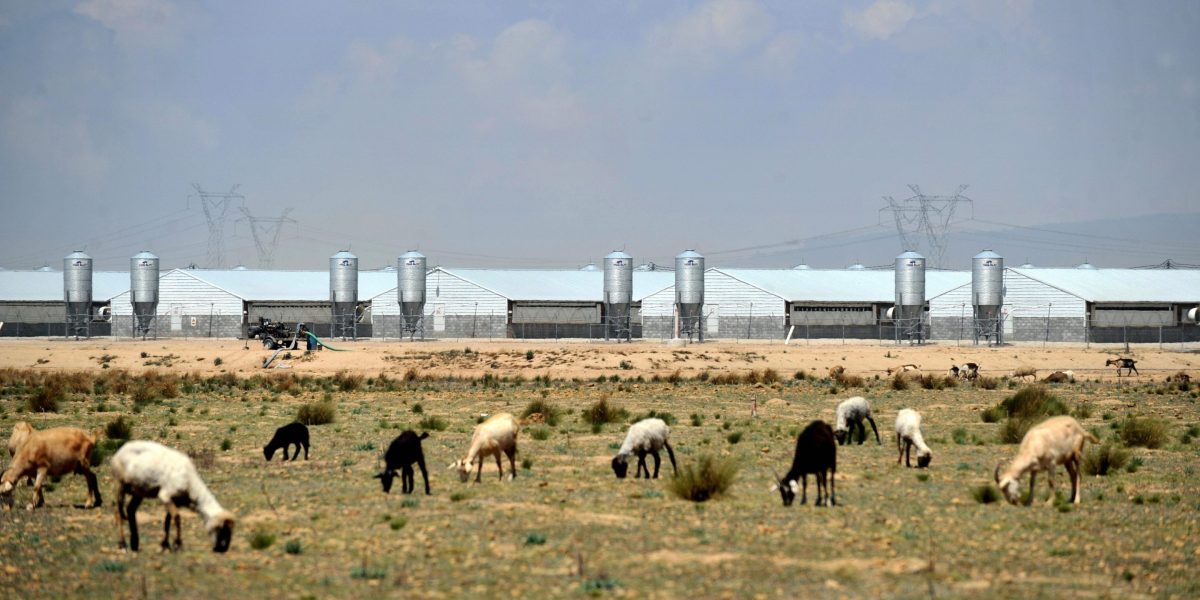
Asia’s healthcare challenges include aging populations, rising disease, and strained infrastructure, but the crisis is better understood at the kitchen table, where families decide what conditions to treat, and what to ignore, according to their savings.

While the APAC region makes up 60% of the world’s population, the region accounts for a mere 22% of global healthcare spending. According to the World Health Organization, most developing Asian countries spend just 2–3% of GDP on health, and in many cases public funding amounts to less than $150 per person annually, compared with more than $4,000 per person under OECD norms. Government procurement bottlenecks add further friction, delaying nearly 40% of major health projects. This means that in practice, families often absorbed costs, doctors improvised, and communities carried the burden.

However, with populations aging faster than incomes are rising, that model is no longer viable. Rising rates of chronic illness demand lifelong care, rather than one-off interventions. At the same time, climate stress amplifies respiratory and waterborne diseases, while wealthier Asians are demanding higher-quality, more dignified healthcare.

Governments have reached the threshold of what public finance alone can deliver. Healthcare is competing with education, defense and infrastructure for scarce public capital. Even the most committed governments can’t expand capacity fast enough.

Private capital will be essential to expanding Asia’s healthcare systems—it can move quickly and deploy patient, flexible funding that enables greenfield projects and scalable platforms.

It brings together the three capabilities the region urgently needs: long-term investment matching the multi-year horizon of healthcare infrastructure, operating discipline that strengthens governance and clinical standards, and system-level scalability that fragmented markets alone cannot achieve.

The case for private capital

Across Asia, most new hospital beds are already financed privately. Dialysis networks, oncology platforms, diagnostic systems, and new pharmaceutical plants exist only because private capital moved faster than public systems.

Asia’s healthcare market is expected to grow to $5 trillion by 2030, driving 40% of the sector’s global growth. Private investors are tapping this opportunity because Asian healthcare is a volume business: profits come not by charging more to fewer people, but by treating more at lower cost. That’s why Asia’s most effective healthcare models are different from those in the West. In Singapore, day‑surgery centers let patients return home within hours, unlike the longer hospital stays common in Western systems. In India and China, digital platforms and national health records cut waiting times and errors, addressing interoperability gaps that still plague many developed systems.

This model requires patient capital: investors willing to reinvest, work alongside clinicians and regulators, and build capacity over time. Closing Asia’s healthcare gap would otherwise require millions of new beds and hundreds of thousands of clinicians, a process that would take decades. Technology and AI therefore become essential levers: boosting diagnostic capacity, reducing unnecessary visits, and extending care into rural and peri-urban areas. Rather than relying solely on scarce human resources, technology brings care closer to the patient.

Healthcare investors should not have to choose between profit and purpose. The more efficiently care is delivered, the more affordable it becomes, the more lives it can positively impact, all while returning profits to investors. Since Quadria’s investment in NephroPlus in May 2024, the dialysis network has added more than 110 centres, improved patient outcomes, strengthened governance and partnerships, and expanded internationally, including receiving approval to open its first centre in Saudi Arabia later this year. Its recent IPO demonstrates that scaling essential healthcare can deliver both measurable health impact and strong investor returns.

Building outcome-focused systems

The question Asia faces is no longer whether private capital should be involved in healthcare. It already is. The real question is whether it will be patient, disciplined and principled enough, and socially aligned enough, to meet the moment.

The risk today is not excessive private capital, but misaligned capital. Too often, long-term healthcare investment is sidelined not because the need is unclear, but because prevailing investment frameworks are poorly suited to healthcare’s realities—long build times, regulatory complexity and returns that compound through outcomes rather than speed.

Governments therefore have a decisive role to play. By de-risking essential healthcare investments, setting clearer market rules and strengthening stewardship, policymakers can crowd in patient private capital and ensure that impact and returns reinforce rather than undermine each other.

In the end, healthcare systems are judged not by ideology, but by outcomes: What they cost people not only in money, but in dignity, time and peace of mind. And by whether, when the bill arrives, it ends a life—or allows one to continue.

The opinions expressed in Fortune.com commentary pieces are solely the views of their authors and do not necessarily reflect the opinions and beliefs of Fortune.

This story was originally featured on Fortune.com



Source link

Tags: AsiaCapitalgapshealthcareneededpatientplugprivate
ShareTweetShare
Previous Post

I grew up in the 70s and didn’t realize these 8 childhood experiences were unusual until I talked to younger generations

Next Post

How CIOs Are Strengthening Data And AI Foundations

Related Posts

edit post
As U.S.-Iran deal nears, Trump ally warns against creating perception Tehran controls Hormuz

As U.S.-Iran deal nears, Trump ally warns against creating perception Tehran controls Hormuz

by TheAdviserMagazine
May 23, 2026
0

President Donald Trump announced Saturday that an agreement to reopen the Strait of Hormuz is near, but a top ally...

edit post
Is Goldman Sachs a Better Buy After Earnings Than Wall Street Thinks?

Is Goldman Sachs a Better Buy After Earnings Than Wall Street Thinks?

by TheAdviserMagazine
May 23, 2026
0

It is shaping up to be a massive year for initial public offerings (IPO). SpaceX recently confirmed that it plans...

edit post
Iran and US near agreement on MOU, as Tehran says Hormuz is part of talks but nuclear issues are not

Iran and US near agreement on MOU, as Tehran says Hormuz is part of talks but nuclear issues are not

by TheAdviserMagazine
May 23, 2026
0

The United States and Iran are close to agreeing on a memorandum of understanding aimed at ending the war, two regional...

edit post
Illegal Immigration Is Down, but Fentanyl Seizures Are Up

Illegal Immigration Is Down, but Fentanyl Seizures Are Up

by TheAdviserMagazine
May 23, 2026
0

The swarm of illegal immigrants crossing into the US has come to a near standstill with strict immigration enforcement making...

edit post
A Klaviyo Director Sold Over 9,000 Company Shares. What Does That Mean for Investors?

A Klaviyo Director Sold Over 9,000 Company Shares. What Does That Mean for Investors?

by TheAdviserMagazine
May 23, 2026
0

Susan St. Ledger, a member of the Board of Directors at Klaviyo, disclosed the sale of 9,334 shares of Series...

edit post
Trump administration to force foreigners to apply for a green card abroad

Trump administration to force foreigners to apply for a green card abroad

by TheAdviserMagazine
May 23, 2026
0

Foreigners in the U.S. who want a green card will need to leave and apply in their home country, the Trump administration announced...

Next Post
edit post
Why “Context Lake” Matters For Agentic AI

Why “Context Lake” Matters For Agentic AI

edit post
Nifty likely to stay firm, 26,000–26,300 key hurdle: Analysts

Nifty likely to stay firm, 26,000–26,300 key hurdle: Analysts

  • Trending
  • Comments
  • Latest
edit post
Supreme Court Delivers More Bad Redistricting News for Democrats

Supreme Court Delivers More Bad Redistricting News for Democrats

May 19, 2026
edit post
From Maine to Michigan, Democrats Are Making Communism Great Again

From Maine to Michigan, Democrats Are Making Communism Great Again

May 16, 2026
edit post
Gavin Newsom issues ‘final warning’ amid California’s dire housing crisis — what’s at stake for millions of residents

Gavin Newsom issues ‘final warning’ amid California’s dire housing crisis — what’s at stake for millions of residents

May 3, 2026
edit post
Florida Warning: With Senior SNAP Benefits Averaging 8/Month, Thousands Risk Losing Assistance in 2026

Florida Warning: With Senior SNAP Benefits Averaging $188/Month, Thousands Risk Losing Assistance in 2026

April 27, 2026
edit post
Minnesota Wealth Tax | Intangible Personal Property Tax

Minnesota Wealth Tax | Intangible Personal Property Tax

May 6, 2026
edit post
10 Cheapest High Dividend Stocks With P/E Ratios Under 10

10 Cheapest High Dividend Stocks With P/E Ratios Under 10

April 13, 2026
edit post
Bitcoin Price Rises Above k as U.S. and Iran Near Deal to Extend Ceasefire

Bitcoin Price Rises Above $75k as U.S. and Iran Near Deal to Extend Ceasefire

0
edit post
Brigette’s 2 Grocery Shopping Trip and Weekly Menu Plan for 6!

Brigette’s $102 Grocery Shopping Trip and Weekly Menu Plan for 6!

0
edit post
Disinformation researchers are suing Marco Rubio — and the mechanism in the complaint matters more than the politics

Disinformation researchers are suing Marco Rubio — and the mechanism in the complaint matters more than the politics

0
edit post
From Seniors to ‘Generation Jones’: Why 2026 Media Outlets Are Shifting Away From the ‘Elderly’ Label

From Seniors to ‘Generation Jones’: Why 2026 Media Outlets Are Shifting Away From the ‘Elderly’ Label

0
edit post
“Big Oil Tax” Proposals: Analysis of Windfall Profits Taxes

“Big Oil Tax” Proposals: Analysis of Windfall Profits Taxes

0
edit post
Mises’s Theory of Nations Applied to Immigration and Borders

Mises’s Theory of Nations Applied to Immigration and Borders

0
edit post
As U.S.-Iran deal nears, Trump ally warns against creating perception Tehran controls Hormuz

As U.S.-Iran deal nears, Trump ally warns against creating perception Tehran controls Hormuz

May 23, 2026
edit post
Is Goldman Sachs a Better Buy After Earnings Than Wall Street Thinks?

Is Goldman Sachs a Better Buy After Earnings Than Wall Street Thinks?

May 23, 2026
edit post
EBT Processing Alert: Why Some Households May See a 48-Hour Delay Before Their Next Scheduled Deposit This Week

EBT Processing Alert: Why Some Households May See a 48-Hour Delay Before Their Next Scheduled Deposit This Week

May 23, 2026
edit post
From Seniors to ‘Generation Jones’: Why 2026 Media Outlets Are Shifting Away From the ‘Elderly’ Label

From Seniors to ‘Generation Jones’: Why 2026 Media Outlets Are Shifting Away From the ‘Elderly’ Label

May 23, 2026
edit post
Bitcoin’s hard-money thesis is colliding with 5% Treasury yields

Bitcoin’s hard-money thesis is colliding with 5% Treasury yields

May 23, 2026
edit post
Iran and US near agreement on MOU, as Tehran says Hormuz is part of talks but nuclear issues are not

Iran and US near agreement on MOU, as Tehran says Hormuz is part of talks but nuclear issues are not

May 23, 2026
The Adviser Magazine

The first and only national digital and print magazine that connects individuals, families, and businesses to Fee-Only financial advisers, accountants, attorneys and college guidance counselors.

CATEGORIES

  • 401k Plans
  • Business
  • College
  • Cryptocurrency
  • Economy
  • Estate Plans
  • Financial Planning
  • Investing
  • IRS & Taxes
  • Legal
  • Market Analysis
  • Markets
  • Medicare
  • Money
  • Personal Finance
  • Social Security
  • Startups
  • Stock Market
  • Trading

LATEST UPDATES

  • As U.S.-Iran deal nears, Trump ally warns against creating perception Tehran controls Hormuz
  • Is Goldman Sachs a Better Buy After Earnings Than Wall Street Thinks?
  • EBT Processing Alert: Why Some Households May See a 48-Hour Delay Before Their Next Scheduled Deposit This Week
  • Our Great Privacy Policy
  • Terms of Use, Legal Notices & Disclosures
  • Contact us
  • About Us

© Copyright 2024 All Rights Reserved
See articles for original source and related links to external sites.

Welcome Back!

Login to your account below

Forgotten Password?

Retrieve your password

Please enter your username or email address to reset your password.

Log In
No Result
View All Result
  • Home
  • Financial Planning
    • Financial Planning
    • Personal Finance
  • Market Research
    • Business
    • Investing
    • Money
    • Economy
    • Markets
    • Stocks
    • Trading
  • 401k Plans
  • College
  • IRS & Taxes
  • Estate Plans
  • Social Security
  • Medicare
  • Legal

© Copyright 2024 All Rights Reserved
See articles for original source and related links to external sites.