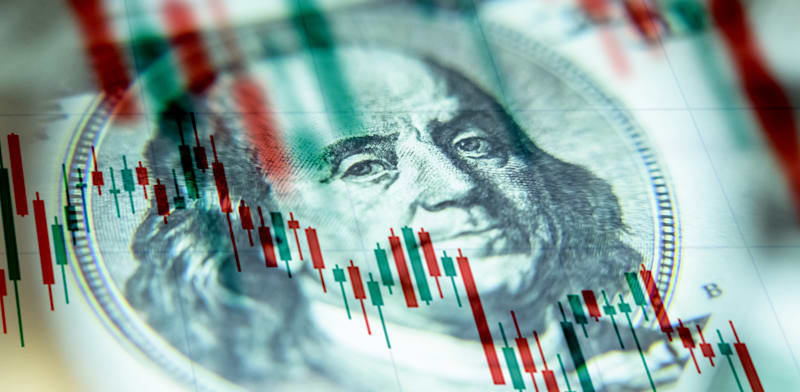
While importers are happy at the fall in the shekel-US dollar exchange rate, which enables them to import products more cheaply, exporters are the biggest losers from the trend – headed by technology companies. They have seen the capital they have raised in the past four years steadily eroded. On a simple calculation, anyone who raised $100 million a year ago has lost $13.5 million of the amount just from the slide in the exchange rate. If the same amount was raised two years ago, the loss is $15.4 million.
The fear: Temporary becomes permanent
Israel’s technology sector employs 10% of the country’s workforce. The companies in the sector account for billions of shekels in receipts from income tax and capital gains tax. Technology companies, many of which are loss-making, raise capital in dollars from foreign investors, while their expenses are in shekels, mostly spent on employing research and development engineers.
Noam Canetti, managing partner at EY Israel, says that the shekel-dollar exchange rate has been fairly volatile over the years, and that in the past decade it has hit several lows, but he says that the current economic environment looks different from the way it was in the past.
“Without external intervention, the shekel-dollar rate could stay permanently low,” he says. “From a macro-economic perspective we are looking at a global process. The dollar has not been eroded only against the shekel, but against the major currencies. Trump’s statements indicate that this may be a strategic move on the part of the US, a move that erodes the US national debt, and raises production and development costs for American companies that operate outside the US, encouraging them to repatriate activities to the US itself.”
According to Canetti, the fact that the Bank of Israel has been in no rush to intervene signals to the market that the process may be prolonged, and perhaps even permanent. “As soon as high-tech companies, which are financed in dollars and mainly sell in dollars for export, assess that this is the new situation, they are forced to revise their financial plans and cut costs.
“It’s true that the low shekel-dollar rate reduces import costs, flights and electrical products, but conversely it considerably reduces the amount of money coming into Israel. When the cash held by high-tech companies that is intended for development and activity in Israel effectively shrinks by 15-20% within a year just because of changes in the exchange rate, that obliges the companies to rethink how many development and operations people they need in Israel, what pay levels will be, and how their expense structure will look. From there, the effect is liable to percolate through to the economy as a whole.”
RELATED ARTICLES
Shekel nears 30-year strongest against US dollar
The low shekel-dollar rate reduces the cash reserves of the high-tech companies, whether it’s money that comes from private capital investment or from sales. That considerably shortens what is known in the industry as the runway, that is, the amount of money available to the companies before they grow sufficiently to be independent, without having to raise private capital again and again in order to be able to sell their products.
The new lows in the exchange rate have caught the technology companies at a sensitive time, when they have to budget for 2026 and make important decisions concerning their growth plans in Israel.
“A low shekel-dollar rate is not necessarily the cause of downsizing or structural changes, but it certainly exacerbates the situation and could be the straw that breaks the camel’s back,” says Adam Fisher, a partner at Bessemer Venture Partners. “If a company planned to hire employees, it will hire fewer of them. If it planned layoffs, there will be more of them. If it was considering starting to hire employees overseas, it will do it faster or on a larger scale. And an international company that is in any case closing offices around the world, and that has a few dozen employees here whose cost of employment has grown by 20% all at once, will perhaps consider shutting down its activity here.”
Although among the casualties are startup companies where the main expenditure is salaries in shekels, the immediate sufferers from the fall in the shekel-dollar rate are public companies listed on Nasdaq. “They have lost the ability to provide stable guidance,” says Fisher. “The capital market is not forgiving towards companies that instantly switch from profits to losses or that struggle to meet their guidance, and it makes no difference whether it stems from exchange rate fluctuations or any other cause.”
If you have been wondering why high-tech companies don’t solve the problem by switching to raising capital in shekels, they can’t really do that. Most companies raise capital by selling shares, which don’t bear interest, to venture capital funds that specialize in this kind of finance. 90% of the funds’ own sources of finance are overseas, with 70% coming in dollars from American investors, generally financial institutions, university funds, or family offices in the US.
Government programs for attracting Israeli financial institutions to investment in venture capital funds have yet to bear fruit. Some of these programs (such as the “section 43” program) have been cancelled, and the Israeli capital invested in Israeli funds and privately-held technology companies is pretty small. Often, particularly in more mature companies and companies listed on Nasdaq, the sales revenue is in any case in dollars, since the US represents the main target market for most of them. The proportion of sales in the US out of all the target markets of the Israeli technology companies is higher than 90%.
Fisher points out that for all the problems with volatile exchange rates, Israeli companies will find it hard to raise capital in shekels. “Israeli high tech is dependent on foreign investors, and for them investment in dollars simplifies their investment policy and saves the need to take currency exposure into account. If you raise money in shekels, you transfer the exposure to a low shekel-dollar rate to the investor, and that reduces his incentive to invest in you from the outset.”
“Not many solutions besides cutbacks”
Yossi Vinitzky, formerly head of high tech at Bank Hapoalim and now a partner in the Late Stage Program at StageOne Ventures, says, “Employee salaries in Israel are among the highest in the world to start with, such that the erosion of the dollar in effect pushes their salary costs up even higher. There aren’t too many solutions to that other than layoffs and transferring jobs overseas – not a move that I recommend or welcome.”
Companies can hedge their currency balances, he says. Currency hedging is a widespread and effective tool, but it is not a permanent solution, and many managers who hedged their currency exposure last year or two years ago are forced to continue to renew their hedging every year at a lower exchange rate to match it to the decline, which entails costs.
Gideon Ben Noon, chairperson of Agio Risk Management, who assists technology companies in hedging their risks from the fall in the exchange rate, cannot recall such a low shekel-dollar rate since the early 2000s, but protests against the fact that “businesses and senior managers think that the trend is one-way downwards,” and says, “The dollar could rise at any moment. Historically it can be expected that this will happen after falls in the Nasdaq index, which is in almost fixed inverse correlation with the shekel-dollar exchange rate.”
Hedging by buying options on a lower shekel-dollar rate can insure a company against sharper falls, but it entails costs that amount to a kind of insurance policy excess (NIS 0.20 per dollar) and an annual commission of 1.25% of the hedged amount. “The recommendation is a mix of types of hedging that includes futures contracts and buying options, in order to reduce risks and costs,” Ben Noon says.
Published by Globes, Israel business news – en.globes.co.il – on February 2, 2026.
© Copyright of Globes Publisher Itonut (1983) Ltd., 2026.