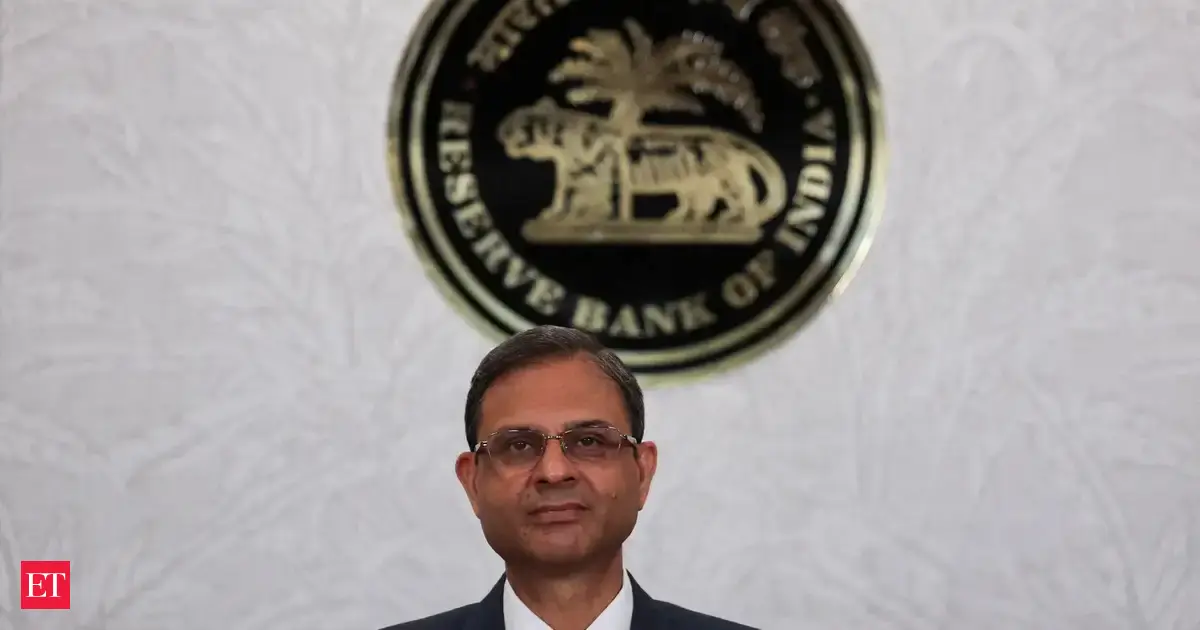
RBI took steps to attract overseas investors into government bonds and equities, provided public sector units time-bound incentives to raise external commercial borrowings (ECB), and agreed to bear the hedging cost on fresh three- to five-year FCNR(B) deposits, among other measures.”As a result of these measures on FCNR(B) and ECBs, and initiatives taken by the government on bonds and trade agreements, we are quite confident of a very healthy balance of payments, compared to what it would have been otherwise,” said RBI governor Sanjay Malhotra at the post-policy press meet.
The central bank revised inflation forecast upward to 5.1%, from 4.6%, and lowered its growth forecast for FY27 to 6.6%, from 6.9% projected in the previous policy.
“Adverse implications of extended disruptions in supply chains and elevated energy prices are reflected in moderation of growth and increase in inflation projections from the April policy,” the governor said, while revising forecasts in his second policy following the West Asia crisis. He stated that “although risks of higher inflation have amplified, the MPC felt it would be prudent to wait for greater clarity to emerge.”

The measures to attract inflows come amid outflows of $13.7 billion by foreign institutional investors from the equity market and are likely to support the rupee, which has fallen 4.1%, or about four rupees, since the start of the US-Iran conflict.Malhotra said he expects strong inflows but declined to put a number to them while adding that he expects banks to pass on the benefits of lower hedging costs to customers. Chairman State Bank of India CS Setty said, “These steps should help enhance capital inflows, deepen bond markets, improve liquidity and provide support to the rupee.”
Soumya Kanti Ghosh, group chief economic adviser, State Bank of India, said the measures would result in a potential capital flow of at least $40 billion, a pullback in the rupee toward 92-93 levels, and a pause in the August policy.
Madhavi Arora, chief economist, Emkay Global Financial Services, expects inflows of $30-50 billion over the year, while Aastha Gudwani, chief economist at Barclays, said the measures could add about $5 billion a month.
Economists said the policy is supportive of growth but has overlooked rising inflation risks. These would stem from higher oil prices following the West Asia crisis.
However, the governor defended the stance, stating that the 4% inflation target is “not in abeyance” and remains “sacrosanct.”
“This target is to be met over a period. It is a medium-term target, and it is not advisable to take action for every small deviation, as that could have disproportionate consequences for growth,” Malhotra said. The governor highlighted that the economy is facing uncertainty over the nature and duration of the conflict, as well as the time needed for the restoration of supplies. He also noted uncertainty around the monsoon and the impact of El Niño, both of which have implications for inflation and growth.
The NSE Nifty 50 index declined 0.21% to 23,366.7. The 10-year government bond yield fell four basis points to close at 6.97%, while the rupee gained 84 paise to close at 94.95 on Friday.
Upasna Bhardwaj, a senior economist at Kotak Mahindra Bank, expects a 50-basis point rate hike in October, while Arora said RBI will raise rates only if inflation becomes entrenched. The governor reiterated that RBI would “look through” shocks unless inflation becomes broad-based and persistent or starts getting embedded in expectations.
On the upward revision in inflation forecasts, RBI said in its statement that the pass-through of higher oil prices could exert upward pressure in the coming months as firms pass on input costs.