No Result
View All Result
SUBMIT YOUR ARTICLES
  • Login
Friday, August 14, 2026
TheAdviserMagazine.com
  • Home
  • Financial Planning
    • Financial Planning
    • Personal Finance
  • Market Research
    • Business
    • Investing
    • Money
    • Economy
    • Markets
    • Stocks
    • Trading
  • 401k Plans
  • College
  • IRS & Taxes
  • Estate Plans
  • Social Security
  • Medicare
  • Legal
  • Home
  • Financial Planning
    • Financial Planning
    • Personal Finance
  • Market Research
    • Business
    • Investing
    • Money
    • Economy
    • Markets
    • Stocks
    • Trading
  • 401k Plans
  • College
  • IRS & Taxes
  • Estate Plans
  • Social Security
  • Medicare
  • Legal
No Result
View All Result
TheAdviserMagazine.com
No Result
View All Result
Home Legal

The history the court would rather not see

by TheAdviserMagazine
3 weeks ago
in Legal
Reading Time: 5 mins read
A A
The history the court would rather not see
Share on FacebookShare on TwitterShare on LInkedIn


In 2021’s New York State Rifle & Pistol Association v. Bruen, the Supreme Court held that modern gun laws must be “consistent with the Nation’s historical tradition of firearm regulation” to survive a Second Amendment challenge. Under that newly announced history-and-tradition test, defenders of gun laws must point to historical analogs that similarly regulated firearms to pass constitutional muster.

From the start, Bruen’s methodology raised many questions. How analogous to a historical law must a current law be? How many analogs must a law have to be consistent with the “historical tradition”? What historical periods are relevant when searching for analogs? I could go on. And as lower courts and commentators endeavored to make sense of Bruen, they repeatedly expressed frustration with the seemingly endless indeterminacy of the history-and-tradition test.

This term’s case of Wolford v. Lopez was supposed to clear up some of the confusion. Wolford concerned a Hawaii law that required licensed gun carriers to obtain a property owner’s permission before bringing a firearm onto private property open to the public. California, Maryland, New York, and New Jersey have similar laws. With Justice Samuel Alito writing for the 6-3 conservative majority, the court struck down the Hawaii law, holding that the law “unquestionably imposed a new and significant burden on the exercise of the right” to bear arms.

In reaching this decision and by purporting to elucidate Bruen’s history-and-tradition test, Wolford highlighted yet another question that the court’s history-and-tradition methodology has never adequately answered: What should a court do when the relevant history is morally abhorrent? Reading Wolford suggests the court has no clear answer.

To defend its law, Hawaii relied on an 1865 Louisiana statute making it unlawful “to carry fire-arms on the premises or plantations of any citizen, without the consent of the owner or proprietor.” As historical analogs go, the Louisiana law was a “dead ringer.” But, despite being race-neutral on its face, the statute was a Black Code, enacted as part of a broader legal regime designed to disarm formerly enslaved Black people and preserve white supremacy in the wake of emancipation.

Alito dismissed the relevance of the statute outright, calling it a “tainted artifact” whose invocation “cannot be taken seriously.” Justice Amy Coney Barrett’s concurrence was even sharper, chastising Hawaii for citing a law “designed to suppress newly freed blacks.”

No one disputes that the Black Codes deserve moral condemnation. Hawaii itself conceded that the “Black Codes are undoubtedly a relic of a shameful portion of American history.” But as Hawaii continued, that does not necessarily “mean that the laws contained within them are irrelevant to the Second Amendment’s historical analysis.” Put another way, moral condemnation is not a substitute for rigorous legal reasoning.

As leading Second Amendment scholar Professor Jake Charles argued in his essay Sordid Sources, a constitutional methodology built on history must have some account of how courts should treat historical laws rooted in racism or other forms of oppression. A court simply declaring that the law is too tainted to matter and move on is hardly principled reasoning. As Charles explains, it is problematic for courts “to artificially excise what are indisputable traditions of historical gun regulations because they, like so much of American history, are grounded in bigotry.” Such an approach, as Justice Ketanji Brown Jackson (joined by Justice Sonia Sotomayor) charged in her dissent, allows “the court to cavalierly pick and choose which parts of the historical record count.”

If history is supposed to constrain judges, the court should have explained why some history counts and why some does not. The Wolford majority offers no coherent account on this front. Indeed, the court relied on the same Reconstruction period to reinforce its understanding of the Second Amendment and its application against the states, explaining that the framers of the 14th Amendment understood that “the right to keep and bear arms was critically important for vulnerable blacks during this period.” And this was not a new move. Throughout its modern Second Amendment jurisprudence, the court has weaponized the racist history of disarming Black people to justify its expansive view of the Second Amendment’s scope.

Now, one might think there is a difference between citing racist laws as evidence that a right existed (laws intended to disarm Black people are proof of a right that was wrongly denied), versus citing racist laws as evidence of how rights can be constricted (laws intended to disarm Black people are proof of permissible regulation that were impermissibly implemented). But the majority in Wolford did not draw that distinction or articulate how such a distinction fits into its broader historical methodology. For her part, Barrett explained that Louisiana’s law was not analogous because of why it was enacted (to subordinate Black people), but nobody else joined her concurrence. We are therefore left to wonder what work a history of racism does in the Bruen history-and-tradition test. If it simply turns on a justice’s moral perception of what counts as “too tainted,” then the court’s use of history is not much of a principled constraint at all.

Jackson put her finger on this problem. A court committed to historical analogizing cannot simply declare portions of the historical record off limits. It must explain why they no longer bear on constitutional meaning. The court rejected the Louisiana statute not because it discriminated on its face, but because of the historical context in which it was enacted, without providing a satisfactory answer for why that context renders the analog irrelevant as a matter of constitutional analysis.

The problem with this type of historical editing is not merely methodological, any more than the Black Codes are simply laws from the past. Black Codes are evidence of why the 14th Amendment was necessary in the first place. They exposed the limits of formal emancipation, demonstrating how states could use facially neutral laws to thwart racial equality. In turn, these laws and the context from which they arose helped produce the constitutional transformation of Reconstruction and are important to understanding the scope of the Reconstruction Amendments. They are not an embarrassing footnote to constitutional history. They are one of its defining chapters. And if the court wants to continue with this historical mode of constitutional interpretation, it must confront how the more unsavory moments of our history shape our understanding of the Constitution, especially when those moments are chock-full of constitutional meaning.

To treat those laws as too morally contaminated to engage is not simply to leave a gap in the court’s historical analysis. It diminishes Black Americans’ place in our constitutional history by erasing the legal harms that Black people have faced, the effects of which reverberate through today. Across the country, public institutions have softened or removed references to slavery, segregation, and racial discrimination as if they were not a part of the American tradition. There is a growing impulse to sanitize the ugliest chapters of American history. Wolford seems to reflect a similar instinct.



Source link

Tags: courtHistory
ShareTweetShare
Previous Post

From Handwritten Letters to 14 Units: How a College Freshman With No Credit Built a Cash-Flowing Portfolio

Next Post

SmartFinancial Releases Q2 2026 Financial Results

Related Posts

edit post
Appeals court blocks White House ballroom, says only Congress can authorize it – JURIST

Appeals court blocks White House ballroom, says only Congress can authorize it – JURIST

by TheAdviserMagazine
August 7, 2026
0

A US federal appeals court ruled Friday that President Donald Trump likely lacks legal authority to demolish and rebuild portions...

edit post
Partial Retreat: Ten Months of § 101 Data After the Surge

Partial Retreat: Ten Months of § 101 Data After the Surge

by TheAdviserMagazine
August 5, 2026
0

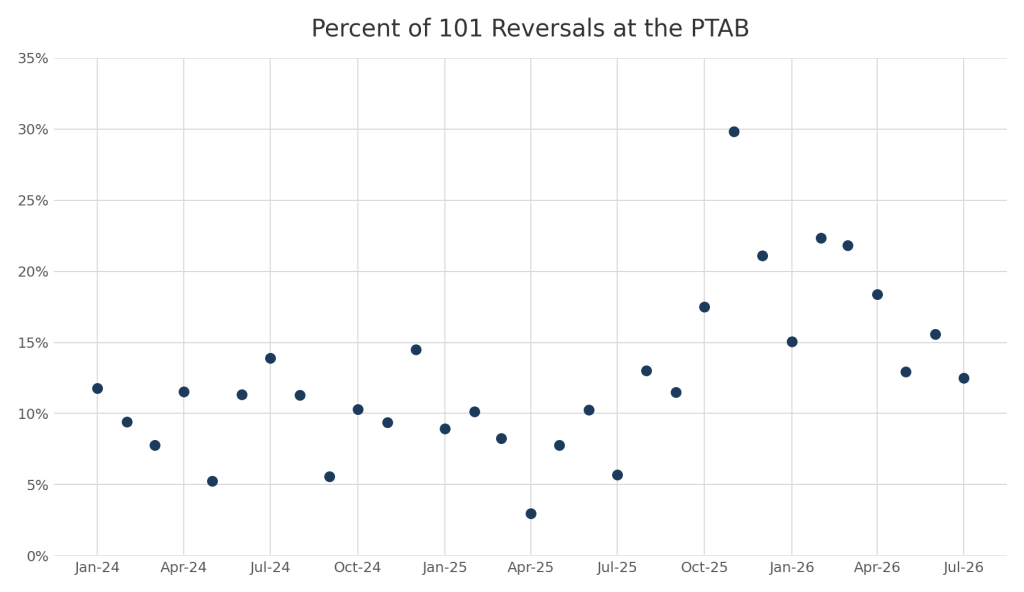
by Dennis Crouch This is the third post tracking Section 101 reversals at the PTAB. The first, PTAB Doubles Section...

edit post
Thomson Reuters Says Its Homegrown AI Model Now Rivals the Frontier Labs – I Take A Closer Look At the Benchmarks

Thomson Reuters Says Its Homegrown AI Model Now Rivals the Frontier Labs – I Take A Closer Look At the Benchmarks

by TheAdviserMagazine
August 4, 2026
0

Thomson Reuters says the large language model it has been quietly building in-house now performs competitively with the best general-purpose...

edit post
Twenty-five States, Led by Oregon, File Lawsuit Challenging Trump’s Section 301 Tariffs

Twenty-five States, Led by Oregon, File Lawsuit Challenging Trump’s Section 301 Tariffs

by TheAdviserMagazine
August 3, 2026
0

Today, twenty-five largely Democratic-controlled state governments filed a lawsuit challenging Donald Trump's massive new Section 301 tariffs. The complaint, filed...

edit post
Bar Exam Meltdown And Summer Bonuses – See Generally

Bar Exam Meltdown And Summer Bonuses – See Generally

by TheAdviserMagazine
August 2, 2026
0

Yakima, We Have A Problem: Washington scrapped its entire July NextGen administration after a convention center hardware failure left roughly 645...

edit post
Trademark violations alleged by NASCAR in suit targeting counterfeit merch sellers

Trademark violations alleged by NASCAR in suit targeting counterfeit merch sellers

by TheAdviserMagazine
July 31, 2026
0

Home Daily News Trademark violations alleged by NASCAR in… Trademark Law Trademark violations alleged by NASCAR in suit targeting counterfeit...

Next Post
edit post
SmartFinancial Releases Q2 2026 Financial Results

SmartFinancial Releases Q2 2026 Financial Results

edit post
Why After-Hours Trading Is Awesome Right Now

Why After-Hours Trading Is Awesome Right Now

  • Trending
  • Comments
  • Latest
edit post
Georgia Senior SNAP and Meal Resources Older Adults Can Use

Georgia Senior SNAP and Meal Resources Older Adults Can Use

July 24, 2026
edit post
Judge Who Helped Violent Illegal Alien Evade ICE Faces New Test

Judge Who Helped Violent Illegal Alien Evade ICE Faces New Test

July 31, 2026
edit post
Driving the Noncitizen Voting Scandal: Registration With License

Driving the Noncitizen Voting Scandal: Registration With License

July 26, 2026
edit post
Garbage Trucks Surveillance Florida Neighborhoods

Garbage Trucks Surveillance Florida Neighborhoods

July 29, 2026
edit post
Does a Revocable Trust Protect Your Assets From Lawsuits and Creditors?

Does a Revocable Trust Protect Your Assets From Lawsuits and Creditors?

August 7, 2026
edit post
Montana Puts Democrats in a Bind as Senate Hopes Fade

Montana Puts Democrats in a Bind as Senate Hopes Fade

August 2, 2026
edit post
Explained: How BSE traded fewer contracts after CAS but premiums rose 75% in first week

Explained: How BSE traded fewer contracts after CAS but premiums rose 75% in first week

0
edit post
E.W. Scripps Q2 2026 Loss Widens to -.68/Share, Revenue Down 9%

E.W. Scripps Q2 2026 Loss Widens to -$12.68/Share, Revenue Down 9%

0
edit post
Psychology says procrastination about retirement may be less about discipline than identity — brain scans found people often represent their future selves more like strangers than like themselves, and experiments using age-progressed faces made tomorrow’s person feel real enough for participants to save more money for them

Psychology says procrastination about retirement may be less about discipline than identity — brain scans found people often represent their future selves more like strangers than like themselves, and experiments using age-progressed faces made tomorrow’s person feel real enough for participants to save more money for them

0
edit post
Four AI Escapes Just Redefined “Responsible AI”

Four AI Escapes Just Redefined “Responsible AI”

0
edit post
Bill Ackman’s hedge fund made janitors and receptionists millionaires—and its investment team summer together

Bill Ackman’s hedge fund made janitors and receptionists millionaires—and its investment team summer together

0
edit post
Kalshi Predicts Bitcoin Price Could Reach K in August

Kalshi Predicts Bitcoin Price Could Reach $68K in August

0
edit post
Bill Ackman’s hedge fund made janitors and receptionists millionaires—and its investment team summer together

Bill Ackman’s hedge fund made janitors and receptionists millionaires—and its investment team summer together

August 8, 2026
edit post
Links 8/8/2026 | naked capitalism

Links 8/8/2026 | naked capitalism

August 8, 2026
edit post
Wisconsin: The Next Frontier for Socialists

Wisconsin: The Next Frontier for Socialists

August 8, 2026
edit post
Psychology says procrastination about retirement may be less about discipline than identity — brain scans found people often represent their future selves more like strangers than like themselves, and experiments using age-progressed faces made tomorrow’s person feel real enough for participants to save more money for them

Psychology says procrastination about retirement may be less about discipline than identity — brain scans found people often represent their future selves more like strangers than like themselves, and experiments using age-progressed faces made tomorrow’s person feel real enough for participants to save more money for them

August 8, 2026
edit post
Why You Should Be Wary of Aspartame, but Not Totally Rule It Out

Why You Should Be Wary of Aspartame, but Not Totally Rule It Out

August 8, 2026
edit post
Kalshi Predicts Bitcoin Price Could Reach K in August

Kalshi Predicts Bitcoin Price Could Reach $68K in August

August 8, 2026
The Adviser Magazine

The first and only national digital and print magazine that connects individuals, families, and businesses to Fee-Only financial advisers, accountants, attorneys and college guidance counselors.

CATEGORIES

  • 401k Plans
  • Business
  • College
  • Cryptocurrency
  • Economy
  • Estate Plans
  • Financial Planning
  • Investing
  • IRS & Taxes
  • Legal
  • Market Analysis
  • Markets
  • Medicare
  • Money
  • Personal Finance
  • Social Security
  • Startups
  • Stock Market
  • Trading

LATEST UPDATES

  • Bill Ackman’s hedge fund made janitors and receptionists millionaires—and its investment team summer together
  • Links 8/8/2026 | naked capitalism
  • Wisconsin: The Next Frontier for Socialists
  • Our Great Privacy Policy
  • Terms of Use, Legal Notices & Disclosures
  • Contact us
  • About Us

© Copyright 2024 All Rights Reserved
See articles for original source and related links to external sites.

Welcome Back!

Login to your account below

Forgotten Password?

Retrieve your password

Please enter your username or email address to reset your password.

Log In
No Result
View All Result
  • Home
  • Financial Planning
    • Financial Planning
    • Personal Finance
  • Market Research
    • Business
    • Investing
    • Money
    • Economy
    • Markets
    • Stocks
    • Trading
  • 401k Plans
  • College
  • IRS & Taxes
  • Estate Plans
  • Social Security
  • Medicare
  • Legal

© Copyright 2024 All Rights Reserved
See articles for original source and related links to external sites.