Why overlooked payroll processes can expose businesses to costly compliance failures
Highlights
Payroll errors often stem from fragmented processes, outdated systems, and inconsistent data handling.
Noncompliance can trigger penalties, audits, and reputational damage far beyond simple administrative mistakes.
Proactive controls and standardized workflows are essential to reduce risk and maintain regulatory confidence.
Payroll may still be treated inside organizations as a routine back-office function, but the official data around it tell a more consequential story. In its latest Data Book, the IRS said it collected more than $5.1 trillion in gross taxes in fiscal 2024, while individual income tax withheld and tax payments together totaled almost $2.8 trillion before refunds — making payroll administration one of the most direct pressure points in the federal revenue system. For organizations that treat payroll as a low-priority process, payroll compliance risks can accumulate quietly and surface at significant cost.
The compliance stakes remain significant. The IRS’s latest tax-gap projection estimates a $696 billion gross tax gap for tax year 2022, including $127 billion attributable to employment taxes, with an 85.0% voluntary compliance rate. In a February 2026 report, the Government Accountability Office said the IRS had processed nearly 5 million Employee Retention Credit claims as of June 2025 and found that aspects of the credit’s design and administration increased complexity and improper payment risk.
Payroll departments are also operating in a more exposed risk environment. The IRS continues to warn businesses and payroll service providers about W-2/SSN data-theft schemes that impersonate executives to obtain employee information, and the agency’s 2026 “Dirty Dozen” scam list highlighted AI-enabled IRS impersonation by phone as an emerging threat.
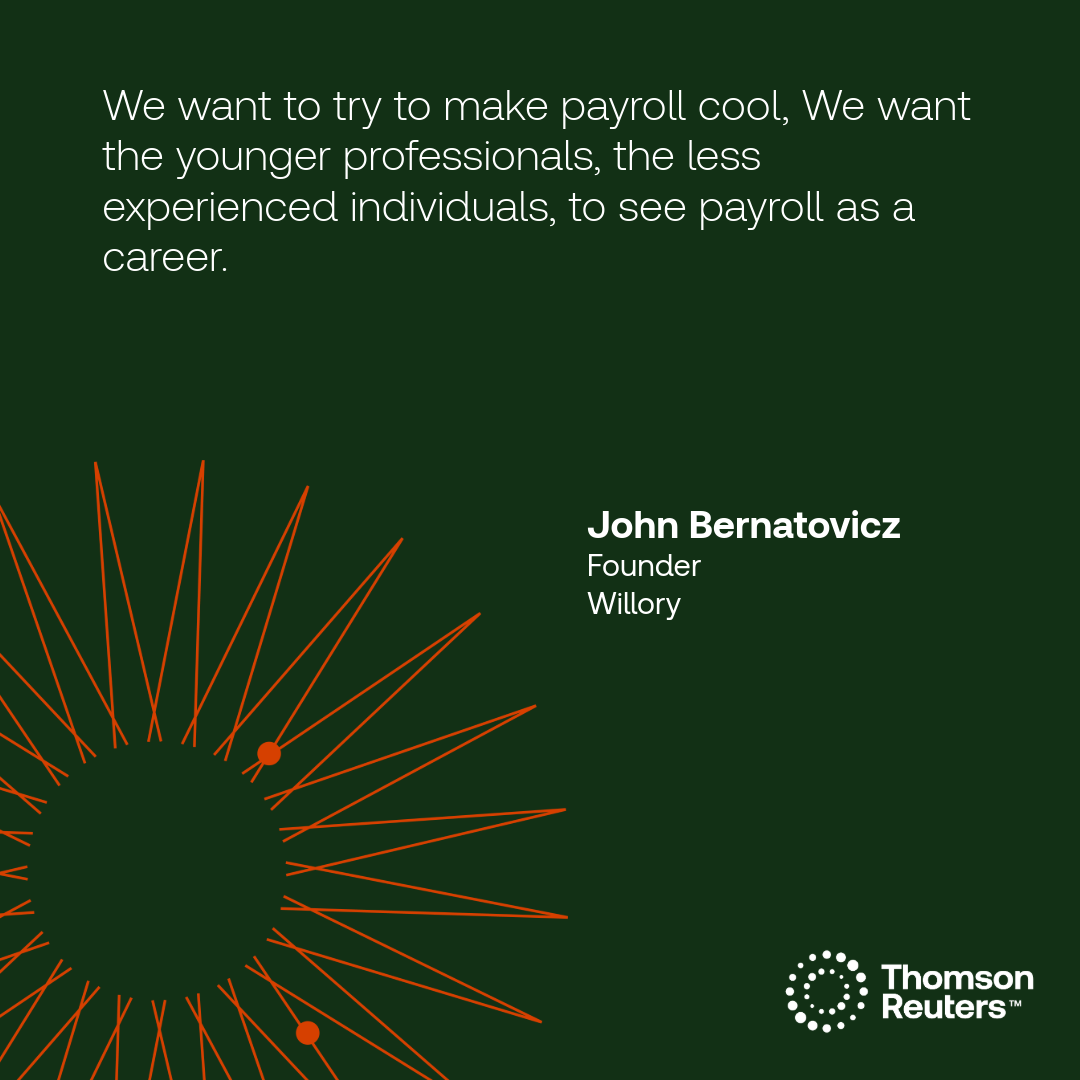
Against that backdrop, John Bernatovicz, founder of Willory, an HR/payroll consulting firm, and co-author of “Payroll Like a Boss,” said the profession is still constrained by assumptions that limit its influence. “The number one misperception about payroll is that it’s easy,” he told Checkpoint News. “And that’s dangerous.”
Jump to ↓
Why “easy” perceptions increase payroll compliance risk
From processing to ownership of compliance risk
Telling the payroll risk story with data
Payroll’s talent cliff
Technology can strengthen payroll compliance — and expose it
A payroll leadership shift for 2026
Payroll leadership checklist for 2026
Why “easy” perceptions increase payroll compliance risk
Bernatovicz said payroll’s apparent simplicity is often the result of work that outsiders never see. “There’s a lot of hardworking payroll professionals that make it look easy,” he said, describing teams that work after hours and on weekends to ensure people are paid accurately and on time. “They tirelessly spend time after hours on weekends making sure that people get paid because they have a strong responsibility.”
In his view, that perception carries structural consequences. When payroll is seen only as a processing function, the underlying payroll compliance risks — from wage errors to reporting failures — become easier to underestimate and harder to resource. Investment in staffing, training, systems, and strategic involvement can fall behind. Errors and downstream costs also accumulate without visibility. The Labor Department said its Wage and Hour Division recovered more than $259 million in back wages for nearly 177,000 workers in fiscal year 2025, an average of $1,465 per worker, while the IRS says employers can face information-return penalties of up to $340 per form for late or incorrect filings and $680 for intentional disregard. The Social Security Administration also urges employers to use its AccuWage Online tool to catch wage-file formatting problems before submission, warning that errors can trigger rejected files, rework, and delays.
Bernatovicz said that is why payroll’s “easy” label is more than a misunderstanding. “Executive leaders lack the prioritization of the payroll resources and what they do to make sure that it’s a non-event every week for people to get paid,” he said.
From processing to ownership of compliance risk
For Bernatovicz, the dividing line between transactional payroll and strategic payroll is ownership. “You’ve got to land the plane every week, and it’s got to be accurate and timely,” he said. “Those are the table stakes.” The shift comes when payroll leaders look beyond run-the-cycle execution and start asking how payroll can influence broader outcomes — and how actively managing payroll compliance risks can itself become a source of organizational credibility.
That means using payroll’s data position more deliberately — not just to reconcile wages and taxes, but to inform labor spending, workforce planning, scheduling, expansion, and service to employees. Bernatovicz said payroll leaders should ask how to better leverage technology, improve employee service, strengthen vendor partnerships, and use compensation and workforce data to help managers make more informed decisions. “They have access to the largest indirect expense inside of any business,” he said. “How can they use that data back to the owners of departments and help them make business decisions?”
That argument is supported by broader labor-cost data. In the BLS’s latest Employer Costs for Employee Compensation release, private-industry employer compensation costs averaged $46.15 per hour worked in December 2025, with wages and salaries accounting for 70.1% of that total and benefits accounting for 29.9%. Compensation costs for private-industry workers also increased 3.4% over the 12 months ending in December 2025, showing that labor-related costs remain both substantial and persistent. Bernatovicz said this makes payroll more relevant to leadership than it is often given credit for.
Telling the payroll risk story with data
If payroll has one underused asset, Bernatovicz said, it is credibility built through numbers. “Payroll professionals want to keep a low profile,” he said, noting that many are naturally reluctant to call attention to themselves even when the function is performing at a high level. “They don’t want to sell themselves. They don’t want to promote the good things that they’ve done.”
His advice is not to become louder, but more deliberate. Payroll leaders can tell a clearer story by translating their work into business terms: accuracy, on-time pay, error reduction, labor-cost insight, employee service, and compliance improvement. That includes being able to communicate clearly when payroll compliance risks have been identified, managed, or avoided — outcomes that carry direct financial and legal consequences for the business. “You’re just telling a story with company information,” he said. “It’s really not your voice. You’re just telling a story with company data.”
That approach also aligns with where payroll is headed more broadly. ADP’s 2025 global payroll survey, based on 1,825 payroll leaders in 20 countries, found growing emphasis on automation, integration, employee experience, and strategic use of payroll data. PayrollOrg also described its 2025 Payroll Industry Report as a broad benchmark of payroll staffing, processes, systems, and career trends, based on responses from more than 1,700 payroll professionals.
Bernatovicz said payroll professionals do not need to become marketers to gain influence. “I think them stepping out and expressing those data points is a keen way for someone to be viewed as a strategic partner of the business,” he said.
Payroll’s talent cliff
Bernatovicz said one of payroll’s biggest long-term risks is not legislative change or software, but the profession’s own workforce. “There’s a major age demographic issue in payroll,” he said. “There’s too big of a disparity between the number of people that are at the tail end of their career than the number of people that are just beginning their career.”
If that gap is not addressed, he added, “employers won’t be able to make paychecks right” — and unaddressed payroll compliance risks will grow alongside it, as institutional knowledge leaves and newer staff face steeper learning curves.
PayrollOrg’s 2025 industry report and a February 2026 PayTalk episode described the generational talent gap as “one of the most critical challenges facing the payroll industry,” focusing on how to attract younger workers while preserving the institutional knowledge of retiring practitioners. PayrollOrg’s 2025 global “Getting the World Paid” survey also identified hiring skilled payroll talent as one of payroll’s key challenges, alongside compliance and poor-quality data.
The broader labor-force data point in the same direction. Census Bureau research says workers ages 55 and older were the fastest-growing age group in the labor force for more than two decades and made up 24% of the U.S. workforce in 2022, up from 10% in 1994. At the same time, the Census Bureau found that employment at firms where at least one-quarter of workers are over age 55 rose from 13 million in 2006 to 35 million in 2022.
The pipeline behind them is thinner. The Bureau of Labor Statistics projects the labor force participation rate for workers ages 16 to 24 will decline from 55.9% in 2024 to 53.6% in 2034, while that age group’s share of the labor force is projected to fall as well. In a separate youth employment release, BLS said the share of 16- to 24-year-olds employed in July 2025 fell to 53.1% from 54.5% a year earlier, while youth unemployment rose to 10.8% from 9.8%.
Bernatovicz said the answer is not simply to wait for technology to fill the gap. “We do need AI to advance itself inside of payroll because there’s just not enough people to be able to process payroll at the clip that it currently is done,” he said. But he added that payroll still depends on judgment and operational follow-through that software cannot easily replace. “I don’t think AI is paced fast enough.” He said that is one reason he and co-author Tammy Gillenwater wanted the book to speak to a younger audience.
Technology can strengthen payroll compliance — and expose it
Bernatovicz said technology is essential to payroll’s next stage, but it is not risk-free. On the operational side, he sees growing importance in workforce analytics, workforce management, and tools that help employers better understand scheduling, overtime, labor distribution, and employee experience. “There’s a big pivot into workforce management, workforce analytics,” he said. “Let’s use the data to make informed decisions about who should be working when and building schedules.”
That direction is consistent with current payroll research. ADP’s 2026 global payroll survey said 72% of organizations are exploring ways to run payroll with fewer people, while one-third are currently using AI to support payroll processes and 41% want their teams to spend more time on compliance oversight. At the same time, 70% of organizations reported experiencing a payroll-related cybersecurity incident in the past two years — a sharp reminder that technology adoption and payroll compliance risks move together, and that data protection must be part of any modernization plan.
The IRS has also continued to warn that payroll teams remain prime targets for fraud. Its W-2/SSN data-theft guidance says cybercriminals use spoofed messages that appear to come from executives and are sent to payroll or HR staff requesting employee W-2 data. The IRS’s 2026 Dirty Dozen list separately warned about AI-enabled impersonation by phone and other evolving phishing tactics.
Bernatovicz said payroll leaders need to understand both sides of that shift. “It’s an easy thing to spoof a payroll manager,” he said. But he also argued that payroll cannot afford to stand still. The challenge is using automation and AI to take pressure off already stretched teams while keeping strong human controls around sensitive processes and exceptions.
A payroll leadership shift for 2026
Asked what payroll leaders should do next, Bernatovicz did not start with software or compliance. He started with mindset. “I would love for payroll professionals to become a little bit more selfish,” he said, referring not to ego, but to self-preservation, confidence, and sustainability in a profession defined by constant deadlines and limited recognition. “I’d like for them to take care of themselves, their mindset, their physical well-being, their belief in themselves. So, then they can start to tell the story of the impact that they have.”
For Bernatovicz, that story should not be loud or self-congratulatory. It should be grounded in the same traits that define the profession at its best: accuracy, discipline, and trust. “I think we would be better as a community and as a profession if we prioritized ourselves a little bit and started to tell our story in the way that payroll professionals would do it,” he said, “which would be non-braggadocious, it would be data-driven, it would be factual, and it would be with a quiet level of confidence.”
That, ultimately, is the argument at the center of Payroll Like a Boss: payroll leaders should not stop at executing the process. They should be willing to own the outcome — including the compliance risks that come with it — and to explain, clearly and confidently, why that work matters.
Key takeaways
Payroll sits much closer to the center of tax administration than many organizations recognize, with the IRS collecting more than $5.1 trillion in gross taxes in FY 2024 and nearly $2.8 trillion in individual income tax withheld and payments before refunds.
Payroll’s “easy” reputation hides real payroll compliance risks, including DOL back-wage recoveries, IRS information-return penalties, and SSA wage-reporting correction burdens.
Strategic payroll leadership begins after accurate, timely payroll is achieved, not before. Bernatovicz calls that baseline “table stakes.”
Payroll data can support wider business decisions because wages and salaries account for 70.1% of private-industry employer compensation costs in the latest BLS data.
The profession faces a real talent challenge, with PayrollOrg and broader labor-force data both pointing to an aging workforce and a thinner pipeline of younger workers.
Technology is both a force multiplier and a risk vector, especially as payroll teams face AI-enabled fraud, W-2 phishing, and cybersecurity pressures while trying to automate more work.
Payroll leaders need to communicate their value more clearly, using data-driven narratives that connect payroll outcomes to cost, compliance, and employee trust.
Payroll leadership checklist for 2026
Elevate visibility:
Report payroll accuracy, timeliness, and exception trends in a format leadership can easily understand.
Translate payroll results into business terms such as labor cost, employee service, and compliance impact.
Use data more strategically:
Review payroll data for overtime trends, scheduling inefficiencies, and labor-cost outliers.
Bring payroll into discussions involving hiring, expansion, and workforce planning.
Strengthen compliance and risk controls:
Review W-2 data-sharing protocols and phishing-response procedures with payroll and HR teams.
Confirm processes for timely and accurate information-return filing and wage-file validation.
Conduct a regular audit of payroll compliance risks — including classification, overtime, and reporting accuracy — before they become penalties.
Prepare for the talent cliff:
Document key payroll procedures and decision points before institutional knowledge walks out the door.
Build succession, mentoring, and cross-training plans for critical payroll roles.
Invest in leadership:
Develop a concise, data-based narrative about payroll’s value inside your organization.
Put sustainability, confidence, and professional development on the agenda alongside compliance.
For more up-to-date insights and expertise-backed resources, heck out our

Subscribe to our newsletter!
Stay up to date with the latest tax and accounting news, featuring exclusive content from Checkpoint.
Redeem offer ↗

Want more payroll content?
Stay in the know with the latest news and insights from Thomson Reuters and Checkpoint.
Access payroll hub ↗