Updated for tax year 2025.
Sometimes, life throws you a curveball, and you’re suddenly staring at a tax form you’ve never seen before — like IRS Form 1099-LS. Let’s look at why a 1099-LS form appeared in your mailbox this tax year and what to do with it when filing your taxes.
At a glance:
Form 1099-LS reports the sale of a life insurance policy (which differs from receiving tax-free death benefits), but receiving the form doesn’t always mean you owe taxes.
If your proceeds exceed your tax basis, they may be taxed as ordinary income or capital gains.
What is Form 1099-LS?
You may get Form 1099-LS, Reportable Life Insurance Sale, if you sell or transfer your life insurance contract to another party, such as a life settlement provider or insurance company. Sometimes, this has tax implications.
Under current 1099-LS requirements, if you sell to a buyer who doesn’t have a substantial family, business, or financial relationship with the person insured (other than an interest in the policy), it results in a reportable policy sale. This means the acquirer (the buyer) files Form 1099-LS with the Internal Revenue Service (IRS) and sends you Copy B. The form tells the IRS how much you were paid and when the sale occurred.
Form 1099-LS scenarios
To better understand this tax form, let’s examine some examples that may trigger Form 1099-LS.
Life settlement: You sell your life insurance policy to a life settlement company or another insurance company for cash. After the sale, the buyer sends you Form 1099-LS to document the transaction.
Viatical settlement (terminal illness sale): You are diagnosed with a terminal illness and sell your life insurance policy to a viatical settlement provider in exchange for a cash payment. The provider sends you Form 1099-LS to report the transaction.
Transferring a policy: You transfer a life insurance policy in a sale that qualifies as a reportable policy sale — for example, transferring to a third-party buyer rather than someone with whom you have a substantial relationship, such as a family member or business partner. The acquirer files Form 1099-LS and sends you a copy.
Note: Receiving Form 1099-LS does not always mean you owe taxes. For example, if you’re terminally or chronically ill and sell to a licensed viatical settlement provider, the proceeds may be excluded from income. We go over how and when life insurance settlements are taxed in the next section.
How life insurance settlements are taxed
Note that 1099 forms are only IRS information returns, and cashing out a life insurance policy doesn’t automatically mean you owe taxes.
As the seller of the policy, you may also receive IRS Form 1099-SB, Seller’s Investment in Life Insurance Contract, from the life insurance issuer (or broker). Form 1099-SB will have details about your cost basis in the contract and the settlement amount. You can use this form along with your 1099-LS form to figure out whether the sale created taxable income.
Here’s how life settlement tax treatment generally works:
Tax tip: The IRS has a useful online tool to help you determine whether life insurance proceeds are taxable. TaxAct® can also help you determine when and how to report 1099-LS proceeds when you file with us.
Example of Form 1099-LS
Here’s a 1099-LS form example. As the payment recipient, you should receive recipient Copy B (the acquirer sends Copy A to the IRS, and Copy C goes to the issuer of the contract):
On this form, you’ll find:
The recipient’s name and contact info: The form will include your taxpayer identification number (TIN), name, and contact information. Your TIN is often your Social Security number (other examples include your EIN or ITIN).
The acquirer’s information: This is the entity that bought your policy — you’ll see the acquirer’s TIN and contact info on the form as well.
Policy details: Information about the life insurance policy, including the policy number.
Amount paid to payment recipient (Box 1): This is the amount the buyer paid for the policy.
Date of sale (Box 2): The specific date of the sale when the buyer bought the policy from you.
Instructions for Form 1099-LS
Now that you’ve got your 1099-LS form in hand, it’s time to figure out what to do with it. Here’s what you need to do:
Review the information: Double-check that your name, TIN, policy number, Box 1 amount, and Box 2 date are correct. If something looks off, contact the acquirer listed on the form.
Determine if you have a taxable event: The 1099-LS form details the sale of a life insurance policy, which could have tax implications (but not always). If the proceeds need to be reported, TaxAct can help you do so when you e-file with us.
Consult a tax professional: Viatical settlements, capital losses, and mixed ordinary and capital gain amounts can get tricky fast. If this all sounds a bit too complex, don’t hesitate to consult a tax expert or use tax preparation software like TaxAct, which can guide you through the reporting process step-by-step.
FAQs about Form 1099-LS
How to file Form 1099-LS with TaxAct
Filing taxes often feels like running a marathon, but TaxAct can help you cross the finish line. Here’s how you can file your 1099-LS form with TaxAct:
To report ordinary income from 1099-LS
Classic view
Click Federal in the left navigation.
On the Federal Quick Q&A Topics screen, click Other Income to expand the category.
Click Prizes, awards or other miscellaneous income as shown below.
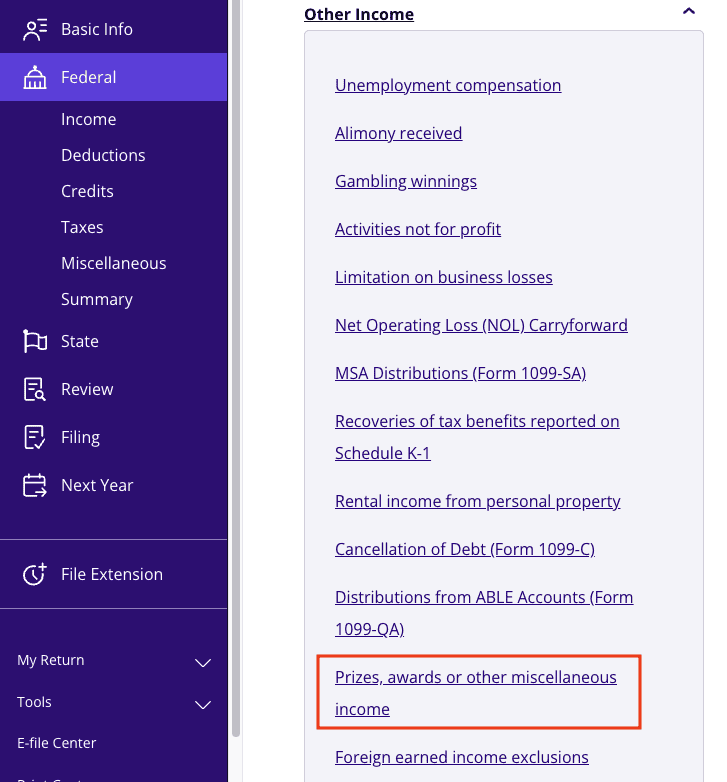
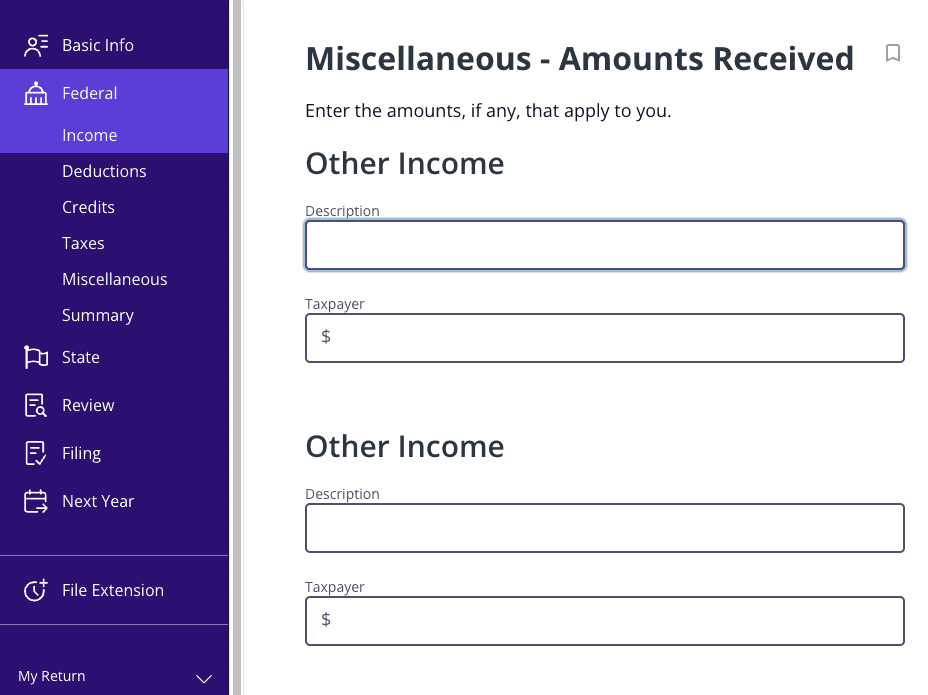
4. Enter the amount and description in one of the two Other Income lines as shown below.
Dashboard view
Click Income in the left navigation.
On the Add an income source screen, click Explore More to expand the category.
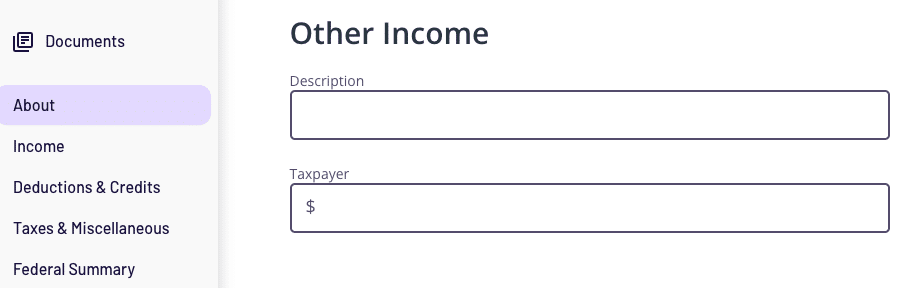
Click Add next to Other Income as shown below.
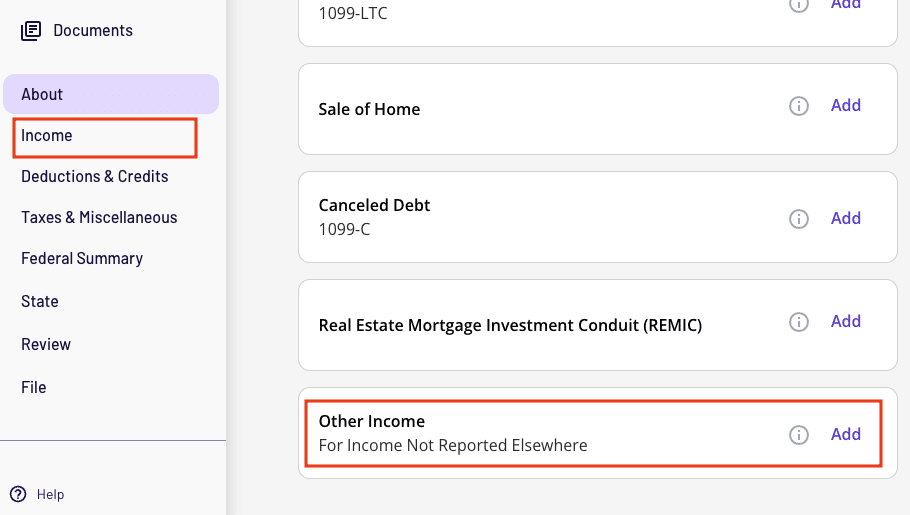
4. Enter the amount and description in one of the Other Income lines as shown in the screenshot below.
To report capital gains from Form 1099-LS
Classic view
Click Federal in the left navigation.
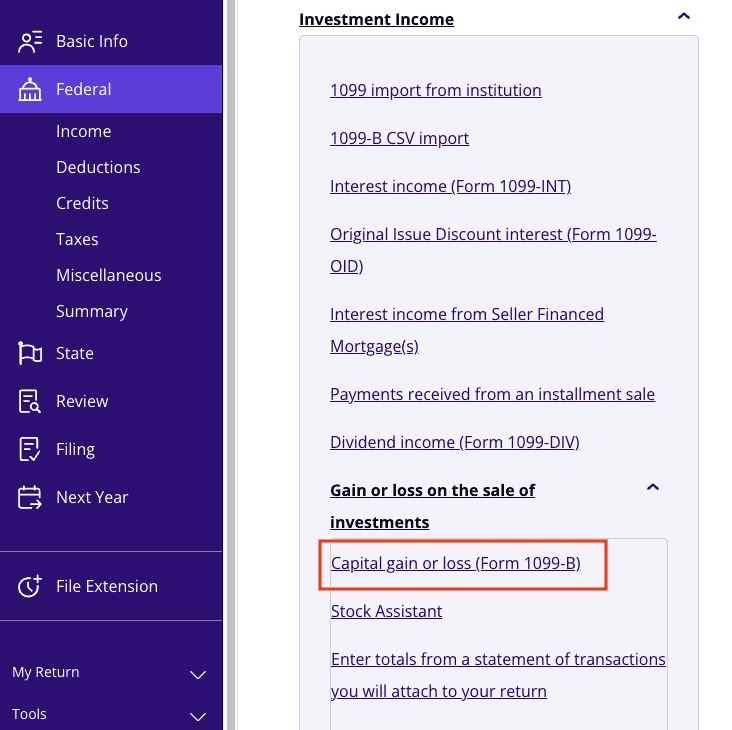
On the Federal Quick Q&A Topics screen, click Investment Income to expand the category.
Click Gain or loss on the sale of investments to expand the category.
Click Capital gain or loss (Form 1099-B) as shown below.
Dashboard view
Click Income in the left navigation.
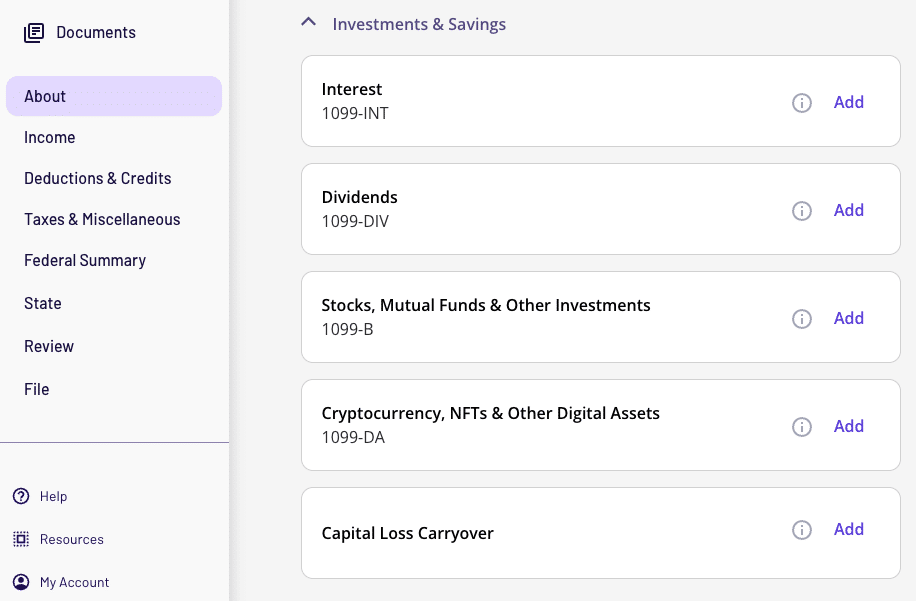
On the Add an income source screen, click Investments & Savings to expand the category.
Click Add next to Stocks, Mutual Funds & Other Investments as shown in the screenshot below.
In both the Classic and Dashboard views, enter the transaction details. Under Term and Type, you’ll be able to select whether it was a short-term gain or long-term gain for which you did not receive a Form 1099-B, as shown below:
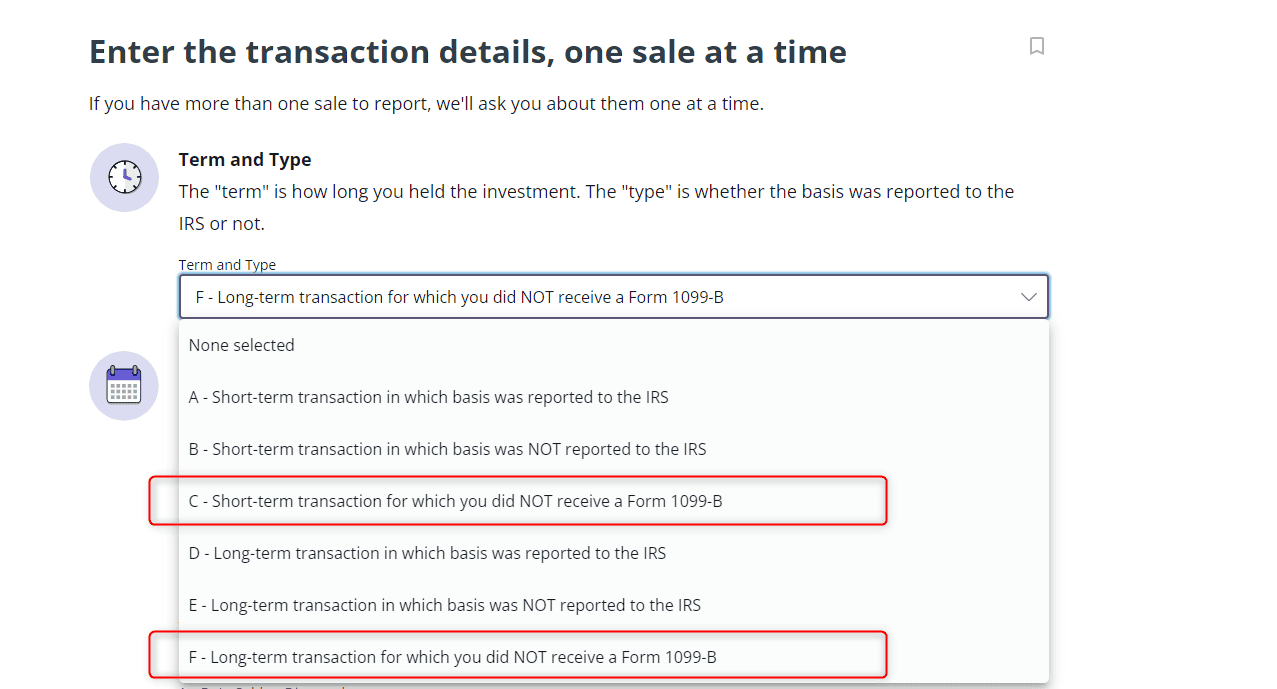
Tax tip: If you held the life insurance policy for longer than one year, it’s a long-term capital gain. If you held it for one year or less, it’s a short-term gain.
The bottom line
Form 1099-LS might not be the most common tax document out there, but if you’ve received one, it’s important to handle it correctly. By understanding what this form is, what it includes, and how to report it on your taxes, you can avoid unnecessary stress and ensure you’re in good standing with the IRS. And remember, TaxAct can walk you through the filing questions step by step so you’re not guessing where Form 1099-LS amounts belong on your return.
This article is for informational purposes only and not legal or financial advice.
All TaxAct offers, products and services are subject to applicable terms and conditions.
Citations
Ponder, Meghen. “Your Guide to Form 1099: What You Need to Know.” TaxAct Blog, 9 June 2026.Ponder, Meghen. “Form 1099-SB: What It Is and How to Use It.” TaxAct Blog, 25 Nov. 2024.Ponder, Meghen. “How Capital Gains Tax Works: Short-Term vs. Long-Term Gains.” TaxAct Blog, 9 Apr. 2026.Ponder, Meghen. “Long-Term Capital Gains Tax: How Much Tax Will I Owe?.” TaxAct Blog, 2 Apr. 2026.Internal Revenue Service. “Are the life insurance proceeds I received taxable?.” Internal Revenue Service, 5 Sept. 2025.Ponder, Meghen. “Guide to IRS Form 1040, Individual Income Tax Return.” TaxAct Blog, 6 Feb. 2026.Ponder, Meghen. “Schedule D: Your Guide to Reporting Capital Gains and Losses.” TaxAct Blog, 15 Apr. 2026.TaxAct. “File Taxes Online with TaxAct.” TaxAct, accessed 2 July 2026.