No Result
View All Result
SUBMIT YOUR ARTICLES
  • Login
Wednesday, May 27, 2026
TheAdviserMagazine.com
  • Home
  • Financial Planning
    • Financial Planning
    • Personal Finance
  • Market Research
    • Business
    • Investing
    • Money
    • Economy
    • Markets
    • Stocks
    • Trading
  • 401k Plans
  • College
  • IRS & Taxes
  • Estate Plans
  • Social Security
  • Medicare
  • Legal
  • Home
  • Financial Planning
    • Financial Planning
    • Personal Finance
  • Market Research
    • Business
    • Investing
    • Money
    • Economy
    • Markets
    • Stocks
    • Trading
  • 401k Plans
  • College
  • IRS & Taxes
  • Estate Plans
  • Social Security
  • Medicare
  • Legal
No Result
View All Result
TheAdviserMagazine.com
No Result
View All Result
Home College

Why the Traditional College Major May Be Holding Students Back in a Rapidly Changing Job Market

by TheAdviserMagazine
9 months ago
in College
Reading Time: 5 mins read
A A
Why the Traditional College Major May Be Holding Students Back in a Rapidly Changing Job Market
Share on FacebookShare on TwitterShare on LInkedIn


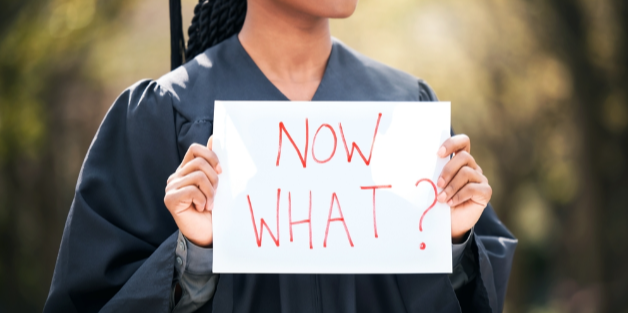
PeopleImages.com – Yuri A/Shutterstock

Colleges and universities are struggling to stay afloat.

The reasons are numerous: declining numbers of college-age students in much of the country, rising tuition at public institutions as state funding shrinks, and a growing skepticism about the value of a college degree.

Pressure is mounting to cut costs by reducing the time it takes to earn a degree from four years to three.

Students, parents and legislators increasingly prioritize return on investment and degrees that are more likely to lead to gainful employment. This has boosted enrollment in professional programs while reducing interest in traditional liberal arts and humanities majors, creating a supply-demand imbalance.

The result has been increasing financial pressure and an unprecedented number of closures and mergers, to date mostly among smaller liberal arts colleges.

To survive, institutions are scrambling to align curriculum with market demand. And they’re defaulting to the traditional college major to do so.

The college major, developed and delivered by disciplinary experts within siloed departments, continues to be the primary benchmark for academic quality and institutional performance.

This structure likely works well for professional majors governed by accreditation or licensure, or more tightly aligned with employment. But in today’s evolving landscape, reliance on the discipline-specific major may not always serve students or institutions well.

As a professor emeritus and former college administrator and dean, I argue that the college major may no longer be able to keep up with the combinations of skills that cross multiple academic disciplines and career readiness skills demanded by employers, or the flexibility students need to best position themselves for the workplace.

Students Want Flexibility

I see students arrive on campus each year with different interests, passions and talents — eager to stitch them into meaningful lives and careers.

A more flexible curriculum is linked to student success, and students now consult AI tools such as ChatGPT to figure out course combinations that best position them for their future. They want flexibility, choice and time to redirect their studies if needed.

And yet, the moment students arrive on campus — even before they apply — they’re asked to declare a major from a list of predetermined and prescribed choices. The major, coupled with general education and other college requirements, creates an academic track that is anything but flexible.

Not surprisingly, around 80% of college students switch their majors at least once, suggesting that more flexible degree requirements would allow students to explore and combine diverse areas of interest. And the number of careers, let alone jobs, that college graduates are expected to have will only increase as technological change becomes more disruptive.

As institutions face mounting pressures to attract students and balance budgets, and the college major remains the principal metric for doing so, the curriculum may be less flexible now than ever.

How Schools Are Responding

In response to market pressures, colleges are adding new high-demand majors at a record pace. Between 2002 and 2022, the number of degree programs nationwide increased by nearly 23,000, or 40%, while enrollment grew only 8%. Some of these majors, such as cybersecurity, fashion business or entertainment design, arguably connect disciplines rather than stand out as distinct. Thus, these new majors siphon enrollment from lower-demand programs within the institution and compete with similar new majors at competitor schools.

At the same time, traditional arts and humanities majors are adding professional courses to attract students and improve employability. Yet, this adds credit hours to the degree while often duplicating content already available in other departments.

Importantly, while new programs are added, few are removed. The challenge lies in faculty tenure and governance, along with a traditional understanding that faculty set the curriculum as disciplinary experts. This makes it difficult to close or revise low-demand majors and shift resources to growth areas.

The result is a proliferation of under-enrolled programs, canceled courses and stretched resources — leading to reduced program quality and declining faculty morale.

Ironically, under the pressure of declining demand, there can be perverse incentives to grow credit hours required in a major or in general education requirements as a way of garnering more resources or adding courses aligned with faculty interests. All of which continues to expand the curriculum and stress available resources.

Universities are also wrestling with the idea of liberal education and how to package the general education requirement.

Although liberal education is increasingly under fire, employers and students still value it.

Students’ career readiness skills — their ability to think critically and creatively, to collaborate effectively and to communicate well — remain strong predictors of future success in the workplace and in life.

Reenvisioning the College Major

Assuming the requirement for students to complete a major in order to earn a degree, colleges can also allow students to bundle smaller modules — such as variable-credit minors, certificates or course sequences — into a customizable, modular major.

This lets students, guided by advisers, assemble a degree that fits their interests and goals while drawing from multiple disciplines. A few project-based courses can tie everything together and provide context.

Such a model wouldn’t undermine existing majors where demand is strong. For others, where demand for the major is declining, a flexible structure would strengthen enrollment, preserve faculty expertise rather than eliminate it, attract a growing number of nontraditional students who bring to campus previously earned credentials, and address the financial bottom line by rightsizing curriculum in alignment with student demand.

One critique of such a flexible major is that it lacks depth of study, but it is precisely the combination of curricular content that gives it depth. Another criticism is that it can’t be effectively marketed to an employer. But a customized major can be clearly named and explained to employers to highlight students’ unique skill sets.

Further, as students increasingly try to fit cocurricular experiences — such as study abroad, internships, undergraduate research or organizational leadership — into their course of study, these can also be approved as modules in a flexible curriculum.

It’s worth noting that while several schools offer interdisciplinary studies majors, these are often overprescribed or don’t grant students access to in-demand courses. For a flexible-degree model to succeed, course sections would need to be available and added or deleted in response to student demand.

Several schools also now offer microcredentials– skill-based courses or course modules that increasingly include courses in the liberal arts. But these typically need to be completed in addition to requirements of the major.

We take the college major for granted.

Yet it’s worth noting that the major is a relatively recent invention.

Before the 20th century, students followed a broad liberal arts curriculum designed to create well-rounded, globally minded citizens. The major emerged as a response to an evolving workforce that prioritized specialized knowledge. But times change — and so can the model.



Source link

Tags: ChangingCollegeHoldingjobmajormarketRapidlystudentstraditional
ShareTweetShare
Previous Post

Unfairly Traded Steel – Econlib

Next Post

No Stopping EU Needs War

Related Posts

edit post
BCA blind spot as admin review backlog reaches six months

BCA blind spot as admin review backlog reaches six months

by TheAdviserMagazine
May 27, 2026
0

Students who appeal through the administrative review process are not currently included in BCA visa refusal rate calculations The current...

edit post
Warren requests GAO investigation into Education Department layoffs

Warren requests GAO investigation into Education Department layoffs

by TheAdviserMagazine
May 27, 2026
0

Listen to the article 2 min This audio is auto-generated. Please let us know if you have feedback. Sen. Elizabeth...

edit post
How To Build a Strong Scholarly Presence and Professional Brand Online

How To Build a Strong Scholarly Presence and Professional Brand Online

by TheAdviserMagazine
May 26, 2026
0

3rdtimeluckystudio/Shutterstock For many academic faculty and staff, online presence may be looked at as an afterthought, as something that doesn't...

edit post
Week in Review: A flurry of new Education Department rules and proposals

Week in Review: A flurry of new Education Department rules and proposals

by TheAdviserMagazine
May 25, 2026
0

Most clicked story of the week: The U.S. Department of Education released final regulations detailing how short-term programs can become...

edit post
Outcome over geography: the new student compass

Outcome over geography: the new student compass

by TheAdviserMagazine
May 25, 2026
0

Today, higher education has become much more than a milestone or a fancy degree for most students. Instead, most folks...

edit post
Strategies for Supporting Graduate and Professional Students’ Teaching Readiness – Faculty Focus

Strategies for Supporting Graduate and Professional Students’ Teaching Readiness – Faculty Focus

by TheAdviserMagazine
May 25, 2026
0

Graduate and professional students who aspire to academic careers often tell mentors that they are eager to teach but unsure how to...

Next Post
edit post
No Stopping EU Needs War

No Stopping EU Needs War

edit post
Digital asset reporting and compliance in 2025

Digital asset reporting and compliance in 2025

  • Trending
  • Comments
  • Latest
edit post
Supreme Court Delivers More Bad Redistricting News for Democrats

Supreme Court Delivers More Bad Redistricting News for Democrats

May 19, 2026
edit post
From Maine to Michigan, Democrats Are Making Communism Great Again

From Maine to Michigan, Democrats Are Making Communism Great Again

May 16, 2026
edit post
Gavin Newsom issues ‘final warning’ amid California’s dire housing crisis — what’s at stake for millions of residents

Gavin Newsom issues ‘final warning’ amid California’s dire housing crisis — what’s at stake for millions of residents

May 3, 2026
edit post
Florida Warning: With Senior SNAP Benefits Averaging 8/Month, Thousands Risk Losing Assistance in 2026

Florida Warning: With Senior SNAP Benefits Averaging $188/Month, Thousands Risk Losing Assistance in 2026

April 27, 2026
edit post
Minnesota Wealth Tax | Intangible Personal Property Tax

Minnesota Wealth Tax | Intangible Personal Property Tax

May 6, 2026
edit post
It’s Time To Talk About Massie

It’s Time To Talk About Massie

May 23, 2026
edit post
Why AI is raising worker productivity but not making the economy more efficient

Why AI is raising worker productivity but not making the economy more efficient

0
edit post
Salesforce (CRM) Q1 FY27 earnings beat estimates; revenue up 13%

Salesforce (CRM) Q1 FY27 earnings beat estimates; revenue up 13%

0
edit post
BCA blind spot as admin review backlog reaches six months

BCA blind spot as admin review backlog reaches six months

0
edit post
National Foster Care Month: Supporting Youth as They Transition to Adulthood | Social Security Matters

National Foster Care Month: Supporting Youth as They Transition to Adulthood | Social Security Matters

0
edit post
Teen Takeovers – Coming to a City Near You?

Teen Takeovers – Coming to a City Near You?

0
edit post
10 Healthcare Dividend Growth Stocks Poised For Exceptional Dividend Increases

10 Healthcare Dividend Growth Stocks Poised For Exceptional Dividend Increases

0
edit post
XRP Pushing To 0: The Market Cap Conversation Will Go Out The Window If This Happens

XRP Pushing To $100: The Market Cap Conversation Will Go Out The Window If This Happens

May 27, 2026
edit post
The Medicare “Benefit Boost” Claim Circulating on Facebook — and Why Experts Say Seniors Should Be Careful

The Medicare “Benefit Boost” Claim Circulating on Facebook — and Why Experts Say Seniors Should Be Careful

May 27, 2026
edit post
10 Healthcare Dividend Growth Stocks Poised For Exceptional Dividend Increases

10 Healthcare Dividend Growth Stocks Poised For Exceptional Dividend Increases

May 27, 2026
edit post
Salesforce (CRM) Q1 FY27 earnings beat estimates; revenue up 13%

Salesforce (CRM) Q1 FY27 earnings beat estimates; revenue up 13%

May 27, 2026
edit post
Why AI is raising worker productivity but not making the economy more efficient

Why AI is raising worker productivity but not making the economy more efficient

May 27, 2026
edit post
The SBA Loan Limit Is Doubling, But It Won’t Matter for Most Small Businesses

The SBA Loan Limit Is Doubling, But It Won’t Matter for Most Small Businesses

May 27, 2026
The Adviser Magazine

The first and only national digital and print magazine that connects individuals, families, and businesses to Fee-Only financial advisers, accountants, attorneys and college guidance counselors.

CATEGORIES

  • 401k Plans
  • Business
  • College
  • Cryptocurrency
  • Economy
  • Estate Plans
  • Financial Planning
  • Investing
  • IRS & Taxes
  • Legal
  • Market Analysis
  • Markets
  • Medicare
  • Money
  • Personal Finance
  • Social Security
  • Startups
  • Stock Market
  • Trading

LATEST UPDATES

  • XRP Pushing To $100: The Market Cap Conversation Will Go Out The Window If This Happens
  • The Medicare “Benefit Boost” Claim Circulating on Facebook — and Why Experts Say Seniors Should Be Careful
  • 10 Healthcare Dividend Growth Stocks Poised For Exceptional Dividend Increases
  • Our Great Privacy Policy
  • Terms of Use, Legal Notices & Disclosures
  • Contact us
  • About Us

© Copyright 2024 All Rights Reserved
See articles for original source and related links to external sites.

Welcome Back!

Login to your account below

Forgotten Password?

Retrieve your password

Please enter your username or email address to reset your password.

Log In
No Result
View All Result
  • Home
  • Financial Planning
    • Financial Planning
    • Personal Finance
  • Market Research
    • Business
    • Investing
    • Money
    • Economy
    • Markets
    • Stocks
    • Trading
  • 401k Plans
  • College
  • IRS & Taxes
  • Estate Plans
  • Social Security
  • Medicare
  • Legal

© Copyright 2024 All Rights Reserved
See articles for original source and related links to external sites.