No Result
View All Result
SUBMIT YOUR ARTICLES
  • Login
Wednesday, July 22, 2026
TheAdviserMagazine.com
  • Home
  • Financial Planning
    • Financial Planning
    • Personal Finance
  • Market Research
    • Business
    • Investing
    • Money
    • Economy
    • Markets
    • Stocks
    • Trading
  • 401k Plans
  • College
  • IRS & Taxes
  • Estate Plans
  • Social Security
  • Medicare
  • Legal
  • Home
  • Financial Planning
    • Financial Planning
    • Personal Finance
  • Market Research
    • Business
    • Investing
    • Money
    • Economy
    • Markets
    • Stocks
    • Trading
  • 401k Plans
  • College
  • IRS & Taxes
  • Estate Plans
  • Social Security
  • Medicare
  • Legal
No Result
View All Result
TheAdviserMagazine.com
No Result
View All Result
Home College

The Cognitive Concern: Why AI Needs a Nutrition Label – Faculty Focus

by TheAdviserMagazine
22 hours ago
in College
Reading Time: 4 mins read
A A
The Cognitive Concern: Why AI Needs a Nutrition Label – Faculty Focus
Share on FacebookShare on TwitterShare on LInkedIn


In the late 1970s, America had a collective awakening. For decades, the food industry had flourished, offering convenience and endless variety, largely in the absence of robust public health oversight. It took the official declaration of the 1977 McGovern Report to crystallize and politically amplify the long-term cost of a diet built on processed foods. 

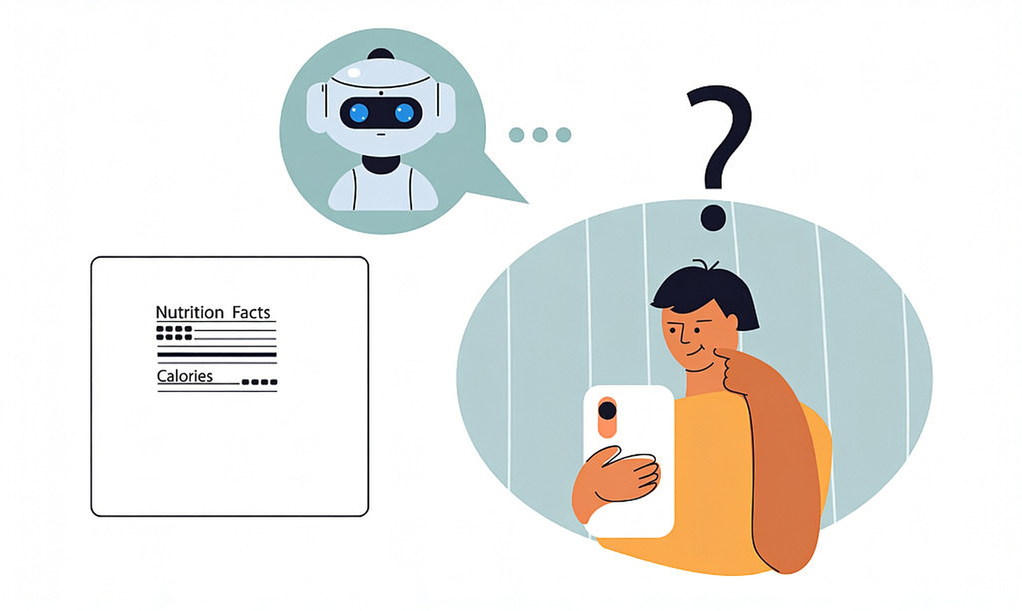
The food industry’s response prioritized marketability. When the public was told ‘fat is bad,’ companies rushed to create ‘low-fat’ products, which were often loaded with extra sugar to compensate for taste. The critical issue wasn’t the calorie count; it was the hidden, unhealthy trade-off that was not clearly communicated. Without a deep understanding of nutritional science, the public happily consumed these new products, unaware of the unhealthy choices they were making. It took decades of advocacy culminating in the 1990 Nutrition Labeling and Education Act to give consumers a standardized tool to navigate this confusing landscape. This is the perfect historical parallel for our current moment with generative artificial intelligence. 

AI as the New Convenience Food

Generative AI offers the same irresistible combination the snack industry sold decades ago: speed, ease, and instant gratification. It is the new convenience food of the mind. It seems to solve every small, immediate problem, from drafting an email to composing a syllabus.  

But just as early convenience foods prioritized taste over nutritional value, many of the AI tools we are adopting are prioritizing speed and efficiency over intellectual depth and human insight. 

The problem is when convenience outruns understanding. Right now, the average faculty member or student has about as much grasp of AI’s mechanics, limits, and long-term effects as a 1960s consumer had about trans fats or high-fructose corn syrup. We are actively consuming without taking the necessary steps to understand the risks involved. 

The most dangerous unlabeled ingredient in AI is the loss of cognitive friction. As AI becomes more prevalent, there’s a concern that human intelligence could diminish. Over-reliance on AI might lead to passive information consumption, hindering our original thought, creativity, and critical thinking. Our ability to synthesize information and generate new ideas, data, and code could decay, turning us into mere readers rather than creators of understanding. 

Guiding AI to Augmentation, Not Addiction

The dominant view of AI portrays it as a force of displacement, suggesting it will replace jobs, creative work, and even human thought. This narrative is intensified by the term “artificial intelligence” itself. “Artificial” implies a fabricated, inferior imitation, subtly framing AI as a rival rather than a potential human partner. 

But a strong, publicly educated counter-narrative can guide the technology toward augmentation, using AI to amplify, rather than substitute, human cognition. This must be the core message we, as educators, champion, actively reframing the discussion away from the limiting implications of “artificial” and towards the empowering potential of “augmented”: 

Amplifying Critical Thinking: Instead of using AI to summarize a book, we should be using it to debate an argument, identify underlying assumptions in a text, or test the edges of a complex theory. AI becomes a high-powered sparring partner, not a cheat sheet.  Driving Scientific Discovery: This is AI not replacing a researcher, but multiplying their capacity for insight by sifting through millions of data points, allowing the human to focus on novel hypotheses.  Enhancing Creativity: The human remains the visionary and the editor of the AI’s output, using it to rapidly accelerate the iteration and testing of ideas before committing to a final vision. 

Making AI Literacy a Public Health Imperative

We missed the window once with what we put in our bodies. We don’t have to miss it again with what we feed our minds. 

We cannot wait decades for a federal law to mandate transparency. Instead, we must treat AI literacy as a public health campaign on our campuses and in our schools, ensuring our students and colleagues understand the trade-offs they are making. 

To make this vision a reality, we must: 

Educate on Failure and Process: Schools need to teach not just how to use AI tools, but how they fail, how bias is introduced, and what the “black box” means for truth and fact. We must prioritize teaching students to question the instantaneous answer.  Reverse-Engineer the Black Box: To truly understand the “ingredients,” we must encourage a form of intellectual reverse-engineering. By studying the known parameters of an AI’s training (e.g., the nature of its data, the objective functions of its training) we can glean insight into its decision-making logic. Faculty and students should approach AI output not just as a solution, but as a data point revealing the system’s problem-solving strategies and underlying patterns. This process of intellectual deconstruction is crucial to mastering the tool.  Demand Cognitive Labels: Faculty should demand transparency from AI tool vendors about their training data sources, known failure modes, and what the user is risking by using these tools.  Prioritize the “Why” Over the “How Fast”: As educators, we must collectively pause and ask: Is this AI tool making the student smarter, or is it merely making them faster at a less meaningful task? 

The snack food industry created an environment where convenience trumped health because the public lacked the tools to understand the trade-off. We have a chance right now, before the current generation of AI models becomes fully entrenched, to prevent a similar crisis of cognitive atrophy.  

Acknowledgements: I would like to thank my colleague Toni Gist for reviewing an early draft and acknowledge the use of Google Gemini for refinement of style and clarity. The human author is solely responsible for any errors or inaccuracies presented.  

Jim Wentworth is the Associate Director Educational Innovation at The Center for Innovation in Teaching & Learning at the University of Illinois Urbana-Champaign. He oversees the Instructional Development and Instructional Design teams at CITL. His amazing colleagues are responsible for designing, developing and delivering high-quality faculty development opportunities and course design services that meet the evolving challenges facing instructors on our campus. They are in the process of integrating these two teams to create the next generation of academic professionals able to support the design, production, and teaching of courses across all modalities.




Source link

Tags: CognitiveconcernFacultyFocusLabelNutrition
ShareTweetShare
Previous Post

UK Lawmakers Probe 40% Crypto Transfer Blocks as Banking Scrutiny Widens

Next Post

US Home Builder Sentiment Contracts For 15th Month

Related Posts

edit post
Irish unis rethink recruitment as Indian students become more outcome-focused

Irish unis rethink recruitment as Indian students become more outcome-focused

by TheAdviserMagazine
July 22, 2026
0

India’s rise to become Ireland’s largest international student market is prompting universities to rethink how they engage with prospective students,...

edit post
90% of students use AI in the classroom, Instructure poll finds

90% of students use AI in the classroom, Instructure poll finds

by TheAdviserMagazine
July 21, 2026
0

Listen to the article 4 min This audio is auto-generated. Please let us know if you have feedback. Dive Brief:...

edit post
Five Things I Wish I Knew My First Semester – Faculty Focus

Five Things I Wish I Knew My First Semester – Faculty Focus

by TheAdviserMagazine
July 20, 2026
0

My first semester as a faculty member taught me something I wish I had understood on day one: most of...

edit post
India attracts students from 173 countries as overseas enrolment rises 19%

India attracts students from 173 countries as overseas enrolment rises 19%

by TheAdviserMagazine
July 17, 2026
0

India enrolled 58,134 international students from 173 countries during the 2023-24 academic year, with overseas enrolment rising 18.9% over the...

edit post
“The tsunami keeps coming”: US leaders react to final D/S rule

“The tsunami keeps coming”: US leaders react to final D/S rule

by TheAdviserMagazine
July 17, 2026
0

Yesterday’s announcement from the US government ending the long-standing duration of status visa rule was met with little surprise from educators across...

edit post
Still the Teacher: How California’s AI Law Keeps You at the Center – Faculty Focus

Still the Teacher: How California’s AI Law Keeps You at the Center – Faculty Focus

by TheAdviserMagazine
July 17, 2026
0

Picture this: A colleague spends Sunday night feeding her lesson outline into an AI tool, gets back a polished set...

Next Post
edit post
US Home Builder Sentiment Contracts For 15th Month

US Home Builder Sentiment Contracts For 15th Month

edit post
Von Der Leyen And Draghi Plot More Centralization To “Save” Europe

Von Der Leyen And Draghi Plot More Centralization To “Save” Europe

  • Trending
  • Comments
  • Latest
edit post
Mass Fraud in Massachusetts Committed by Illegal Immigrants Discovered

Mass Fraud in Massachusetts Committed by Illegal Immigrants Discovered

June 22, 2026
edit post
New Jersey Tax-Relief Events: Three July Dates Near Seniors

New Jersey Tax-Relief Events: Three July Dates Near Seniors

July 13, 2026
edit post
Bristlecone pines growing in the White Mountains of California germinated before the Great Pyramid was built, and the oldest one alive today, nicknamed Methuselah, has been quietly adding rings for 4,855 years in soil so poor almost nothing else survives beside it

Bristlecone pines growing in the White Mountains of California germinated before the Great Pyramid was built, and the oldest one alive today, nicknamed Methuselah, has been quietly adding rings for 4,855 years in soil so poor almost nothing else survives beside it

July 8, 2026
edit post
Retail giant exits U.S. fashion after multi-million-dollar scandal

Retail giant exits U.S. fashion after multi-million-dollar scandal

July 1, 2026
edit post
Same Portfolio. Same Retirement. A 10-Mile Move Costs One Couple ,000 A Year

Same Portfolio. Same Retirement. A 10-Mile Move Costs One Couple $10,000 A Year

June 27, 2026
edit post
Top Democrats Are Trapped in a Catch 22

Top Democrats Are Trapped in a Catch 22

July 6, 2026
edit post
It Is Always A Matter Of TIME

It Is Always A Matter Of TIME

0
edit post
Ripple Makes CNBC’s 2026 Top Fintech List as Digital Assets Enter Institutional Era

Ripple Makes CNBC’s 2026 Top Fintech List as Digital Assets Enter Institutional Era

0
edit post
Anthropic and SpaceX just handed Google the biggest profit quarter in company history—on paper

Anthropic and SpaceX just handed Google the biggest profit quarter in company history—on paper

0
edit post
Helping an Aging Parent? Start With This Free Government Resource

Helping an Aging Parent? Start With This Free Government Resource

0
edit post
The Cognitive Concern: Why AI Needs a Nutrition Label – Faculty Focus

The Cognitive Concern: Why AI Needs a Nutrition Label – Faculty Focus

0
edit post
When Passive Income Becomes a Massive Headache: The Major Mistakes Landlords Have Made and What They Did to Correct Them

When Passive Income Becomes a Massive Headache: The Major Mistakes Landlords Have Made and What They Did to Correct Them

0
edit post
Ripple Makes CNBC’s 2026 Top Fintech List as Digital Assets Enter Institutional Era

Ripple Makes CNBC’s 2026 Top Fintech List as Digital Assets Enter Institutional Era

July 22, 2026
edit post
Anthropic and SpaceX just handed Google the biggest profit quarter in company history—on paper

Anthropic and SpaceX just handed Google the biggest profit quarter in company history—on paper

July 22, 2026
edit post
Helping an Aging Parent? Start With This Free Government Resource

Helping an Aging Parent? Start With This Free Government Resource

July 22, 2026
edit post
How SEC’s e-delivery rule could cut paperwork, costs for advisors

How SEC’s e-delivery rule could cut paperwork, costs for advisors

July 22, 2026
edit post
6 Extra Help Prescription Costs Seniors Can Lower

6 Extra Help Prescription Costs Seniors Can Lower

July 22, 2026
edit post
It Is Always A Matter Of TIME

It Is Always A Matter Of TIME

July 22, 2026
The Adviser Magazine

The first and only national digital and print magazine that connects individuals, families, and businesses to Fee-Only financial advisers, accountants, attorneys and college guidance counselors.

CATEGORIES

  • 401k Plans
  • Business
  • College
  • Cryptocurrency
  • Economy
  • Estate Plans
  • Financial Planning
  • Investing
  • IRS & Taxes
  • Legal
  • Market Analysis
  • Markets
  • Medicare
  • Money
  • Personal Finance
  • Social Security
  • Startups
  • Stock Market
  • Trading

LATEST UPDATES

  • Ripple Makes CNBC’s 2026 Top Fintech List as Digital Assets Enter Institutional Era
  • Anthropic and SpaceX just handed Google the biggest profit quarter in company history—on paper
  • Helping an Aging Parent? Start With This Free Government Resource
  • Our Great Privacy Policy
  • Terms of Use, Legal Notices & Disclosures
  • Contact us
  • About Us

© Copyright 2024 All Rights Reserved
See articles for original source and related links to external sites.

Welcome Back!

Login to your account below

Forgotten Password?

Retrieve your password

Please enter your username or email address to reset your password.

Log In
No Result
View All Result
  • Home
  • Financial Planning
    • Financial Planning
    • Personal Finance
  • Market Research
    • Business
    • Investing
    • Money
    • Economy
    • Markets
    • Stocks
    • Trading
  • 401k Plans
  • College
  • IRS & Taxes
  • Estate Plans
  • Social Security
  • Medicare
  • Legal

© Copyright 2024 All Rights Reserved
See articles for original source and related links to external sites.