77% report having heard of or witnessed incidents in the past 12 months, showing that migration-related tensions are highly visible in everyday life and public discourse.
75% say violence against foreign nationals is never acceptable, reflecting a strong normative rejection of violence despite ongoing tensions.
54% disagree with attacks on foreign nationals, indicating general opposition to violence but also a notable level of uncertainty or weaker conviction among some respondents.
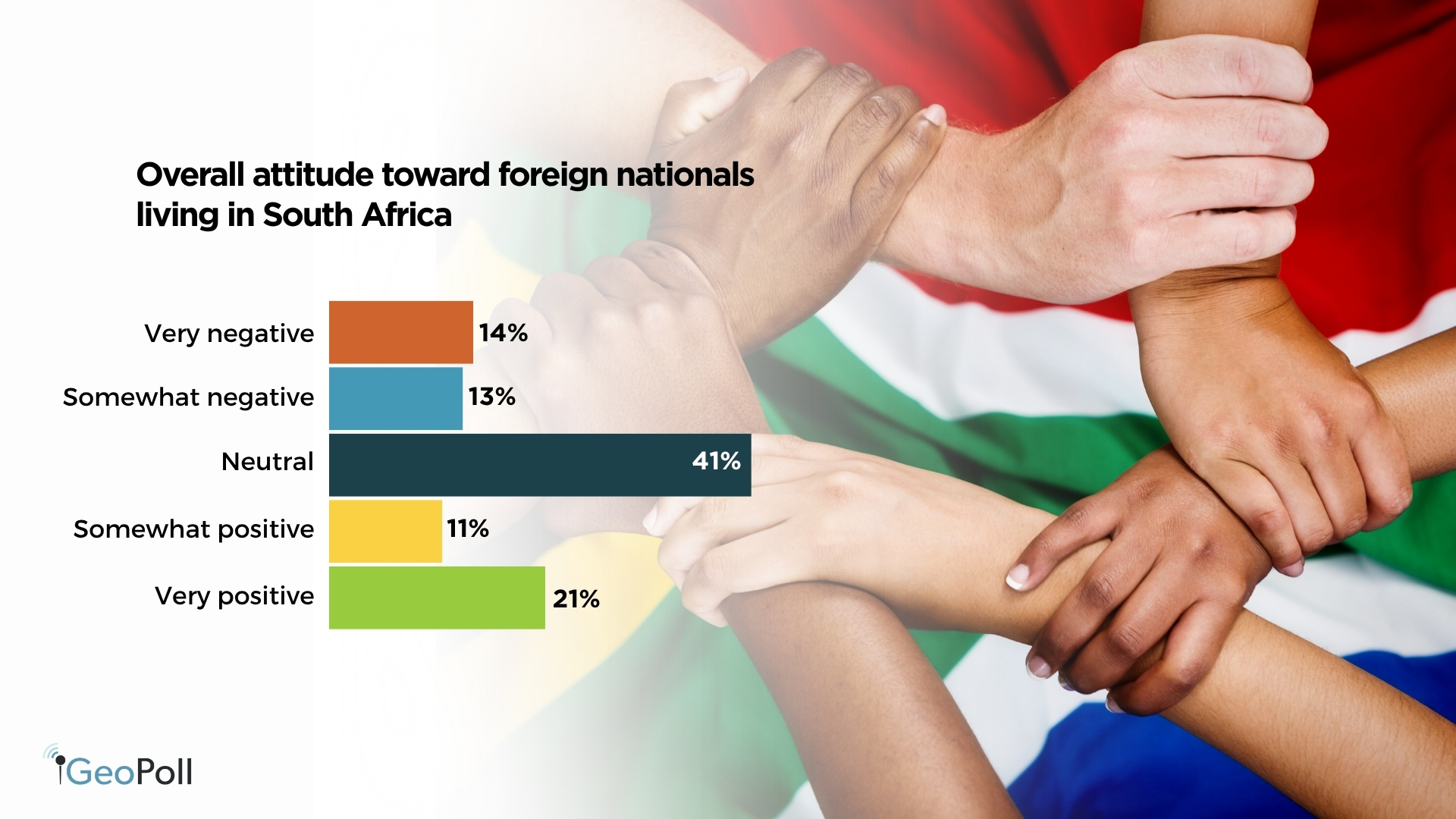
41% hold a neutral overall attitude toward foreign nationals, suggesting many people are neither strongly supportive nor strongly opposed, but instead ambivalent.
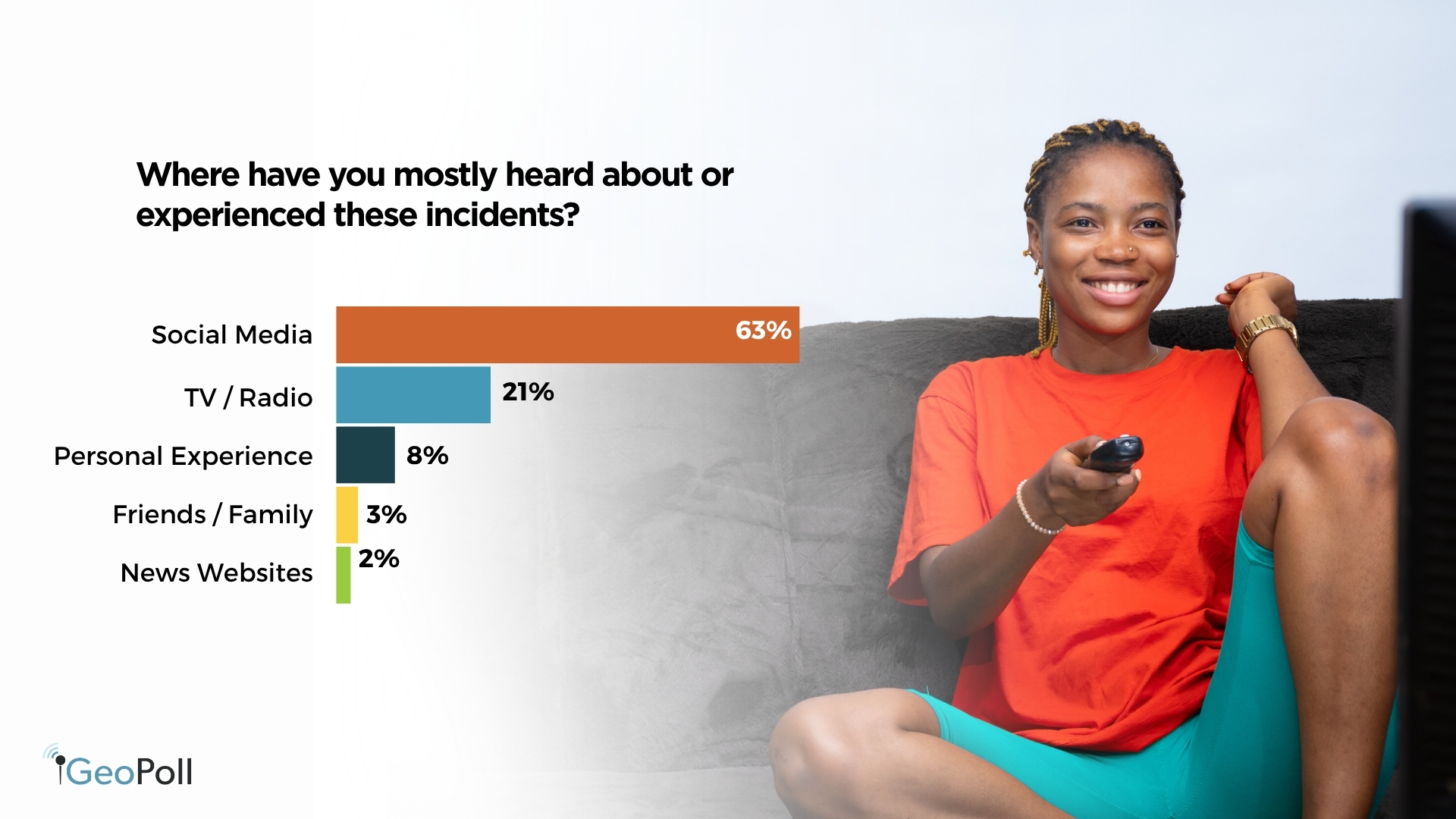
63% say social media is their primary source of information on incidents, underscoring its strong influence in shaping perceptions and narratives.
43% believe all levels of society are responsible for improving relations, indicating only partial agreement on shared responsibility for addressing tensions.
Awareness of Incidents Involving Foreign Nationals
In South Africa, issues involving foreign nationals are widely known and experienced. About 77% of respondents say they have heard of or personally witnessed incidents or tensions involving foreign nationals in the past year, while only 19% say they have not.
This shows that such experiences are not rare or limited to certain areas. Instead, they are commonly seen or heard about across cities, towns, and rural communities, making them part of everyday public awareness rather than isolated events.
Source of information
Social media is, by a clear margin, the dominant channel through which South Africans encounter information about incidents involving foreign nationals. 63% of respondents say they mainly get news and accounts of such tensions from platforms like Facebook, X (Twitter), TikTok, WhatsApp groups, and other social media platforms. These platforms combine official news, personal testimonies, commentary, and viral content, meaning that information is often fast-moving, highly visible, and shaped by both verified reporting and user-generated narratives.
Traditional media such as television and radio account for only 21% as a primary source, highlighting a significant shift away from conventional broadcast journalism. Far fewer respondents rely on direct or interpersonal channels, with personal experience cited by 8% and friends or family by just 3%. This distribution suggests that most perceptions are formed not through close personal networks or direct encounters, but through mediated digital environments where information spreads quickly and is often shaped by amplification, framing, and repetition.
Overall attitudes toward foreign nationals
When asked to describe their overall attitude toward foreign nationals living in South Africa, the largest share of respondents, 41% identify as neutral. This is an important signal, suggesting that a significant portion of the population has not formed firm opinions and may still be open to influence, information, and changing circumstances.
Among those who do express a clearer position, positive sentiment (32% combined) slightly outweighs negative sentiment (27% combined). Rather than a strongly polarized society, the results point to a public that is divided but not fixed, where many views are still forming and are shaped by ongoing experiences, information flows, and prevailing narratives.
At a glance
The data paints a picture of a nation grappling with a complex social issue rather than one driven by hostility. A significant majority of respondents (77%) report having heard of or witnessed incidents involving foreign nationals within the past year. This level of awareness suggests that tensions surrounding migration are not remote or isolated events; they are part of everyday conversations, media coverage, community experiences, and, for some, direct personal encounters.
Yet, despite this widespread exposure, most South Africans reject violence as a response. Three-quarters (75%) say that violence against foreign nationals is never acceptable, while 54% explicitly oppose attacks targeting them. This contrast is one of the survey’s most important findings. It reveals a society that is highly aware of migration-related tensions but largely unwilling to endorse violent action. The coexistence of concern and restraint, frustration and rejection of violence, underscores the nuanced nature of public sentiment and highlights the distinction between recognizing a problem and supporting harmful responses to it.