No Result
View All Result
SUBMIT YOUR ARTICLES
  • Login
Saturday, April 4, 2026
TheAdviserMagazine.com
  • Home
  • Financial Planning
    • Financial Planning
    • Personal Finance
  • Market Research
    • Business
    • Investing
    • Money
    • Economy
    • Markets
    • Stocks
    • Trading
  • 401k Plans
  • College
  • IRS & Taxes
  • Estate Plans
  • Social Security
  • Medicare
  • Legal
  • Home
  • Financial Planning
    • Financial Planning
    • Personal Finance
  • Market Research
    • Business
    • Investing
    • Money
    • Economy
    • Markets
    • Stocks
    • Trading
  • 401k Plans
  • College
  • IRS & Taxes
  • Estate Plans
  • Social Security
  • Medicare
  • Legal
No Result
View All Result
TheAdviserMagazine.com
No Result
View All Result
Home Market Research Economy

Disaster Prediction and Alerts Would Thrive in the Free Market

by TheAdviserMagazine
7 months ago
in Economy
Reading Time: 4 mins read
A A
Disaster Prediction and Alerts Would Thrive in the Free Market
Share on FacebookShare on TwitterShare on LInkedIn


If in January 2018 you found yourself on the islands of Hawaii for a relaxing holiday, your winter break might have taken a turn not unlike the wildest apocalyptic Hollywood movie depictions. Any working phone, TV, or radio around you would have started blaring, sending a chilling warning foiling the peaceful morning atmosphere: a ballistic missile is heading toward Hawaii—seek immediate shelter—followed by the blood-freezing, fully capitalized: “THIS IS NOT A DRILL.” Fortunately, the event was nothing more than a procedural error—the islands of Hawaii were not punched by a cataclysmic nuke, and everyone should continue their enjoyable holiday, dealing later with the trouble of forgetting the grim feelings they must have had.

As you may know, smartphones throughout the world come with a pre-activated direct connection to systems employed by states to shovel whatever “emergencies” our governments think are imminent and of prominent importance. Under the auspices of the concept summed up by the oft-repeated “too important to be left to the market”—a pernicious and deeply-ingrained perception in the collective unconsciousness and herd rhetoric—we cannot take advantage of a device lest we unwillingly allow ourselves to become mandatory receivers of outlandish broadcasts. The latter are complemented by a weird collation of a scary alert tone and an eerie screen, adding a modern phobia-suffixed noun in the slang underworld.

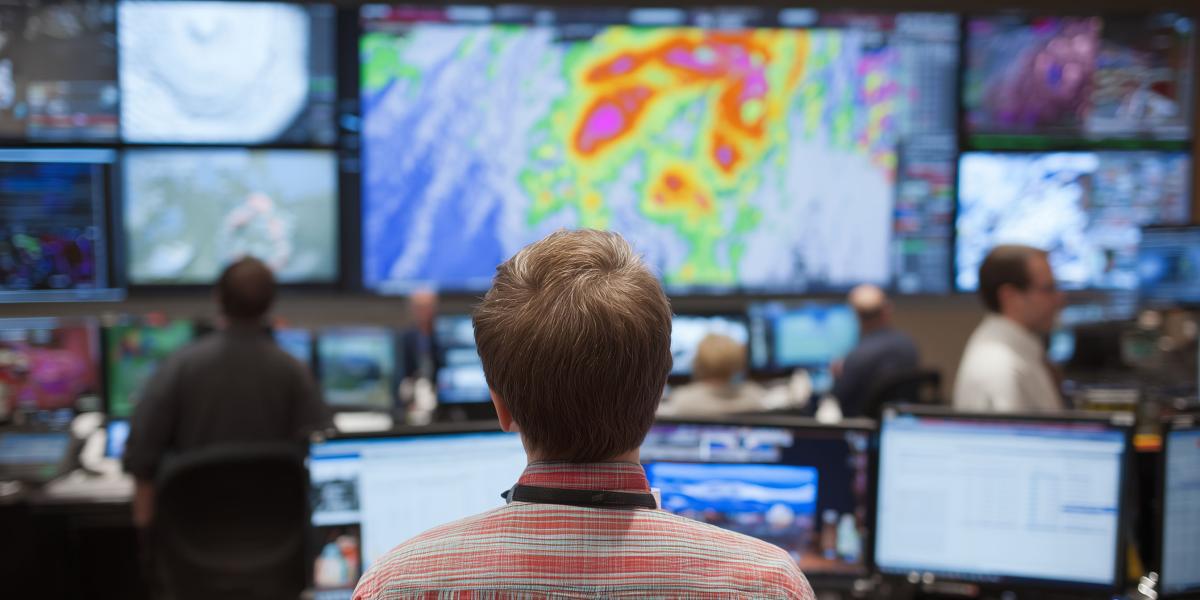
Now, if disaster alert systems exist, and have a high potential of improving human life, could they actually be extended to provide information related to potentially important disasters, where timely information might actually save lives and protect our property? As research in the field of natural and man-made disaster prediction advances and its potential capabilities of saving human lives becomes relevant, predicting many calamities and their impact zone (e.g. earthquakes, hurricanes, violent storms) is still a cumbersome task.

However, researchers gather more and more information on how various measurable geophysical or geothermal parameters, coupled with satellite-derived images and other devices, relate to the occurrence of natural disasters; this, in turn, makes accurate model building more straight-forward. For example, artificial intelligence (AI) was recently employed in devising such models, with one showing a 70 percent success rate in predicting earthquakes a week prior to them occurring.

This obliges us to turn to the question: how can each and every individual be able to take advantage of the technological improvements in disaster prediction? And how would such a system work, given they could still render false positives and their proper implementation may be easily hindered by barriers and regulations? The answer, as with any other innovation, lies in the free market.

Pundits who refuse to allow such systems to be categorized as private goods would have to rely on false explanations to reveal any virtual trace of their non-rivalrous, non-excludable nature. And, importantly, appeasement is an option—if we turn a blind eye to the issue of taxation—governments could work side-by-side and offer their similar services. Only practice will tell if governments can either earn a monopoly for a part of this market, or fail completely.

The free market can only amaze in finding ways to satisfy consumers; thus, one can only imagine how it would bring about disaster prediction and concomitant alerts in an unhampered market. The way the free market would do its workings to offer cheap, personalized emergencies for its customers could be envisioned by drawing analogies from other sectors. Most obvious is that competing firms would be incentivized to invest in research methods, algorithms, and other tools (satellites, local measuring devices, geomagnetic tools) to build quality models for disaster prediction.

Each company would then pack and sell their services catering to the various needs of the consumers. Competing firms will rise or fall based on how well they leverage their consumers’ satisfaction, as seen in their success rate, false positive rate, pricings, modes of implementation, innovations, etc.

Such services could be delivered via apps, which can notify consumers based on their subscription types, select preferences (e.g., thresholds for probability of an event to happen), alert type (e.g., various sound alerts or push notification correlated with severity or probability), or time of day. It’s not hard to imagine that service aggregators could emerge, drawing their data from multiple providers and merging them in a meaningful way for final consumers.

Current Emergency Alert Systems should be privatized, while alternative systems must be allowed to be created—to which smartphone producers might adhere or not, their choice altering their selling potential. Services could include heat maps, bulletins, or wireless off-the-internet devices that could give announcements via radio waves.

Consumers will also have a wide variety of choices. They could tailor the subscriptions to their needs. Users living in high-rise buildings might want to get earthquake alerts; likewise, house-dwellers could be interested in tornado and wildfire information. A similar competition occurs between companies offering weather services for farmers. The latter can choose from a wide selection of offerings, ranging from traditional long-running periodicals to companies providing top-of-the-line weather prediction software and devices.

Additionally, individuals could choose to get their services from more than one seller of disaster-prediction tools. If any provider wants to use more “eclectic” means to predict disasters, it is up to them if they can attract customers and stay in business. In the aftermath of the large earthquake that took place in Turkey in February 2023, a tweet by a Dutch researcher garnered widespread attention, claiming—three days prior to the event—that “sooner or later” a huge earthquake would hit southern and central Turkey. Other seismologists dismissed his claims and unscientific prediction method—based on planetary alignments and celestial geometry—arguing that his method is serendipitous.

While I am no more qualified to interpret his research, we can agree that it is best letting people decide what’s fit for them, especially when it comes to averting potentially life-changing events. We should extol the benefits of the free market, slash any kinds of governmental monopolies in disaster prediction, and clear all preconceptions regarding the state’s monopoly as a child-minding and patriarchal figure. The “invisible hand” must be allowed to do its workings in the crucial area of disaster alerting.

People tend to ignore the intricate ways the profit motive incentivized producers to create the highly efficient, state-of-the-art products and amenities that many readily take for granted today. Given the huge potential for improvement, after a period of development, companies in this particular sector might just arrive close to complete accuracy in predicting catastrophic events.



Source link

Tags: AlertsDisasterFreemarketPredictionThrive
ShareTweetShare
Previous Post

Best Debit Cards for Kids (7 Great Options!)

Next Post

4 Ways To Prevent Your Investment Accounts From Being Frozen After Death

Related Posts

edit post
The Myth that Won’t Die: “War is Good for the Economy”

The Myth that Won’t Die: “War is Good for the Economy”

by TheAdviserMagazine
April 4, 2026
0

What is the Mises Institute? The Mises Institute is a non-profit organization that exists to promote teaching and research in...

edit post
When Corporations Resist the State: Ethics, AI, and the Limits of Government Power

When Corporations Resist the State: Ethics, AI, and the Limits of Government Power

by TheAdviserMagazine
April 4, 2026
0

Corporations are frequently accused of moral indifference. Critics often portray large firms as institutions that pursue profit while ignoring the...

edit post
Why the Post Office and Non-Profits Share a Socialist Calculation Problem

Why the Post Office and Non-Profits Share a Socialist Calculation Problem

by TheAdviserMagazine
April 3, 2026
0

Public debate usually treats Mises’s Economic Calculation in the Socialist Commonwealth as a Cold War claim that “government is inefficient.”...

edit post
Jobs report March 2026:

Jobs report March 2026:

by TheAdviserMagazine
April 3, 2026
0

The U.S. labor market bounced back in March, with job creation much stronger than expected though the broader picture of...

edit post
Barter, Media of Exchange, and Colonial America

Barter, Media of Exchange, and Colonial America

by TheAdviserMagazine
April 3, 2026
0

In preparation for the 2026 Austrian Economics Research Conference, where I was presenting a forthcoming paper entitled “The United States:...

edit post
The Golden Rule | Mises Institute

The Golden Rule | Mises Institute

by TheAdviserMagazine
April 3, 2026
0

In the acknowledgements to his last great work of scholarship, An Austrian Perspective on the History of Economic Thought, Murray...

Next Post
edit post
4 Ways To Prevent Your Investment Accounts From Being Frozen After Death

4 Ways To Prevent Your Investment Accounts From Being Frozen After Death

edit post
6 Times It’s Financially Better Not to Help Your Children or Grandchildren

6 Times It’s Financially Better Not to Help Your Children or Grandchildren

  • Trending
  • Comments
  • Latest
edit post
Massachusetts loses billions in income after millionaire tax

Massachusetts loses billions in income after millionaire tax

March 24, 2026
edit post
Illinois’ Paid Leave for All Workers Act Takes Effect — Every Employee Now Gets Guaranteed Time Off

Illinois’ Paid Leave for All Workers Act Takes Effect — Every Employee Now Gets Guaranteed Time Off

March 27, 2026
edit post
Virginia Permits ADULT MIGRANT MEN To Attend High School

Virginia Permits ADULT MIGRANT MEN To Attend High School

March 30, 2026
edit post
A 58-year-old left NYC for Miami to save on taxes — then retired early thanks to hidden savings. Here’s the math

A 58-year-old left NYC for Miami to save on taxes — then retired early thanks to hidden savings. Here’s the math

March 30, 2026
edit post
Property Tax Relief & Income Tax Relief

Property Tax Relief & Income Tax Relief

April 1, 2026
edit post
Publix to Open 5 New Stores by End of April. See Upcoming Locations.

Publix to Open 5 New Stores by End of April. See Upcoming Locations.

March 20, 2026
edit post
Sterling Infrastructure, Inc. (STRL) Jumps 5.9% to 1.23

Sterling Infrastructure, Inc. (STRL) Jumps 5.9% to $431.23

0
edit post
China steps forward into world leadership role on Iran war, crisis as America looks on with disinterest

China steps forward into world leadership role on Iran war, crisis as America looks on with disinterest

0
edit post
Gamifying Accountability (and Other Ways to Improve Team Culture and Efficiency)

Gamifying Accountability (and Other Ways to Improve Team Culture and Efficiency)

0
edit post
The Myth that Won’t Die: “War is Good for the Economy”

The Myth that Won’t Die: “War is Good for the Economy”

0
edit post
Why crypto didn’t buy Wall Street’s Iran ceasefire rally

Why crypto didn’t buy Wall Street’s Iran ceasefire rally

0
edit post
Why Long-Term Investors May Not Need to Do Anything

Why Long-Term Investors May Not Need to Do Anything

0
edit post
The Myth that Won’t Die: “War is Good for the Economy”

The Myth that Won’t Die: “War is Good for the Economy”

April 4, 2026
edit post
China steps forward into world leadership role on Iran war, crisis as America looks on with disinterest

China steps forward into world leadership role on Iran war, crisis as America looks on with disinterest

April 4, 2026
edit post
Why Long-Term Investors May Not Need to Do Anything

Why Long-Term Investors May Not Need to Do Anything

April 4, 2026
edit post
Buffett may end donations to Gates charity over Bill’s ties to Epstein

Buffett may end donations to Gates charity over Bill’s ties to Epstein

April 4, 2026
edit post
When Corporations Resist the State: Ethics, AI, and the Limits of Government Power

When Corporations Resist the State: Ethics, AI, and the Limits of Government Power

April 4, 2026
edit post
There is a particular loneliness in being a man whose body never matched the archetype he was taught to aspire to. Not because anyone was cruel about it, but because the world built its furniture, its expectations, and its respect around a size he would never reach.

There is a particular loneliness in being a man whose body never matched the archetype he was taught to aspire to. Not because anyone was cruel about it, but because the world built its furniture, its expectations, and its respect around a size he would never reach.

April 4, 2026
The Adviser Magazine

The first and only national digital and print magazine that connects individuals, families, and businesses to Fee-Only financial advisers, accountants, attorneys and college guidance counselors.

CATEGORIES

  • 401k Plans
  • Business
  • College
  • Cryptocurrency
  • Economy
  • Estate Plans
  • Financial Planning
  • Investing
  • IRS & Taxes
  • Legal
  • Market Analysis
  • Markets
  • Medicare
  • Money
  • Personal Finance
  • Social Security
  • Startups
  • Stock Market
  • Trading

LATEST UPDATES

  • The Myth that Won’t Die: “War is Good for the Economy”
  • China steps forward into world leadership role on Iran war, crisis as America looks on with disinterest
  • Why Long-Term Investors May Not Need to Do Anything
  • Our Great Privacy Policy
  • Terms of Use, Legal Notices & Disclosures
  • Contact us
  • About Us

© Copyright 2024 All Rights Reserved
See articles for original source and related links to external sites.

Welcome Back!

Login to your account below

Forgotten Password?

Retrieve your password

Please enter your username or email address to reset your password.

Log In
No Result
View All Result
  • Home
  • Financial Planning
    • Financial Planning
    • Personal Finance
  • Market Research
    • Business
    • Investing
    • Money
    • Economy
    • Markets
    • Stocks
    • Trading
  • 401k Plans
  • College
  • IRS & Taxes
  • Estate Plans
  • Social Security
  • Medicare
  • Legal

© Copyright 2024 All Rights Reserved
See articles for original source and related links to external sites.