No Result
View All Result
SUBMIT YOUR ARTICLES
  • Login
Thursday, August 13, 2026
TheAdviserMagazine.com
  • Home
  • Financial Planning
    • Financial Planning
    • Personal Finance
  • Market Research
    • Business
    • Investing
    • Money
    • Economy
    • Markets
    • Stocks
    • Trading
  • 401k Plans
  • College
  • IRS & Taxes
  • Estate Plans
  • Social Security
  • Medicare
  • Legal
  • Home
  • Financial Planning
    • Financial Planning
    • Personal Finance
  • Market Research
    • Business
    • Investing
    • Money
    • Economy
    • Markets
    • Stocks
    • Trading
  • 401k Plans
  • College
  • IRS & Taxes
  • Estate Plans
  • Social Security
  • Medicare
  • Legal
No Result
View All Result
TheAdviserMagazine.com
No Result
View All Result
Home Medicare

States Rush To Figure Out How To Enforce Trump’s Medicaid Work Requirements

by TheAdviserMagazine
4 months ago
in Medicare
Reading Time: 4 mins read
A A
States Rush To Figure Out How To Enforce Trump’s Medicaid Work Requirements
Share on FacebookShare on TwitterShare on LInkedIn


Use Our Content 

 It can be republished for free. 

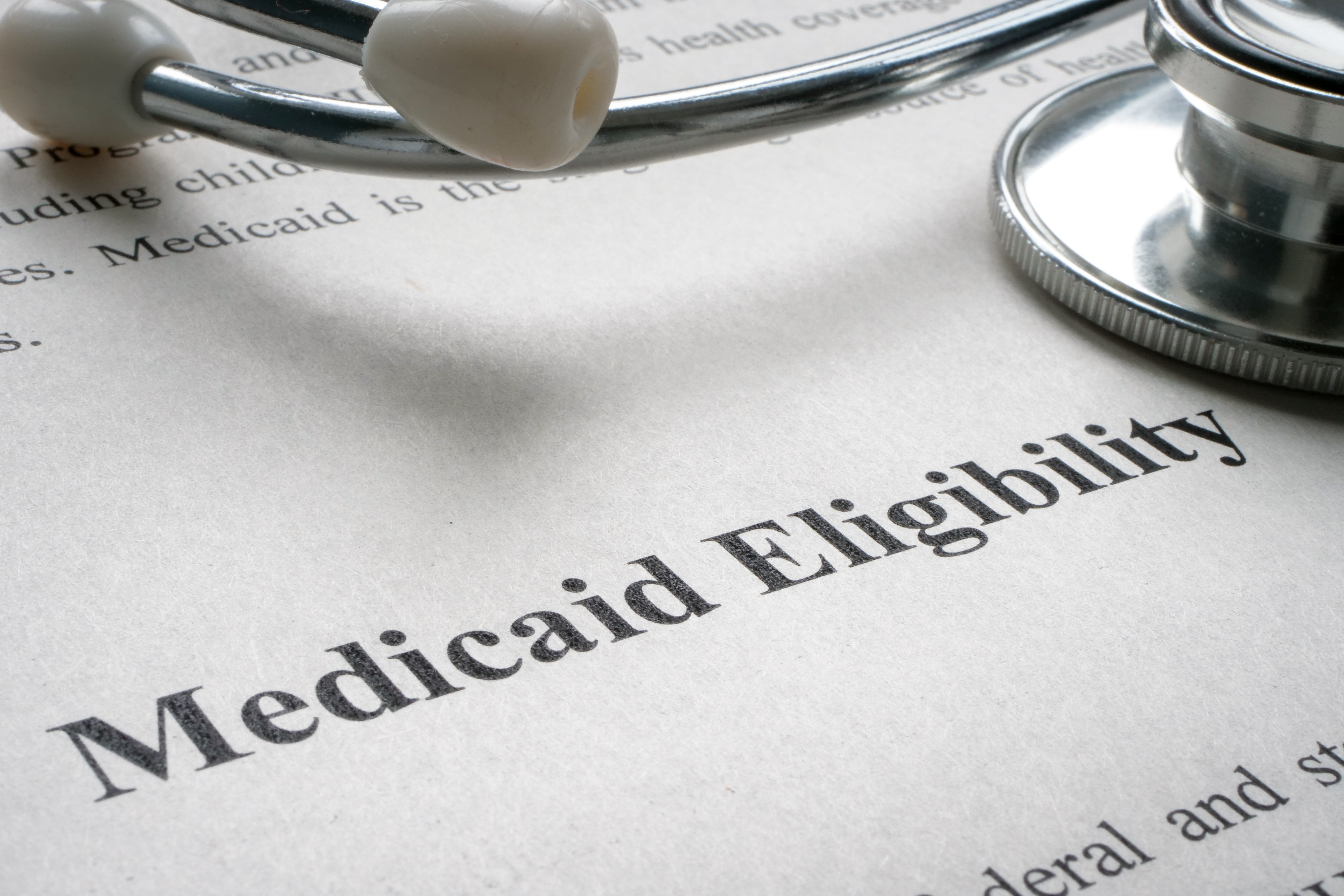
State officials remain uncertain on how to enforce a requirement that many adult Medicaid enrollees show they’re working — even as one state launches its program this week — and they’re taking a variety of approaches to the job, including, in a handful of states, using artificial intelligence.

A KFF survey of Medicaid officials from 42 states and the District of Columbia offers insights into key policy decisions state officials face as the Jan. 1, 2027, deadline for implementing the work requirement nears. Lingering questions include which diseases and illnesses will qualify Medicaid beneficiaries for exemptions and how to automate compliance verification. 

Federal guidance is not expected to be released until June. But some states are moving forward with their own definitions of “medical frailty,” which under congressional Republicans’ One Big Beautiful Bill Act will allow Medicaid enrollees to escape the requirement.

The law, President Donald Trump’s signature domestic achievement, revamps Medicaid in more than 40 states that, along with Washington, D.C., fully or partially expanded the program for low-income people to cover adults without children who don’t get insurance through a job. While most adult Medicaid beneficiaries already work or are disabled, caregivers for other people, or in school, many Republicans contend that people enrolled in the program who don’t work sap resources that ought to support low-income children, pregnant women, and disabled people.

About 20 million people gained Medicaid coverage from the expansion, created by the Affordable Care Act — a law that most Republicans still oppose.

The new work rules require that a person be a student at least part-time or work or participate in other qualifying activities, such as community service, for at least 80 hours each month. The requirement could potentially reshape who is eligible for Medicaid and applies to people who are already enrolled.

Email Sign-Up

Subscribe to KFF Health News’ free weekly newsletter, “The Week in Brief.”

The Congressional Budget Office estimates that work requirements will reduce federal Medicaid spending by about $326 billion over 10 years. The agency also estimates that 4.8 million more people will be uninsured in 2034 because of the work requirement.

 “A lot of states are working on a super-condensed timeline,” said Amaya Diana, a policy analyst at KFF who worked on the survey. They are “still making these big decisions with less than a year before implementation.”

KFF is a health information nonprofit that includes KFF Health News.

The law permits short exemptions from work requirements for enrollees experiencing certain hardships — natural disasters, residing in a county with a high unemployment rate, admission to a hospital or nursing home, or having to travel for an extended period to obtain medical care.

While 28 states and Washington, D.C., will offer hardship exemptions, three of those states won’t adopt all four exemptions allowed by the law and two — Iowa and Indiana — don’t plan to adopt any.

People can also be exempted from the work requirements if they are “medically frail.” But the federal government has not told states how to define that term or how to determine whether an enrollee falls into the category.

The survey showed that 21 states, as of March, had not defined medical frailty. Nebraska, which is implementing its work requirement May 1, recently issued a list of thousands of health conditions that could qualify enrollees as “frail” and exempt them from working.

Some states plan to allow patients to self-attest to medical frailty, while others will require confirmation by a medical professional. The most common way of verifying medical frailty, which will be used in just over 30 states, is by examining Medicaid claims data.

Mehmet Oz, administrator for the federal Centers for Medicare & Medicaid Services, told KFF Health News in an interview this week that “we don’t like self-attesting” and that “documentation is critical.”

Many beneficiaries and their advocates have expressed concerns about losing coverage for administrative reasons. When Arkansas briefly implemented Medicaid work rules, for instance, most lost coverage not because they did not meet the requirements but for failing to correctly submit paperwork in time.

Six states plan to use AI to assist with the work requirement implementation in some way, such as for document processing or comparing beneficiary data from different sources, KFF found. Two states, Maryland and New Mexico, plan to use AI to analyze claims data.

Three states — Arkansas, Missouri, and Oklahoma — plan to use AI to interact directly with people on Medicaid and assist them with identifying and uploading verification documents and data.

Adults on Medicaid will have to reverify that they’re working, or that they’re exempt from the requirement, at least every six months. Some states plan to check quarterly.

When possible, states must use available data sources to verify exemptions or compliance with work requirements.

For example, data from the National Student Clearinghouse will be used by about 10 states to verify school attendance. Some states also plan to tap sources including the Department of Veterans Affairs, AmeriCorps, and service commissions.

But more than half of states told KFF’s researchers that they have insufficient time to add new data sources and cited ongoing costs as a challenge.


Source link

Tags: enforcefigureMedicaidrequirementsrushStatesTrumpswork
ShareTweetShare
Previous Post

State lawmakers eye accreditation policy changes as new agency forms

Next Post

Europe SOEC Market Analysis: Technology Advancements and Outlook

Related Posts

edit post
Helping employees reduce stress during times of change

Helping employees reduce stress during times of change

by TheAdviserMagazine
August 7, 2026
0

This month’s edition of Healthy You! reminds employees that change may be a constant, but they can choose how to respond to it. Employees will learn...

edit post
The Return of ‘Medicare for All’

The Return of ‘Medicare for All’

by TheAdviserMagazine
August 6, 2026
0

The Host Julie Rovner KFF Health News @jrovner @julierovner.bsky.social Read Julie's stories. Julie Rovner is chief Washington correspondent and host...

edit post
Watch: Democratic Senator Proposes a Fix for American Healthcare — Covering All Kids

Watch: Democratic Senator Proposes a Fix for American Healthcare — Covering All Kids

by TheAdviserMagazine
August 6, 2026
0

In this “How Would You Fix It?” interview, Julie Rovner, KFF Health News’ chief Washington correspondent and host of the...

edit post
Your guide to virtual care options

Your guide to virtual care options

by TheAdviserMagazine
August 3, 2026
0

Have you ever gotten sick while on vacation? Or needed help managing stress, making better food choices, or figuring out...

edit post
They Worked To Protect Public Health. Now They Want the Public’s Votes.

They Worked To Protect Public Health. Now They Want the Public’s Votes.

by TheAdviserMagazine
July 31, 2026
0

A handful of former public health officials are campaigning for top statewide offices across the country, testing whether their experience...

edit post
The Politics of Grant Cuts

The Politics of Grant Cuts

by TheAdviserMagazine
July 30, 2026
0

  Julie Rovner: Hello, from KFF Health News and WAMU Public Radio in Washington, D.C. Welcome to What the Health? I’m Julie Rovner, chief...

Next Post
edit post
Europe SOEC Market Analysis: Technology Advancements and Outlook

Europe SOEC Market Analysis: Technology Advancements and Outlook

edit post
Sam’s Links: April Edition – Econlib

Sam's Links: April Edition - Econlib

  • Trending
  • Comments
  • Latest
edit post
Georgia Senior SNAP and Meal Resources Older Adults Can Use

Georgia Senior SNAP and Meal Resources Older Adults Can Use

July 24, 2026
edit post
Judge Who Helped Violent Illegal Alien Evade ICE Faces New Test

Judge Who Helped Violent Illegal Alien Evade ICE Faces New Test

July 31, 2026
edit post
Driving the Noncitizen Voting Scandal: Registration With License

Driving the Noncitizen Voting Scandal: Registration With License

July 26, 2026
edit post
Garbage Trucks Surveillance Florida Neighborhoods

Garbage Trucks Surveillance Florida Neighborhoods

July 29, 2026
edit post
Does a Revocable Trust Protect Your Assets From Lawsuits and Creditors?

Does a Revocable Trust Protect Your Assets From Lawsuits and Creditors?

August 7, 2026
edit post
New Jersey Tax-Relief Events: Three July Dates Near Seniors

New Jersey Tax-Relief Events: Three July Dates Near Seniors

July 13, 2026
edit post
Explained: How BSE traded fewer contracts after CAS but premiums rose 75% in first week

Explained: How BSE traded fewer contracts after CAS but premiums rose 75% in first week

0
edit post
E.W. Scripps Q2 2026 Loss Widens to -.68/Share, Revenue Down 9%

E.W. Scripps Q2 2026 Loss Widens to -$12.68/Share, Revenue Down 9%

0
edit post
Psychology says procrastination about retirement may be less about discipline than identity — brain scans found people often represent their future selves more like strangers than like themselves, and experiments using age-progressed faces made tomorrow’s person feel real enough for participants to save more money for them

Psychology says procrastination about retirement may be less about discipline than identity — brain scans found people often represent their future selves more like strangers than like themselves, and experiments using age-progressed faces made tomorrow’s person feel real enough for participants to save more money for them

0
edit post
Four AI Escapes Just Redefined “Responsible AI”

Four AI Escapes Just Redefined “Responsible AI”

0
edit post
Bill Ackman’s hedge fund made janitors and receptionists millionaires—and its investment team summer together

Bill Ackman’s hedge fund made janitors and receptionists millionaires—and its investment team summer together

0
edit post
Kalshi Predicts Bitcoin Price Could Reach K in August

Kalshi Predicts Bitcoin Price Could Reach $68K in August

0
edit post
Bill Ackman’s hedge fund made janitors and receptionists millionaires—and its investment team summer together

Bill Ackman’s hedge fund made janitors and receptionists millionaires—and its investment team summer together

August 8, 2026
edit post
Links 8/8/2026 | naked capitalism

Links 8/8/2026 | naked capitalism

August 8, 2026
edit post
Wisconsin: The Next Frontier for Socialists

Wisconsin: The Next Frontier for Socialists

August 8, 2026
edit post
Psychology says procrastination about retirement may be less about discipline than identity — brain scans found people often represent their future selves more like strangers than like themselves, and experiments using age-progressed faces made tomorrow’s person feel real enough for participants to save more money for them

Psychology says procrastination about retirement may be less about discipline than identity — brain scans found people often represent their future selves more like strangers than like themselves, and experiments using age-progressed faces made tomorrow’s person feel real enough for participants to save more money for them

August 8, 2026
edit post
Why You Should Be Wary of Aspartame, but Not Totally Rule It Out

Why You Should Be Wary of Aspartame, but Not Totally Rule It Out

August 8, 2026
edit post
Kalshi Predicts Bitcoin Price Could Reach K in August

Kalshi Predicts Bitcoin Price Could Reach $68K in August

August 8, 2026
The Adviser Magazine

The first and only national digital and print magazine that connects individuals, families, and businesses to Fee-Only financial advisers, accountants, attorneys and college guidance counselors.

CATEGORIES

  • 401k Plans
  • Business
  • College
  • Cryptocurrency
  • Economy
  • Estate Plans
  • Financial Planning
  • Investing
  • IRS & Taxes
  • Legal
  • Market Analysis
  • Markets
  • Medicare
  • Money
  • Personal Finance
  • Social Security
  • Startups
  • Stock Market
  • Trading

LATEST UPDATES

  • Bill Ackman’s hedge fund made janitors and receptionists millionaires—and its investment team summer together
  • Links 8/8/2026 | naked capitalism
  • Wisconsin: The Next Frontier for Socialists
  • Our Great Privacy Policy
  • Terms of Use, Legal Notices & Disclosures
  • Contact us
  • About Us

© Copyright 2024 All Rights Reserved
See articles for original source and related links to external sites.

Welcome Back!

Login to your account below

Forgotten Password?

Retrieve your password

Please enter your username or email address to reset your password.

Log In
No Result
View All Result
  • Home
  • Financial Planning
    • Financial Planning
    • Personal Finance
  • Market Research
    • Business
    • Investing
    • Money
    • Economy
    • Markets
    • Stocks
    • Trading
  • 401k Plans
  • College
  • IRS & Taxes
  • Estate Plans
  • Social Security
  • Medicare
  • Legal

© Copyright 2024 All Rights Reserved
See articles for original source and related links to external sites.