
You’re standing in the kitchen at 10pm, loading the dishwasher, and a thought arrives so clearly it almost sounds like someone else’s voice: this is it. You might think ‘this is bad’ or ‘this is wrong,’ but often the thought is simpler: this is the shape of things. The children are asleep or the children don’t exist. The career is fine or the career stalled years ago without you noticing. The partner across the room is lovely or absent or someone you chose before you knew what choosing meant. And the thought that floors you isn’t about any of that. It’s about the other life. The one you’ve been mentally furnishing since you were twenty-three. The one with the house, the book, the business, the body, the city, the marriage, the version of yourself who figured it all out a decade ago. That life. You suddenly understand it was never a plan. It was a prayer. And nobody is going to answer it.
Most people assume the hard part of aging is physical decline, or the accumulation of loss, or the slow narrowing of options. And all of that is real. But there’s a different kind of reckoning that tends to land in the early-to-mid forties, and it has nothing to do with what you’ve lost. It has to do with what you never had in the first place. The grief is for a life that existed only as internal architecture: elaborate, detailed, deeply felt, and entirely fictional.
The conventional framing says midlife sadness is about regret. You wish you’d done something differently, made a better choice, taken the other path. But that misses the actual texture of what happens. Regret implies a real alternative existed that you failed to select. This is something else. This is mourning a future that was never available, a projection you carried so long it calcified into expectation. And the pain is harder to process precisely because there’s nothing concrete to point to.
The imagined life was never a plan
Somewhere around twenty or twenty-one, most people begin constructing an internal model of how their life will unfold. It’s not a formal plan with milestones and deadlines. It’s more like a feeling with furniture. You can see the apartment. You can feel the kind of morning you’ll have. You know what your body looks like, roughly what your work involves, who’s beside you. The details stay vague enough to survive every major life event without being falsified.
That’s the trick. The imagined life is designed to be unfalsifiable. It sits just far enough in the future that it never has to confront present evidence. You’re twenty-six and broke? That’s fine, the imagined life is set at thirty-five. You’re thirty-five and still figuring things out? The imagined life shifts to forty-two. It’s always receding. Always plausible. Always about five years away.
Until it isn’t.
What happens in the forties is that the math stops working. You can’t push the imagined life forward another five years because you’ve run out of room. The gap between where you are and where the imagined self lives becomes too large to bridge with optimism. And the grief that follows is disorienting, because you’re not mourning a death. You’re mourning the collapse of a story you told yourself for two decades.
Why this grief has no name
There is no condolence card for this. No ritual, no leave of absence, no support group. Grief is often described as something internal, a process we endure, but it rarely stays contained within the self. It moves outward, reshaping our relationships, our sense of time, and how we show up in daily life. When someone we love dies, grief is visible. Friends rally. People bring food. Language exists.
But when the thing that dies is an imagined future, you grieve alone and in silence, mostly because explaining it sounds absurd. Try explaining that you’re sad about a life you never had. Try telling your partner that you’re mourning a version of yourself they’ve never met. The language fails, so the feeling goes underground.
The concept of the midlife crisis was essentially coined by psychoanalyst Elliott Jaques in his 1965 essay “Death and the Mid-Life Crisis,” which described a patient in his mid-thirties who surveyed his life and concluded it was all downhill from there. MIT philosophy professor Kieran Setiya later expanded on this, describing his own experience at thirty-five as involving nostalgia, regret, catastrophe, emptiness, and fear. The feelings aren’t new. But the way they land in the forties carries a specific weight, because by then you’ve accumulated enough evidence to know what’s a projection and what’s reality.
Surveys suggest that a majority of adults actively reject midlife crisis stereotypes, with most reporting they feel optimistic and believe their best years are ahead. Which tells us something interesting: this isn’t a crisis in the way culture frames it. People aren’t buying sports cars out of desperation. They’re quietly processing something much subtler, and the optimism might itself be a coping mechanism for the loss they can’t articulate.
The gap between the self you built and the self you projected
I spent my twenties and early thirties in corporate. And for all of that time I carried, without ever writing it down or saying it out loud, a detailed interior portrait of who I would be by forty-five. The specifics shifted over the years, but the feeling was consistent: arrival. Completion. A settled quality that the actual experience of being alive never delivered.
The imagined self wasn’t doing anything remarkable. He’d just figured it out. He was calm. He was certain. He occupied his life fully, the way you imagine an adult does when you’re still pretending to be one.
When I left corporate in my mid-thirties to start my own thing, and later when a major relationship fell apart, I had to confront something uncomfortable: the imagined self had been carrying the weight of my identity. He was doing the emotional labor of making the present bearable. I would tell myself this was temporary, that the real version would start soon. And therapy helped me see, slowly and with more discomfort than I expected, that I’d been outsourcing my sense of self to a character who didn’t exist.
That recognition isn’t a crisis. It’s something more like a controlled demolition of a building you assumed was load-bearing.
What grief for an unlived life actually looks like
It doesn’t look dramatic. It looks like a Tuesday where you sit in traffic and feel a heaviness you can’t explain. It looks like scanning a friend’s social media and feeling not jealousy exactly, but a faint nausea, as if their life accidentally resembles the one you were supposed to have. It looks like starting a sentence with ‘someday I’ll’ and catching yourself, mid-breath, because someday now sounds different than it did at twenty-eight.
The grief also shows up in relationships. Research on grief suggests it rewrites relational tolerance. Conversations feel different. Certain people feel harder to be around. Others suddenly matter more. This isn’t bitterness or withdrawal. It’s what happens when the internal organizing story shifts. When the imagined life collapses, the relationships built around maintaining it lose their foundation too.
The friends who knew your projected self, the ambitious version, the “someday” version, can feel strangely painful to be around. We’ve explored before how losing access to the person you were with old friends carries its own kind of grief. This is adjacent but distinct. It’s not just the past self you’re losing access to. It’s the future self those friends believed in alongside you.
The difference between regret and this
Regret has a cause. You didn’t take the job. You ended the relationship. You stayed too long. Regret is retrospective. It looks backward and identifies where things went wrong.
This is different. This grief is prospective. It looks forward into the space where the imagined life was supposed to be and finds only the present, which is fine, or good, or even great, but is not the thing you were promised. The promise came from yourself. And that’s what makes it so disorienting. You can’t direct the anger outward. There’s no one to blame. The person who made the false promise and the person absorbing the disappointment are the same person.
Setiya addresses something related in his book “Midlife: A Philosophical Guide.” He argues that for some people, the midlife feeling arrives not because of a lack of purpose or meaningful work, but due to the sensation that something important has been left out of life. Setiya argues that what’s left out includes all the activities and ways of being sacrificed to becoming who we thought we should be—hobbies, stillness, the capacity to enjoy the present for its own sake. He coins a term for what fills that gap: existential value.
He coins a term for what fills that gap: “existential value.” Activities that aren’t solving a problem or building toward something but have inherent worth. Reading. Swimming. Conversation for its own sake. The forties, if you’re willing to look at them honestly, can be the decade where you stop building toward the imagined life and start inhabiting the actual one.
The mourning is real even if the object isn’t
Here’s the part people struggle with most: the grief feels absurd. You’re mourning something that never existed. The house with the garden wasn’t real. The career wasn’t real. The version of your body, your marriage, your freedom, your standing in the world: all projections. All scaffolding around an empty center.
But the feelings were real. The emotional investment was real. Twenty years of quiet planning, of deferring present satisfaction because the real version was coming, of tolerating discomfort because it was temporary. That labor was real. And when the object of that labor dissolves, the grief is legitimate, even if there’s no funeral.
Losing someone close to you forces you to think about what kind of person you actually want to be, stripped of the performance. And what I noticed, when I went through that process myself, is that the imagined life I’d been carrying didn’t have much room for the kind of person I was actually becoming. The imagined self was impressive. The actual self was humbler, messier, and considerably more honest. The gap between them was where the grief lived.
Something that has been observed across age groups is that chasing the version of happiness you see modeled in other people’s lives can consume decades before you notice what’s already present in your own. The forties are when many people first catch themselves doing this and recognize the cost.
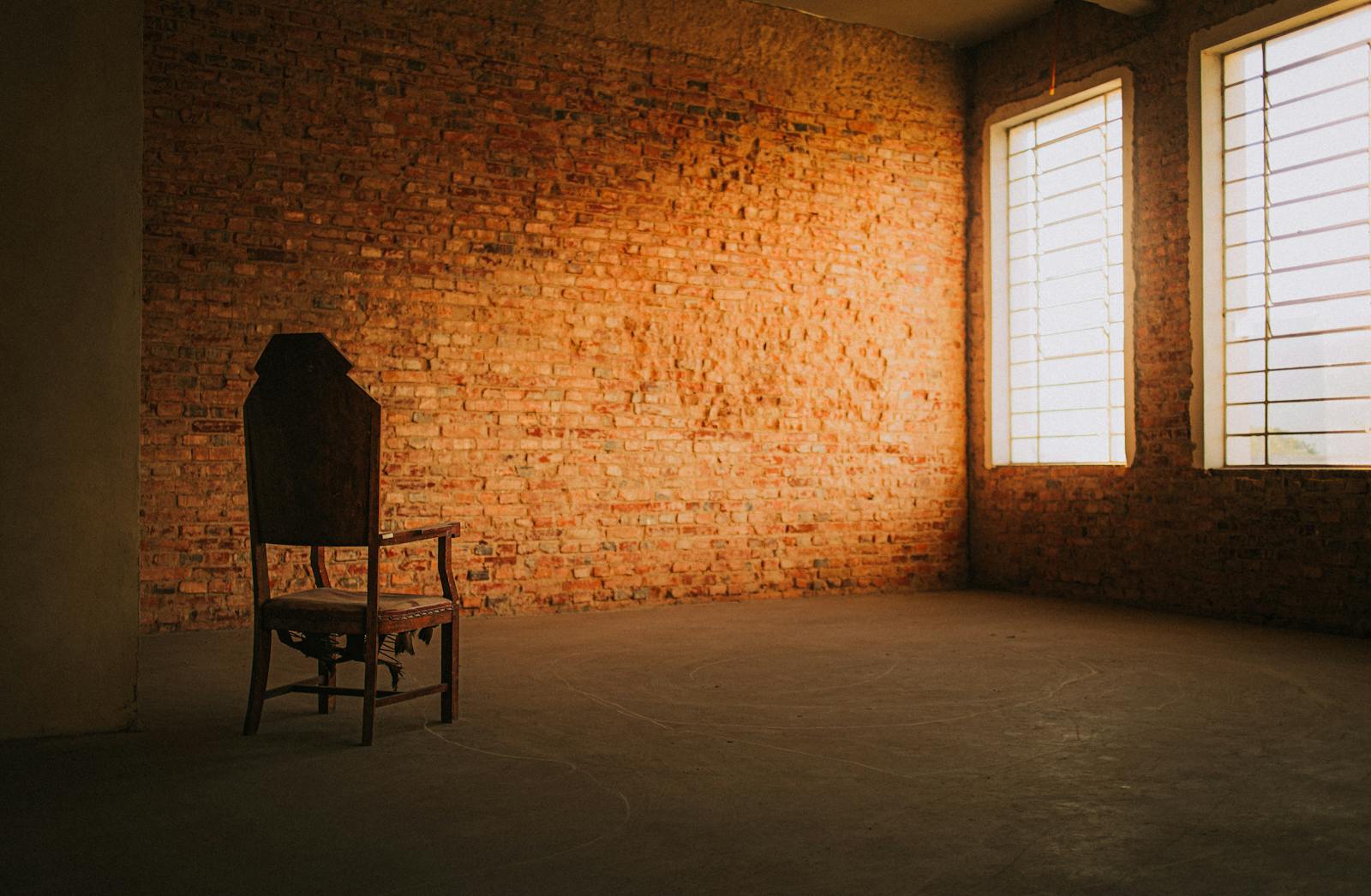
What comes after the imagined life dies
The good news, if we can call it that, is that the collapse of the imagined life creates a vacancy. And vacancies, psychologically, are where new things grow.
When you stop orienting toward a projected future, the present becomes available in a way it hasn’t been since childhood. Small pleasures register. An afternoon without plans feels like space rather than failure. The relentless internal narration of being not quite there yet begins to quiet down.
Some of the research on midlife actually contradicts the crisis narrative. Decades of psychological study suggest that the popular portrayal of midlife as universally bleak doesn’t hold. Many people report increased satisfaction, clearer priorities, and a diminished need for external validation. The crisis, when it happens, may be less about decline and more about the painful but ultimately productive moment when the projected self finally gives way to the real one.
Setiya frames this as an opportunity. Not in the motivational-poster sense. In the specific sense that midlife invites a reorientation from what he calls ameliorative activities (things done to fix problems or achieve goals) toward things with existential value (things done because they matter right now, not because they lead somewhere).
That distinction changed something for me. Not overnight, and not neatly. But gradually.
The version of you that remains
There’s a strange relief that comes after the imagined life dies. You stop performing for an audience of one. The internal critic who kept measuring the gap between projected and actual loses its reference point. If the imagined self was the standard, and the imagined self dissolves, what’s left is just you. Present tense. No comparison.
I won’t pretend that’s simple. Leaving corporate was terrifying. Rebuilding an identity after wrapping too much of it in work and accomplishments was slower than I wanted. But the flip side was real: I could, for the first time, build something on my own terms rather than the terms my twenty-three-year-old self had set.
The forties are the first decade where you have enough evidence to know what’s fiction and enough time left to build something true. That’s not optimism. That’s arithmetic.
The grief doesn’t fully resolve. It can’t. You carried that imagined life for too long for it to evaporate cleanly. But it shifts from a wound to something more like a scar that tells a story. You were someone who hoped hard enough to build an entire world in your head and live in it for twenty years. That’s not pathology. That’s the deeply human act of imagining yourself forward.
The only problem is when you forget to stop imagining and start living.
That part, as it turns out, is the work of the forties. And nobody tells you about it in advance because nobody has words for mourning something that never existed. Except now, maybe, you do.
Feature image by cottonbro studio on Pexels