
The man at the next table is explaining, with a kind of practiced lightness, that he stopped caring what people think about five years ago. He is dressed carefully. His hair is deliberate. He mentions twice, without being asked, that he does not read the comments anymore. His friend nods. He keeps going. By the time the coffee arrives, he has told three different stories that all land on the same punchline: other people’s opinions do not touch him.
I watched this play out for maybe twenty minutes before I realised something uncomfortable. He was not lying. He genuinely believed it.
What he had actually done was more interesting than indifference. He had moved the audience inward.
The freedom that isn’t freedom
The conventional story about caring what others think goes like this: insecure people are ruled by external opinion, and growth means learning to stop. The culture sells this everywhere. Self-help books, podcasts, motivational posts about being unbothered.
But the people who announce their liberation loudest are almost never the ones who have actually achieved it. They have done something subtler. They have installed the judges inside and kept performing.
The real test is not whether one feels watched when other people are in the room. It is whether one feels watched while alone in the kitchen at 2am with no one to impress.
Conformity doesn’t disappear, it changes address
Dr. Kendra Seaman at the University of Texas at Dallas ran a study tracking 157 adults between 18 and 80, pinging them at random intervals to catch their self-control decisions in real time. Her finding was quietly devastating for anyone who thought adulthood was a graduation from peer pressure. The pull of social conformity continues well into middle age, even if older adults get better at managing it.
Research suggests that conventional theories assume adults are better at resisting social pressure, but according to studies on peer pressure susceptibility, the data shows otherwise.
What one might add to that research is a layer it does not quite measure. The people who appear most resistant to conformity are not necessarily resisting it; they have just internalised the audience so thoroughly (and so early, in many cases) that it no longer needs to be in the room.
The internalised jury
Here is what I watched for twelve years as a consultant. Partners who claimed they did not care what the market thought would spend forty minutes rehearsing a throwaway comment for a board meeting. Executives who prided themselves on being unbothered by critics kept mental dossiers of every slight from the last decade. People who claim not to care about others’ opinions are often (it bears noting) the ones who keep the most detailed mental records of criticism.
The audience did not leave. They just moved into the skull.
And the private version is worse, because it never sleeps, never gets distracted, never has its own problems to attend to. The internal judge is always watching, always comparing, always grading against a standard the person can no longer remember agreeing to.
Why the announcement itself gives it away
There is a specific tell. People who have genuinely stopped caring what others think do not usually mention it. They are busy doing things. The announcement is a performance for a particular kind of listener; the version of themselves that still needs to hear it.
Classic conformity research has shown that people will agree with an obviously wrong group answer just to avoid the discomfort of standing alone. Studies have confirmed how pervasive that pull remains, especially in intimate settings where the cost of dissent feels highest.
What the original experiments did not measure is what happens when someone tries to opt out. The people who opt out loudly tend to import the group into themselves. They carry the court with them. The jury goes everywhere.
The subcultures people escape into
One of the more honest findings in recent peer pressure research is that rejecting mainstream approval often just redirects the conformity pressure toward a smaller, stricter audience. The UT Dallas team noted that adult conformity pressure is often triggered by observing peers enacting the behaviour; which means the peer group matters more than the principle. The person who leaves corporate life hoping to escape performance pressure often ends up performing harder for a new tribe. The contrarian who claims to think independently usually thinks exactly what the other contrarians think. The minimalist performs for minimalists. The recovering people-pleaser performs a very specific aesthetic of having stopped pleasing people. One might argue that this is the deeper betrayal of the liberation narrative; not that the audience is still there, but that the new audience (smaller, stricter, often composed of people one has never met) tends to hold its members to a more exacting standard than the old one ever did. The stakes feel higher precisely because the tribe is smaller. The performance intensifies because defection now means losing not just approval but identity itself.
What actually happens when someone stops caring
The people I have met who genuinely do not care what others think share a specific quality, and it is not confidence. It is a kind of mild boredom with the question. They will answer honestly if asked something, and they will also be slightly surprised at the asking, because the topic of how they come across has not been occupying much of their processing power.
They are not performing unbotheredness. They have just moved onto other things.
Vegout Magazine ran a piece recently arguing that the people who actually seem unbothered often paid for that freedom through years of anxious people-pleasing that eventually exhausted their capacity. That is partly right, but it misses something. The ones who ran out of capacity and went quiet are different from the ones who ran out of capacity and went loud. The loud ones are often still in the performance; they have just changed the script.
The men who look fine
Running a solo business for a few years forced me to confront a version of this in myself. I had built an identity around being someone who understood other people’s behaviour, which turned out to be a different thing entirely from understanding my own. I had stopped caring what colleagues thought of my work the day I left McKinsey. What I had not stopped doing was running a private tribunal (composed, absurdly, of people whose approval I had decided I did not need) in which I rehearsed elaborate cases for why I did not need it.
That is not freedom. That is relocation.
There is a pattern here; men who are deeply unhappy but hide it well describe essentially the same machinery. The performance looks like strength from outside. Inside, it is a full-time job.
Why this matters more than it sounds
The private-audience version of caring what people think is harder to exit than the public version, for three reasons.
First, one cannot argue with it. A real audience can be avoided, blocked, or outgrown. The one in the head has root access.
Second, the language of liberation disguises the ongoing performance. Once someone has told themselves and everyone else that they have escaped, they no longer have a framework to notice when they have not. The exit door has been closed behind them.
Third, the internalised judges tend to be composites. They are the harshest critic one ever had, blended with the parent whose approval one did not get, blended with a version of oneself at fifteen who would be disappointed now. Real audiences are messy and inconsistent. Internal ones are brutal and coherent.
The people who actually seem unoffendable
There is an adjacent pattern worth naming. What looks like thick skin is often a decision not to show hurt; people who appear impossible to offend have often decided long ago that showing hurt gives others a map they have not earned, so they absorb the wound and reclassify it. The I-don’t-care-what-people-think crowd uses a version of the same move, but pitched one register higher. They are not absorbing the wound silently. They are announcing that the wound is impossible.
The announcement is the giveaway.
What to look for instead
For those curious whether someone has actually stopped caring what people think, the method is to stop listening to what they say about it and watch what they do when they are criticised. The genuinely indifferent person looks briefly confused, considers whether the criticism is useful, and moves on. The internally-audienced person has a reaction, manages it, and then performs having managed it.
The tell is the second layer. The management of the reaction. The meta-performance of being fine.
And for anyone curious whether they have actually stopped caring, the question is not how one feels in public. It is what one says to oneself after making a mistake alone. The voice that answers (whose voice is it, really? whose standard is it using?) was agreed to at some point, though the moment of agreement is usually lost.
The exit that doesn’t exist
Here is the part that is genuinely hard. There is no clean exit from caring what other people think. Humans are social animals whose survival for most of our evolutionary history depended on group approval. The nervous system was built for it. The software cannot be uninstalled.
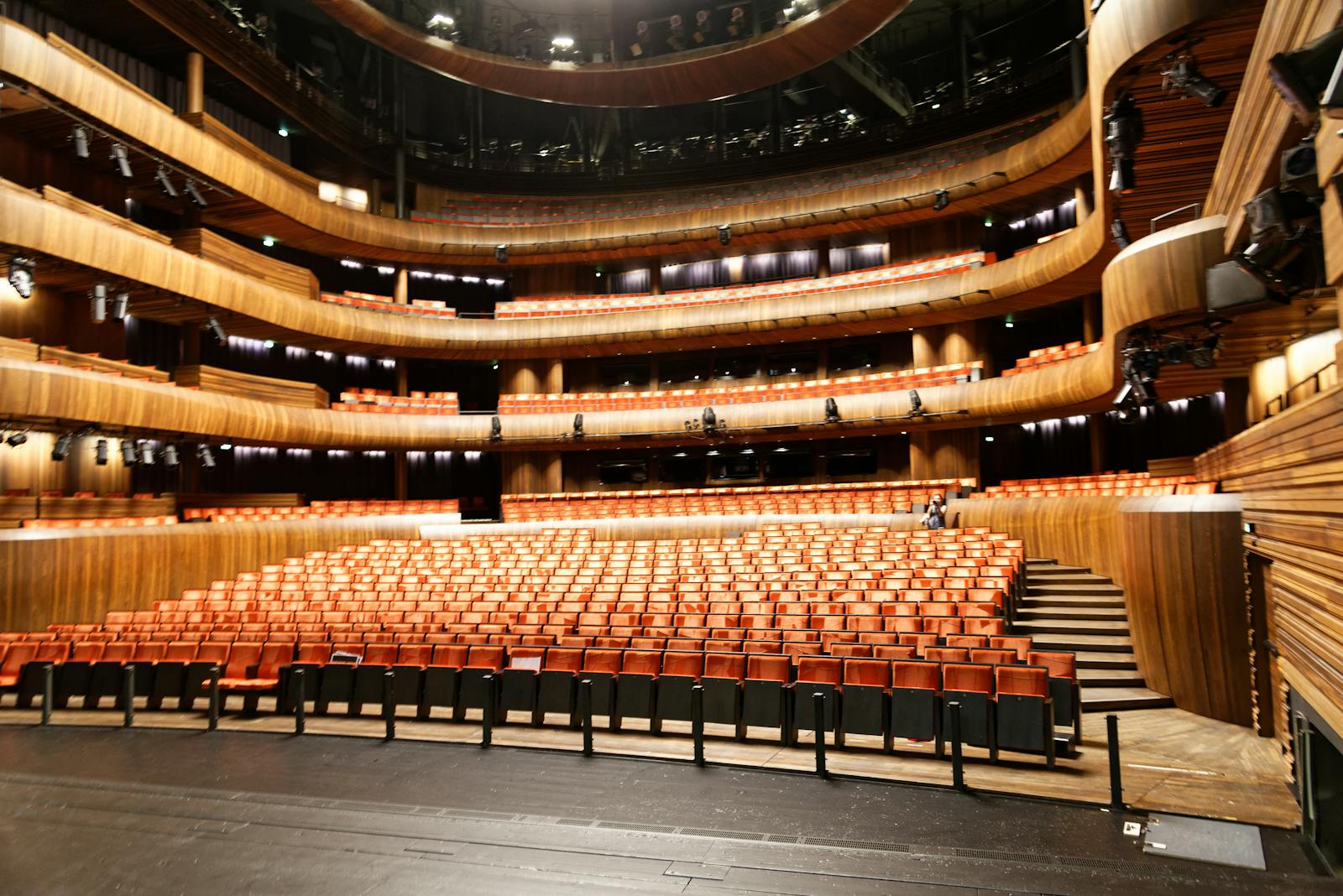
What can be done is to notice the audience. To name it. To ask, on a given day, whose approval is actually being sought and whether those people are even real anymore.
Some of the judges in the head are people one has not seen in twenty years. Some are composites of people who never existed. Some are versions of oneself long outgrown but never formally informed of their obsolescence.
The work is not to silence them. It is to stop pretending they have already left.
A quieter version of honesty
The people one comes to trust on this topic do not claim to have escaped anything. They will say, plainly, that they still feel the pull. They will admit that a bad review stings, that an unfollowed friend lingers, that a comment at dinner can rearrange an afternoon. And then they will do the thing they were going to do anyway. Whether that counts as freedom, or simply a more sustainable accommodation with the same ancient machinery, is a question one might argue either way; the honest among them tend not to settle it.
The ones at the next café table, explaining at length how little they care, are running some version of the same program on different hardware. Perhaps the rest of us are too, in quieter ways we have not yet learned to notice. The audience did not leave for them; it is worth asking, occasionally and without flattering oneself with the answer, whether it ever truly leaves for anyone.
Feature image by MART PRODUCTION on Pexels