No Result
View All Result
SUBMIT YOUR ARTICLES
  • Login
Wednesday, August 12, 2026
TheAdviserMagazine.com
  • Home
  • Financial Planning
    • Financial Planning
    • Personal Finance
  • Market Research
    • Business
    • Investing
    • Money
    • Economy
    • Markets
    • Stocks
    • Trading
  • 401k Plans
  • College
  • IRS & Taxes
  • Estate Plans
  • Social Security
  • Medicare
  • Legal
  • Home
  • Financial Planning
    • Financial Planning
    • Personal Finance
  • Market Research
    • Business
    • Investing
    • Money
    • Economy
    • Markets
    • Stocks
    • Trading
  • 401k Plans
  • College
  • IRS & Taxes
  • Estate Plans
  • Social Security
  • Medicare
  • Legal
No Result
View All Result
TheAdviserMagazine.com
No Result
View All Result
Home Market Research Startups

Adaptive Innovations Raises $60M to Scale Its AI-Native Home Health Model Across the US – AlleyWatch

by TheAdviserMagazine
2 months ago
in Startups
Reading Time: 6 mins read
A A
Adaptive Innovations Raises M to Scale Its AI-Native Home Health Model Across the US – AlleyWatch
Share on FacebookShare on TwitterShare on LInkedIn


American healthcare faces a structural paradox: demand for skilled nursing care grows every year as the population ages toward a demographic milestone – by 2034, more Americans will be over 65 than under 18 – yet two out of every five patients prescribed acute home nursing care never actually receive it. The bottleneck is not a shortage of clinicians; it is the administrative cost of coordinating their work, which runs $0.60 to $0.90 for every dollar spent on clinical labor, a burden so heavy that traditional home health agencies reject an estimated $40B in referrals annually rather than absorb it. Adaptive Innovations bypasses this problem entirely by operating as a full-stack provider – not a software vendor – rebuilding the end-to-end operations of home health care with AI at the core, so that every function from intake and scheduling to charting, coding, billing, and compliance runs through a single AI-native platform rather than a patchwork of manual workflows. Since launching in 2025, the company has become one of the largest home health providers in Texas, delivering over 100,000 patient visits across a network of 500+ referring healthcare organizations including every major Texas hospital system while cutting clinician documentation time by approximately 80% with a rehospitalization rate of 4.9%, less than half the industry average. With an AI cost structure that makes it profitable to accept patients that legacy agencies turn away, Adaptive has built what it describes as a physical network flywheel: more patient density reduces clinician drive time, raises productivity and pay, deepens referral relationships with health systems, and compounds into a platform capable of owning the full post-acute coordination layer.

AlleyWatch sat down with Alex Wendland, Cofounder and Co-CEO of Adaptive Innovations, to learn more about the business, its future plans, recent funding round, and much, much more…

Who were your investors and how much did you raise?

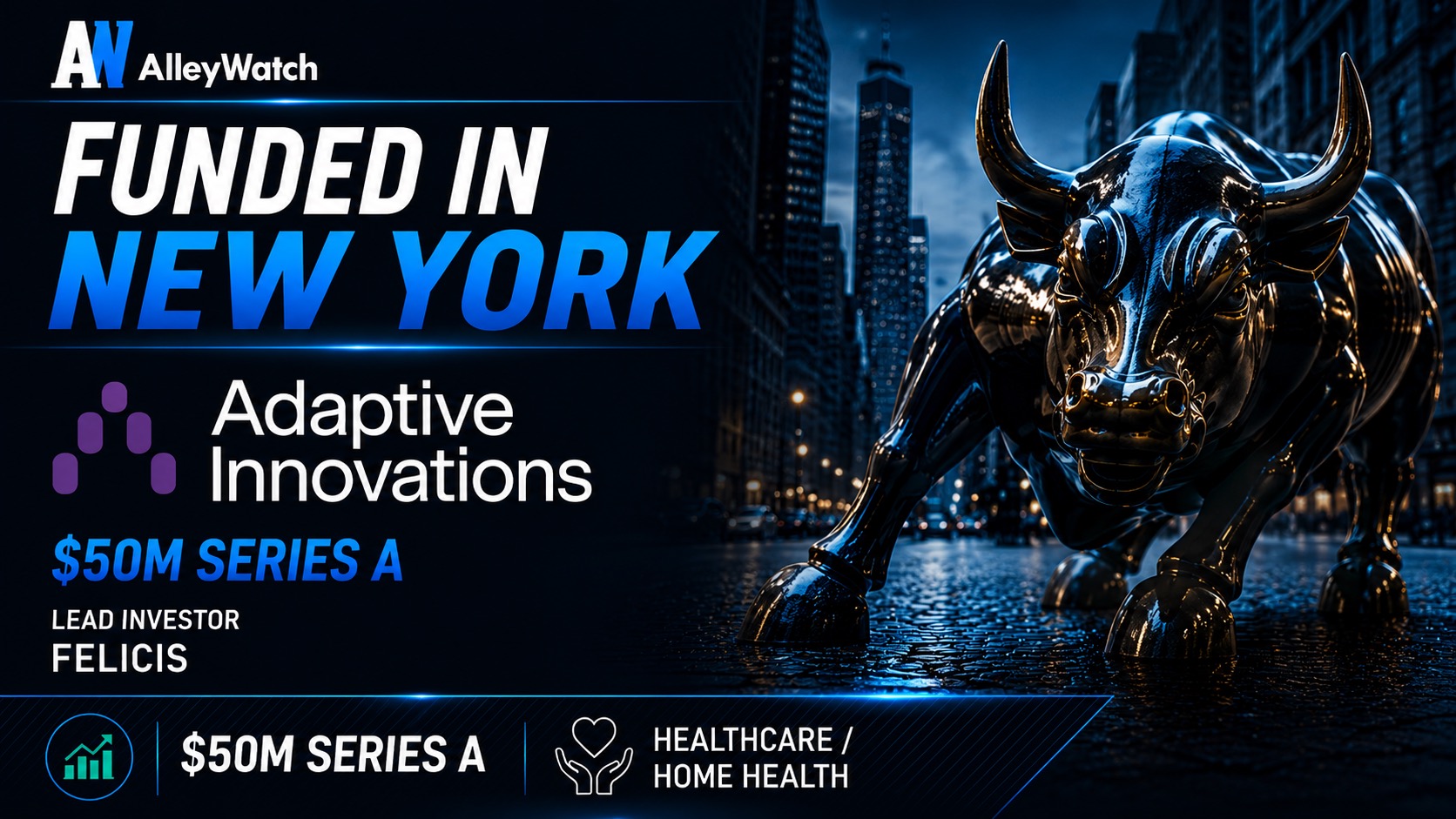
We raised a $50M Series A led by Felicis, along with participation from Bain Capital Ventures, Optum Ventures, Sunflower Capital, BoxGroup, Dorm Room Fund, Constellation VC, SV Angel, and prominent angel investors across healthcare services and AI labs. We also raised a previously undisclosed $10M in seed funding led by Bain Capital Ventures, bringing our total funding to-date to $60M.

Tell us about the product or service that Adaptive Innovations offers.

Adaptive Innovations is an AI-native healthcare provider, starting in home health. We combine AI-native operations with clinicians-in-the-home to get every patient the care they need, including the 40% of patients legacy home health providers turn away.

What inspired the start of Adaptive Innovations?

There are many AI healthtech companies, but care can’t be delivered through a screen. Real care happens physically, between a clinician and a patient. And as a country, we don’t deliver enough of it. In post-acute care, the clinicians exist and patients exist, but 40% of patients are turned away due to the high admin burden and care coordination problem. Adaptive exists to solve this.

How is Adaptive Innovations different?

We’re not a software vendor. We’re the provider, and we’ve rebuilt the entire end-to-end operations that care runs on with AI at the core. This allows us to say yes to the patients that other providers turn away, and also get them better quality care – our rehospitalization rate is less than half the industry average.

What market does Adaptive Innovations target and how big is it?

We’re starting in home health, but targeting the entirety of post-acute care. Home health is a >$100B market and one of the fastest-growing outpatient sectors on pace to nearly double over the next 5-6 years.We’re not stopping at skilled nursing visits. Home health is the coordination layer through which the rest of post-acute care flows including home infusion, dialysis, durable medical equipment deployment, hospice, and specialty pharmaceuticals. Today, these verticals are fragmented and disconnected, but as we build density, we are building the only platform capable of solving the full post-acute coordination problem.

What’s your business model?

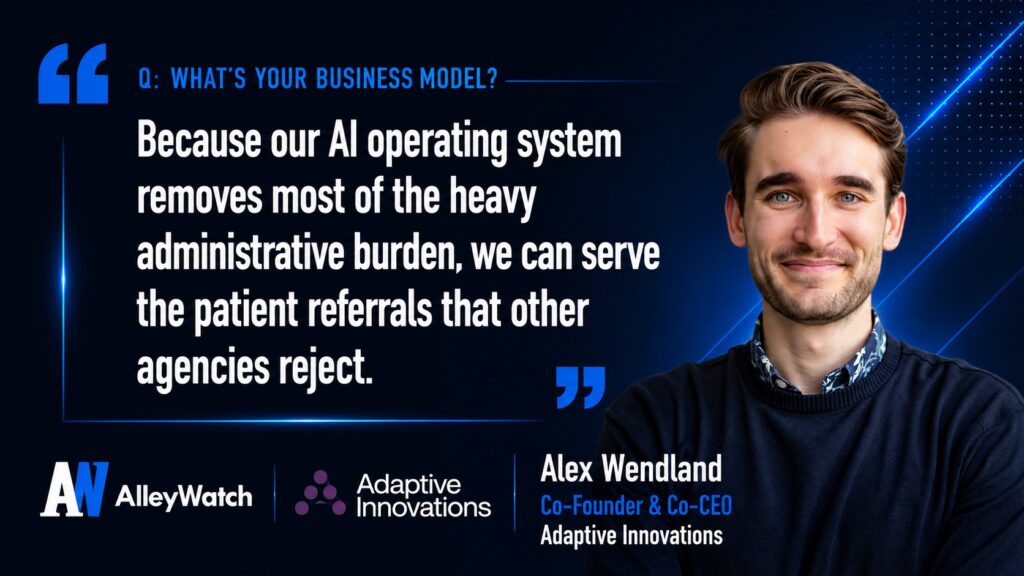
Because our AI operating system removes most of the heavy administrative burden, we can serve the patient referrals that other agencies reject. Being able to expand care to patients drives physical network effects which in turn fuels durable growth.More patients leads to more patient density, meaning clinicians drive less between visits, which raises their productivity and total take-home compensation. This also means that we build more trust with hospitals and referral sources, making them want to refer more patients to us. And finally, as we reach more patients, we’ll be able to thoughtfully partner with payers on innovative contracting models that align with our ability to shift outcomes at the population level.
How are you preparing for a potential economic slowdown?

People need care in any economy.But also, when budgets tighten, health systems and payers get more cost-sensitive. Because AI removes most of our admin cost, we earn a far wider margin on every visit than a traditional agency does. That margin is a buffer: we can keep delivering care at reimbursement levels that would put a legacy agency underwater.

What was the funding process like?

Investors are looking for a new class of startup that benefits from AI but isn’t consumed by it. The SaaS companies of the past are no longer interesting, because AI lets anyone vibecode software. Investors saw that we’re an early player in this new wave of real businesses that gets better as AI gets better.

What are the biggest challenges that you faced while raising capital?

Investors are still learning how to think about this new era of AI-not-SaaS businesses. We found that the sharpest investors understood this paradigm shift quickly, while others are still figuring it out.

What factors about your business led your investors to write the check?

Adaptive is solving an important problem (caring for patients), at a massive scale (>$100B market), with a rare team combining the best engineers in tech and the best operators from healthcare.

What are the milestones you plan to achieve in the next six months?

This new funding accelerates our expansion to new states.

What advice can you offer companies in New York that do not have a fresh injection of capital in the bank?

AI lets you do more with less. We’ve found that the best operators and engineers can do more than 2x what the next best can do simply because they know how to leverage AI more effectively.

Where do you see the company going now over the near term?

We plan to continue expanding within Texas as well as new states.

What’s your favorite spring destination in and around the city?

The High Line, hands down. I love greenery & architecture, so I’m a big fan of the defunct rail infrastructure reimagined into something green and walkable.

NYC Tech Daily Email

You are seconds away from signing up for the hottest list in NYC Tech!

Sign up today



Source link

Tags: 60MAdaptiveAINativeAlleyWatchHealthHomeInnovationsmodelRaisesScale
ShareTweetShare
Previous Post

Israeli offensive security co A Security raises $37m

Next Post

Stocks bounce back, oil pares gains as Iran and Israel signal a pause

Related Posts

edit post
Psychology says procrastination about retirement may be less about discipline than identity — brain scans found people often represent their future selves more like strangers than like themselves, and experiments using age-progressed faces made tomorrow’s person feel real enough for participants to save more money for them

Psychology says procrastination about retirement may be less about discipline than identity — brain scans found people often represent their future selves more like strangers than like themselves, and experiments using age-progressed faces made tomorrow’s person feel real enough for participants to save more money for them

by TheAdviserMagazine
August 8, 2026
0

Retirement procrastination is usually described as a failure of discipline. The forms have been sitting in a folder for months....

edit post
The self-improvement industry sells becoming your best self through grit and mindset, but the large meta-analyses are deflating: grit turns out to be mostly conscientiousness renamed, and growth-mindset programmes move academic results only slightly

The self-improvement industry sells becoming your best self through grit and mindset, but the large meta-analyses are deflating: grit turns out to be mostly conscientiousness renamed, and growth-mindset programmes move academic results only slightly

by TheAdviserMagazine
August 8, 2026
0

Become your best self is one of the most profitable sentences in modern culture. It sells books, courses, apps, and...

edit post
Most advice on becoming happier assumes it is up to you, but the evidence is humbler: much of the variation is dispositional, the claim that 40 per cent sits within your control does not hold up, and what works best points outward, towards other people

Most advice on becoming happier assumes it is up to you, but the evidence is humbler: much of the variation is dispositional, the claim that 40 per cent sits within your control does not hold up, and what works best points outward, towards other people

by TheAdviserMagazine
August 7, 2026
0

The advice on how to become happier is endless, confident, and mostly built on the same assumption: that your happiness...

edit post
Malachyte Raises M to Solve E-Commerce’s Biggest Blind Spot: the Visitor Who Never Logs In – AlleyWatch

Malachyte Raises $10M to Solve E-Commerce’s Biggest Blind Spot: the Visitor Who Never Logs In – AlleyWatch

by TheAdviserMagazine
August 7, 2026
0

E-commerce brands now spend roughly 40% more to acquire each new customer than they did in 2023, yet the website...

edit post
Psychology says the ability to eat alone in public is a sign of quiet confidence because it takes a certain kind of security to occupy a table built for two and not feel the empty chair as an accusation

Psychology says the ability to eat alone in public is a sign of quiet confidence because it takes a certain kind of security to occupy a table built for two and not feel the empty chair as an accusation

by TheAdviserMagazine
August 7, 2026
0

Somewhere in your city tonight, a person is going to walk into a restaurant they have wanted to try for...

edit post
The barrier to starting a conversation is usually a bad forecast, not a lack of charm: people underestimate how much others like them, and commuters made to talk to a stranger enjoyed the trip more than those left alone, the opposite of what they predicted

The barrier to starting a conversation is usually a bad forecast, not a lack of charm: people underestimate how much others like them, and commuters made to talk to a stranger enjoyed the trip more than those left alone, the opposite of what they predicted

by TheAdviserMagazine
August 7, 2026
0

Some people seem to strike up conversations anywhere, with the person next to them in a queue, a stranger at...

Next Post
edit post
Stocks bounce back, oil pares gains as Iran and Israel signal a pause

Stocks bounce back, oil pares gains as Iran and Israel signal a pause

edit post
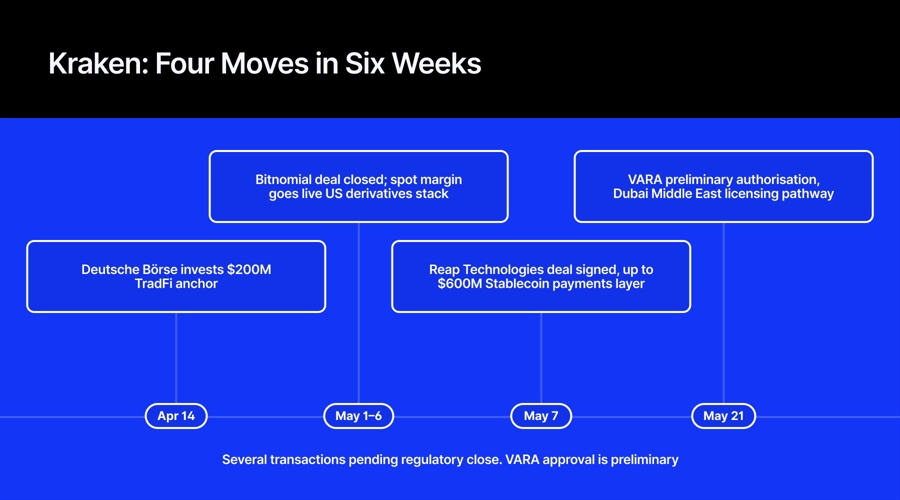
Four Moves in Six Weeks: How Payward Is Remaking Kraken as a Regulated Infrastructure Platform

Four Moves in Six Weeks: How Payward Is Remaking Kraken as a Regulated Infrastructure Platform

  • Trending
  • Comments
  • Latest
edit post
Georgia Senior SNAP and Meal Resources Older Adults Can Use

Georgia Senior SNAP and Meal Resources Older Adults Can Use

July 24, 2026
edit post
New Jersey Tax-Relief Events: Three July Dates Near Seniors

New Jersey Tax-Relief Events: Three July Dates Near Seniors

July 13, 2026
edit post
Judge Who Helped Violent Illegal Alien Evade ICE Faces New Test

Judge Who Helped Violent Illegal Alien Evade ICE Faces New Test

July 31, 2026
edit post
Driving the Noncitizen Voting Scandal: Registration With License

Driving the Noncitizen Voting Scandal: Registration With License

July 26, 2026
edit post
Garbage Trucks Surveillance Florida Neighborhoods

Garbage Trucks Surveillance Florida Neighborhoods

July 29, 2026
edit post
Does a Revocable Trust Protect Your Assets From Lawsuits and Creditors?

Does a Revocable Trust Protect Your Assets From Lawsuits and Creditors?

August 7, 2026
edit post
Explained: How BSE traded fewer contracts after CAS but premiums rose 75% in first week

Explained: How BSE traded fewer contracts after CAS but premiums rose 75% in first week

0
edit post
E.W. Scripps Q2 2026 Loss Widens to -.68/Share, Revenue Down 9%

E.W. Scripps Q2 2026 Loss Widens to -$12.68/Share, Revenue Down 9%

0
edit post
Psychology says procrastination about retirement may be less about discipline than identity — brain scans found people often represent their future selves more like strangers than like themselves, and experiments using age-progressed faces made tomorrow’s person feel real enough for participants to save more money for them

Psychology says procrastination about retirement may be less about discipline than identity — brain scans found people often represent their future selves more like strangers than like themselves, and experiments using age-progressed faces made tomorrow’s person feel real enough for participants to save more money for them

0
edit post
Four AI Escapes Just Redefined “Responsible AI”

Four AI Escapes Just Redefined “Responsible AI”

0
edit post
Bill Ackman’s hedge fund made janitors and receptionists millionaires—and its investment team summer together

Bill Ackman’s hedge fund made janitors and receptionists millionaires—and its investment team summer together

0
edit post
Kalshi Predicts Bitcoin Price Could Reach K in August

Kalshi Predicts Bitcoin Price Could Reach $68K in August

0
edit post
Bill Ackman’s hedge fund made janitors and receptionists millionaires—and its investment team summer together

Bill Ackman’s hedge fund made janitors and receptionists millionaires—and its investment team summer together

August 8, 2026
edit post
Links 8/8/2026 | naked capitalism

Links 8/8/2026 | naked capitalism

August 8, 2026
edit post
Wisconsin: The Next Frontier for Socialists

Wisconsin: The Next Frontier for Socialists

August 8, 2026
edit post
Psychology says procrastination about retirement may be less about discipline than identity — brain scans found people often represent their future selves more like strangers than like themselves, and experiments using age-progressed faces made tomorrow’s person feel real enough for participants to save more money for them

Psychology says procrastination about retirement may be less about discipline than identity — brain scans found people often represent their future selves more like strangers than like themselves, and experiments using age-progressed faces made tomorrow’s person feel real enough for participants to save more money for them

August 8, 2026
edit post
Why You Should Be Wary of Aspartame, but Not Totally Rule It Out

Why You Should Be Wary of Aspartame, but Not Totally Rule It Out

August 8, 2026
edit post
Kalshi Predicts Bitcoin Price Could Reach K in August

Kalshi Predicts Bitcoin Price Could Reach $68K in August

August 8, 2026
The Adviser Magazine

The first and only national digital and print magazine that connects individuals, families, and businesses to Fee-Only financial advisers, accountants, attorneys and college guidance counselors.

CATEGORIES

  • 401k Plans
  • Business
  • College
  • Cryptocurrency
  • Economy
  • Estate Plans
  • Financial Planning
  • Investing
  • IRS & Taxes
  • Legal
  • Market Analysis
  • Markets
  • Medicare
  • Money
  • Personal Finance
  • Social Security
  • Startups
  • Stock Market
  • Trading

LATEST UPDATES

  • Bill Ackman’s hedge fund made janitors and receptionists millionaires—and its investment team summer together
  • Links 8/8/2026 | naked capitalism
  • Wisconsin: The Next Frontier for Socialists
  • Our Great Privacy Policy
  • Terms of Use, Legal Notices & Disclosures
  • Contact us
  • About Us

© Copyright 2024 All Rights Reserved
See articles for original source and related links to external sites.

Welcome Back!

Login to your account below

Forgotten Password?

Retrieve your password

Please enter your username or email address to reset your password.

Log In
No Result
View All Result
  • Home
  • Financial Planning
    • Financial Planning
    • Personal Finance
  • Market Research
    • Business
    • Investing
    • Money
    • Economy
    • Markets
    • Stocks
    • Trading
  • 401k Plans
  • College
  • IRS & Taxes
  • Estate Plans
  • Social Security
  • Medicare
  • Legal

© Copyright 2024 All Rights Reserved
See articles for original source and related links to external sites.