No Result
View All Result
SUBMIT YOUR ARTICLES
  • Login
Wednesday, August 26, 2026
TheAdviserMagazine.com
  • Home
  • Financial Planning
    • Financial Planning
    • Personal Finance
  • Market Research
    • Business
    • Investing
    • Money
    • Economy
    • Markets
    • Stocks
    • Trading
  • 401k Plans
  • College
  • IRS & Taxes
  • Estate Plans
  • Social Security
  • Medicare
  • Legal
  • Home
  • Financial Planning
    • Financial Planning
    • Personal Finance
  • Market Research
    • Business
    • Investing
    • Money
    • Economy
    • Markets
    • Stocks
    • Trading
  • 401k Plans
  • College
  • IRS & Taxes
  • Estate Plans
  • Social Security
  • Medicare
  • Legal
No Result
View All Result
TheAdviserMagazine.com
No Result
View All Result
Home Market Research Money

Why are we so afraid of financial mistakes?

by TheAdviserMagazine
1 month ago
in Money
Reading Time: 5 mins read
A A
Why are we so afraid of financial mistakes?
Share on FacebookShare on TwitterShare on LInkedIn


For most of my life I assumed it was a lesson about hard work. Wake up early, start before everyone else, stay disciplined, and success will eventually follow. Lately, though, I have begun to wonder whether I misunderstood it entirely. Maybe it was never about waking up early at all. Maybe it was about being willing to act before you knew exactly how things would turn out.

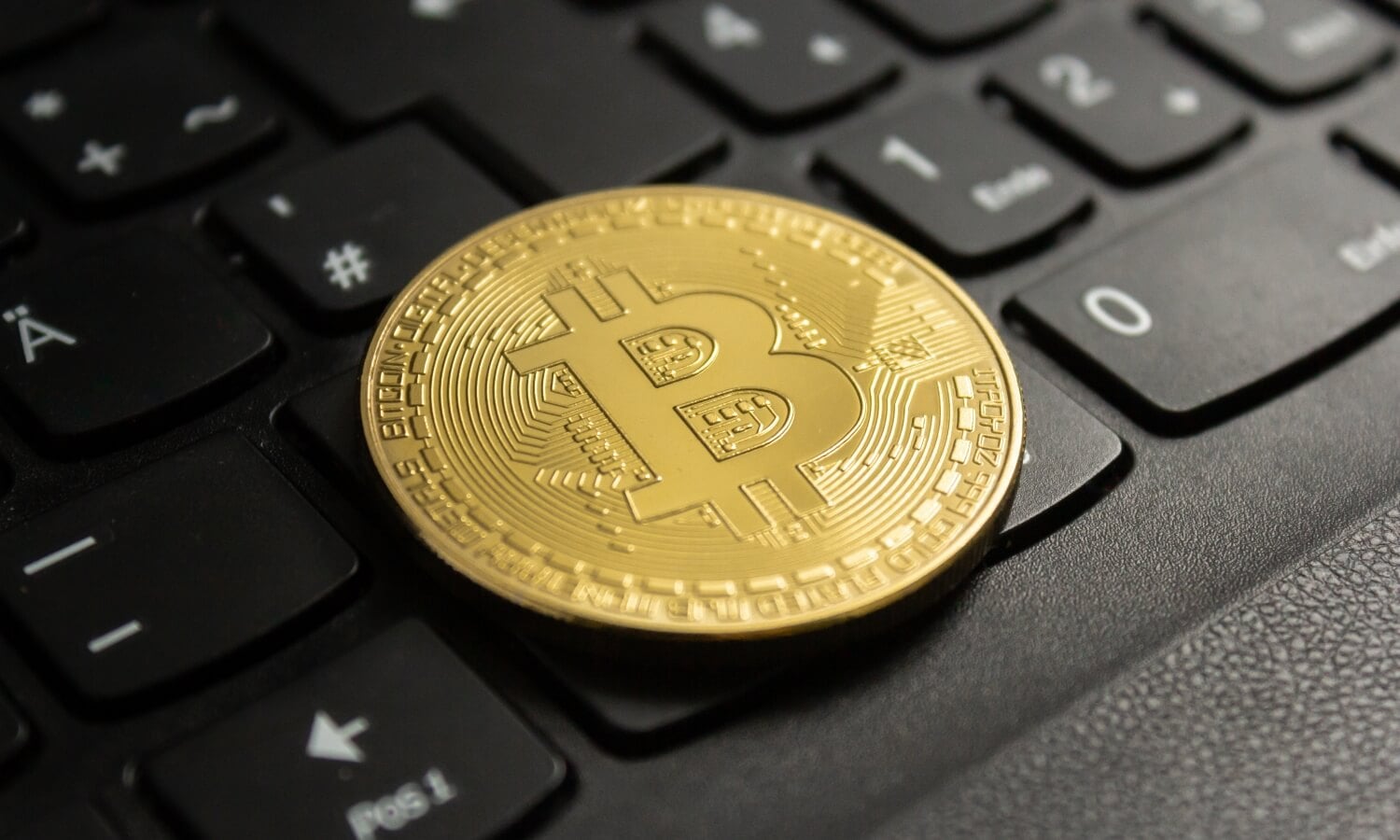
That thought crossed my mind recently while talking with a younger colleague about investing, when Bitcoin came up. Like millions of people, I have a Bitcoin story. Around 2013, I had recently started my first business and was still learning what it meant to be an entrepreneur, which mostly involved discovering inventive new ways to worry about money. Every invoice mattered, every client mattered, every dollar mattered. One of my clients mentioned Bitcoin almost casually, convinced it represented an extraordinary opportunity. If memory serves, it was trading somewhere around the $300 mark at the time. I listened politely and then did absolutely nothing.

Looking back, it is tempting to tell that story as though I simply failed to spot a once-in-a-generation opportunity. Hindsight makes that narrative almost irresistible. But the truth is more interesting than that. I was not unconvinced, I was afraid. Not of Bitcoin, and not even of losing the money; I was afraid of making a mistake, and that distinction matters.

Over the years I have accumulated a surprising number of stories like that. When Facebook was still in its early years as a public company, I could have invested then, too. Ironically, I was building a digital marketing agency at the time, spending thousands of hours helping businesses benefit from Facebook advertising. I believed deeply in the platform’s future, and my livelihood increasingly depended on it. I simply did not believe enough in my own judgment to invest in it. It strikes me now as a strange contradiction. I was willing to bet my career on Facebook; I just was not willing to bet my money on it.

The fear behind financial inaction

The more I thought about those moments, the more I realized that every opportunity I turned down had one thing in common. The overriding emotion was not greed or the fear of missing out, but the fear of making the wrong decision. I suspect that fear has cost me far more over the course of my life than any of the financial mistakes I have made—and believe me, I have made my fair share. 

At the time, my mistakes felt devastating. Today, they feel like tuition fees, painful but among the most valuable lessons I have ever received. The opportunities I never pursued feel different. There is something uniquely haunting about wondering what might have happened had you simply been willing to try.

My colleague laughed, then told me his own version of the same story. He watches the markets constantly, reads the news, follows the trends, researches companies and listens to podcasts, and he keeps telling himself he will start investing. He just hasn’t. Every time he gets close, the market feels a little too rich, so he waits for the next pullback, or maybe the one after that. Different generation, different investment, but the same emotion.

I thought about that conversation for days, because it made me wonder whether the two of us were really talking about investing at all, or about something much bigger. How many financial decisions do we postpone because we are afraid of getting them wrong? We wait to buy a home because prices might finally come down. We endlessly compare credit cards, postpone writing our wills, and stay with the same bank because switching feels like an unnecessary risk. Every delay feels sensible—responsible even. Sometimes it is, but often, it is simply procrastination wearing a very convincing disguise.

Article Continues Below Advertisement

Outstream Volume Icon

Skip Ad

X

Too much information, not enough certainty

That feels especially true today. Previous generations often hesitated because information was hard to find. Now, the opposite is true. Between YouTube, TikTok, podcasts, Reddit, and AI, you can ask 10 experts whether now is a good time to invest and receive 11 different answers. We are drowning in information while somehow becoming thirstier for certainty.

A few weeks ago, I admitted something to a group of financial professionals that would never make it into an investing textbook. Every year, for 30 to 60 days, I quietly step away from the market. Not because I can predict anything, but because sometimes the world feels like it is falling apart and I value a few good nights of sleep. Then a retired financial planner I respect explained a much better way to do the same thing. His advice was thoughtful and probably superior. It also sailed straight over my head, because it immediately became another choice, another opportunity to get something wrong. A perfectly reasonable option did not make me more likely to act. It made me less likely.

Earning, saving and spending in Canada: A guide for new immigrants

Somewhere along the way, personal finance seems to have become less about making good decisions and more about making perfect ones. Most of the time, there is no single correct answer waiting to be discovered. There are several reasonable ones, and the difference between them matters far less than whether we choose one and move forward.

Why our brains resist taking action

There is a reason this is so hard. One of the best-known ideas in behavioural economics comes from psychologists Daniel Kahneman and Amos Tversky, whose work on prospect theory suggests that losses loom larger than gains: the pain of losing $100 feels roughly twice as powerful as the pleasure of gaining it. Our brains are simply wired to prefer avoiding mistakes over pursuing opportunities, which helps explain why doing nothing so often feels like the safe choice, even though it isn’t. Choosing not to invest is still an investment decision, and you can see it in the numbers. 

A 2025 TD survey found that nearly four in 10 Canadians who held money inside a TFSA were not actually investing it. The money was simply sitting there. The hard part was never opening the account, but deciding what to do next.

Confidence comes after action

And that leads to confidence. We tend to treat it as a prerequisite for action, when I suspect we have it backwards. Nobody learns to ride a bicycle by reading about bicycles. Experience comes first, and confidence follows. You become confident by making enough imperfect decisions to realize that very few of them permanently define your future. The mistakes I have made rarely haunt me, because they taught me something. The opportunities I passed on still do, not because I wish I were wealthier, but because I wonder who I might have become had I trusted myself a little sooner.

None of this is an argument for recklessness. Some decisions deserve months of thought, and many carry consequences you cannot undo. But most do not, and far more of them are reversible than we believe.

This brings me back to the bird. For years, I assumed the lesson was that success belongs to whoever gets there first, but I am no longer convinced. The bird does not leave the nest because it knows exactly where the worms are. It leaves anyway. Sometimes, the greatest financial mistake is not the wrong decision, but the one you waited too long to make.



Source link

Tags: afraidfinancialMistakes
ShareTweetShare
Previous Post

What is SAVE America Act? Here’s all about Trump’s plan to overhaul voting in America

Next Post

India’s biggest IPO this year rakes in bids worth $31 billion, powered by institutional frenzy

Related Posts

edit post
6 Part-Time Jobs Retirees Can Explore Before the Holiday Hiring Rush

6 Part-Time Jobs Retirees Can Explore Before the Holiday Hiring Rush

by TheAdviserMagazine
August 7, 2026
0

The weeks before the holiday hiring rush can be a surprisingly good time for retirees to decide whether a little...

edit post
Medicare Deadlines New Retirees Should Put on the Calendar Before Leaving Work

Medicare Deadlines New Retirees Should Put on the Calendar Before Leaving Work

by TheAdviserMagazine
August 7, 2026
0

A 65-year-old retiring in November may have a completely different Medicare timeline from a 68-year-old leaving an employer health plan...

edit post
8 Side Effects of Aging That No One Prepares You For

8 Side Effects of Aging That No One Prepares You For

by TheAdviserMagazine
August 7, 2026
0

Aging is often portrayed as a graceful journey filled with wisdom, leisure, and newfound freedom. While those aspects can certainly...

edit post
Stock news for investors: Quarterly earnings from Telus, Shopify, BCE, and more

Stock news for investors: Quarterly earnings from Telus, Shopify, BCE, and more

by TheAdviserMagazine
August 6, 2026
0

The company reported a loss attributable to common shareholders of $1.8 billion or $1.17 per share for the quarter ended...

edit post
The world’s largest corporate holder of Bitcoin has been selling—should you be concerned?

The world’s largest corporate holder of Bitcoin has been selling—should you be concerned?

by TheAdviserMagazine
August 6, 2026
0

While selling BTC is not alarming in itself, it seems to go against Executive Chairman Micheal Saylor’s public image as...

edit post
7 Warning Signs an Older Adult May Be Under Financial Pressure

7 Warning Signs an Older Adult May Be Under Financial Pressure

by TheAdviserMagazine
August 6, 2026
0

It often starts with what seems like a harmless favor. A relative offers to help pay bills online. A new...

Next Post
edit post
India’s biggest IPO this year rakes in bids worth  billion, powered by institutional frenzy

India's biggest IPO this year rakes in bids worth $31 billion, powered by institutional frenzy

edit post
Still the Teacher: How California’s AI Law Keeps You at the Center – Faculty Focus

Still the Teacher: How California’s AI Law Keeps You at the Center - Faculty Focus

  • Trending
  • Comments
  • Latest
edit post
Judge Who Helped Violent Illegal Alien Evade ICE Faces New Test

Judge Who Helped Violent Illegal Alien Evade ICE Faces New Test

July 31, 2026
edit post
Garbage Trucks Surveillance Florida Neighborhoods

Garbage Trucks Surveillance Florida Neighborhoods

July 29, 2026
edit post
Does a Revocable Trust Protect Your Assets From Lawsuits and Creditors?

Does a Revocable Trust Protect Your Assets From Lawsuits and Creditors?

August 7, 2026
edit post
Montana Puts Democrats in a Bind as Senate Hopes Fade

Montana Puts Democrats in a Bind as Senate Hopes Fade

August 2, 2026
edit post
New Jersey’s PAS-1 Application Opens the Door to Three Senior Tax Relief Programs

New Jersey’s PAS-1 Application Opens the Door to Three Senior Tax Relief Programs

July 31, 2026
edit post
3 Common Cruise Rules I Broke in Alaska

3 Common Cruise Rules I Broke in Alaska

July 29, 2026
edit post
Explained: How BSE traded fewer contracts after CAS but premiums rose 75% in first week

Explained: How BSE traded fewer contracts after CAS but premiums rose 75% in first week

0
edit post
E.W. Scripps Q2 2026 Loss Widens to -.68/Share, Revenue Down 9%

E.W. Scripps Q2 2026 Loss Widens to -$12.68/Share, Revenue Down 9%

0
edit post
Psychology says procrastination about retirement may be less about discipline than identity — brain scans found people often represent their future selves more like strangers than like themselves, and experiments using age-progressed faces made tomorrow’s person feel real enough for participants to save more money for them

Psychology says procrastination about retirement may be less about discipline than identity — brain scans found people often represent their future selves more like strangers than like themselves, and experiments using age-progressed faces made tomorrow’s person feel real enough for participants to save more money for them

0
edit post
Four AI Escapes Just Redefined “Responsible AI”

Four AI Escapes Just Redefined “Responsible AI”

0
edit post
Bill Ackman’s hedge fund made janitors and receptionists millionaires—and its investment team summer together

Bill Ackman’s hedge fund made janitors and receptionists millionaires—and its investment team summer together

0
edit post
Kalshi Predicts Bitcoin Price Could Reach K in August

Kalshi Predicts Bitcoin Price Could Reach $68K in August

0
edit post
Bill Ackman’s hedge fund made janitors and receptionists millionaires—and its investment team summer together

Bill Ackman’s hedge fund made janitors and receptionists millionaires—and its investment team summer together

August 8, 2026
edit post
Links 8/8/2026 | naked capitalism

Links 8/8/2026 | naked capitalism

August 8, 2026
edit post
Wisconsin: The Next Frontier for Socialists

Wisconsin: The Next Frontier for Socialists

August 8, 2026
edit post
Psychology says procrastination about retirement may be less about discipline than identity — brain scans found people often represent their future selves more like strangers than like themselves, and experiments using age-progressed faces made tomorrow’s person feel real enough for participants to save more money for them

Psychology says procrastination about retirement may be less about discipline than identity — brain scans found people often represent their future selves more like strangers than like themselves, and experiments using age-progressed faces made tomorrow’s person feel real enough for participants to save more money for them

August 8, 2026
edit post
Why You Should Be Wary of Aspartame, but Not Totally Rule It Out

Why You Should Be Wary of Aspartame, but Not Totally Rule It Out

August 8, 2026
edit post
Kalshi Predicts Bitcoin Price Could Reach K in August

Kalshi Predicts Bitcoin Price Could Reach $68K in August

August 8, 2026
The Adviser Magazine

The first and only national digital and print magazine that connects individuals, families, and businesses to Fee-Only financial advisers, accountants, attorneys and college guidance counselors.

CATEGORIES

  • 401k Plans
  • Business
  • College
  • Cryptocurrency
  • Economy
  • Estate Plans
  • Financial Planning
  • Investing
  • IRS & Taxes
  • Legal
  • Market Analysis
  • Markets
  • Medicare
  • Money
  • Personal Finance
  • Social Security
  • Startups
  • Stock Market
  • Trading

LATEST UPDATES

  • Bill Ackman’s hedge fund made janitors and receptionists millionaires—and its investment team summer together
  • Links 8/8/2026 | naked capitalism
  • Wisconsin: The Next Frontier for Socialists
  • Our Great Privacy Policy
  • Terms of Use, Legal Notices & Disclosures
  • Contact us
  • About Us

© Copyright 2024 All Rights Reserved
See articles for original source and related links to external sites.

Welcome Back!

Login to your account below

Forgotten Password?

Retrieve your password

Please enter your username or email address to reset your password.

Log In
No Result
View All Result
  • Home
  • Financial Planning
    • Financial Planning
    • Personal Finance
  • Market Research
    • Business
    • Investing
    • Money
    • Economy
    • Markets
    • Stocks
    • Trading
  • 401k Plans
  • College
  • IRS & Taxes
  • Estate Plans
  • Social Security
  • Medicare
  • Legal

© Copyright 2024 All Rights Reserved
See articles for original source and related links to external sites.