Over the years, I’ve found that bottlenecks often point investors toward some of the market’s biggest opportunities.
And the AI buildout is running into them everywhere you look.
We’ve seen it with AI chips, memory and power infrastructure.
But recently, before the ground is ever broken on many new data centers, they have to overcome another major obstacle.
Public opposition.
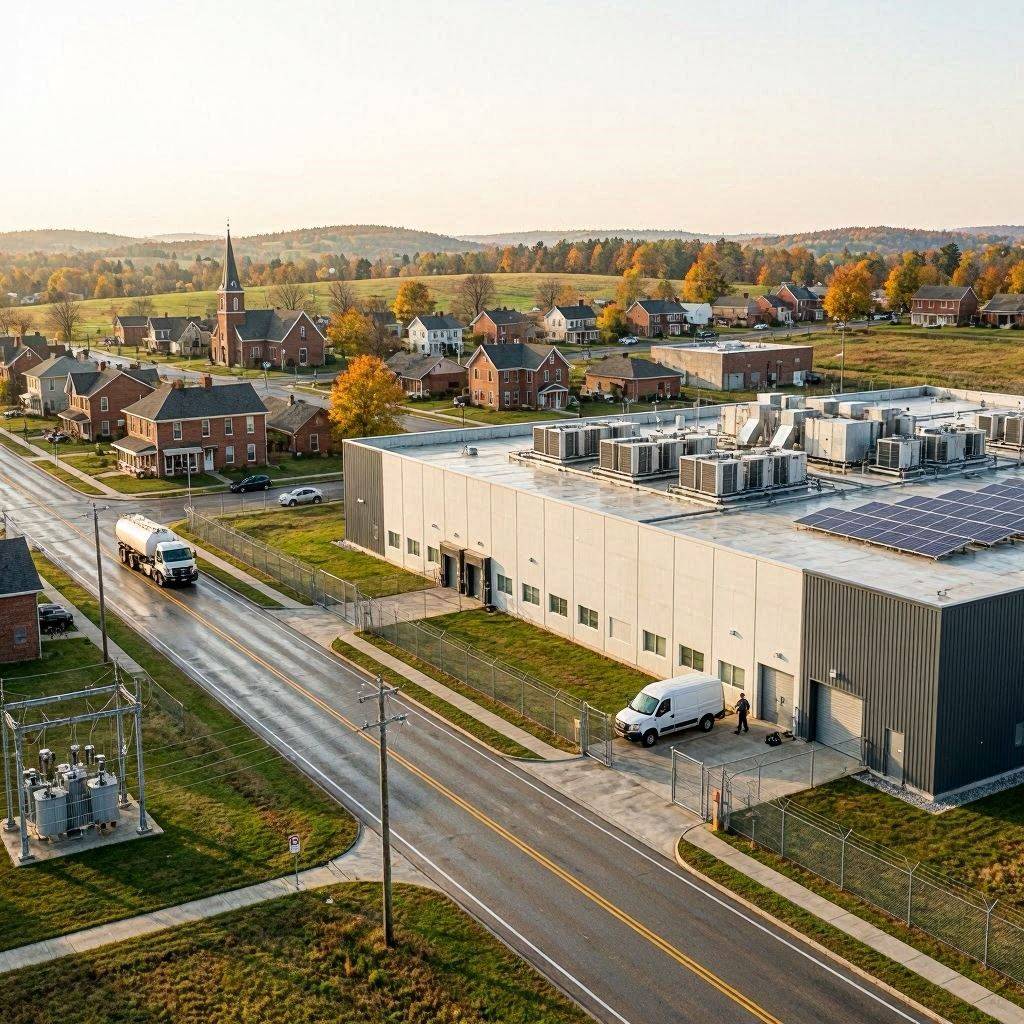
Because where investors see economic opportunity, many communities see higher utility bills, more pressure on local resources and giant buildings replacing open land.
As a result, a growing number of proposed data center projects are running into resistance before construction even begins.
And if that trend continues, the next bottleneck in the AI boom might be persuading the public to build.
The New NIMBY Movement
A few weeks ago, officials in Andover Township, New Jersey voted to prohibit data centers within the community.
The proposal passed unanimously, and the room erupted in cheers.
That’s not a typical reaction when a town rejects a major investment project. But it highlights a growing tension that’s spreading across the country.
The AI industry sees data centers as the foundation of the next technological revolution.
But many local residents see them as something very different. They see giant industrial facilities consuming enormous amounts of electricity and water while creating relatively few permanent jobs once the construction crews leave.
And increasingly, communities are pushing back.
In California’s Coachella Valley, residents have protested plans for a massive 450-acre data center campus. Concerns ranged from electricity demand to environmental impacts and water consumption.
In Michigan, Huron County recently approved a three-year moratorium on new data centers while officials study their potential impact on the region.
And in Baltimore, city leaders approved a temporary pause on new projects while conducting additional reviews.
These are just a few recent examples.
And they aren’t really about AI. They’re about the infrastructure needed to support it.
Image: Hanwha Data Centers
You see, electricity isn’t the only resource these facilities consume. Many modern data centers also require significant amounts of water for cooling.
This requirement has become a particularly sensitive issue in drought-prone regions.
Researchers estimate that some large AI facilities can consume millions of gallons of water each year. And as AI workloads become more intensive, cooling requirements will continue to grow alongside power demand.
That’s creating difficult conversations in places already concerned about long-term water availability like Utah, Arizona, Nevada and parts of California.
Because when water is scarce, every gallon becomes a question of allocation.
Should it be reserved for local households or agriculture?
Or is it better used cooling a data center supporting AI services used around the world?
To be fair, the situation isn’t always as straightforward as it might seem. For example, some newer facilities use recycled water or advanced cooling technologies that reduce consumption.

Image: Microsoft
And the industry continues finding ways to make AI infrastructure more efficient.
Amazon recently unveiled new networking technology that reduces hardware requirements while improving performance, allowing more computing power from less physical equipment.
But perception matters.
And perception is shaping local politics as more communities question whether the benefits of AI justify the costs.
Historically, large industrial projects tend to create substantial local employment. Factories hire thousands of workers, and manufacturing plants can support entire local economies.
But data centers are different.
Construction can create hundreds or even thousands of temporary jobs. But once they’re operational, many facilities require a relatively small permanent staff.
That can make the economics of them harder for local residents to accept.
Communities can clearly see what they’re giving up between visual impact, infrastructure demands and resource consumption. But they’re often less certain about what they’re getting in return.
That’s why Brad Gerstner, the founder and CEO of Altimeter Capital, recently argued that communities hosting data centers may need what he called a “tangible and profound dividend.”

Image: Official White House Photo by Joyce N. Boghosian
In other words, if America wants to accelerate AI infrastructure development, he believes local communities should share more directly in the benefits.
And he’s not alone.
OpenAI CEO Sam Altman recently joined Senator Bernie Sanders in discussing whether ordinary Americans should directly benefit from the economic gains created by AI.
And President Trump has also emphasized the importance of ensuring Americans benefit from our leadership in artificial intelligence.
The question is how.
Gerstner hasn’t publicly explained exactly what he has in mind.
But the idea that communities should receive direct benefits from hosting AI infrastructure isn’t radical. After all, energy companies, utilities and infrastructure developers have often provided local benefits when building major projects.
Communities have received everything from road improvements and public facilities to direct investments tied to development.
Data centers could follow a similar model.
Here’s My Take
Reader Andrea B. recently emailed me to say: “AI is now more and more facing BIG pushback; gobbling up taxes and bleeding out our water.”
I understand the frustration. But I don’t think the answer is slowing down the AI buildout.
China certainly isn’t standing still. It’s still investing aggressively in the infrastructure needed to support artificial intelligence.
But that doesn’t mean communities here in the U.S. should simply accept every project.
Instead, we need to find better ways to share the benefits. Because if we get that right, then AI won’t just work for technology companies.
It’ll work for everyone.
Regards,
 Ian KingChief Strategist, Banyan Hill Publishing
Editor’s Note: We’d love to hear from you!
If you want to share your thoughts or suggestions about the Daily Disruptor, or if there are any specific topics you’d like us to cover, just send an email to [email protected].
Don’t worry, we won’t reveal your full name in the event we publish a response. So feel free to comment away!