No Result
View All Result
SUBMIT YOUR ARTICLES
  • Login
Friday, December 12, 2025
TheAdviserMagazine.com
  • Home
  • Financial Planning
    • Financial Planning
    • Personal Finance
  • Market Research
    • Business
    • Investing
    • Money
    • Economy
    • Markets
    • Stocks
    • Trading
  • 401k Plans
  • College
  • IRS & Taxes
  • Estate Plans
  • Social Security
  • Medicare
  • Legal
  • Home
  • Financial Planning
    • Financial Planning
    • Personal Finance
  • Market Research
    • Business
    • Investing
    • Money
    • Economy
    • Markets
    • Stocks
    • Trading
  • 401k Plans
  • College
  • IRS & Taxes
  • Estate Plans
  • Social Security
  • Medicare
  • Legal
No Result
View All Result
TheAdviserMagazine.com
No Result
View All Result
Home Market Research Investing

The Downgrade Is Done. The Investor Response Is Just Beginning

by TheAdviserMagazine
7 months ago
in Investing
Reading Time: 5 mins read
A A
The Downgrade Is Done. The Investor Response Is Just Beginning
Share on FacebookShare on TwitterShare on LInkedIn


For global investors and institutional asset managers, Moody’s downgrade of US sovereign debt is more than a symbolic signal — it’s a market event with portfolio-level consequences. The move by Moody’s to cut the US rating to Aa1 reflects growing concern about long-term fiscal stability, and it forces investment professionals to reassess Treasury exposure, sovereign risk modeling, and forward-looking allocation strategies.

Downgrade with Real Implications

When Moody’s stripped the United States of its triple-A rating after markets closed last Friday (May 16), it cited a “rising tide of debt” and prolonged fiscal inaction. While the downgrade does not change the fundamentals of the US economy, it marks a moment of strategic reflection for global investors.

Rising Debt and Political Gridlock

Moody’s decision did not occur in a vacuum. It followed years of fiscal strain amid gridlock in Washington. Federal debt has surged relative to GDP, and Moody’s projects deficits reaching nearly 9% of GDP by 2035, up from 6.4% in 2024.

The political context was pivotal. The downgrade came amid contentious showdowns over the debt ceiling and federal budget. As this blog went to press, the US House narrowly passed a sweeping tax and spending bill. The statutory debt limit, reinstated in January 2025 at $36.1 trillion, was fast approaching. Analysts warned that the United States could default by mid-July if Congress failed to act. The Trump Administration and Congress had prioritized tax relief and strategic investments to support economic growth, while maintaining a commitment to fiscal responsibility over the long term.

Moody’s warned that extending the 2017 tax cuts would significantly worsen the outlook, adding roughly $4 trillion to deficits over the next decade. Just hours before the downgrade, budget negotiations faced renewed challenges in Congress, underscoring the complexities of achieving bipartisan consensus on long-term fiscal solutions.

Investor Response and Repricing Risk

The downgrade jolted investors but did not trigger panic. Treasury yields jumped in early trading on Monday (May 19) and stocks dipped initially, reflecting routine market adjustments in response to updated credit assessments. “Very surprising…markets were not expecting this at all,” admitted one Wall Street trading head who was caught off guard by the downgrade. However, there was no mass exodus from US assets. Global investors continued to view Treasuries as a safe haven even with a lower rating.

For institutional investors, the downgrade serves as a reminder to revisit sovereign risk frameworks. Portfolio managers may need to adjust asset allocations, hedge exposure to US Treasuries, or recalibrate models that rely on triple-A-rated government debt as a benchmark. While the market response was muted, the rating shift could subtly influence capital weightings and collateral requirements.

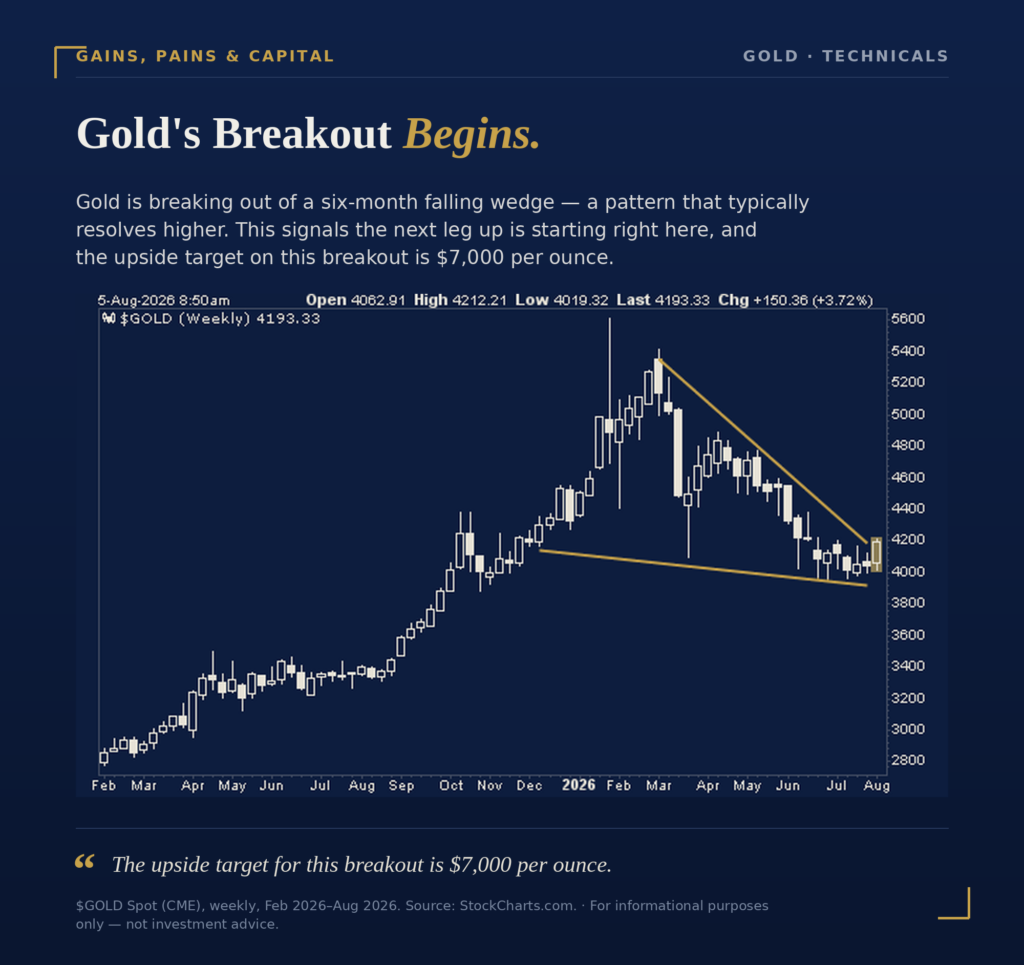
Any rise in US borrowing costs was modest. Credit spreads on highly rated corporate and municipal bonds widened only slightly, signaling a minor repricing of risk rather than a loss of confidence. One notable move was gold’s surge above $3,200 per ounce — a flight-to-safety response. Meanwhile, the US dollar held firm, its reserve-currency status unshaken by a one-notch rating change.

Global Spillovers and EM Vulnerabilities

Moody’s downgrade of US sovereign debt carried symbolic weight far beyond American shores. Financial leaders from Frankfurt to Beijing watched closely, mindful that any shift in US credit conditions can send ripples through global markets. In this case, the ripples were subtle but significant. Global investors reassessed their portfolios over the weekend, balancing the slight uptick in US risk with conditions elsewhere. Emerging markets felt a chill. Some emerging economy bonds and currencies came under pressure as the news sparked a modest “risk-off” mood.

When the world’s benchmark risk-free asset is perceived as marginally riskier, investors often become more cautious toward riskier sovereigns. Indeed, analysts noted a small widening of emerging market sovereign bond spreads on Monday, and a few developing-nation currencies slipped as money moved toward dollar assets.

At the same time, higher US yields — even marginally higher — can attract capital flows out of emerging markets, raising their borrowing costs. For some emerging economies already navigating global financial tightening, the downgrade added a layer of complexity to their outlook. Some finance ministers from Asia and Africa voiced concern that their countries could face capital outflows or higher interest on new debt issuance if global investors demand a higher premium. The consensus among many economists, however, is that the overall impact on emerging markets likely will be contained.

Liability-driven investors, insurance companies, and global fixed income managers may face ripple effects if credit rating changes affect capital reserve calculations or yield expectations. Even minor shifts in perceptions of US credit quality can cascade through models that prioritize safety and duration matching.

Fiscal Credibility and the Investor Outlook

Despite the political drama and Wall Street jitters, the prevailing view in policy circles is that the United States retains extraordinary financial resilience. Moody’s itself acknowledged that US creditworthiness rests on “exceptional credit strengths” — a diverse and productive economy, unrivaled monetary flexibility, and the government’s unblemished record of honoring debt through every crisis. The downgrade has not changed the fact that US Treasury bonds remain the world’s safe asset of choice, underpinning the dollar-based international financial system. No other nation can yet match the United States’ capacity to issue debt at such scale, in its own currency, at relatively low cost.

The real question now is how US policymakers respond. The Moody’s downgrade is more than symbolic; it’s a warning to restore fiscal credibility. That means a medium-term plan to reduce deficits, stabilize debt-to-GDP, and improve policy predictability. As the IMF and others have noted, governance matters: recurring brinkmanship risks eroding investor confidence in Treasuries as the global benchmark.

For long-term investors, a credible bipartisan approach — focused on spending discipline, targeted revenue, and durable policy frameworks — could reinforce the US Treasury market’s central role in global finance. In contrast, ongoing gridlock may lead to higher risk premiums or a shift toward sovereign diversification.

Early signals are modest but encouraging. Lawmakers have revived talks on a fiscal commission, and the White House has shown openness to reform. For markets, what matters isn’t the downgrade — it’s the path forward. The world still depends on a financially sound America. Investors will be watching whether Washington treats this as a warning — or an opportunity.

Source link

Tags: Beginningdowngradeinvestorresponse
ShareTweetShare
Previous Post

Will Jamie Dimon build the first trillion-dollar bank?

Next Post

What the failure of a superstar student reveals about economics

Related Posts

edit post
How to Calculate Cash Flow on a Rental Property

How to Calculate Cash Flow on a Rental Property

by TheAdviserMagazine
December 12, 2025
0

Before you buy your first (or next) real estate deal, you need to know one thing—how to calculate cash flow...

edit post
Migration Trends Are Ramping Up Again—Here’s Where Movers Are Going

Migration Trends Are Ramping Up Again—Here’s Where Movers Are Going

by TheAdviserMagazine
December 10, 2025
0

In This Article For the last few years, the narrative about the U.S. real estate market has been that homeowners...

edit post
AI in Venture Capital: Separating Signal from Noise

AI in Venture Capital: Separating Signal from Noise

by TheAdviserMagazine
December 10, 2025
0

In both public and private markets, AI’s rise has been extraordinary: fewer than a dozen technology stocks now account for...

edit post
I Built a Real Estate Business That Replaced My High-Paying W2 (Here’s How)

I Built a Real Estate Business That Replaced My High-Paying W2 (Here’s How)

by TheAdviserMagazine
December 10, 2025
0

Many rookies assume it’s easier to buy a rental property in their own market, but today’s guest proved you don’t...

edit post
How to Fire Yourself and Still Scale Your Portfolio Successfully

How to Fire Yourself and Still Scale Your Portfolio Successfully

by TheAdviserMagazine
December 9, 2025
0

In This Article This article is presented by RentRedi. There’s a big difference between working in and on your business....

edit post
10 High Dividend Stocks For The Long Run

10 High Dividend Stocks For The Long Run

by TheAdviserMagazine
December 9, 2025
0

Published on December 9th, 2025 by Bob Ciura There’s a beauty to simplicity. And investing doesn’t get much simpler than...

Next Post
edit post
What the failure of a superstar student reveals about economics

What the failure of a superstar student reveals about economics

edit post
Kumar Mangalam Birla’s Grasim gets cheapest rupee bond deal in 5 years

Kumar Mangalam Birla's Grasim gets cheapest rupee bond deal in 5 years

  • Trending
  • Comments
  • Latest
edit post
How Long is a Last Will and Testament Valid in North Carolina?

How Long is a Last Will and Testament Valid in North Carolina?

December 8, 2025
edit post
How to Make a Valid Will in North Carolina

How to Make a Valid Will in North Carolina

November 20, 2025
edit post
Who Should I Choose as My Powers of Attorney?

Who Should I Choose as My Powers of Attorney?

December 6, 2025
edit post
8 Places To Get A Free Turkey for Thanksgiving

8 Places To Get A Free Turkey for Thanksgiving

November 21, 2025
edit post
Could He Face Even More Charges Under California Law?

Could He Face Even More Charges Under California Law?

November 27, 2025
edit post
As ICE Street Raids Ramp Up, New Yorkers Stock Up On Whistles

As ICE Street Raids Ramp Up, New Yorkers Stock Up On Whistles

November 17, 2025
edit post
Ryan Serhant reveals his best networking advice: ‘Every room I go into, I use the two C’s’

Ryan Serhant reveals his best networking advice: ‘Every room I go into, I use the two C’s’

0
edit post
Food inflation leads diners to cheaper menu items

Food inflation leads diners to cheaper menu items

0
edit post
Ripple National Trust Bank Receives Conditional Approval in Massive Step for RLUSD

Ripple National Trust Bank Receives Conditional Approval in Massive Step for RLUSD

0
edit post
8 Discount Programs Seniors Can Use on Winter Utility Bills

8 Discount Programs Seniors Can Use on Winter Utility Bills

0
edit post
Israeli hotel management co Duve raises m

Israeli hotel management co Duve raises $60m

0
edit post
Trying to Find Fault With Samsara Stock

Trying to Find Fault With Samsara Stock

0
edit post
Ryan Serhant reveals his best networking advice: ‘Every room I go into, I use the two C’s’

Ryan Serhant reveals his best networking advice: ‘Every room I go into, I use the two C’s’

December 12, 2025
edit post
Ripple National Trust Bank Receives Conditional Approval in Massive Step for RLUSD

Ripple National Trust Bank Receives Conditional Approval in Massive Step for RLUSD

December 12, 2025
edit post
Boomi lays foundation for enterprises’ agentic transformation

Boomi lays foundation for enterprises’ agentic transformation

December 12, 2025
edit post
Food inflation leads diners to cheaper menu items

Food inflation leads diners to cheaper menu items

December 12, 2025
edit post
*HOT* Beauty Deals at Target = Lip Balm 2-Packs from .10, plus more! {Stocking Stuffers Ideas}

*HOT* Beauty Deals at Target = Lip Balm 2-Packs from $2.10, plus more! {Stocking Stuffers Ideas}

December 12, 2025
edit post
Adani Green insider trading: Sebi ends case against Pranav Adani without any direction or penalty

Adani Green insider trading: Sebi ends case against Pranav Adani without any direction or penalty

December 12, 2025
The Adviser Magazine

The first and only national digital and print magazine that connects individuals, families, and businesses to Fee-Only financial advisers, accountants, attorneys and college guidance counselors.

CATEGORIES

  • 401k Plans
  • Business
  • College
  • Cryptocurrency
  • Economy
  • Estate Plans
  • Financial Planning
  • Investing
  • IRS & Taxes
  • Legal
  • Market Analysis
  • Markets
  • Medicare
  • Money
  • Personal Finance
  • Social Security
  • Startups
  • Stock Market
  • Trading

LATEST UPDATES

  • Ryan Serhant reveals his best networking advice: ‘Every room I go into, I use the two C’s’
  • Ripple National Trust Bank Receives Conditional Approval in Massive Step for RLUSD
  • Boomi lays foundation for enterprises’ agentic transformation
  • Our Great Privacy Policy
  • Terms of Use, Legal Notices & Disclosures
  • Contact us
  • About Us

© Copyright 2024 All Rights Reserved
See articles for original source and related links to external sites.

Welcome Back!

Login to your account below

Forgotten Password?

Retrieve your password

Please enter your username or email address to reset your password.

Log In
No Result
View All Result
  • Home
  • Financial Planning
    • Financial Planning
    • Personal Finance
  • Market Research
    • Business
    • Investing
    • Money
    • Economy
    • Markets
    • Stocks
    • Trading
  • 401k Plans
  • College
  • IRS & Taxes
  • Estate Plans
  • Social Security
  • Medicare
  • Legal

© Copyright 2024 All Rights Reserved
See articles for original source and related links to external sites.