Guest Contribution Published on April 22nd, 2026
Written by Tom Hutchinson, Chief Analyst, Cabot Dividend Investor
The market has made up for all the March losses and then some. And while there could still be negative headlines that send stocks reeling, investors are clearly looking ahead.
There could be more uncertainty. Meanwhile, stocks are currently selling at very high valuations by historical standards after multiple years of high returns.
In times like these, it makes sense to go back to basics. We don’t know the future direction of the economy or interest rates. or the next phase of the AI trade.
Regardless of what happens with any of those market-driving issues, you can bank on the fact that people will still get sick, and older, and need medications.
The fact that people need healthcare regardless of the state of the economy or the market puts those stocks among the most defensive on the market.
If things go badly over the next several months, healthcare stocks are likely to hold up well.
But today’s best healthcare stocks also tend to thrive in bull markets because it’s also a growth industry as the population continues to age at warp speed and demand ever more healthcare.
Clearly, this sector holds appeal for dividend growth investors.
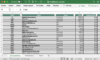
To that end, Sure Dividend has compiled a list of over 300 healthcare dividend stocks (along with important investing metrics like price-to-earnings ratios and dividend yields) which you can download below:
At the same time, many stocks in the sector are cheap. The sector has performed poorly recently, and many stocks sell at valuations far below those of the overall market.
Stocks that are both defensive and cheap while also able to thrive in a strong market are a great way to play the uncertainty from the Iran war and beyond.
Here are 3 of the best healthcare dividend stocks right now.
Healthcare Dividend Stock #1: McKesson Corp. (MCK)
McKesson Corp. (MCK) is a leading domestic wholesaler of branded, generic, and specialty pharmaceutical products. It has a solid base of over 40,000 customers and supplies about one-third of the U.S. drug distribution market. It’s a Goliath, with $398 billion in annual revenues.
Established in 1833 to import and sell therapeutic drugs, McKesson in one of the country’s oldest continuously operating businesses.
Today, McKesson is a health care services company that distributes pharmaceuticals and medical supplies, and provides technology solutions to pharmacies, hospitals and health care providers.
An extensive distribution network and enormous scale give McKesson tremendous bargaining leverage with suppliers and customers that can’t be easily duplicated by would-be competitors.
That’s why the business is an oligopoly. McKesson, along with Cencora Inc. (COR) and Cardinal Health (CAH), accounts for 90% of the drug wholesale distribution market in the United States.
In addition, there are very high switching costs among the providers, so they rarely lose business to the other two companies.
McKesson gets predictable earnings from the stable traditional pharmaceutical business while expanding capacity and the rapidly growing, high-margin, specialty drugs and biosimilars.
Pharmaceutical demand continues to rise every year at a solid pace because of the aging population. McKesson has a huge share of a business that will grow all by itself.
That’s the advantage of a massive tailwind like the aging population mega-trend.
Healthcare Dividend Stock #2: AbbVie Inc. (ABBV)
AbbVie is a U.S.-based biopharmaceutical company formed in 2013 as a spinoff from Abbott Laboratories (ABT). AbbVie is a research-based pharmaceutical company that specializes in small-molecule drugs.
It’s a cutting-edge company with strong exposure to high-demand needs in immunology and oncology, and it has a terrific pipeline.
AbbVie became an industry giant because of its mega-blockbuster drug Humira. It’s an autoimmune medication that became the world’s bestselling drug with annual sales of over $20 billion.
But the tremendous success of that drug became a problem as Humira lost its patent overseas years ago, and it lost its U.S. patent in 2023.
Because of shrinking Humira sales, AbbVie posted lower year-over-year revenues in 2023 and the first half of 2024. But the company turned that corner.
AbbVie has long planned for this eventuality and has done a stellar job launching new drugs capable of replacing the diminishing Humira revenue.
Humira accounted for 75% of revenue a few years ago. But new immunology drugs Skyrizi and Rinvoq together now have sales that already replace peak Humira revenues.
In the most recent quarter, the two drugs had combined revenue of $7.4 billion and $25.9 billion for 2025, easily eclipsing the best Humira year. AbbVie has also guided for the two drugs to bring in $40 billion by 2029.
AbbVie has replaced the Humira revenue and is well on track for strong earnings growth in the years ahead.
Healthcare Dividend Stock #3: Eli Lilly & Co. (LLY)
Eli Lilly & Co. (LLY) is a pharmaceutical giant that has delivered returns of 152% over the past three years and 430% over the last five.
Indiana-based Eli Lilly is a global pharmaceutical company with over $65 billion in annual revenue, 41,000 employees, and sales in 110 countries.
Founded in 1876, Lilly is noteworthy for its unusually high focus on research and development (R&D), where it historically allocates well over 20% of sales compared to an average of high teens for the industry.
The catalyst for the stock recently has been the mega-blockbuster weight-loss drugs.
Its new weight-loss drug Zepbound and diabetes drug Mounjaroof have a massive potential market where 30% of the population is obese, and there is a long runway for growth.
In 2025, Zepbound and Mounjaro generated sales of $36 billion. Growth is still strong as Mounjaro sales were up 110% in the last quarter to $7.4 billion and Zepbound sales grew 123%.
The two drugs generated $11.7 billion in the fourth quarter alone. The company reported revenue growth of 45% and EPS growth of 96% for 2025. Lilly is guiding for full-year 2026 revenue growth of 25% and earnings per share growth of 49% at the midpoints.
And yet, LLY stock had been floundering down 16.5% in March. But a big event came on April 1 when the FDA approved the new oral weight-loss drug.
The current drugs on the market require an injection, except for an oral drug made by Novo Nordisk (NOV), but Lilly’s drug is considered to be superior.
It could be a game-changer in the white-hot weight-loss drug arena. Drugs taken orally are more desirable and cheaper to manufacture.
The weight-loss drug market is expected to reach $130 billion by 2030. The oral drug could give Lilly a huge further boost in this massive market.
LLY seems expensive with a forward price/earnings ratio of 27. But the PEG ratio, which factors in the expected growth rate, is less than one, signifying good value.
Additional Reading
The Dividend Healthcare Stocks Excel List is an excellent place to find high-quality dividend stocks suitable for long-term investment, largely due to our ability to screen it for particular quantitative characteristics.
If you’re interested in finding other compelling investment opportunities outside of the healthcare space, the following Sure Dividend databases will prove very useful:
Thanks for reading this article. Please send any feedback, corrections, or questions to [email protected].