In nearly every city, the same bitter argument repeats itself: riders complain about disorder on trains and buses—open drug use, harassment, people sleeping across seats, feces on vehicles—while activists warn that enforcement is “criminalizing poverty” or discriminating against the mentally ill. The debate stalls because it refuses to ask the most basic question any sane society would ask: Whose property is this?
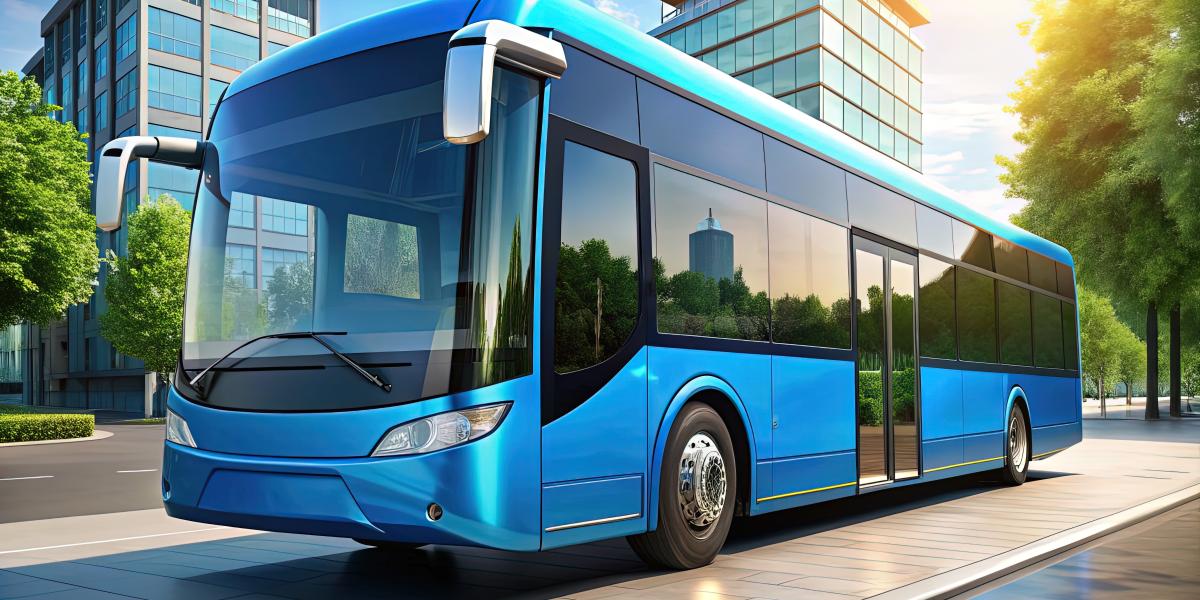
On truly private transit, the answer would be clear. The bus belongs to an owner (or a cooperative, or a firm) with a duty to deliver a safe, reliable service to the satisfaction of paying customers. That owner sets conditions of entry: pay the fare, don’t assault people, don’t smoke fentanyl in the aisle, don’t defecate on the seat. If you violate the rules, you are removed and excluded; not abducted into some sprawling punitive apparatus at taxpayer expense, not processed as a political symbol. In that case, you are simply denied access—because the service is not yours by right, it’s conditional use of someone else’s property.
But when transit is “public,” ownership is dissolved into a fog of politics. “Everyone” owns it, so in practice no one can exercise ordinary property rights—especially the right to exclude. The result is predictable: agencies drift into a role they were never designed for (mobile shelters, rolling psychiatric wards, de facto harm-reduction sites), while riders—disproportionately working people who can’t easily opt out—pay the price in safety, dignity, and time.
That isn’t a mystery. It’s the tragedy of the commons wearing an MTA jacket.
The Commons Creates Disorder—Then Demands Coercion to Manage It
Libertarians have made the general point for decades: when resources are treated as “public,” incentives for care, stewardship, and sane governance collapse. Instead of normal rules grounded in ownership, you get politicized rationing and conflict. As Patrick Barron put it, the tragedy of the commons arises because “public” resources are treated as a free-for-all until the resource is degraded.
Transit is a perfect example. The left tends to moralize the issue: “If you object to disorder, you hate the homeless.” That’s not analysis; it’s emotional blackmail. The right often responds with blunt-force policing and sweeping mandates. Both miss the structural cause: a system without real ownership can’t behave like a system with real rules.
And, because the property-rights tool that actually prevents disorder, exclusion is politically taboo in “public” space, authorities reach for the tools they do control: police surges, surveillance expansions, “quality of life” campaigns, and—in the worst cases—expanded involuntary commitment.
Look at New York. After high-profile subway violence and mounting fear, officials announced major spending aimed at homelessness and serious mental illness alongside intensified public-safety measures. Governor Kathy Hochul has also pressed for more aggressive intervention frameworks around people judged a danger to themselves or others—including expansion of subway-based outreach teams that pair clinical staff with police presence. Whether you support those measures or not, notice the logic: when you can’t simply exclude a repeat disrupter from a service, you start debating how easily the state can confine him.
That is the “public” model’s moral inversion: it makes a simple question of access and contract metastasize into a question of cages and institutions.
Fare Gates Are a Quiet Admission That Property Rights Matter
Even transit agencies themselves increasingly behave like reluctant property owners. They’re “hardening” stations, closing open gates, experimenting with tap-to-exit, adding barriers, and cracking down on evasion—not merely for revenue, but because disorder and crime correlate with uncontrolled access.
BART completed installation of next-generation fare gates systemwide in August 2025—explicitly framing the gates as a way to reduce fare evasion and “anti-social behavior.” BART also publicized sizable crime declines in 2025, while local reporting noted that earlier headline claims were overstated due to a data error—yet still found meaningful reductions.In February 2026, the San Francisco Chronicle reported BART’s new gates generated an estimated $10 million annually and reduced maintenance burdens—again highlighting that controlling entry isn’t just punitive theater; it changes system conditions.In Los Angeles, Metro experimented with making riders tap to exit at a major station as part of a safety push following violent incidents and rider anxiety.In New York, independent analysis has documented the sheer scale of fare evasion and the agency’s physical-environment changes designed to make it harder to freeload—alongside reported declines in evasion rates over time.
These are partial, awkward approximations of property rights inside a politicized “public” system. They are the system’s tacit confession: permissioned access and enforceable boundaries work.
Notably, none of this requires turning every disorderly act into a prosecutorial crusade, it requires treating transit like what it is: a service with terms of use.
Exclusion Is the Non-Carceral Alternative
The current conversation is warped by a false dichotomy: either you tolerate anything, or you “criminalize homelessness.” A property-rights framework breaks the spell.
In normal life, exclusion is routine and often humane. If you repeatedly harass people in a coffee shop, you’re banned. If you smear feces in a gym locker room, your membership ends. No one calls this “incarceration.” It’s a boundary: you don’t get to keep using other people’s spaces while degrading them.
There’s a growing policy literature on “transit exclusion” or “banning” orders precisely because agencies are trying—within the limits of public governance—to replicate what private ownership would do naturally: remove repeat offenders from the system without pretending every infraction is a philosophical referendum.
From a libertarian perspective, this is exactly the point: exclusion is how you minimize coercion. You don’t need to build a bigger carceral machine if you can simply withdraw service from those who violate the contract.
“But What About the Mentally Ill?” The Answer Still Starts With Ownership
Some activists object that exclusion “abandons” people who are mentally ill or addicted. But conflating help with a transportation service is a category error. A private transit firm isn’t a psychiatric hospital; it’s a transportation provider. If a person cannot ride without endangering others or destroying property, the compassionate response is not to force passengers and drivers to endure it. The compassionate response is to build parallel institutions that actually address the problem—shelters, treatment, supervised facilities, etc.—funded voluntarily, competitively, and with market accountability.
Here the libertarian critique of government’s role in social breakdown is relevant. Libertarian writers routinely point to state policies that inflate homelessness and street disorder—especially housing regulation and zoning constraints that raise prices and reduce supply. If government helps create the conditions that push more people onto the street, it’s perverse to then treat the subway car as the moral repair shop for those failures.
Once again, when transit is “public,” the lack of ownership creates political incentives to offload social crises onto shared infrastructure. Even federal politics gets pulled in; in 2025 Reuters reported federal threats around transit funding tied to subway crime and safety disputes in New York. That’s what “public” means in practice: not “the people,” but a permanent tug-of-war among agencies, politicians, and funding streams, with riders stuck in the middle.
The Libertarian Alternative: Transit as a Club Good, Not a Moral Battlefield
Classical liberal and Austrian economists have long argued that transport can be governed by user fees, entrepreneurship, and ownership rather than centralized provision. Lawrence H. White’s scholarship explicitly identifies municipal bus and rail as strong candidates for privatization (“load shedding”), precisely because user charges are feasible and performance can be disciplined by exit and competition. Walter Block’s work on denationalizing transportation emphasizes the core advantage of private provision: failure is punished, incentives are real, and “mistakes” are not frozen into place by politics.
Translated into the messy reality of modern transit: privatization (or genuine owner-like governance) would mean clearer rules, enforceable exclusions, and pricing structures that prevent the system from becoming a default shelter. It would also mean innovation in service models—everything from subscription passes to targeted routes, security staffing aligned with customer demand, and insurance-driven standards that don’t require citywide ideological permission slips.
None of this is utopian. It’s what we already expect from nearly every other service we use.
Stop Asking “What Do We Do With the Homeless?” Start Asking “Who Owns the Space?”
The debate over disorder on public transit is “ridiculous” for the same reason so many public-space debates are ridiculous: they moralize symptoms while ignoring structure. When everything is “public,” no one can act like an owner—yet everyone suffers the consequences of ownerlessness. The system then oscillates between permissiveness (because exclusion is stigmatized) and heavy coercion (because disorder becomes intolerable).
A property-rights approach is not a sneer at the poor, it’s the insistence that civilization requires boundaries—and that boundaries are most humanely enforced through exclusion and contract, not through political theater or expanding state confinement powers.
If we want transit that is clean, safe, and functional—and we want to address homelessness and mental illness honestly—then we should stop using trains and buses as battlegrounds for collective guilt. Treat transit as a service. Let it be owned, governed, and defended as property. And build real, accountable institutions for those who need help—without forcing captive riders to pay the daily cost of a commons managed by politics.