No Result
View All Result
SUBMIT YOUR ARTICLES
  • Login
Wednesday, July 22, 2026
TheAdviserMagazine.com
  • Home
  • Financial Planning
    • Financial Planning
    • Personal Finance
  • Market Research
    • Business
    • Investing
    • Money
    • Economy
    • Markets
    • Stocks
    • Trading
  • 401k Plans
  • College
  • IRS & Taxes
  • Estate Plans
  • Social Security
  • Medicare
  • Legal
  • Home
  • Financial Planning
    • Financial Planning
    • Personal Finance
  • Market Research
    • Business
    • Investing
    • Money
    • Economy
    • Markets
    • Stocks
    • Trading
  • 401k Plans
  • College
  • IRS & Taxes
  • Estate Plans
  • Social Security
  • Medicare
  • Legal
No Result
View All Result
TheAdviserMagazine.com
No Result
View All Result
Home Market Research Economy

When a Chicken Isn’t Just a Chicken

by TheAdviserMagazine
3 months ago
in Economy
Reading Time: 4 mins read
A A
When a Chicken Isn’t Just a Chicken
Share on FacebookShare on TwitterShare on LInkedIn


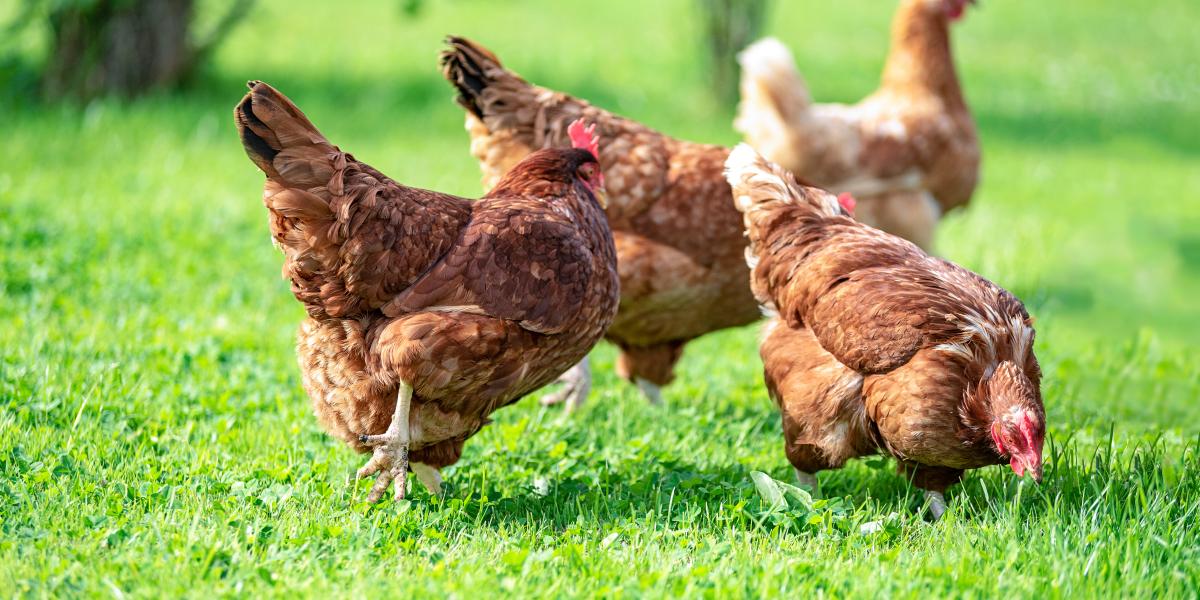
A man stands at a farmers market stall. His wife is talking to the farmer. He picks up a chicken. Paper-wrapped, no barcode, a handwritten tag on the twine. He holds it close to read the label and sets it back down fast. The price is an insult. What are these people thinking?

A minute later, another man reaches for the same bird, reads the same label, and smiles. What a deal.

Same chicken, same label, same words. Two men, similar incomes. One walks away shaking his head, the other reaches for his wallet. The usual explanations don’t hold up. Neither is confused. Neither is irrational. Neither misread the label.

Mises was clear that prices don’t emerge from some objective measure of worth. They emerge from subjective valuations, each party to an exchange believing—at the moment of transaction—that what he receives is worth more than what he gives up. The price is not a fact about the chicken. It is the meeting point of two different minds reading the world differently.

Look back at the two men: From Mises’s view, one simply valued it more. But that just restates what we already saw; it doesn’t explain it. The question is what shaped the valuation in the first place—why one man’s subjective read landed at outrage and the other’s landed at satisfaction—when both were looking at the same object, at the same moment.

The farmer who raised that bird didn’t just raise a chicken. He raised it inside a way of life, specific practices, specific convictions about land and animals and time—a web of relationships with other people who share those convictions. The price he put on it carries all of that. It is a signal, and like any signal, it is only intelligible to someone already operating in that system. The cultural framework shaping that valuation isn’t peripheral to economics, it is the mechanism.

This is why the label fails the first man. He tries. He reads every word: Pasture-raised, biodiverse soil, no-till, hyper-local, non-GMO. Each term opens onto another term, and none of them have a floor. He can’t weigh non-GMO against pastured, can’t tell if no-till is a farming method or a philosophy, can’t find an anchor point from which to make a judgment. He puts the chicken down and thinks what any reasonable person would think: is this just a fancy chicken? A regular bird with a better publicist?

That question is reasonable; it is also wrong. But correcting it isn’t a matter of better information. No certification, no stamp, no improved label closes this gap. What closes it—slowly and partially—is something more personal. Perhaps a health problem with no clean answer, a research binge that starts with symptoms and ends somewhere unexpected, months of reading that gradually builds a frame of reference where the terms on that label start to mean something. The conventional buyer doesn’t become a regenerative buyer by being informed, he becomes one by living through something that makes the logic of that world feel relevant to his own life.

The second man reads the same label: Pasture-raised, biodiverse soil, no-till, hyper-local, non-GMO. Where the first man found a wall of unconnected terms, he found a pattern. He doesn’t have to look anything up. Each word resolves into something he already knows from the inside, a practice, a conviction, a tradeoff made deliberately. The label isn’t informing him, it is confirming him.

Moreover, when he reaches for his wallet, he isn’t just buying a bird. He knows without calculating it that his dollars move through a specific network: The farmer, the feed supplier, the processor down the road, the market itself. He feels an affinity toward those people, understands why they farm the way they do, trusts the product in a way no certification can manufacture. The price reflects that entire web. That knowledge wasn’t on the label, it came from living inside that community long enough to stop having to think about it.

The regenerative bird and the conventional bird are not the same good. They carry different cultural worlds in their price and no amount of label reading collapses that distance. The pasture-raised bird runs roughly $8 to $11 per pound. The conventional American bird runs roughly $2 per pound—two price points, no arbitrage opportunity, no market failure. Two goods encoding two different cultural worlds, priced accordingly.

The distinction is not merely informal. It was contested in a regulatory battle for nearly a decade. The USDA only formalized a definition for pasture-raised poultry in 2024, the result of a public comment period that drew close to 6,500 responses and years of industry conflict over whether the term should mean anything at all. Two cultures, one regulatory apparatus, and a fight over whether the label should mean what buyers already understood it to mean.

It is worth noting, if only in passing, that a third tier exists. Imported poultry sits below both in price. The questions that follow it across the border are harder to answer: What did the labeling standards actually require? What do the certifications genuinely guarantee? What was externalized in the production that doesn’t show up in the price? There are no clean answers, and—for most buyers—no way to even know what questions to ask. The cultural distance there is of a different order entirely.

Hayek argued that the knowledge required to coordinate a complex economy is dispersed, and no central planner can aggregate it all. But there is a step further. That knowledge cannot be transferred between individuals through language alone either. Cultural participation is the only mechanism.

Subjective value theory explains that two men can price the same bird differently, but it does not explain why one man cannot simply be told what the other knows. That requires something Austrian economics has the tools to examine but hasn’t fully named. And it does not explain what happens when those two men—and the worlds they carry—are forced to compete in the same market. That gap remains an unexplored problem.



Source link

Tags: chickenIsnt
ShareTweetShare
Previous Post

50/30/20 Monthly Budget – NerdWallet

Next Post

Nvidia’s CEO Is Trying to Shorten His Own Quantum Timeline

Related Posts

edit post
Trump plans high generic-drug tariffs in 2028 to spur U.S. production

Trump plans high generic-drug tariffs in 2028 to spur U.S. production

by TheAdviserMagazine
July 21, 2026
0

U.S. President Donald Trump signs an executive order on researching the effects of psychedelic drugs in medical treatment for veterans,...

edit post
Coffee Break: Armed Madhouse – The Two Faces of Starlink

Coffee Break: Armed Madhouse – The Two Faces of Starlink

by TheAdviserMagazine
July 21, 2026
0

In 2022, as Russian forces advanced into Ukraine, the Starlink satellite communication system became an indispensable wartime asset. Thousands of...

edit post
From Spoiled Sons of Liberty to Surveillance Leviathan: America’s Six Republics and the Myth of Eternal Union

From Spoiled Sons of Liberty to Surveillance Leviathan: America’s Six Republics and the Myth of Eternal Union

by TheAdviserMagazine
July 21, 2026
0

What is the Mises Institute? The Mises Institute is a non-profit organization that exists to promote teaching and research in...

edit post
The Ideology Behind the American Revolution

The Ideology Behind the American Revolution

by TheAdviserMagazine
July 21, 2026
0

In his book The Vision of the Anointed, Thomas Sowell argues that most people’s political opinions are shaped by “a...

edit post
The High Cost of Just Cause

The High Cost of Just Cause

by TheAdviserMagazine
July 21, 2026
0

This month, amid World Cup fever, New York City implemented a new job-protection law. This law forbids app-based rideshare platforms...

edit post
America’s Food Supply Has Become Too Big To Fail – Cyclospora

America’s Food Supply Has Become Too Big To Fail – Cyclospora

by TheAdviserMagazine
July 21, 2026
0

One of the greatest lies in politics is that anyone who opposes excessive government regulation must therefore oppose government enforcement....

Next Post
edit post
Nvidia’s CEO Is Trying to Shorten His Own Quantum Timeline

Nvidia’s CEO Is Trying to Shorten His Own Quantum Timeline

edit post
Love Driving? 9 Ways Putting Your Pedal to the Metal Can Earn an Income

Love Driving? 9 Ways Putting Your Pedal to the Metal Can Earn an Income

  • Trending
  • Comments
  • Latest
edit post
Mass Fraud in Massachusetts Committed by Illegal Immigrants Discovered

Mass Fraud in Massachusetts Committed by Illegal Immigrants Discovered

June 22, 2026
edit post
New Jersey Tax-Relief Events: Three July Dates Near Seniors

New Jersey Tax-Relief Events: Three July Dates Near Seniors

July 13, 2026
edit post
Bristlecone pines growing in the White Mountains of California germinated before the Great Pyramid was built, and the oldest one alive today, nicknamed Methuselah, has been quietly adding rings for 4,855 years in soil so poor almost nothing else survives beside it

Bristlecone pines growing in the White Mountains of California germinated before the Great Pyramid was built, and the oldest one alive today, nicknamed Methuselah, has been quietly adding rings for 4,855 years in soil so poor almost nothing else survives beside it

July 8, 2026
edit post
Retail giant exits U.S. fashion after multi-million-dollar scandal

Retail giant exits U.S. fashion after multi-million-dollar scandal

July 1, 2026
edit post
Same Portfolio. Same Retirement. A 10-Mile Move Costs One Couple ,000 A Year

Same Portfolio. Same Retirement. A 10-Mile Move Costs One Couple $10,000 A Year

June 27, 2026
edit post
Top Democrats Are Trapped in a Catch 22

Top Democrats Are Trapped in a Catch 22

July 6, 2026
edit post
What Is a Credit Union vs. a Bank

What Is a Credit Union vs. a Bank

0
edit post
York IE Portfolio Momentum: A Look at the First Half of 2026

York IE Portfolio Momentum: A Look at the First Half of 2026

0
edit post
Co-op Advertising Program Management: The 2026 Strategy Guide

Co-op Advertising Program Management: The 2026 Strategy Guide

0
edit post
Private assets in defined contribution plans could top T by 2030

Private assets in defined contribution plans could top $1T by 2030

0
edit post
What are Education Credits and Deductions Every Student Should Claim? 

What are Education Credits and Deductions Every Student Should Claim? 

0
edit post
East West projects 2026 loan growth of 6% to 8% as it raises NII growth outlook to 7% to 9% (NASDAQ:EWBC)

East West projects 2026 loan growth of 6% to 8% as it raises NII growth outlook to 7% to 9% (NASDAQ:EWBC)

0
edit post
Trump plans high generic-drug tariffs in 2028 to spur U.S. production

Trump plans high generic-drug tariffs in 2028 to spur U.S. production

July 21, 2026
edit post
East West projects 2026 loan growth of 6% to 8% as it raises NII growth outlook to 7% to 9% (NASDAQ:EWBC)

East West projects 2026 loan growth of 6% to 8% as it raises NII growth outlook to 7% to 9% (NASDAQ:EWBC)

July 21, 2026
edit post
Kazakhstan Signs Network School Deal as Malaysia Revokes License

Kazakhstan Signs Network School Deal as Malaysia Revokes License

July 21, 2026
edit post
York IE Portfolio Momentum: A Look at the First Half of 2026

York IE Portfolio Momentum: A Look at the First Half of 2026

July 21, 2026
edit post
First Community Bankshares Releases Q2 2026 Financial Results

First Community Bankshares Releases Q2 2026 Financial Results

July 21, 2026
edit post
Co-op Advertising Program Management: The 2026 Strategy Guide

Co-op Advertising Program Management: The 2026 Strategy Guide

July 21, 2026
The Adviser Magazine

The first and only national digital and print magazine that connects individuals, families, and businesses to Fee-Only financial advisers, accountants, attorneys and college guidance counselors.

CATEGORIES

  • 401k Plans
  • Business
  • College
  • Cryptocurrency
  • Economy
  • Estate Plans
  • Financial Planning
  • Investing
  • IRS & Taxes
  • Legal
  • Market Analysis
  • Markets
  • Medicare
  • Money
  • Personal Finance
  • Social Security
  • Startups
  • Stock Market
  • Trading

LATEST UPDATES

  • Trump plans high generic-drug tariffs in 2028 to spur U.S. production
  • East West projects 2026 loan growth of 6% to 8% as it raises NII growth outlook to 7% to 9% (NASDAQ:EWBC)
  • Kazakhstan Signs Network School Deal as Malaysia Revokes License
  • Our Great Privacy Policy
  • Terms of Use, Legal Notices & Disclosures
  • Contact us
  • About Us

© Copyright 2024 All Rights Reserved
See articles for original source and related links to external sites.

Welcome Back!

Login to your account below

Forgotten Password?

Retrieve your password

Please enter your username or email address to reset your password.

Log In
No Result
View All Result
  • Home
  • Financial Planning
    • Financial Planning
    • Personal Finance
  • Market Research
    • Business
    • Investing
    • Money
    • Economy
    • Markets
    • Stocks
    • Trading
  • 401k Plans
  • College
  • IRS & Taxes
  • Estate Plans
  • Social Security
  • Medicare
  • Legal

© Copyright 2024 All Rights Reserved
See articles for original source and related links to external sites.