The Sierra Nevada of California are rugged and beautiful mountains, and they are located only about an hour east of my home in Roseville. We can see them on clear days and many times we have driven east to go snowshoeing, cross-country skiing, or taking in the scenery around Lake Tahoe.
They are also something else: dangerous. Every year people die in those mountains by falling off cliffs, drowning, or even running into trees while skiing at the numerous resorts in the Sierra. People also succumb to avalanches, which are common in the mountains of the American West. Last week, an avalanche killed nine backcountry skiers in the Sierras who had made the trip to engage in “storm skiing,” making it one of the worst such accidents in US history. We often can see the mountain, Castle Peak, where they died, from elevated places in our town. It doesn’t look deadly from our vantage point far away, but last week it was a killer.
A couple of days after the skiers were killed, Wes—an acquaintance of mine—was driving home on I-40 in Knoxville. On weekday afternoons, traffic often is heavy and it isn’t unusual for it to come to a stop. Wes came upon a traffic jam that had turned into a pileup as the driver in front of him hit someone who was stopped and he then hit that driver from behind, although the initial contact was not serious.
Unfortunately, the driver behind him was driving his large pickup truck much too fast, ramming into Wes and landing on top of his car, killing him instantly. His was the only fatality in that chain reaction.
In the tragedy on the mountain, people have long understood and appreciated the peril of avalanches in the Sierra Nevada, and many, including the local and state authorities, are asking why the skiers who were hit with the avalanche were in that spot in the first place, given the snow conditions that day. No one, however, is asking why Wes was on I-40 that day when he had the fatal accident.
Yet, in both situations, someone died. We can speak about the risk of taking to the freeway every day, using probabilities that might say something like “one has a 0.5 percent chance of dying on I-40 in Knoxville during rush hour traffic” or something like that. (I am using that number as a random example, not stating a probability that someone might have calculated).
Likewise, when nine people met their deaths near Perry Peak on February 17, the snow that broke away from the steep mountain slope was not governed by probabilities, nor can we say it was a random event. An avalanche expert from Blackbird Mountain Guides, the company that provided the guides leading the ill-fated ski trip, explained on social media how the newest snowfall had led to avalanche hazards, and that people should be careful when being out in avalanche-prone areas. The conditions were ripe for avalanches, and probably everyone in the ill-fated 15-member group knew it. They chose to be out on the mountain, anyway.
One could have warned this group about being in an avalanche-prone area, and certainly the guides—who were well-trained and even certified in detecting avalanche conditions—understood the dangers. They were listed as experts, and the women they were leading in the group were also experienced in backcountry skiing. In other words, all 15 had much experience skiing in these conditions and were hardly rank amateurs.
At this writing, we do not know if any of the 15 had the experience of being in an avalanche before. After all, people do survive avalanches, sometimes by sheer luck and sometimes by using techniques and equipment developed that increase one’s chances of living through it. Certainly, every person in the group knew about avalanche survival techniques and also were well aware of avalanche conditions, but sometimes knowing something and knowing it well can work against someone when a dreaded event actually happens.
Anything beyond what I’ve written is speculation. What we can safely assume is that these skiers knew there were avalanche dangers (all of them carried avalanche detection beacons) and chose to be in that fateful place. Obviously, one can assume they did not expect an avalanche to occur but understood the dangers.
One cannot use probabilities here. Either an avalanche occurred, or it didn’t. We cannot know if someone in the group triggered it, or if the snowpack simply moved when it became too heavy. All we can know is that it happened.
Likewise, probabilities are useless in examining the death of my acquaintance, Wes. Instead, it was something that just happened and he was in the wrong place at the wrong time.
Mises and Probability
Ludwig von Mises writes that human action is not governed by laws of probability. He notes that when people act, they carry out plans in the realm of uncertainty:
Whether this was or was not the most appropriate plan depends on the development of future conditions which at the time of the plan’s execution cannot be forecast with certainty.
He continues:
Future needs and valuations, the reaction of men to changes in conditions, future scientific and technological knowledge, future ideologies and policies can never be foretold with more than a greater or smaller degree of probability. Every action refers to an unknown future. It is in this sense always a risky speculation.
While Mises ultimately writes about entrepreneurship and how the Austrian School paradigm is uniquely suited to explain the role of entrepreneurs within an economy, one also can apply this to all human action. People act, and they act with purpose, sometimes that purpose being complex, and sometimes it being simple. In both examples listed in this article, people were trying to get home.
With Wes, it was the simple matter of getting on I-40 West and getting off at an exit and driving home, something he had done many times before. Because it was at about 4:30 p.m., traffic was heavy, as one would expect at that time, and almost surely, he had been in situations in which he had to come to a full stop on the freeway. Anyone who has driven in West Knoxville in the afternoon is familiar with the heavy westbound traffic patterns and the possibility that traffic will stop at one point or another. Furthermore, every freeway has bottlenecks and merger locations that bring so many cars to a restrictive point that traffic will predictably slow down or even stop.
Yet, the accident itself was a unique event, falling under what Mises called case probability:
Case probability means: We know, with regard to a particular event, some of the factors which determine its outcome; but there are other determining factors about which we know nothing.
As for the skiers, they, too, were trying to get home. Their scheduled stay in the Frog Lake Huts was concluded and most of them had obligations at home and at work. They would have known that there was avalanche danger, as the heavy snowfall had fallen upon layers of older, frozen snow that provided an unstable base for the new snow as it piled up. No doubt, they spoke about the danger before they left.
The dangerous conditions would have been no surprise to the members of the group, as the conditions would have made avalanches almost inevitable. For that matter, had they stayed two more days, the danger still would not have fully passed, as the crews that recovered the bodies on Saturday—four days after the tragedy—first had to use techniques to stabilize the slopes where they were working in order to avoid triggering another snow slide.
While it was clear that the skiers were facing avalanche danger—something they understood, with the guides themselves having been certified in avalanche detection and recovery—the avalanche that took those lives was a unique event, as Mises would have described. Furthermore, while they took the route rated “most dangerous” as opposed to a flatter but longer path, one should assume that they had reasons as to their particular choice.
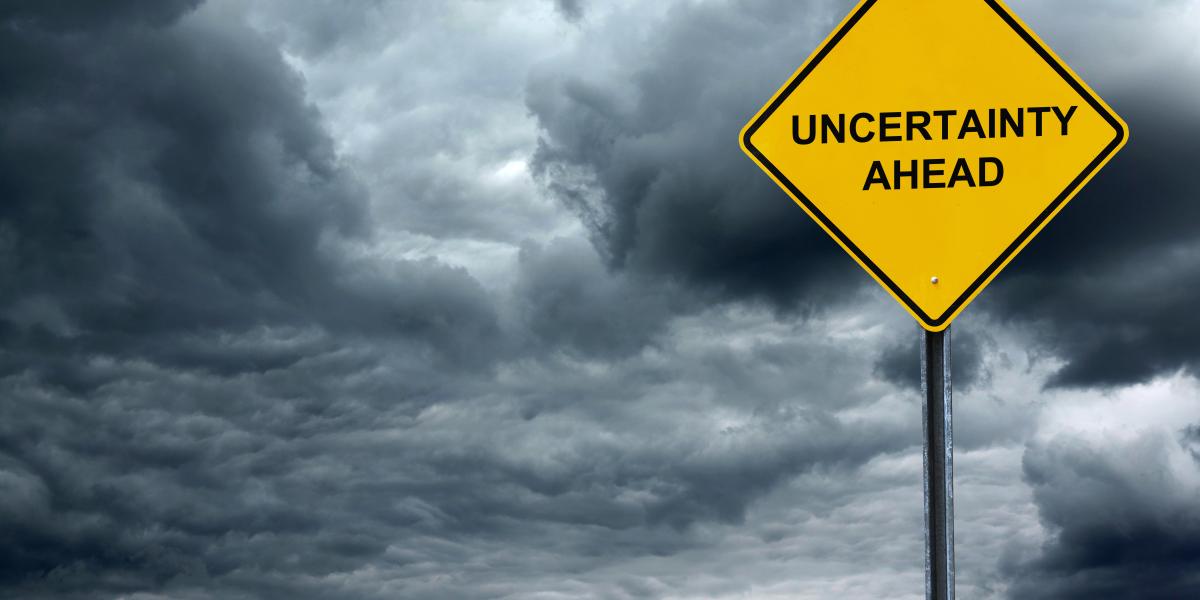
We emphasize “uncertainty” for a reason. The New York Times claims, quoting someone who had been in that same area a few days prior:
If the party had simply stayed until Thursday, Mr. Gensheimer said, the members would have walked out alive. What the backcountry world is grappling with now is why they didn’t.
However, we don’t know that statement to be true, even if it comes from the NYT. As pointed out earlier, there was still much danger from avalanches four days after the tragedy occurred. All we can know is that the forecasted avalanche danger level in that area was lower on Thursday than what had been forecasted for that fateful Tuesday, but that alone was no guarantee to safety, the NYT notwithstanding.
Conclusion
In a world of uncertainty, we often look to experts for guidance, forgetting that having expertise in something is no guarantee of satisfactory outcomes. Each of the guides that lost their lives in the snow slide had training, certification, and experience in avalanche detection and rescue, yet they and six of their clients (who also were expert backcountry skiers) fared no better than would have been the case with rank amateurs on skis.
Likewise, the other drivers near Wes last week made it to their destinations even though they were not better motorists with more expertise in driving. It wasn’t Wes’s lack of safe driving skills that led to his death; instead, he happened to be in the path of another driver who failed to keep control of his vehicle. In both cases, the only way to have prevented the loss of life was not to have been in that location in the first place. With the case of the skiers, they chose to be in a snowstorm when avalanche dangers would have been higher than they would have been at another time, while in the event with Wes, he was repeating an action he had taken countless times before with no ill effects. Death occurred in both situations.
It is fitting, then, that Mises should have the last word here:
Understanding is always based on incomplete knowledge. We may know the motives of the acting men, the ends they are aiming at, and the means they plan to apply for the attainment of these ends. We have a definite opinion with regard to the effects to be expected from the operation of these factors. But this knowledge is defective. We cannot exclude beforehand the possibility that we have erred in the appraisal of their influence or have failed to take into consideration some factors whose interference we did not foresee at all, or not in a correct way.