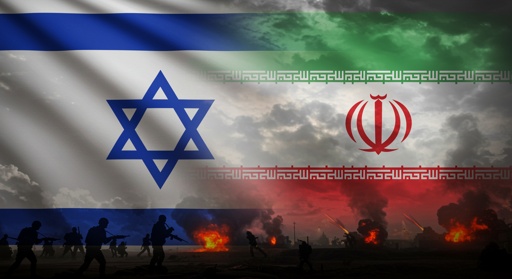
For the past six weeks, as this US-Israeli war with Iran has played out, the economic impact of the conflict has gotten a lot of attention. And rightfully so.
As anyone who’s consumed any news about this war knows well by now, the Strait of Hormuz is a major energy chokepoint, the Iranian government did exactly what they said they were going to do if Trump and Netanyahu ordered this attack and started blocking ships tied in any way to the government’s attacking them from passing through the Strait, and the US, Israeli, or really any other government have not been able to do anything about it.
However, throughout all of this, most of the discourse about the economic impacts of the war has focused on the rising prices drivers are facing at the gas pump. That isn’t surprising, as gas prices are an early cost that impact consumers directly.
But the emphasis on pain at the pump threatens to badly understate the economic damage of this war. And it helps feed the false impression that, if this new attempt at a ceasefire holds and the war ends somewhat quickly, gas prices will fall back down as fast as they rose, and then all the global economic turmoil the world’s been worrying about will be avoided.
It won’t. A lot of economic pain has already been locked in by this war. But to really understand it, it’s necessary to keep a few important economic truths at the front of our minds.
First is the fact that the entire purpose of the economy is to produce goods and services that consumers value enough to pay for. All of the production happening anywhere in the economy is geared towards that end.
That’s relatively straightforward with the production of consumer goods. A commercial brewer, for example, chooses to produce specific beers because they think consumers will value those beers enough to pay more money than the brewer spent producing them, making it a profitable production.
But it’s also true for all the production that is not directly tied to a finished consumer good—which is, in fact, most of the production happening in the economy. Businesses produce capital goods like industrial stainless-steel mixing tanks, rubber tractor tires, plastic packaging, or the ingredients of fertilizer because there’s demand for those goods from other businesses that produce later-stage goods and, ultimately, consumer goods.
So, returning to the brewing example, all the production that results in that finished bottle of beer doesn’t begin with the brewer. It requires grain that is planted, grown, harvested, and transported to the brewery. It also requires fermenters, Brite tanks, mash turns, and canning or bottling systems—all of which need to be produced with other capital goods like stainless steel, which itself requires other capital goods like iron ore.
Every consumer good can be viewed as the end of a long chain of production stretching all the way back to the cultivation of raw materials like iron or timber, or the creation of basic components like resins or plastics. Economists call those basic capital goods at the beginning of the chain higher order goods.
And what’s important to remember about higher order goods is that, first, almost all of them are used in many different lines of production. Iron ore is not exclusively used to help eventually produce beer, it’s used to make a lot of goods that are themselves used to make a lot of other goods. It’s what’s called a non-specific factor of production. Any change in the production of iron ore has widespread consequences across the economy.
And second, production takes time. That’s true for the production of any given good, but it’s especially true if we look across that entire chain of production. The higher order goods that are currently being produced won’t help bring about finished consumer products until months or even years down the road.
All of this is important to understand and keep in mind because the war with Iran is, so far, primarily impacting the production of higher order goods. And it goes far beyond oil.
About 8 percent of the world’s aluminum travels through the Strait. And aluminum is used across many sectors, including construction, manufacturing, and technology. Nearly a third of the world’s helium supply comes from Qatar, which is an important component in semiconductor production as well as MRI systems.
Polyethylene and other kinds of plastics and resins are also greatly affected. More than 40 percent of the world’s polyethylene is exported from the Middle East. And these are used in all stages of production in all sorts of industries—packaging, auto parts, medical equipment, consumer containers, industrial components, electronics, and much, much more.
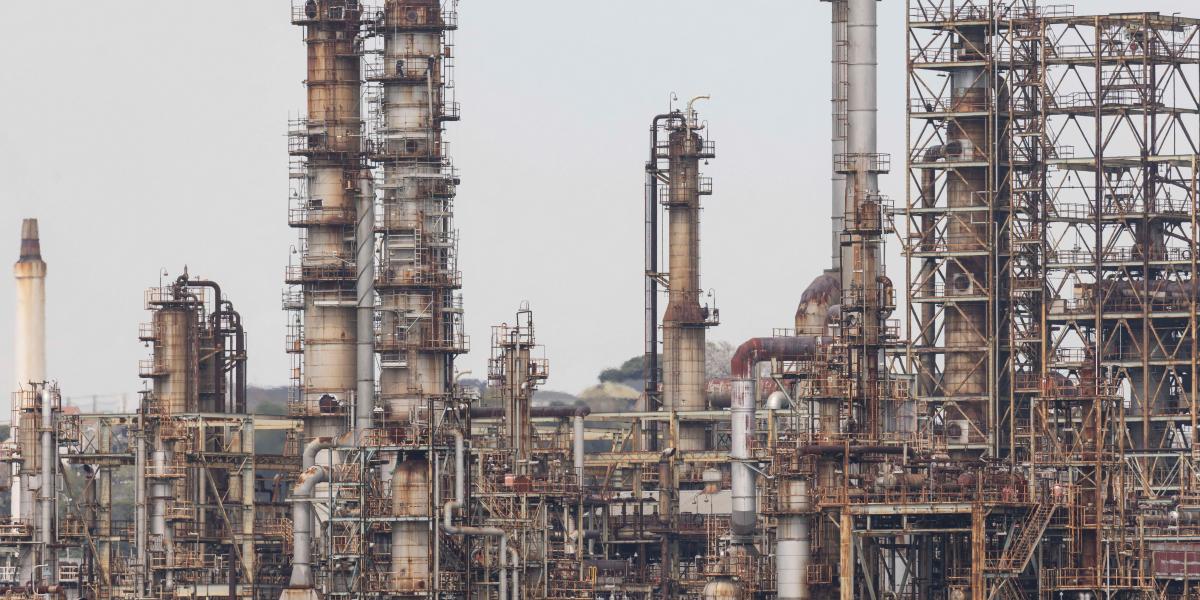
And there are other often-neglected but extremely important hydrocarbon products being held up, such as petroleum naphtha, which is critical for refining gasoline and producing solvents for cleaning agents and paints. Natural gas condensate is another liquid hydrocarbon used in refining and to dilute other denser hydrocarbons to make them easier to transport. There’s also liquified petroleum gas, or LPG, which is mostly composed of propane and butane. These components are also important for refining as well as residential cooking and heating in many parts of the world. Much of the world’s supply of all these products is produced in the Middle East and exported through the Strait of Hormuz.
Another often-neglected yet critical higher-order good is sulfur. About half the world’s seaborne sulfur trade moves through the Strait. It’s important for refining petroleum and minerals like copper, nickel, and zinc, which are widely used in everything from electronics to medicine.
But the other major use of sulfur is as an ingredient in fertilizer. The sulfur supply shock—along with adjacent shocks in the supply of ammonia and urea, other key fertilizer components primarily exported through the Strait of Hormuz—has created a time bomb in global food markets.
Which brings us to another economic concept that is extremely important to understand if we want to fully comprehend the situation we’re now in. The problem is not merely a rise in prices but, specifically, the destruction of supply. The strikes on production facilities and the severing of supply lines mean there is now not enough supply of the components I laid out above available to meet current levels of demand. And because, again, these higher order goods are demanded for the production of lower order and consumer goods, that means, eventually, fewer consumer goods. The rising prices are a symptom of the fact that there is now less stuff available for everyone who wants it than there was before.
The fertilizer shortage provides a good example. The fact that producers cannot get their hands on the supply of ingredients like sulfuric acid, ammonia, and urea they need to meet demand means they are forced to produce less fertilizer than their customers need. Which, in turn, means those customers—industrial and family farmers—have less fertilizer to use during this year’s spring planting season. Which means they produce fewer crops. This leads to less animal feed for livestock and produce overall, resulting in an unavoidable drop in the food supply.
Those of us who are fortunate enough to live in developed countries above the poverty line will primarily experience the shortage as higher food prices. But for the millions of people who are already struggling to secure the food they need, this drop in supply may force them to go without.
That is not a choice forced on all of us by some greedy companies, it is an unavoidable consequence of the economic destruction brought about by this war.
And that same basic process is at play with all the other commodities and higher order goods I mentioned, as can be seen in the dramatic price increases. Aluminum prices have already surged by 10 percent. Import prices for helium have jumped 50 percent. Polyethylene prices are up 37 percent. Polypropylene is up 38 percent. And the price of petroleum naphtha has tripled since February.
Remember, these price increases are not the end of the story. They are the symptom of supply shortages that will work their way through all relevant lines of production and result in fewer consumer goods down the road—all from production disruption that will be slow to start back up again, even when the war is fully over.
That means fewer containers available for goods like nail polish and, yes, beer. It means fewer medical supplies, like IV bags, syringes, and sterile packaging, all of which rely on petrochemical plastics. Also, delays in construction projects as it becomes harder to source asphalt, plastics, and aluminum inputs. And dangerous health issues going undetected because of limited MRI machine availability, and much more.
And that’s not to mention, of course, the oil and LNG shortages that people are already sufficiently focused on. These commodities power nearly all stages of all lines of production and help produce the diesel and jet fuel used to physically move everything in the economy to where it needs to be.
Unlike gas prices, these effects will take some time to develop—especially in the US, where our supply chain is momentarily protected from the initial impacts. And they won’t be as clearly tied to the war in the minds of most people. But the costs of all this economic destruction are real, they are substantial, and they are already locked in.