A paradox now sits at the center of global finance: the US government, in trying to stabilize its debt markets, has legitimized the very free-market forces that are eroding its monopoly over money.
In mid-2025, the United States enacted the GENIUS Act, the first comprehensive legal framework for stablecoins — privately issued, fully backed digital dollars that move instantly across open blockchain networks rather than through the regulated banking system. The law gave official legitimacy to an already booming industry, but its deeper consequence reaches far beyond cryptocurrency. It has turned stablecoin issuers into a new and dependable class of buyers of US government debt.
At a time when foreign central banks are cutting their Treasury holdings and America’s fiscal burden is swelling, this flow of private demand has become a genuine lifeline. And therein lies the paradox: by empowering private markets to create and circulate digital dollars backed by US Treasuries, the government has secured short-term relief for its mounting financial pressures — while allowing an ever larger share of the dollar system to evolve beyond its direct control. To keep control in one place it is losing control in another.
A Shrinking Buyer Base and Rising Fiscal Strain
The United States is now running persistent budget deficits — the gap between what the government spends and what it collects — that exceed six percent of GDP. Interest payments on the national debt have become one of the largest single items in the federal budget, rivaling defense spending and Social Security. Every one-percentage-point increase in average borrowing costs adds hundreds of billions of dollars in annual expenses, leaving less room for everything else the government funds.
For decades, foreign central banks such as those of China and Japan helped finance these deficits by buying US Treasuries — the short- and long-term bonds the government issues to raise money. But that era is ending. Both countries have become net sellers of Treasuries, using the proceeds to defend exchange rates and support domestic economies.
When those traditional buyers retreat, the US must find new ones. Without steady demand, Treasury prices fall and yields (interest rates) rise, which increases the government’s borrowing costs and compounds the very debt problem it is trying to solve.
The last-resort option is for the Federal Reserve, America’s central bank, to buy the debt itself using newly created money — a process known as monetization. But this route carries obvious dangers. Creating money to buy government debt undermines confidence in the dollar, raising the risk of depreciation against other currencies and pushing up prices at home. Inflation is, in effect, the hidden tax of fiscal imbalance.
Avoiding, or at least minimizing, that outcome has become an urgent priority. One unexpected way the US is achieving it is through the rise of stablecoins. By channeling global demand for digital dollars into the purchase of US Treasury bills, stablecoin issuers are helping to fund the government’s deficits, reducing the need for new money printing by the Fed — quietly stabilizing America’s finances while shifting more of the dollar system into private hands.
Stablecoins: Private Digital Dollars Backed by Public Debt
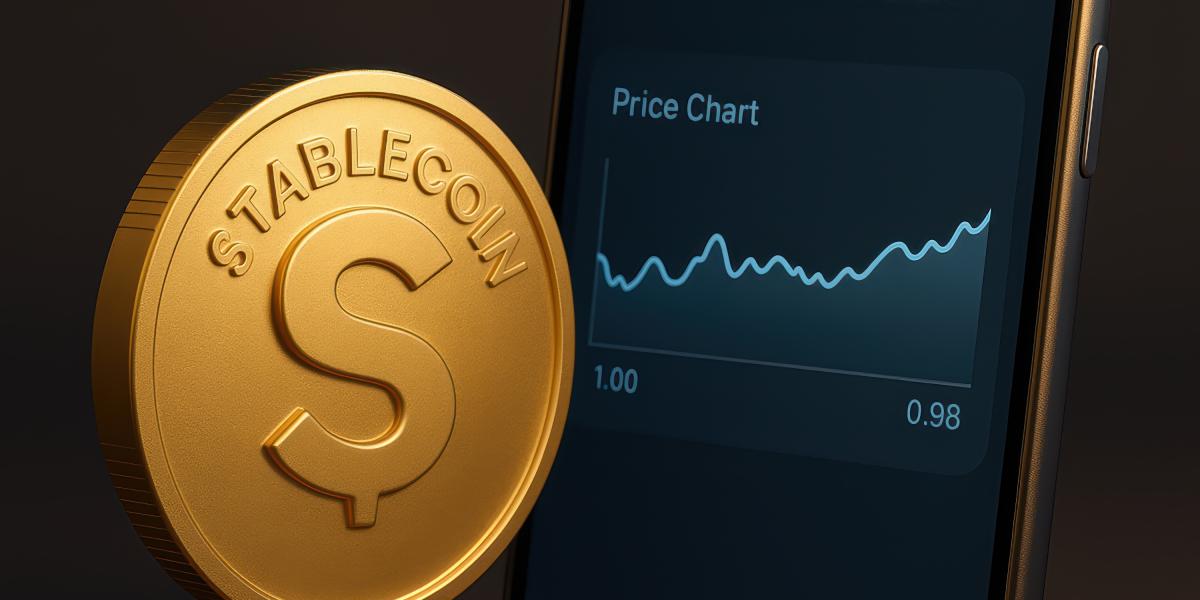
A stablecoin is essentially a digital version of the US dollar — a token that can be held or sent like cryptocurrency but is always worth one dollar. People want them for the same reasons they use dollars: stability, trust, and global acceptance. The difference is in the delivery mechanism. Stablecoins move instantly across borders, settle within seconds, and are available to anyone with a smartphone, even where access to US banking is limited or unreliable. For entrepreneurs in emerging markets, freelancers paid from abroad, or families sending remittances home, they are simply a faster, cheaper, and more open form of the dollar.
Beyond these practical uses, stablecoins also serve as the bridge between traditional money and the wider digital-asset world. They provide the stable, dollar-based liquidity that keeps crypto markets functioning and allow assets such as Bitcoin to act as investments or collateral without needing the legacy banking system.
Unlike traditional bank deposits, which are lent out and only partly backed by cash, stablecoins are fully backed: for every token issued, there is a matching dollar or US Treasury bill (a short-term government bond) held in reserve. This distinction is critical. Fractional-reserve banking allows two parties to believe they own the same money at once — the depositor and the borrower — and that illusion holds only as long as confidence does. When confidence falters, banks face runs and rely on central-bank rescues. Stablecoins avoid that fragility by design: the backing funds are never re-lent, and redemption is immediate and transparent.
When a user sends dollars to a stablecoin company such as Circle (USDC), Tether (USDT), or PayPal USD, the company buys US Treasuries or holds cash of equal value. Those assets generate interest income for the issuer while the token circulates freely online. When the token is redeemed, the company sells Treasuries to return cash to the user.
The GENIUS Act formalizes this model. It requires issuers to hold reserves in “safe, liquid assets” — cash or short-term Treasuries — verified by independent audits and publicly disclosed. Issuers are also barred from implying any government guarantee or central-bank insurance.
The effect: every dollar of stablecoin demand becomes a new dollar of Treasury demand. The world’s rising appetite for digital dollars now means the largest issuers collectively hold more than $150 billion in US Treasury bills (roughly 2–3 percent of all outstanding short-term Treasuries)— an amount comparable to the holdings of a major foreign creditor. And that figure is growing rapidly. At current interest rates, those holdings generate billions in income for issuers and provide steady, price-insensitive demand for US government debt.
In practice, the world’s thirst for digital dollars is now financing a significant and growing share of America’s deficits — voluntarily, profitably, and without any direction from the Federal Reserve.
Why a US CBDC Is Not Likely
Every major power has explored the idea of a Central Bank Digital Currency (CBDC) — a government-issued digital dollar that would sit directly on a Federal Reserve ledger. For policymakers, the appeal is obvious: it offers complete visibility and control over money. A CBDC could allow the state to see every transaction, trace every recipient, freeze or confiscate funds instantly, block disfavored payments, or even make money expire to force people to spend it. Taxation could become automatic; sanctions and subsidies could be applied with code.
To central planners, this looks efficient — a tool for perfect compliance and instant stimulus. To citizens, it would mean the end of cash as a private instrument and the beginning of programmable money whose use depends on permission. Financial privacy, as we have known it, would vanish.
Yet despite that allure of power, a US CBDC remains unlikely — not because the technology is difficult, but because the fiscal logic runs the other way. The federal government now benefits enormously from the private demand for its debt created by stablecoins. A CBDC would not generate that demand. It would simply be another government liability circulating inside the official system, doing nothing to attract external capital. Stablecoins, by contrast, draw in global private savings and recycle them into US Treasuries, turning worldwide demand for digital dollars into a steady source of funding for Washington’s deficits.
Where This All Leads
If stablecoins continue to expand, the architecture of monetary control will inevitably change. For more than a century, the Federal Reserve — America’s central bank — has guided the economy through two main tools:
Adjusting the supply of reserves (the base money held by banks) to encourage or restrict lending.Setting interest rates to influence borrowing, spending, and investment.
Both tools rely on one assumption: that most dollars circulate inside the regulated banking system. Stablecoins quietly break that link. Each token represents real assets — Treasuries or cash — but moves on networks that operate outside the Fed’s direct reach.
As this pool of “off-bank” dollars grows, the Fed’s traditional levers lose precision. Creating more reserves at the central bank no longer guarantees more credit when individuals and businesses can hold or move digital dollars independently. Raising interest rates may cool activity in traditional banks but not in the global digital-dollar economy that now runs on its own infrastructure.
This doesn’t erase the Fed’s influence entirely — it still sets the yields on Treasuries, which determine how profitable stablecoins are to issue — but it transforms policy from direct control to indirect coordination with markets. The Fed becomes one actor among many in an open monetary ecosystem it no longer fully commands.
In the longer run, this shift could mark the first step in a broader evolution away from pure fiat money — currency that exists solely by government decree — toward market-based fiat, dollars that remain denominated in US units but circulate and self-regulate through private, competitive institutions.
Bitcoin deepens this evolution. With its fixed supply and independence from any state, it serves as the natural hedge against fiat inflation and mismanagement. Today, it functions mainly as a reserve or collateral asset beneath the stablecoin system, but over time it could grow into a broader store of value — a hard, voluntary anchor for a new digital monetary order.
The deeper this system embeds, the clearer its logic becomes: the more Washington delays fiscal reform, the more Treasuries it must issue — and the more it will rely on global demand for stablecoins to absorb them. Each step increases dependence on market-based money and decreases central control.
That dependence may prove to be a healthy limitation. It forces discipline on a government that has long evaded it and opens the way for an age of monetary independence — where money once again belongs to the market, not the ministry.
Originally published at AppliedLibertarian.substack.com