Seabed 2030 is a global initiative launched in 2017 by the Nippon Foundation and GEBCO, operating under the International Hydrographic Organization and UNESCO’s Intergovernmental Oceanographic Commission, with the stated goal of mapping the entire ocean floor by 2030 and compiling that data into a single global grid, drawing on governments, private industry, academic institutions, and international agencies to build what is effectively the most comprehensive database of the seabed ever attempted.
I discussed how China is actively mapping the ocean floor for wartime data. The funding for Seabed 2030 comes from a handful of powerful institutions, governments, and globalist agencies. The primary financial backing comes from Japan’s Nippon Foundation, which committed tens of millions of dollars to initiate the project and continues to fund its operations through structured payments distributed via the International Hydrographic Organization. Additional support comes from government agencies such as NOAA, international bodies like UNESCO under the UN Ocean Decade framework, and a growing network of corporate and philanthropic partners including Fugro, Schmidt Ocean Institute, and other private-sector contributors that provide vessels, technology, and data collection capabilities, creating a hybrid system where public, private, and international governance structures converge around a single dataset.
People are told this is about science, climate, and sustainability. Yet, when you follow the project’s structure and the concentration of funding and control, it becomes clear that this is not simply research. Still, the construction of a global information system managed through institutions that are not accountable to any single electorate, which is always how these initiatives are framed when they are intended to operate above national jurisdiction.
The scale alone should raise attention because this is not incremental research but a rapid buildout of strategic infrastructure, with ocean floor mapping increasing from roughly 6 percent at the project’s inception to over 27 percent by 2025, representing millions of square kilometers of newly mapped terrain in a short period, which demonstrates coordinated acceleration rather than passive discovery.
What is never emphasized is that seabed data is not neutral, because it has direct military application. China is conducting similar mapping operations specifically to prepare for submarine warfare, since understanding seabed topography, currents, and acoustic conditions determines submarine stealth, detection, and positioning, meaning that whoever possesses the most detailed mapping controls the underwater domain in any future conflict.
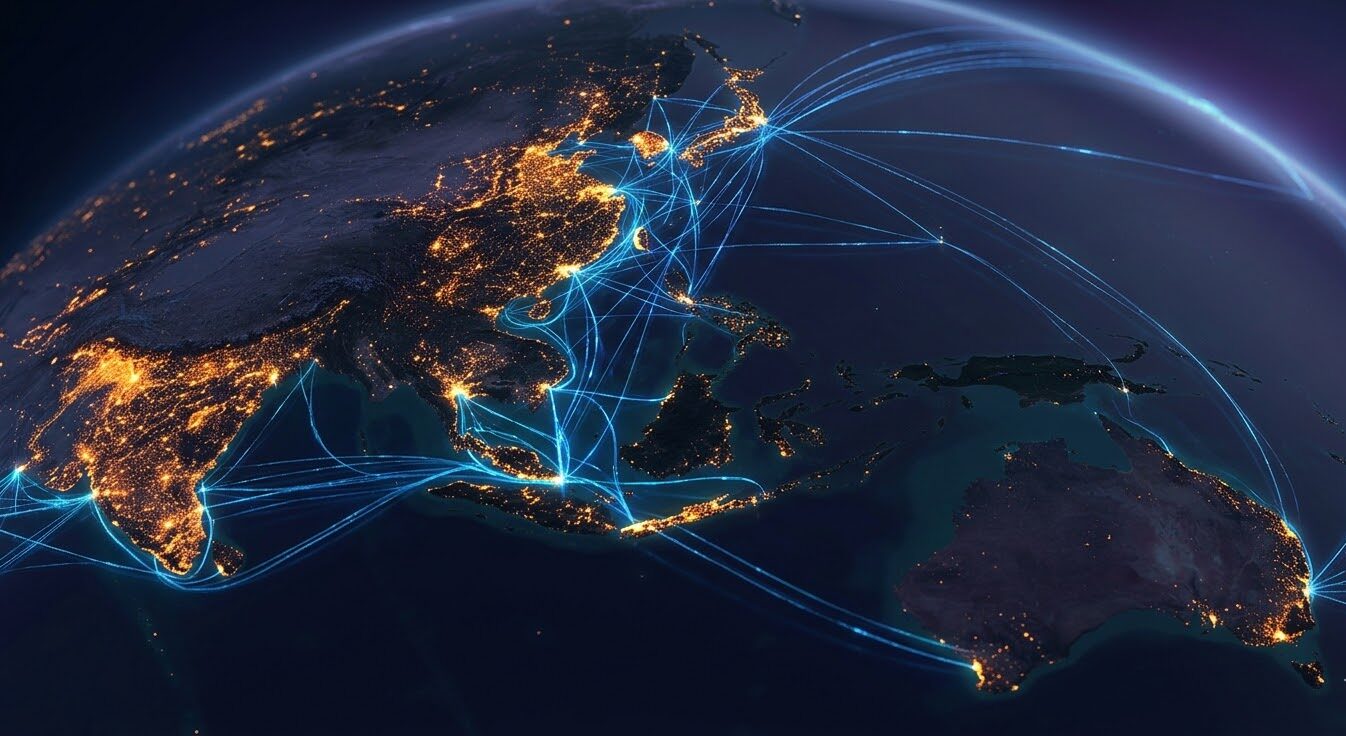
At the same time, nearly all global communications rely on subsea cables and critical energy infrastructure runs across the ocean floor, so mapping the seabed is also about identifying and potentially controlling the arteries of the global economy, which transforms what is presented as environmental mapping into strategic intelligence.
The structure of this project follows a familiar model where governments, multinational corporations, NGOs, and “philanthropic foundations” are integrated into a single framework, with data centralized into global repositories such as the GEBCO grid, which gradually shifts influence toward those who define standards, control access, and determine how that data is used, and history shows that once such centralized systems are established, their function expands beyond their original stated purpose.
I have said many times that global initiatives are rarely built for one reason, and this is no different, because the same data being marketed for climate modeling, biodiversity, and the so-called blue economy is also the foundation for military planning, resource exploration, and infrastructure control, and in a period where geopolitical tensions are rising into what the ECM has identified as a war cycle, it is naive to assume that mapping the entire seabed is purely humanitarian.
This is not simply about science or climate, but about building the informational foundation for the next phase of global power, where control of the seabed will influence military positioning, communications, energy systems, and ultimately economic dominance, and once that infrastructure is complete, the justification for how it is used will follow as it always has throughout history.