No Result
View All Result
SUBMIT YOUR ARTICLES
  • Login
Sunday, May 31, 2026
TheAdviserMagazine.com
  • Home
  • Financial Planning
    • Financial Planning
    • Personal Finance
  • Market Research
    • Business
    • Investing
    • Money
    • Economy
    • Markets
    • Stocks
    • Trading
  • 401k Plans
  • College
  • IRS & Taxes
  • Estate Plans
  • Social Security
  • Medicare
  • Legal
  • Home
  • Financial Planning
    • Financial Planning
    • Personal Finance
  • Market Research
    • Business
    • Investing
    • Money
    • Economy
    • Markets
    • Stocks
    • Trading
  • 401k Plans
  • College
  • IRS & Taxes
  • Estate Plans
  • Social Security
  • Medicare
  • Legal
No Result
View All Result
TheAdviserMagazine.com
No Result
View All Result
Home Market Research Economy

Rothbard and the American Revolution

by TheAdviserMagazine
3 months ago
in Economy
Reading Time: 4 mins read
A A
Rothbard and the American Revolution
Share on FacebookShare on TwitterShare on LInkedIn


Americans are taught that the Constitution completed the Revolution. The Articles of Confederation were weak, disorder reigned, Shays’s Rebellion terrified the countryside, and sober statesmen in Philadelphia heroically designed a “more perfect Union,” as the story goes. The Constitution thus appears as the Revolution’s crowning achievement.

But, as Rothbard showed, the Constitution was not the fulfillment of 1776, but rather its undoing.

After all, had the American states not just fought a war to reject centralized control by Parliament in London? Why, scarcely four years after Yorktown, were many of the same revolutionary leaders advocating a new consolidated national authority—one equipped with taxing power, a standing army, supremacy over state laws, and an independent judiciary insulated from direct democratic control?

Indeed, Murray Rothbard’s fifth volume of Conceived in Liberty invites us to reconsider the founding moment not as triumph, but as counter-revolution. And modern revisionist scholarship—from Charles Beard to Michael Klarman—suggests that this interpretation deserves more attention than it typically receives.

The Articles: Chaos or Liberty?

The conventional narrative insists that the Articles of Confederation were a failure. Congress could not tax. It could not regulate commerce effectively. It struggled to service war debts. Shays’s Rebellion seemed to expose fatal weakness, et cetera.

But weakness to whom?

Under the Articles, political authority was radically decentralized. Congress lacked independent revenue and depended upon the states. There was no executive, no national judiciary, no standing army in peacetime. Western territories were promised eventual self-government. From the standpoint of the revolutionary suspicion of centralized power, this arrangement was not an embarrassment—it was the logical extension of 1776.

The Revolution had been fought, after all, against a distant legislature claiming plenary authority over colonial affairs. Parliament taxed without representation. It imposed navigation laws and commercial restrictions. It stationed troops in peacetime. The colonists’ grievance was not merely taxation but consolidation—power drawn away from local institutions into an unaccountable center.

The Articles embodied the opposite principle: sovereignty lodged in the states, with Congress acting as their agent. Yet, by the mid-1780s, a coalition of nationalists argued that this decentralization had gone too far.

Shays’ Rebellion and Elite Fear

Much of the urgency for constitutional reform stemmed from Shays’s Rebellion in Massachusetts (1786–87). The textbook version describes desperate debtor-farmers rebelling against lawful authority. But as Leonard Richards demonstrated in Shays’s Rebellion: The American Revolution’s Final Battle, the uprising was less a revolt of insolvent peasants than a tax revolt against aggressive debt enforcement and heavy state taxation designed to service war bonds.

Those bonds had often been purchased at steep discounts by speculators—many of them eastern merchants and financiers—who now demanded repayment at face value. The tax burden fell disproportionately on western farmers. When courts began seizing property for unpaid taxes, rebels closed them.

To nationalists, this was not populist protest but democratic excess. For men like George Washington and James Madison, Shays’s Rebellion confirmed their fear that local majorities could threaten property rights and creditor interests.

Here Rothbard’s interpretation converges with Charles Beard’s earlier thesis in An Economic Interpretation of the Constitution of the United States. Beard argued that the Constitution reflected the interests of bondholders, commercial elites, and national creditors who desired a stronger central government to secure public debts and stabilize commerce. Though Beard’s determinism has been criticized, few deny that financial concerns loomed large in Philadelphia.

Michael Klarman’s The Framers’ Coup reinforces this picture. Klarman demonstrates that the Constitution was not the inevitable outcome of national consensus but the product of strategic maneuvering by political elites who capitalized on economic anxiety and fear of disorder. The Philadelphia Convention exceeded its mandate to amend the Articles and instead drafted an entirely new frame of government. Ratification rules were altered to bypass recalcitrant state legislatures in favor of specially-elected conventions.

If the Revolution was a popular uprising against consolidated imperial authority, the Constitution was most definitely an engineered response to popular unrest at home.

From Confederation to Consolidation

The shift was profound. Under the Constitution, Congress received independent taxing power. Federal law became “supreme.” A national judiciary could invalidate state legislation. The executive branch gained energy and permanence. Standing armies were constitutionally permissible. Interstate commerce fell under federal authority.

The logic of 1776 had been inverted. No longer was power presumed to rest with local institutions unless explicitly delegated; instead, the new government possessed enumerated powers whose interpretation would inevitably expand. The Supremacy Clause and the Necessary and Proper Clause quickly became such instruments of consolidation.

Nationalists defended these changes as essential to protect liberty. But liberty for whom?

For public creditors and commercial interests, national consolidation promised stability, uniformity, and reliable debt servicing. For slaveholding states, the Constitution protected the institution through clauses safeguarding the slave trade (for twenty years), fugitive slaves, and the three-fifths compromise. Sectional and economic interests aligned behind centralization.

The Constitution did not merely strengthen the union; it fundamentally altered the balance of sovereignty.

Betrayal or Transformation?

To call the Constitution a “betrayal” may sound excessive. After all, the Bill of Rights soon followed, and many Antifederalists ultimately acquiesced. But consider the revolutionary premise: that distant centralized power is dangerous; that standing armies threaten liberty; that taxation requires strict consent; that local self-government is the bulwark of freedom. These were not peripheral complaints, they were the Revolution.

Yet, within a decade of independence, leading revolutionaries endorsed a consolidated national government capable of exercising precisely those powers previously denounced in Parliament. The target had changed; the structure increasingly resembled what had been rejected.

The irony is striking. The same generation that resisted London’s claim of supremacy over colonial legislatures created a federal government with supremacy over the states.

The Counter-Revolution Thesis

None of this requires romanticizing the Articles or denying their weaknesses. Nor does it entail rejecting the Constitution outright. But it does require abandoning the myth of inevitability and the assumption that 1787 simply perfected 1776.

The American Revolution contained competing impulses: radical decentralization and elite consolidation. In Philadelphia, the latter prevailed.

If the Revolution was, in part, a revolt against centralized imperial power, then the Constitution represented not its fulfillment but its redirection. The question that remains is not whether the Constitution established some order (it did); the question is whether, in doing so, it compromised the very anti-centralist principles that animated the break with Britain.

For those willing to revisit the founding without piety, the answer may be uncomfortable.

But history rarely flatters the victors of counter-revolutions.


Source link

Tags: AmericanRevolutionRothbard
ShareTweetShare
Previous Post

Can Anthropic’s CFO sell Wall Street on an AI firm Washington calls a ‘risk’? 

Next Post

Israeli Rampage and Ice Breaker missiles wreak havoc in Iran

Related Posts

edit post
The Sunday Morning Movie Presents: Howling For God (1998) Run Time: 1H 3M and Bonus: Ya Zamene Ahu (1970) Run Time:20M

The Sunday Morning Movie Presents: Howling For God (1998) Run Time: 1H 3M and Bonus: Ya Zamene Ahu (1970) Run Time:20M

by TheAdviserMagazine
May 31, 2026
0

Greetings gentle readers and welcome to another installment of the Sunday Morning Movie. Today it’s a film about a doctrinal...

edit post
Shutting Down Federal Bee Labs Threatens Bees, Beekeepers and the US Food System

Shutting Down Federal Bee Labs Threatens Bees, Beekeepers and the US Food System

by TheAdviserMagazine
May 31, 2026
0

Conor here: It’s hard to avoid the conclusion that there is a concerted effort taking place to wreck American food...

edit post
The Real Reason Russia Would Invade Europe

The Real Reason Russia Would Invade Europe

by TheAdviserMagazine
May 31, 2026
0

The press keeps insisting Russia is preparing to invade all of Europe as if Putin wakes up every morning dreaming...

edit post
The Subjective Nature of Time: From Bergson to Mises

The Subjective Nature of Time: From Bergson to Mises

by TheAdviserMagazine
May 30, 2026
0

Time is the one resource that no economic model can manufacture, and every serious theory of human action must eventually...

edit post
The Sedation of Appalachia | Mises Institute

The Sedation of Appalachia | Mises Institute

by TheAdviserMagazine
May 30, 2026
0

Consider what Appalachia gave America before America returned the favor in pill form.The region supplied the coal that powered two...

edit post
What Adam Smith Left Out of the Pin Factory

What Adam Smith Left Out of the Pin Factory

by TheAdviserMagazine
May 30, 2026
0

What is the Mises Institute? The Mises Institute is a non-profit organization that exists to promote teaching and research in...

Next Post
edit post
Israeli Rampage and Ice Breaker missiles wreak havoc in Iran

Israeli Rampage and Ice Breaker missiles wreak havoc in Iran

edit post
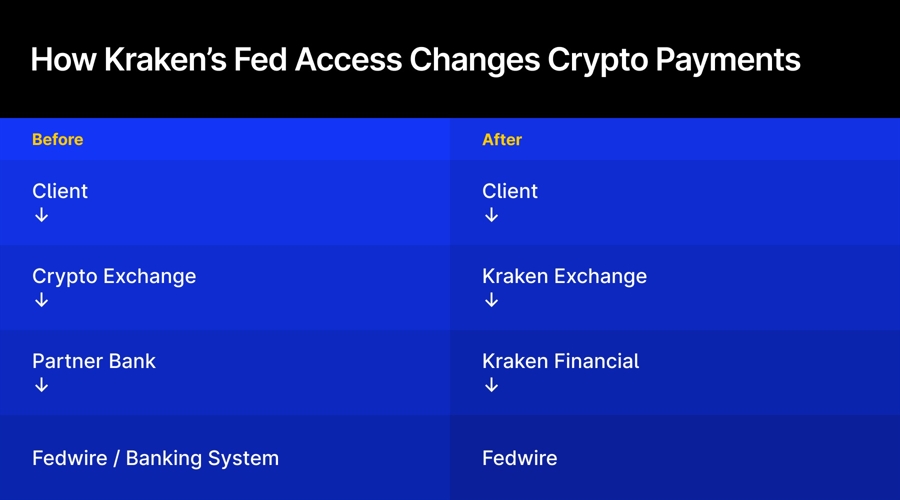
Kraken Just Plugged Into the Fed’s Payment System. Here’s Why It Matters

Kraken Just Plugged Into the Fed’s Payment System. Here’s Why It Matters

  • Trending
  • Comments
  • Latest
edit post
Supreme Court Delivers More Bad Redistricting News for Democrats

Supreme Court Delivers More Bad Redistricting News for Democrats

May 19, 2026
edit post
From Maine to Michigan, Democrats Are Making Communism Great Again

From Maine to Michigan, Democrats Are Making Communism Great Again

May 16, 2026
edit post
Gavin Newsom issues ‘final warning’ amid California’s dire housing crisis — what’s at stake for millions of residents

Gavin Newsom issues ‘final warning’ amid California’s dire housing crisis — what’s at stake for millions of residents

May 3, 2026
edit post
Minnesota Wealth Tax | Intangible Personal Property Tax

Minnesota Wealth Tax | Intangible Personal Property Tax

May 6, 2026
edit post
It’s Time To Talk About Massie

It’s Time To Talk About Massie

May 23, 2026
edit post
10 Cheapest High Dividend Stocks With P/E Ratios Under 10

10 Cheapest High Dividend Stocks With P/E Ratios Under 10

April 13, 2026
edit post
Shutting Down Federal Bee Labs Threatens Bees, Beekeepers and the US Food System

Shutting Down Federal Bee Labs Threatens Bees, Beekeepers and the US Food System

0
edit post
UK treats crypto network like a sanctioned bank after claims it processed B for Russia

UK treats crypto network like a sanctioned bank after claims it processed $90B for Russia

0
edit post
If Your Employees Aren’t Ready For AI, Neither Is Your Business

If Your Employees Aren’t Ready For AI, Neither Is Your Business

0
edit post
8 Cities Where Middle-Income Retirees Can No Longer Afford To Vacation

8 Cities Where Middle-Income Retirees Can No Longer Afford To Vacation

0
edit post
Berkshire Hathaway to buy Taylor Morrison for .8 billion

Berkshire Hathaway to buy Taylor Morrison for $6.8 billion

0
edit post
Red Snapper Used as Cudgel by Fed Judge

Red Snapper Used as Cudgel by Fed Judge

0
edit post
Berkshire Hathaway to buy Taylor Morrison for .8 billion

Berkshire Hathaway to buy Taylor Morrison for $6.8 billion

May 31, 2026
edit post
Seagate Technology Holdings plc (STX): Leopold Aschenbrenner Sells Stake

Seagate Technology Holdings plc (STX): Leopold Aschenbrenner Sells Stake

May 31, 2026
edit post
8 Cities Where Middle-Income Retirees Can No Longer Afford To Vacation

8 Cities Where Middle-Income Retirees Can No Longer Afford To Vacation

May 31, 2026
edit post
ClickUp just laid off 22% of staff while deploying 3,000 AI agents and promising million-dollar salaries to survivors — and Gartner’s data quietly says the financial returns aren’t actually showing up

ClickUp just laid off 22% of staff while deploying 3,000 AI agents and promising million-dollar salaries to survivors — and Gartner’s data quietly says the financial returns aren’t actually showing up

May 31, 2026
edit post
Tech with Empathy: How 2026 Senior Living Communities Are Using Wearables to Predict Health Changes Before They Happen

Tech with Empathy: How 2026 Senior Living Communities Are Using Wearables to Predict Health Changes Before They Happen

May 31, 2026
edit post
Data centers could determine who wins the next war, and a compute shortage would be ‘catastrophic’

Data centers could determine who wins the next war, and a compute shortage would be ‘catastrophic’

May 31, 2026
The Adviser Magazine

The first and only national digital and print magazine that connects individuals, families, and businesses to Fee-Only financial advisers, accountants, attorneys and college guidance counselors.

CATEGORIES

  • 401k Plans
  • Business
  • College
  • Cryptocurrency
  • Economy
  • Estate Plans
  • Financial Planning
  • Investing
  • IRS & Taxes
  • Legal
  • Market Analysis
  • Markets
  • Medicare
  • Money
  • Personal Finance
  • Social Security
  • Startups
  • Stock Market
  • Trading

LATEST UPDATES

  • Berkshire Hathaway to buy Taylor Morrison for $6.8 billion
  • Seagate Technology Holdings plc (STX): Leopold Aschenbrenner Sells Stake
  • 8 Cities Where Middle-Income Retirees Can No Longer Afford To Vacation
  • Our Great Privacy Policy
  • Terms of Use, Legal Notices & Disclosures
  • Contact us
  • About Us

© Copyright 2024 All Rights Reserved
See articles for original source and related links to external sites.

Welcome Back!

Login to your account below

Forgotten Password?

Retrieve your password

Please enter your username or email address to reset your password.

Log In
No Result
View All Result
  • Home
  • Financial Planning
    • Financial Planning
    • Personal Finance
  • Market Research
    • Business
    • Investing
    • Money
    • Economy
    • Markets
    • Stocks
    • Trading
  • 401k Plans
  • College
  • IRS & Taxes
  • Estate Plans
  • Social Security
  • Medicare
  • Legal

© Copyright 2024 All Rights Reserved
See articles for original source and related links to external sites.