Calls to “tax the rich” are, once again, gaining traction online in recent weeks.
It kicked off last month after New York Governor Kathy Hochul proposed a new tax on second homes in New York City worth more than $5 million. That got little attention, but it was New York City mayor Zohran Mamdani who turned it into a viral issue with a video promoting Hochul’s tax, filmed in front of a billionaire’s nine-figure penthouse.
Mamdani framed the proposal as a tiny contribution made by billionaires sitting on empty luxury NYC housing that will quickly raise $500 million to help provide things like “free childcare, cleaner streets, and safer neighborhoods.”
The tax has not actually been passed or implemented yet, and the city’s comptroller estimated that the total raised will be a few hundred million dollars lower than the mayor claimed. But Mamdani’s video was well-produced, and it went viral.
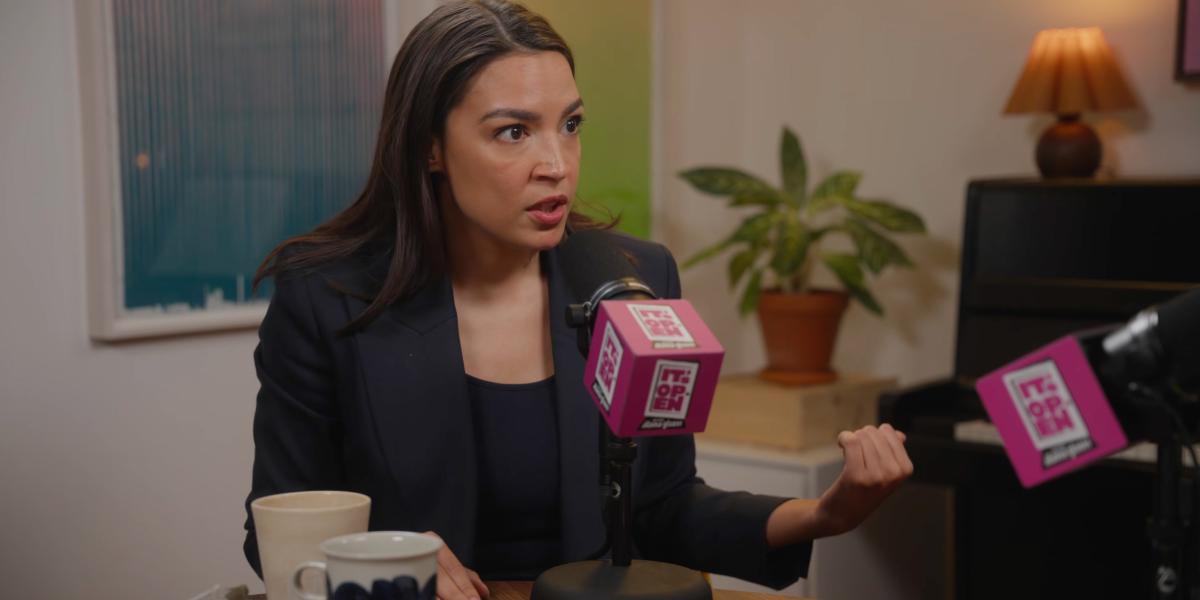
Then, AOC brought the discussion back up to the national level with a couple of podcast appearances where she rehashed the progressive cliché that “you can’t earn a billion dollars.” The congresswoman framed billionaire status as something that can only be attained through various forms of expropriation, such as “getting” market power, breaking rules, rent-seeking, and wage theft.
The clips generated a predictable freakout from conservatives who rushed to their keyboards to fire back that those at the top of America’s economic ladder earned their wealth by “taking risks” and providing consumers with value. AOC doubled down and claimed that her critics were simply trying to distract from the fact that working people are “getting screwed” under our current economic system, which conservatives like Ben Shapiro dismissed as a “conspiratorial, envious view of the world.”
The entire episode has been a good example of why, no matter how many so-called “change” candidates win elections, nothing seems to get done to pull the country out of its concerning and unsustainable economic trajectory. Because both progressives and conservatives show a complete unwillingness or inability to distinguish between those who got rich by genuinely creating value that left society as a whole better off and those who are getting rich by expropriating wealth through force.
Establishment conservatives will often agree that some businessmen and companies engage in rent-seeking or work with government regulators to protect themselves from competition. But they’ll usually write that behavior off as an isolated issue that in no way defines the economic status quo in the US.
But it’s a major factor. The government has been intervening heavily in the economy on behalf of well-connected companies for at least the last century. Across most industries, government agencies have used regulations, taxes, and the monopolization of all sorts of licensing to warp markets in favor of established companies with the means and connections to pay for political privileges.
As Murray Rothbard explained in Man, Economy, and State, beyond just warping the economy in favor of some of those who are already on top, the federal government’s escalating interventionism has also warped the path to wealth. Those who fare best in the interventionist economy are no longer those who provide consumers with goods and services they want at prices they are willing to pay, but, in Rothbard’s words, “those most adept at wielding coercion or at winning favors from wielders of coercion.”
In other words, as the government becomes a bigger and bigger player in the economy, entrepreneurs will be incentivized to abandon actual, value-creating production to join those using government to expropriate wealth from the shrinking productive sector. Because the potential gains are so much higher.
For example, during the first two decades of the war on terror, the top weapons companies invested a little over a billion dollars in lobbying efforts but made over $2 trillion in revenue. It was a 1,800 percent return on investment. War-related spending does tend to be more dramatic than other government programs, but still, one study found that the most politically-active corporations across all industries made an average of $760 for every dollar spent on political influence.
Conservatives tend to significantly underestimate just how much this unproductive and unethical path to wealth has already distorted our economy. Over a hundred years of crony interventions have built and shaped entire industries that are not only decoupled from the wants of end consumers but are also actively involved in attaining wealth, either directly or indirectly, through force. That’s not some hypothetical danger we’d be faced with if “big government” leftists get their way; it’s what we are and have already been living through.
And it’s quickly getting worse—especially in the decades since the government took control of the monetary system, which touches every part of the economy and allows the government to quietly transfer wealth from the masses to its well-connected friends through inflation.
So it is true that everyday Americans are getting ripped off under our current economic system. Conservatives are wrong to ignore that and to pretend like the current wealth distribution is purely the result of a healthy market at work. It isn’t, and we need to face that and address it before this unsustainable attack on the productive elements in society leads to collapse.
But how these problems get addressed is incredibly important. Many paths that are presented as solutions would actually make things far worse. And that includes the progressive obsession with taxing the rich.
The narrative underlying the effort to raise taxes—or, to introduce even more expropriation into our economic system—that figures like AOC and Mamdani have been spearheading these past few weeks is far more delusional than the idea that we currently live in some pure, laissez-faire free market.
According to this worldview, the massive federal government is not really a corrupt tool of expropriation working on behalf of whatever corporations have the means and connections to bribe it. It’s an institution that is genuinely trying to help people. But it’s starved of the resources it needs to do its good work because a handful of ultra-wealthy people are hoarding absurd amounts of money and are refusing to contribute their “fair share” of taxes—a relatively painless contribution that, as progressives like to at least heavily imply, would essentially eliminate poverty in this country.
There’s so much wrong with this narrative that it’s almost hard to know where to start.
First, the idea that the US federal government is starved of resources is absurd. The government already spends about the equivalent of the entire combined net worth of all the billionaires living in the country every single year. The idea that a bit more spending would take us from a totally broken economic system to some post-poverty utopia is preposterous.
It’s also worth noting that taxes on the ultra-wealthy have rarely stayed confined to the ultra-wealthy. It’s a common strategy of political classes across the modern West to sell the public on a new tax by assuring them that it will only be paid by a small sliver of the absolute richest members of society, only to eventually apply it to nearly everyone. The income tax in the US is one example. Recurring wealth taxes could easily be next.
But above all, raising taxes on the rich would hurt the best, most productive, and therefore socially beneficial rich people and help the worst, all while hampering the production of the goods and services that lower- and middle-class Americans rely on.
As I mentioned before, the bulk of the federal government’s programs are designed—and have always been designed—to benefit a growing class of politically-connected wealthy who are, by virtue of their means of attaining and maintaining wealth, net tax consumers. They only stand to benefit from more government taxing and spending.
The group that will be hurt by a sharp increase in taxes on the “rich” are the businesses and households that are still actively producing value in what remains of the market. These aren’t the highly-visible tycoons with obnoxious lifestyles in highly-subsidized industries like finance or tech. These are the mostly faceless mid-level entrepreneurs kickstarting lines of production that consumers rarely even think about but benefit substantially from.
Seizing even more of their income or wealth is unethical, and it dissuades the next round of entrepreneurs from even attempting to produce actual value—especially when a now even more lucrative path to government-expropriated wealth exists.
Said another way, simply raising some taxes on “the rich” would not only leave the true cause of our current economic problems in place, but it would also exacerbate those problems—the very problems figures like Mamdani and AOC claim to want to solve.
If we’re ever going to get on an actual, better economic path, it’s imperative that we acknowledge the widespread problems already embedded in our economic system. That requires us to reject the fear or greed that leads some to pretend like the entire economy is working great and the status quo ought to, or even can, be maintained.
And at the same time, it’s important we be precise about what is and is not causing our problems and not get pulled into lazy narratives that play on people’s envy and narcissistic obsession with demonstrating how “virtuous” they are to lead them to accept policies that will only make those problems more severe.
The economy needs to be fixed. But doing so doesn’t involve yet another increase in taxing and spending. It requires that we starve the machine in DC that is transferring the wealth of poor, middle class, and the most productive wealthy Americans into the pockets of the unproductive but well-connected rich.