No Result
View All Result
SUBMIT YOUR ARTICLES
  • Login
Thursday, April 16, 2026
TheAdviserMagazine.com
  • Home
  • Financial Planning
    • Financial Planning
    • Personal Finance
  • Market Research
    • Business
    • Investing
    • Money
    • Economy
    • Markets
    • Stocks
    • Trading
  • 401k Plans
  • College
  • IRS & Taxes
  • Estate Plans
  • Social Security
  • Medicare
  • Legal
  • Home
  • Financial Planning
    • Financial Planning
    • Personal Finance
  • Market Research
    • Business
    • Investing
    • Money
    • Economy
    • Markets
    • Stocks
    • Trading
  • 401k Plans
  • College
  • IRS & Taxes
  • Estate Plans
  • Social Security
  • Medicare
  • Legal
No Result
View All Result
TheAdviserMagazine.com
No Result
View All Result
Home Market Research Economy

On Solving Social Dilemmas – Econlib

by TheAdviserMagazine
5 months ago
in Economy
Reading Time: 5 mins read
A A
On Solving Social Dilemmas – Econlib
Share on FacebookShare on TwitterShare on LInkedIn


A Book Review of Solving Social Dilemmas: Ethics, Politics, and Prosperity, by Richard D Congleton.

Economists like blackboards. Using chalk (or markers), they construct logically consistent abstractions of the world. They call them “models”. This invites derision from both academics and the general public. However, the abstractions are often tested against the real world to assess their relevance of the models. The bad ones (i.e., those that are irrelevant) are thrown out.

In Solving Social Dilemmas, Roger Congleton flips this perspective by asking how real-world individuals, through trial, error, and adaptation, generate rules and norms that sustain cooperation—and how these emergent solutions are later captured by economists in abstract form.

To illustrate this flip, consider a small collectivity at the beginning of a long-time scale. Because some members of the collectivity can always act opportunistically, cooperation is hard to sustain (and one can think cooperation is analogous to exchange and trade) so rules must be developed to govern behavior.

Sometimes, the discipline of continuous dealings (i.e., losing the stream of benefits from future cooperation because of immediate opportunism) is sufficient. Sometimes, the development of norms and reputations acts as a complement to that discipline. These norms and mores become internalized and reinforced as they generate benefits from sustained cooperation. Then, they are transmitted via socialization.

“Norms,” “mores,” “rules,” and other terms more familiar to anthropologists fall broadly into what economists loosely call “institutions” or “governance.” (This category also includes government legislation.) In everyday language, people tend to describe the behavior generated by adherence to these institutions simply as “ethical behavior.”

If the relevant collectivity grows to the size of a village, the dilemma of cooperation remains, but it changes in form. More people means that the effectiveness of past solutions may decline. Therefore, the norms must be adapted. Tinkering with the existing rules is one way. Introducing new rules may be necessary. This means a long process of trial and error.

If the collectivity grows from a village to a city, the problems change again. The tinkering continues and the innovation must continue as well. This is unavoidable, since each round of growth of the collectivity is made possible by having successfully dealt with the problems of sustaining cooperation in the prior round. Each round generates new problems for sustaining cooperation that must be answered for growth to continue.

“In other words, ethics build markets, markets reinforce the very ethos that sustains them, and together they generate the prosperity that allows both to flourish.”

This is why Congleton can write “communities with an ethos that tends to support market transactions, team production, specialization, innovation and public policies that do not impede economic development benefit from more extensive and productive commercial networks” (p. 23). In other words, ethics build markets, markets reinforce the very ethos that sustains them, and together they generate the prosperity that allows both to flourish.

This is the simplest summary that can be made of Congleton’s Solving Social Dilemmas. And it is a powerful way of expressing more formally the nature of economic development and the process that individuals follow (and understand intuitively) to produce “governance” in their daily lives. Economists can gain from reading this book because it offers ways to conceptualize questions about the evolution of institutions. Economic historians can gain from it a possible way to resolve certain questions regarding divergence between nations. Development economists can use it to understand how “big plans” imposed from above may destroy existing intricate systems of governance in ways that even the most rationally devised plan enacted by the most angelic planner could still make things worse.

Even this high praise fails to do justice to the book. For example, the entirety of chapters 4 and 5 can form the basis of advanced undergraduate classes in economic history, economic development, economic philosophy, the history of economic thought and political economy. If expanded, in ways that some of the appendices provided by Congleton allow, they could form entire sections of core courses for graduate students in economics. They could also be easily adapted as a way to bridge conversations with historians and sociologists.

Chapter 6 of the book provides a simple exposition, accessible to all, about customary law as “market-based law”. Liberty Fund followers are aware of these arguments, but their full exposition often comes in long treatises such as Theodore Plucknett’s Concise History of The Common Law(a misleading title—the book spans 828 pages) or Arthur Hogue’s Origins of the Common Law, and (more modern) John Hasnas’s Common Law Liberalism. But this chapter in Congleton boils down the entire literature in a digestible way. More importantly, Congleton expresses these ideas in terms that would attract people to the argument. Most notably, it is accessible to economists, who sometimes struggle to connect legal concepts to economic concepts.

The understanding that emerges is that customary law has flexibility, offers more room for a smoother tinkering process with new rules as societies change (notably as in my example of changing size), and is cheaper to enforce because of the “customary” part.

Finally, Part III of the book could easily form the core of a course in a Politics, Philosophy, and Economics (PPE) curriculum. It connects the economics discussed above with history and philosophy, providing insight into why the successful tinkering and innovation process in the “governance” of social dilemmas has been effective in sustaining cooperation.

For more on these topics, see

Some may be tempted to dismiss Congleton’s book based on the perception that he is claiming prosperous societies are simply more ethical, while poorer societies are composed of less ethical people. That would be a mistake, since this isn’t what he argues. Instead, Congleton argues that certain ethical systems—discovered through trial and error, innovation, and repeated experimentation—are simply better suited to solving cooperation problems and sustaining markets. He summarizes this best himself: “some ethical systems ameliorate or solve a broader array of dilemmas than others” and “some internalized systems of ethical and normative rules provide more support for commerce than others” (p. 430).

In this, Congleton echoes Adam Smith’s belief that prosperity is not the product of men’s personal virtue, but of the rules that govern their behavior. That is, in short, the single sentence on which Congleton builds one of the finest works I have read in years.

Footnotes

[1] Richard D. Congleton, Solving Social Dilemmas: Ethics, Politics, and Prosperity. Oxford University Press, 2022.

[2] Theodore F. T. Plucknett, A Concise History of the Common Law. Liberty Fund, 2010.

[3] Arthur R. Hogue, Origins of the Common Law. Liberty Fund, 1986.

[4] John Hasnas, Common Law Liberalism: A New Theory of the Libertarian Society. Oxford University Press, 2024.

[5] William Easterly, 2021. Progress by consent: Adam Smith as development economist. Rev Austrian Econ 34, 179–201. https://doi.org/10.1007/s11138-019-00478-5


Source link

Tags: DilemmasEconlibSocialSolving
ShareTweetShare
Previous Post

Links 11/3/2025 | naked capitalism

Next Post

I Quit My W2 Job After a “Home Run” First Deal (With No Money or Experience)

Related Posts

edit post
When Nuclear War Is All We Have Left

When Nuclear War Is All We Have Left

by TheAdviserMagazine
April 16, 2026
0

QUESTION: Do you think the blockade will be effective in bringing Iran to collapse? You also said that Iran is...

edit post
Assisted Suicide Is the Logical Outcome of Government-Controlled Medical Care

Assisted Suicide Is the Logical Outcome of Government-Controlled Medical Care

by TheAdviserMagazine
April 16, 2026
0

Christianity Today recently published an article by Kristy Etheridge that was very critical of Canada’s Medical Assistance in Dying (MAID)...

edit post
New York Fed President Williams worries war will slow growth, aggravate inflation

New York Fed President Williams worries war will slow growth, aggravate inflation

by TheAdviserMagazine
April 16, 2026
0

New York Fed President John Williams expressed concern Thursday about the Iran war's impact on the economy, saying it already...

edit post
UK GDP grows 0.5% in February, beating economists’ expectations

UK GDP grows 0.5% in February, beating economists’ expectations

by TheAdviserMagazine
April 16, 2026
0

Millennium Wheel And Skyline At Sunset. London, England. Design Pics Editorial | Universal Images Group | Getty ImagesThe U.K. economy...

edit post
The Rise Of AI In Payments Is Not About Convenience

The Rise Of AI In Payments Is Not About Convenience

by TheAdviserMagazine
April 16, 2026
0

Visa has just unveiled a new suite of artificial intelligence tools designed to overhaul how credit card disputes are handled,...

edit post
Here are all the ways the Iran war has affected the U.S. economy so far

Here are all the ways the Iran war has affected the U.S. economy so far

by TheAdviserMagazine
April 15, 2026
0

In an aerial view, the Marathon Petroleum Corp's Los Angeles Refinery is seen on April 02, 2026 in Carson, California....

Next Post
edit post
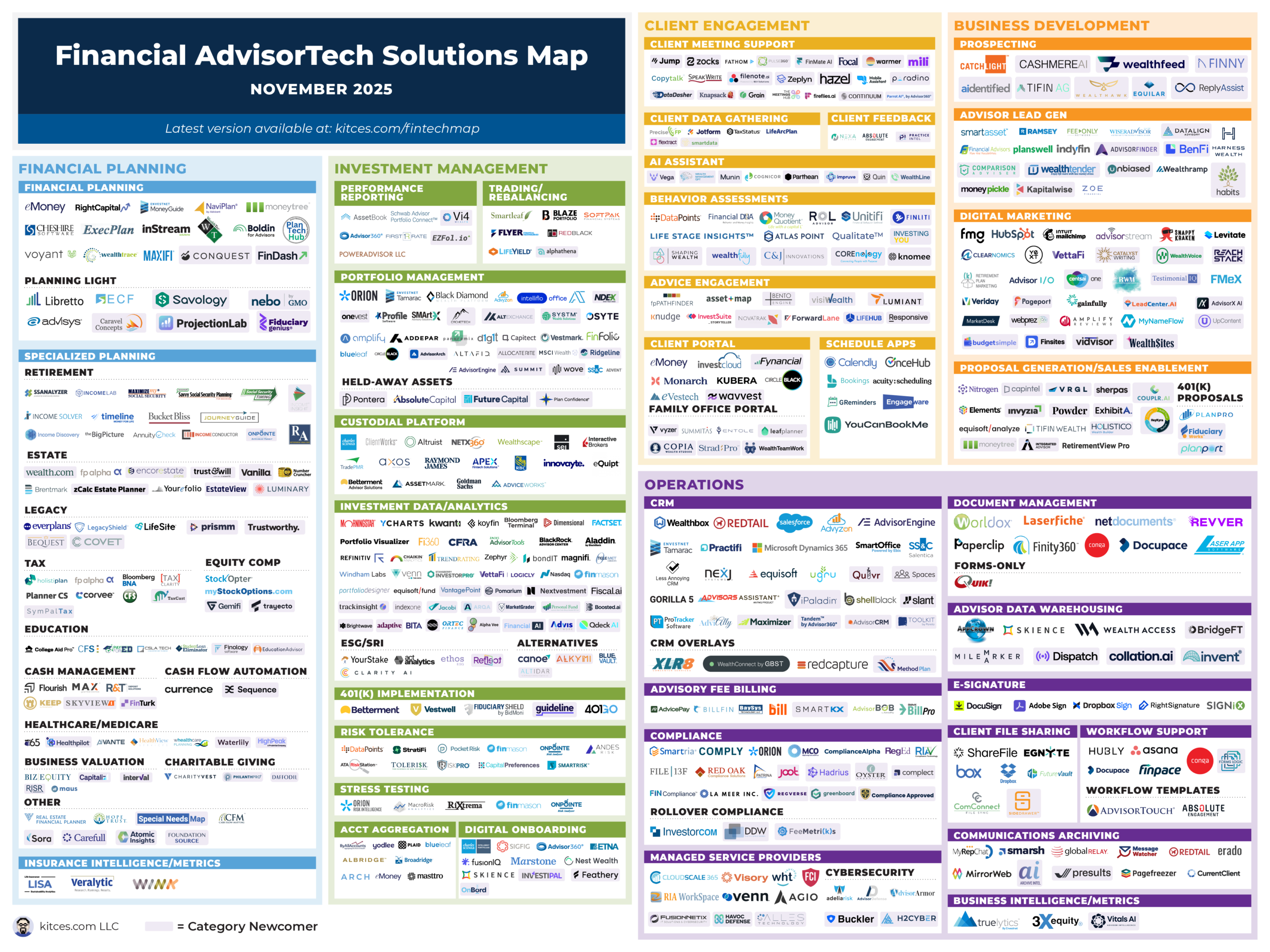
RightCapital Reduces Switching Costs Of Changing Financial Planning Software With New Data Migration Tool (And More Of The Latest In Financial #AdvisorTech – November 2025)

RightCapital Reduces Switching Costs Of Changing Financial Planning Software With New Data Migration Tool (And More Of The Latest In Financial #AdvisorTech – November 2025)

edit post
Sony to spin off Israel chipmaking activity

Sony to spin off Israel chipmaking activity

  • Trending
  • Comments
  • Latest
edit post
Massachusetts loses billions in income after millionaire tax

Massachusetts loses billions in income after millionaire tax

March 24, 2026
edit post
Illinois’ Paid Leave for All Workers Act Takes Effect — Every Employee Now Gets Guaranteed Time Off

Illinois’ Paid Leave for All Workers Act Takes Effect — Every Employee Now Gets Guaranteed Time Off

March 27, 2026
edit post
Virginia Permits ADULT MIGRANT MEN To Attend High School

Virginia Permits ADULT MIGRANT MEN To Attend High School

March 30, 2026
edit post
A 58-year-old left NYC for Miami to save on taxes — then retired early thanks to hidden savings. Here’s the math

A 58-year-old left NYC for Miami to save on taxes — then retired early thanks to hidden savings. Here’s the math

March 30, 2026
edit post
Tax Flight Accelerates In Massachusetts

Tax Flight Accelerates In Massachusetts

April 6, 2026
edit post
Property Tax Relief & Income Tax Relief

Property Tax Relief & Income Tax Relief

April 1, 2026
edit post
Gov’t Cos Authority recommends splitting NTA

Gov’t Cos Authority recommends splitting NTA

0
edit post
Your Top April Questions: Tax Refunds, Debt and More

Your Top April Questions: Tax Refunds, Debt and More

0
edit post
Shares of Myseum jump 150% after following Allbirds in AI pivot

Shares of Myseum jump 150% after following Allbirds in AI pivot

0
edit post
The Most Active Non-NYC Venture Capital Firms in Q1 2026 in New York – AlleyWatch

The Most Active Non-NYC Venture Capital Firms in Q1 2026 in New York – AlleyWatch

0
edit post
How is the Europe Marine Biofuel Market Transforming Sustainable Shipping?

How is the Europe Marine Biofuel Market Transforming Sustainable Shipping?

0
edit post
LPL’s Mariner Advisor Network deal fuels already hot year for RIA M&A

LPL’s Mariner Advisor Network deal fuels already hot year for RIA M&A

0
edit post
Your Top April Questions: Tax Refunds, Debt and More

Your Top April Questions: Tax Refunds, Debt and More

April 16, 2026
edit post
Shares of Myseum jump 150% after following Allbirds in AI pivot

Shares of Myseum jump 150% after following Allbirds in AI pivot

April 16, 2026
edit post
LPL’s Mariner Advisor Network deal fuels already hot year for RIA M&A

LPL’s Mariner Advisor Network deal fuels already hot year for RIA M&A

April 16, 2026
edit post
When Nuclear War Is All We Have Left

When Nuclear War Is All We Have Left

April 16, 2026
edit post
Ripple Payments And The Future Of Domestic Payment Infrastructure by 2030

Ripple Payments And The Future Of Domestic Payment Infrastructure by 2030

April 16, 2026
edit post
The Research Behind Attention — And What It Means for Teaching

The Research Behind Attention — And What It Means for Teaching

April 16, 2026
The Adviser Magazine

The first and only national digital and print magazine that connects individuals, families, and businesses to Fee-Only financial advisers, accountants, attorneys and college guidance counselors.

CATEGORIES

  • 401k Plans
  • Business
  • College
  • Cryptocurrency
  • Economy
  • Estate Plans
  • Financial Planning
  • Investing
  • IRS & Taxes
  • Legal
  • Market Analysis
  • Markets
  • Medicare
  • Money
  • Personal Finance
  • Social Security
  • Startups
  • Stock Market
  • Trading

LATEST UPDATES

  • Your Top April Questions: Tax Refunds, Debt and More
  • Shares of Myseum jump 150% after following Allbirds in AI pivot
  • LPL’s Mariner Advisor Network deal fuels already hot year for RIA M&A
  • Our Great Privacy Policy
  • Terms of Use, Legal Notices & Disclosures
  • Contact us
  • About Us

© Copyright 2024 All Rights Reserved
See articles for original source and related links to external sites.

Welcome Back!

Login to your account below

Forgotten Password?

Retrieve your password

Please enter your username or email address to reset your password.

Log In
No Result
View All Result
  • Home
  • Financial Planning
    • Financial Planning
    • Personal Finance
  • Market Research
    • Business
    • Investing
    • Money
    • Economy
    • Markets
    • Stocks
    • Trading
  • 401k Plans
  • College
  • IRS & Taxes
  • Estate Plans
  • Social Security
  • Medicare
  • Legal

© Copyright 2024 All Rights Reserved
See articles for original source and related links to external sites.