Violent Saviors: The West’s Conquest of the RestBy William EasterlyBasic Books, 2025; 448 pp.
William Easterly is a development economist who early in his career worked at the World Bank and now is a professor of economics at New York University. His book The Tyranny of Experts (Basic Books, 2014) attracted much favorable attention in libertarian and free market circles for its criticism of economic growth programs for third world countries. Easterly argued that these programs are based only on mechanical models of how growth must occur and fail adequately to consider the knowledge and wishes of the local inhabitants or, indeed, whether they want to “develop” at all. Because of this, I looked forward to reading Violent Saviors, but although the book contains some useful insights, it is on the whole a disappointment.
Unlike Easterly’s earlier books, Violent Saviors is not based on his firsthand experience but is rather a vast historical survey that ranges from the seventeenth century to the present. Easterly has read widely but flits he from one topic to another with hardly a pause for breath, and he does not argue very carefully.
The book contrasts Adam Smith’s view of the proper relation between the West and the less developed regions of the world with that of the Marquis de Condorcet. Smith thought that the West should respect the way of life of the native inhabitants, while Condorcet, who had ties to the French Physiocrats, knew what was “best” for them because economic science had established this: “If some developers hastened progress, then ‘the vast gulf that separates’ civilized nations from uncivilized nations would gradually disappear. Such progress would mean that each generation and each person would increasingly ‘be better able to satisfy his needs.’ The ‘average length of human life will be increased.’ Anticipating modern development reports, Condorcet imagined ‘a progress that can be represented with some accuracy in figures or on a graph.’ To Condorcet, material progress could be objectively measured and promoted. It was a benevolent and inspiring vision of economic development. Condorcet’s classic essay offers an early example of economists’ fight against global poverty that inspires so many (including this author) today. But it was the West who had to develop the Rest. The people in the Rest could not develop themselves. According to Condorcet, they were still ‘vegetating in the infant condition of early times.’ They represented ‘the infancy of the human race.’ The infancy metaphor was very common among Western thinkers looking at other peoples, and it was destined to last. The picture was of children in need of the wise guidance of a father in order to grow up into full development. They had failed to develop on their own and were still stuck in ‘their condition of apathy,’ in their ‘indolence of body and mind,’ and in their ‘superstition.’”
“But the crucial distinction between Condorcet and Smith,” Easterly claims, “is that Condorcet saw European settlers as agents of progress for non-Europeans, while Smith saw the settlers as benefiting only themselves. Smith never claimed that European settlement was good for the natives, either in the present or the future. Smith was deeply skeptical about those who claimed to be acting in the interests of others. The other critical difference between Condorcet and Smith is about individual freedom. Throughout The Wealth of Nations, Smith insisted on individual freedom of choice in all market transactions as an end in itself. In his critique of British policy toward the European settlers in North America, Smith saw free trade as a moral good. The British banned the settlers from constructing steel furnaces or other manufactures, forcing them to buy manufactured goods from British merchants. Smith was appalled at this violation of the settlers’ freedom even though the policy’s empirical effect on their prosperity was small: It was ‘a manifest violation of the most sacred rights of mankind.’”
This part of the book also contains a useful discussion of Kant as a defender of human dignity. According to Easterly, Kant saw violations of a person’s property rights as an insult to dignity and as such forbidden, and he extended this view to the property rights of natives. Easterly manages to explain Kant’s views in easy-to-understand language that contains no philosophical howlers, and I commend this chapter to readers.
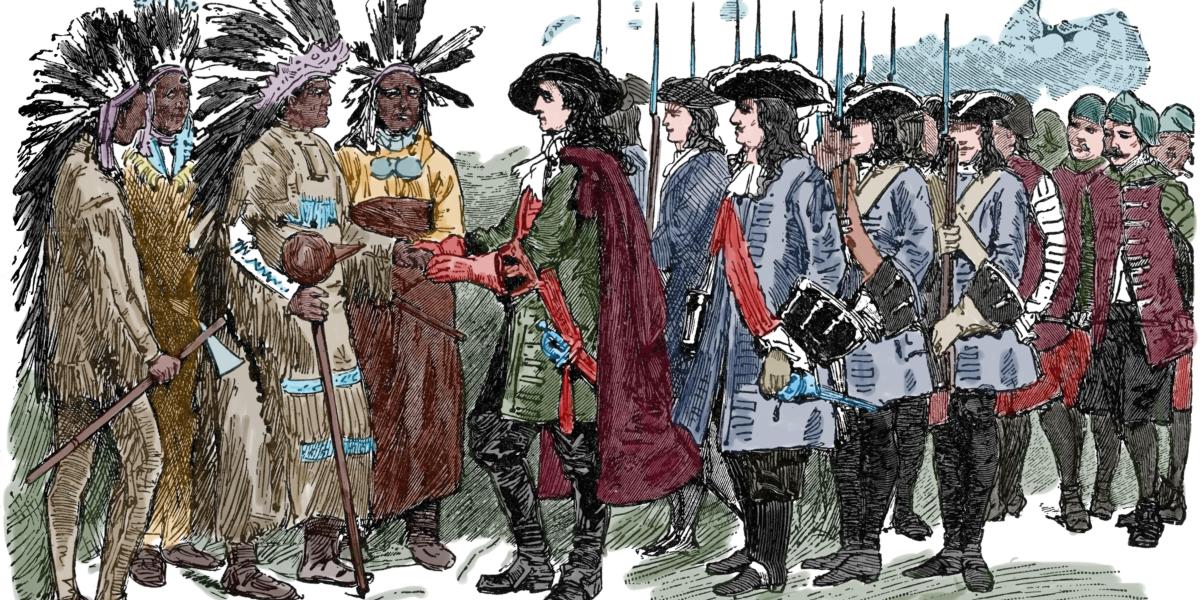
Easterly falls into error, though, in his account of the British settlers’ attitude toward the property of Indians. As he sees it, the advanced Westerners did not have to respect the property rights of such “primitives” as American Indians because the Indians had left most of their land idle. He views Locke as a source of this position, which Easterly calls the development right of conquest: “The great English philosopher John Locke in 1689 endorsed the idea of development as a basis for land rights in his Two Treatises of Government, which otherwise is a classic statement of liberal ideals, such as the consent of the governed. God had commanded man to ‘subdue the earth, i.e. improve it.’ Whoever ‘in obedience to this command of God, subdued, tilled and sowed any part of it’ could claim that part of it as their property. God made this rule to give the land to ‘the industrious and rational’ so that the earth would not remain ‘uncultivated.’ Locke applied this principle to ‘the wild woods and uncultivated waste of America, left to nature, without any improvement, tillage or husbandry,’ where ‘the needy and wretched inhabitants’ get no more from a thousand acres than the English got from ten acres in Devonshire. Locke encouraged the English settler to ‘plant in some in-land, vacant places of America.’” Easterly thinks this is what Locke meant and that the settlers were correct to read Locke as saying this.
But both Easterly and the settlers are wrong: They misapprehend what Locke was saying. What Locke in fact meant was that individual Indians who had fenced off land and cultivated it had just title to their land: They had “mixed their labor” with the land they had fenced off and thus had acquired it. But the Indians could not rightly appeal to “tribal” rights over vast areas and forbid others to homestead them. The Indians did not believe in Locke’s theory, but whether you have a right depends on the correct theory of rights, not on whether you believe the correct theory or some other theory.
As I mentioned at the start, Easterly jumps from one topic to another, so after a discussion of American Indians, he turns to black slavery, especially in the American South. He is guilty of a major blunder. He “quotes” from Chief Justice Taney’s opinion in Dred Scott as follows: “Meanwhile the debate on option number one for Black [sic] people—benevolent slavery—got even more furious. In 1857, the US Supreme Court under Chief Justice Roger B. Taney endorsed benevolent slavery. The Dred Scott decision by Taney announced that Black people were ‘altogether unfit’ for freedom, and so ‘the negro might justly and lawfully be reduced to slavery for his benefit.’ It followed that Black people ‘had no rights which the white man was bound to respect.’” The first quotation is a confabulation that is not in the opinion. In point of fact, Taney was interpreting the original meaning of the Constitution, not giving his own view.
Easterly views the South with contempt, seeing Southerners as self-interested defenders of slavery who “justified” their cruel treatment of black slaves with the transparently false claim that the slaves were for the most part well treated and content with their lot. Easterly has confused two very different questions: Were the slaves well treated? and Is slavery morally permissible?
He takes the War Between the States to be a battle between freedom and slavery, despite the fact that Lincoln did not invade the South for that purpose and in fact supported the 1861 Corwin Amendment to entrench slavery in the Constitution if the South did not secede. Easterly acknowledges that Lincoln hoped to colonize blacks, but he still counts him as a hero: “Lincoln was finally ready to give up. Congress repealed previous colonization clauses in July 1864. So the white dream of Black progress through colonization, which had entranced seven US presidents over eight decades, finally came to an ignominious end on Cow Island. In the end, despite all his hopeful rhetoric on colonization, Lincoln had not been willing to force Black people to leave the US. The resistance of the Black community meant that colonization would have entailed massive violence. In the end, Lincoln’s belief in liberty won out over his colonization fantasies. Although his colonization support had threatened the cause of equal rights for Black people, in the end he did far more for the cause of liberty with his denunciation of benevolent slavery. Lincoln in the end did contribute to a new birth of freedom.” I would hardly describe the vast expansion of the power of the federal government under Lincoln as “a new birth of freedom.”
I have space to discuss only one more of Easterly’s confusions of factual and normative issues. Praising John Stuart Mill, he says: “Mill denounced [Thomas] Carlyle’s theory of innate differences between white and Black people. Mill was one of the foremost critics of the nineteenth-century rise of scientific racism. He referred to all such theories of non-white racial inferiority as ‘vulgar.’ It was so unscientific to just attribute ‘the diversities of conduct and character to inherent natural differences.’ The reasoning was vulgar because it was circular reasoning. The slaves were poor because they were allegedly inferior. Carlyle said he knew they were inferior because they were poor.” The question of whether there are group differences in intelligence is a factual question, not to be resolved by Carlyle’s faulty reasoning and the conclusion he drew from it about the proper treatment of blacks.
Easterly’s book is worth reading, but he has taken on more than he can handle.