No Result
View All Result
SUBMIT YOUR ARTICLES
  • Login
Saturday, July 11, 2026
TheAdviserMagazine.com
  • Home
  • Financial Planning
    • Financial Planning
    • Personal Finance
  • Market Research
    • Business
    • Investing
    • Money
    • Economy
    • Markets
    • Stocks
    • Trading
  • 401k Plans
  • College
  • IRS & Taxes
  • Estate Plans
  • Social Security
  • Medicare
  • Legal
  • Home
  • Financial Planning
    • Financial Planning
    • Personal Finance
  • Market Research
    • Business
    • Investing
    • Money
    • Economy
    • Markets
    • Stocks
    • Trading
  • 401k Plans
  • College
  • IRS & Taxes
  • Estate Plans
  • Social Security
  • Medicare
  • Legal
No Result
View All Result
TheAdviserMagazine.com
No Result
View All Result
Home Market Research Economy

Carl Menger, Crown Prince Rudolf, and the Marginal Revolution That Never Was

by TheAdviserMagazine
14 hours ago
in Economy
Reading Time: 5 mins read
A A
Carl Menger, Crown Prince Rudolf, and the Marginal Revolution That Never Was
Share on FacebookShare on TwitterShare on LInkedIn


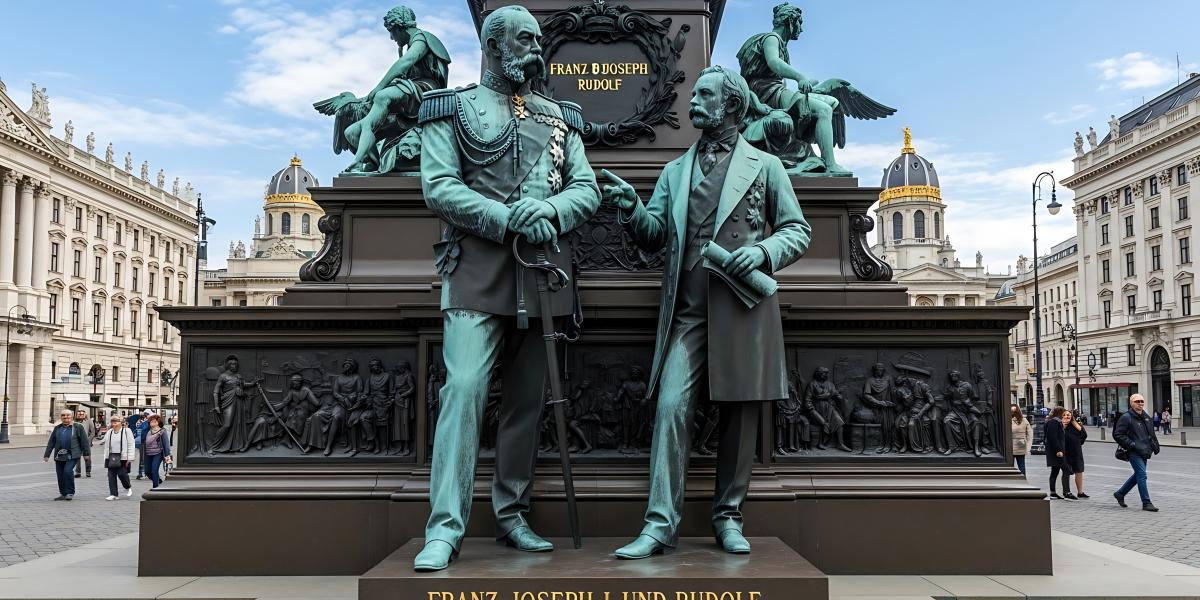
Carl Menger is remembered today as the founder of the Austrian School of Economics and one of the most important economic thinkers in history. His 1871 masterpiece, Principles of Economics, launched what became known as the Marginal Revolution, overturning centuries of economic orthodoxy and fundamentally changing the way economists understand value, prices, and human action. Yet one of the most fascinating aspects of Menger’s life has little to do with economics and everything to do with history. For several years, Menger served as tutor to Crown Prince Rudolf of Austria, heir to the Habsburg throne. The tragic death of Rudolf at Mayerling in 1889 raises one of the great unanswered questions of modern history: what if Menger’s royal student had lived?

To understand the significance of this question, one must first understand Menger’s revolutionary insight. Prior to Menger, many economists believed value was determined primarily by the amount of labor invested in producing a good. Menger rejected this view entirely. He argued that value exists not in objects themselves but in the minds of individuals. A diamond is not valuable because of the labor required to extract it; it is valuable because people desire it. More importantly, people make decisions not based upon total quantities but upon marginal quantities—the next unit available to them.

This seemingly simple observation transformed economics. Water, despite being essential to life, is often inexpensive because it is abundant. Diamonds, despite being non-essential, can command enormous prices because they are valued and scarce. Human beings evaluate goods at the margin, considering the importance of the next available unit rather than the total importance of the good itself.

What became known as the Marginal Revolution did more than explain prices. It offered a profound lesson about how complex systems operate. Small changes at the margin can alter outcomes dramatically. A seemingly insignificant adjustment in supply, demand, knowledge, incentives, or opportunity can ripple outward through an entire economic order. The world is often shaped not by sweeping abstractions but by marginal differences that accumulate over time.

Remarkably, the life of Menger’s student would provide a powerful illustration of this principle.

In 1876, Menger was appointed tutor to Crown Prince Rudolf, the only son of Emperor Franz Joseph and the future ruler of the Austro-Hungarian Empire. During their years together, Menger exposed the young prince to modern economic thought, political philosophy, history, and the scientific spirit of the age. Rudolf emerged as one of the most intellectually curious and reform-minded members of Europe’s ruling class. He was more liberal than his father, more interested in constitutional reform, and more aware of the growing national tensions within the sprawling multinational empire.

Many contemporaries believed Rudolf represented the future. While Emperor Franz Joseph embodied the traditions of nineteenth-century monarchy, Rudolf appeared willing to modernize the empire and adapt it to the realities of a changing Europe. Then came the tragedy at Mayerling.

On January 30, 1889, Rudolf and his young companion Baroness Mary Vetsera were found dead at the imperial hunting lodge. Whether the event was solely a murder-suicide pact or something more complicated remains debated. What is certain is that the death of the crown prince sent shockwaves throughout Europe and fundamentally altered the future of the Habsburg dynasty.

Here is where Menger’s economic insights become strikingly relevant. To most observers at the time, Rudolf’s death was a personal tragedy and a dynastic crisis. Few could have imagined that it might influence the fate of continents. Yet Menger’s theory teaches us to pay attention to marginal changes. The removal of a single individual from a complex system can alter countless future decisions.

Rudolf’s death changed the line of succession. Because he left no surviving male heir, the succession eventually passed to Archduke Franz Ferdinand. Twenty-five years later, Franz Ferdinand’s assassination in Sarajevo triggered the diplomatic crisis that escalated into the First World War.

The chain of causation is impossible to ignore. Remove Rudolf’s death and the succession changes. Change the succession and Franz Ferdinand may never become heir. Remove Franz Ferdinand from that position and the assassination at Sarajevo may never occur in the form history remembers. Without the July Crisis of 1914, the outbreak of World War I may have unfolded differently—or perhaps not at all.

This does not mean Rudolf’s survival would have guaranteed peace. History is too complex for such certainty. Europe was already burdened by nationalism, militarism, imperial rivalries, and an intricate alliance system. Nevertheless, Menger’s theory reminds us that outcomes emerge from the interaction of countless individual choices. A single change at a crucial margin can alter the path of an entire system.

The consequences of World War I illustrate the magnitude of this possibility. The war destroyed four empires: Austria-Hungary, Germany, Russia, and the Ottoman Empire. It created the conditions for the Bolshevik Revolution, the rise of Soviet communism, instability in the Middle East, the punitive peace settlements that destabilized Europe, the emergence of fascism, and ultimately the Second World War. The Cold War, the Iron Curtain, nuclear deterrence, and much of modern geopolitics can be traced back to the catastrophe that began in 1914.

When viewed through this lens, Rudolf’s death appears as a marginal event with monumental consequences. One man died in a hunting lodge outside Vienna, and the political equilibrium of Europe shifted. The effects spread outward through decades like concentric circles in a pond.

This perspective reflects a deeper lesson found throughout Menger’s work. Society is not a machine directed by central planners. It is a complex order composed of individuals making choices under changing circumstances. Just as prices emerge from countless acts of buying and selling, history emerges from countless human decisions, many of which appear insignificant when viewed in isolation.

The Mayerling tragedy demonstrates that the principle of marginalism applies not only to economics but also to history itself. Great historical transformations are often driven by events that appear small at the moment they occur. A conversation, a decision, a meeting, a marriage, or a death can redirect the course of nations. The difference between one outcome and another may lie in a single individual occupying a single position at a single moment in time.

Carl Menger could not have known that the student he was educating might one day become one of history’s great lost possibilities. Nor could he have known that the absence of that student would help shape the century that followed. Yet there is a certain poetic symmetry in the story. The founder of the Marginal Revolution helped educate a prince whose death became one of the most consequential marginal events in modern history.

Today, Menger’s legacy rests securely upon his achievements in economics. His theory of subjective value transformed the discipline and continues to influence economists around the world. But the story of Crown Prince Rudolf offers an unexpected illustration of Menger’s own insights. History, like economics, often turns on the margin. The smallest changes can produce the largest consequences.

The twentieth century may stand as the greatest example of that truth. Somewhere in the lost future that died at Mayerling was another Europe, another century, and perhaps another world. Whether it would have been better or worse, no one can know. But Carl Menger would certainly have understood the principle involved: sometimes the fate of millions depends upon a single marginal change.



Source link

Tags: CarlcrownmarginalMengerprinceRevolutionRudolf
ShareTweetShare
Previous Post

Stablecoins May Improve FX Access but Worsen Currency Runs: IMF

Next Post

Hot Stocks KW 28 / 2026: Computersysteme & Netzwerke – Schaufelverkäufer im digitalen Goldrausch!

Related Posts

edit post
‘Funflation’ is back and hitting gaming and streaming services

‘Funflation’ is back and hitting gaming and streaming services

by TheAdviserMagazine
July 11, 2026
0

For decades, video games have been a go-to hobby for Alyx Green. But in recent years, Green has felt priced...

edit post
The Dupes of War: Mises on Statism, Propaganda, and Foreign Conflict

The Dupes of War: Mises on Statism, Propaganda, and Foreign Conflict

by TheAdviserMagazine
July 11, 2026
0

On the latest episode of Minor Issues, Mark Thornton examines the “dupes of war”—citizens trained by government, schools, and historians...

edit post
Links 7/11/2026 | naked capitalism

Links 7/11/2026 | naked capitalism

by TheAdviserMagazine
July 11, 2026
0

Passersby Can’t Believe Who They Spot Sharing A Picnic Table In Alaska The Dodo Passenger partly sucked from Ryanair plane...

edit post
Market Talk – July 10, 2026

Market Talk – July 10, 2026

by TheAdviserMagazine
July 10, 2026
0

ASIA: The major Asian stock markets had a mixed day today: • NIKKEI 225 increased 813.88 points or 1.20% to...

edit post
Coffee Break: More on American Science, Thomas Jefferson and AI, and Natural History for the Ages

Coffee Break: More on American Science, Thomas Jefferson and AI, and Natural History for the Ages

by TheAdviserMagazine
July 10, 2026
0

Part the First: Beware of Resting on the Shoulders of Atlas.  Dr. Scott Atlas is a radiologist who is now...

edit post
Cloudflare Threatens to Cut Google Off From Their Publishers in Searches Due to AI Scraping

Cloudflare Threatens to Cut Google Off From Their Publishers in Searches Due to AI Scraping

by TheAdviserMagazine
July 10, 2026
0

One of our big complaints about AI is that they steal our copyrighted content. On top of that, the intensity...

Next Post
edit post
Hot Stocks KW 28 / 2026: Computersysteme & Netzwerke – Schaufelverkäufer im digitalen Goldrausch!

Hot Stocks KW 28 / 2026: Computersysteme & Netzwerke – Schaufelverkäufer im digitalen Goldrausch!

edit post
High on Health: Are We Losing Our Ability to Concentrate?

High on Health: Are We Losing Our Ability to Concentrate?

  • Trending
  • Comments
  • Latest
edit post
Mass Fraud in Massachusetts Committed by Illegal Immigrants Discovered

Mass Fraud in Massachusetts Committed by Illegal Immigrants Discovered

June 22, 2026
edit post
New York Seniors: 6 STAR Tax Relief Rules That Could Put a Bigger Check in Your Mailbox

New York Seniors: 6 STAR Tax Relief Rules That Could Put a Bigger Check in Your Mailbox

June 20, 2026
edit post
5 Pennsylvania Rebate Rules Seniors Should Check Before the Property Tax/Rent Deadline

5 Pennsylvania Rebate Rules Seniors Should Check Before the Property Tax/Rent Deadline

June 18, 2026
edit post
Bristlecone pines growing in the White Mountains of California germinated before the Great Pyramid was built, and the oldest one alive today, nicknamed Methuselah, has been quietly adding rings for 4,855 years in soil so poor almost nothing else survives beside it

Bristlecone pines growing in the White Mountains of California germinated before the Great Pyramid was built, and the oldest one alive today, nicknamed Methuselah, has been quietly adding rings for 4,855 years in soil so poor almost nothing else survives beside it

July 8, 2026
edit post
Retail giant exits U.S. fashion after multi-million-dollar scandal

Retail giant exits U.S. fashion after multi-million-dollar scandal

July 1, 2026
edit post
Same Portfolio. Same Retirement. A 10-Mile Move Costs One Couple ,000 A Year

Same Portfolio. Same Retirement. A 10-Mile Move Costs One Couple $10,000 A Year

June 27, 2026
edit post
Nearly 60% of foreign inflows into India-focused funds withdrawn since 2024 peak: Report

Nearly 60% of foreign inflows into India-focused funds withdrawn since 2024 peak: Report

0
edit post
With minutes due, Fed’s ‘family fight’ over interest rates could drag on

With minutes due, Fed’s ‘family fight’ over interest rates could drag on

0
edit post
Crypto won the ETF fight but now the SEC is questioning if things have gone too far

Crypto won the ETF fight but now the SEC is questioning if things have gone too far

0
edit post
Choosing the Wrong Executor Could Cost Your Family More Than You Think

Choosing the Wrong Executor Could Cost Your Family More Than You Think

0
edit post
Carl Menger, Crown Prince Rudolf, and the Marginal Revolution That Never Was

Carl Menger, Crown Prince Rudolf, and the Marginal Revolution That Never Was

0
edit post
The US and Iran can’t agree on reopening Hormuz. The solution could be from the Old Testament

The US and Iran can’t agree on reopening Hormuz. The solution could be from the Old Testament

0
edit post
The US and Iran can’t agree on reopening Hormuz. The solution could be from the Old Testament

The US and Iran can’t agree on reopening Hormuz. The solution could be from the Old Testament

July 11, 2026
edit post
Crypto won the ETF fight but now the SEC is questioning if things have gone too far

Crypto won the ETF fight but now the SEC is questioning if things have gone too far

July 11, 2026
edit post
The Supermarket That Turned Cashiers Into Millionaires

The Supermarket That Turned Cashiers Into Millionaires

July 11, 2026
edit post
The American dream can be put in a number, and that number has halved: 9 in 10 children born in 1940 grew up to out-earn their parents; for those born in the 1980s it is now about 1 in 2 — barely a coin toss

The American dream can be put in a number, and that number has halved: 9 in 10 children born in 1940 grew up to out-earn their parents; for those born in the 1980s it is now about 1 in 2 — barely a coin toss

July 11, 2026
edit post
Why Some Seniors Are Creating ‘Emergency Instruction Letters’ Instead of Emergency Binders

Why Some Seniors Are Creating ‘Emergency Instruction Letters’ Instead of Emergency Binders

July 11, 2026
edit post
Choosing the Wrong Executor Could Cost Your Family More Than You Think

Choosing the Wrong Executor Could Cost Your Family More Than You Think

July 11, 2026
The Adviser Magazine

The first and only national digital and print magazine that connects individuals, families, and businesses to Fee-Only financial advisers, accountants, attorneys and college guidance counselors.

CATEGORIES

  • 401k Plans
  • Business
  • College
  • Cryptocurrency
  • Economy
  • Estate Plans
  • Financial Planning
  • Investing
  • IRS & Taxes
  • Legal
  • Market Analysis
  • Markets
  • Medicare
  • Money
  • Personal Finance
  • Social Security
  • Startups
  • Stock Market
  • Trading

LATEST UPDATES

  • The US and Iran can’t agree on reopening Hormuz. The solution could be from the Old Testament
  • Crypto won the ETF fight but now the SEC is questioning if things have gone too far
  • The Supermarket That Turned Cashiers Into Millionaires
  • Our Great Privacy Policy
  • Terms of Use, Legal Notices & Disclosures
  • Contact us
  • About Us

© Copyright 2024 All Rights Reserved
See articles for original source and related links to external sites.

Welcome Back!

Login to your account below

Forgotten Password?

Retrieve your password

Please enter your username or email address to reset your password.

Log In
No Result
View All Result
  • Home
  • Financial Planning
    • Financial Planning
    • Personal Finance
  • Market Research
    • Business
    • Investing
    • Money
    • Economy
    • Markets
    • Stocks
    • Trading
  • 401k Plans
  • College
  • IRS & Taxes
  • Estate Plans
  • Social Security
  • Medicare
  • Legal

© Copyright 2024 All Rights Reserved
See articles for original source and related links to external sites.