What is a hard cap?
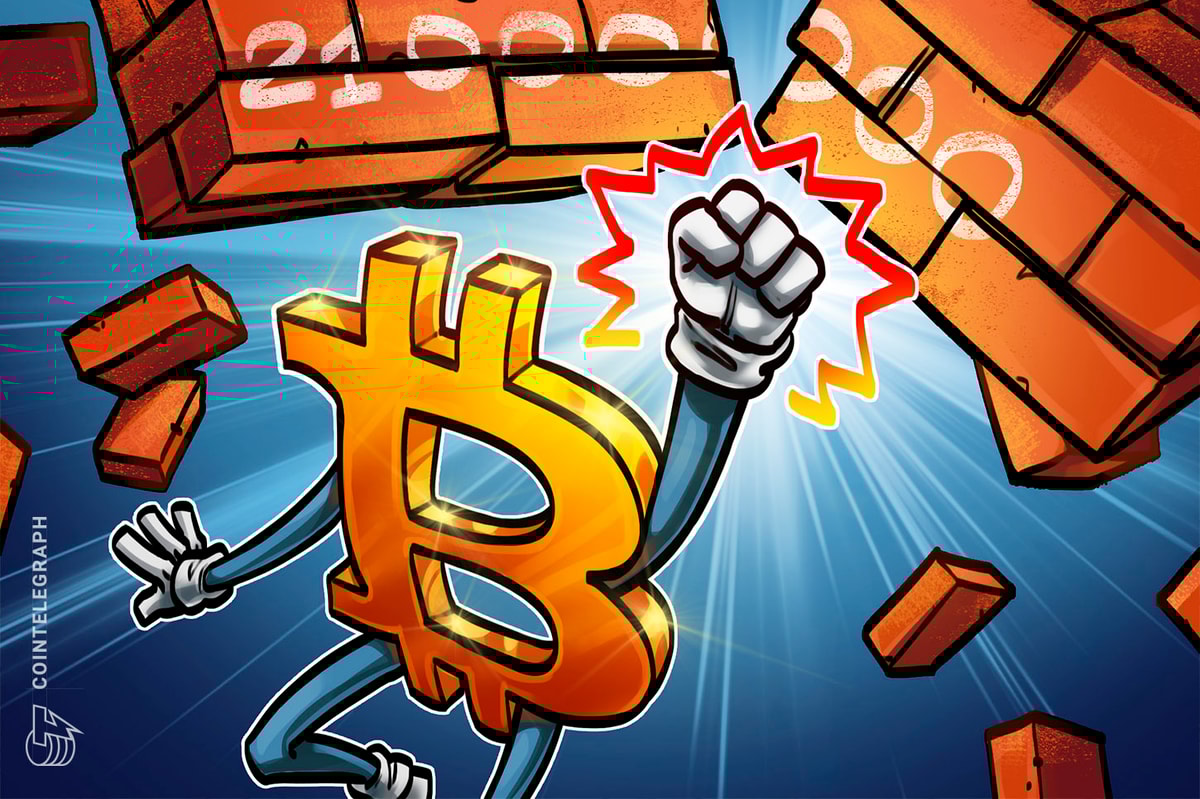
A hard cap is the maximum supply of a cryptocurrency that can ever exist. It’s hardcoded into the blockchain’s code and sets a strict limit on how many tokens or coins can be created. This limit promotes scarcity, which can help boost the value of each token over time.
Take Bitcoin (BTC), for example. Its creator, Satoshi Nakamoto, set a hard cap of 21 million coins. No matter how much demand there is or how many miners try to produce new Bitcoin, the supply will never exceed 21 million.
Why does a hard cap matter?
Absolute scarcity is a big deal in crypto; it’s like Bitcoin being digital gold, but even more limited. If demand increases, the price may rise because no new coins can be created to meet that demand. The only way a cryptocurrency could increase its supply would be by changing its core code — basically reinventing itself.
Compare this to gold: If it were easier for everyone to mine gold suddenly, the supply would increase, and the price would drop. Bitcoin doesn’t have this issue because of its fixed, hard cap.
Hard cap vs. soft cap in ICOs
The term “hard cap” also shows up in the world of initial coin offerings (ICOs). When projects raise money through ICOs, the hard cap is the maximum amount they aim to collect, while the soft cap is the minimum needed to launch the project.
Think of the soft cap as the minimum fundraising goal, while the hard cap is more of a stretch goal. The hard cap is usually set higher to allow for more fundraising potential, but it doesn’t always mean the project will reach that target.
In both cases — whether talking about total supply or fundraising limits — a hard cap helps set clear boundaries, promoting transparency and scarcity.
Now, let’s explore Bitcoin’s 21-million hard cap — why it’s so important and what could happen if this cap were changed.
The significance of the 21-million Bitcoin hard cap
Bitcoin’s 21-million hard cap ensures its scarcity, acting as digital gold and a store of value, but ongoing debates question whether it could ever be changed.
Bitcoin’s hard cap of 21 million coins is like its DNA, and it’s what makes Bitcoin the treasured asset it is today. It’s the digital equivalent of gold’s scarcity, and it’s a big reason why people see it as a store of value. Bitcoin is also considered the apex asset within the cryptocurrency asset class. But as Bitcoin grows and evolves, some folks have started to wonder: Could this hard cap ever be changed?
Let’s break it down and see why this is such a hot topic.
Imagine if someone suddenly decided to print more gold. It wouldn’t be as precious anymore, right?
It is basic economics between supply and demand. As supply increases, the perceived value typically decreases, and vice versa.
The same goes for Bitcoin. The 21-million hard cap was baked into its code by Satoshi Nakamoto, Bitcoin’s mysterious creator. It’s what gives Bitcoin its digital scarcity, a feature that’s pretty rare in the world of fiat currencies.
Even in the world of cryptocurrencies, other blue-chip assets like Ether (ETH) and Solana (SOL) do not enjoy the same status as Bitcoin with respect to their economic model.
Here’s why this cap is such a big deal.
Store of value: Bitcoin is often called “digital gold” because, like gold, it’s scarce. There’s only so much of it, and no one can just make more. This scarcity is a huge part of its value.Decentralization and trust: Unlike fiat currencies, where central banks can print money whenever they want, Bitcoin’s supply is fixed. This means no one can mess with it for their own gain.Predictable monetary policy: Bitcoin’s supply grows at a predictable rate, thanks to the halving event that happens approximately every four years. This event cuts the mining reward in half, slowing down the creation of new BTC until the 21-million cap is reached.
As of 2025, over 19.8 million BTC has already been mined, leaving less than 1.2 million left to be created. This scarcity is a big part of what drives Bitcoin’s value, currently hovering around $100,000 per coin.

Proposals to change the 21-million cap
While the 21-million cap is a cornerstone of Bitcoin, past debates, from early inflation concerns to the 2017 block size wars, show how difficult changing Bitcoin’s core rules would be.
While the 21-million cap is pretty much gospel in the Bitcoin world, there have been a few whispers about changing it over the years. Let’s take a look at some of these discussions.
Back in Bitcoin’s early days, some people wondered if an inflationary model might be necessary. The concern was that once all BTC was mined, miners might lose the incentive to secure the network.
But Satoshi Nakamoto had a solution: transaction fees. As block rewards decrease over time, fees would take over as the main incentive for miners. This idea has held up pretty well so far.
Hal Finney, one of Bitcoin’s earliest adopters (and possibly the first person to receive a Bitcoin transaction from Satoshi), once mused about the possibility of introducing some inflation after the 21-million cap was reached. But he was clear that this was just a thought experiment, not a serious proposal. In his words:
“Imagine if Bitcoin is successful and becomes the dominant payment system in use throughout the world. Then the total value of the currency should be equal to the total value of all the wealth in the world.”
Even so, Finney remained a staunch supporter of Bitcoin’s scarcity.
While not directly about the supply cap, the block size debates of 2017 showed just how hard it is to change Bitcoin’s core rules. The community was deeply divided over whether to increase the block size, and the disagreement eventually led to a hard fork, creating Bitcoin Cash. If something as relatively minor as block size can cause such a rift, imagine the chaos that would ensue if someone tried to mess with the 21-million cap.
What would happen if Bitcoin’s 21-million hard cap changed?
Changing Bitcoin’s 21-million cap would shatter trust, trigger market panic, and likely lead to a hard fork, but history shows the community fiercely protects its scarcity.
Some in the crypto space have speculated that, as Bitcoin adoption grows and mining rewards dwindle, there could be pressure to introduce a small inflationary mechanism.
But let’s be real, this would be trying to rewrite the constitution of the largest crypto asset. The Bitcoin community is fiercely protective of its principles, and any attempt to change the supply cap would likely face massive resistance.
But it is worth thinking through: What would happen if the hard cap were changed?
Let’s play out this scenario. What if someone actually tried to change Bitcoin’s hard cap? Spoiler alert: It wouldn’t go well.
Loss of trust and credibility: Bitcoin’s entire value proposition is built on trust. If the supply cap were changed, that trust would be shattered. As investor and author Nassim Taleb once said: “Bitcoin is the beginning of something great: a currency without a government, something necessary and imperative.” Messing with the hard cap would undermine that greatness.Market reaction and price impact: Bitcoin’s price is heavily tied to its scarcity. If the supply cap were increased, the market would likely panic. We could see a massive sell-off as investors lose confidence in Bitcoin’s value. Remember, Bitcoin’s price has historically been driven by its fixed supply, and any change to that would be a seismic event.Hard fork and network split: If a proposal to change the supply cap gained traction, it would almost certainly lead to a hard fork. The community would split into two camps: those who support the change and those who don’t. The result? Two competing versions of Bitcoin. But history shows us that forks like this rarely succeed. Just look at Bitcoin Cash; it’s still around, but it’s nowhere near as valuable or widely adopted as Bitcoin.Developer and community support: Bitcoin Core developers would need to get on board with the idea. But these folks are like the guardians of Bitcoin’s principles. They’re not likely to support something that undermines its core value.Miner agreement: Miners would also need to agree to the change. But why would they? Miners have a vested interest in Bitcoin’s value. Increasing the supply would dilute their holdings and reduce their long-term profits. There can be an argument that if, in the process of increasing supply, the difficulty of mining goes down, effectively making Bitcoin mining more economical. This could make miners more viable and supportive of the increase in supply cap.Node consensus: Even if developers and miners agreed, the majority of node operators would also need to get on board. Nodes are the backbone of the Bitcoin network, and they have the final say in what changes are adopted from a governance perspective.
Another possibility worth keeping in mind is the role of large institutional Bitcoin holders like BlackRock and Strategy. If they see benefits in increasing the supply through a fork and are willing to move capital at scale into the forked Bitcoin, that might potentially trigger the beginning of a meaningful alternative to Bitcoin.
Even with greater capital backing than Bitcoin Cash, the community’s acceptance is crucial for any forked chain to become a meaningful Bitcoin alternative. Bitcoin’s hard cap is one of its most sacred principles, fiercely guarded by its community.
As Andreas Antonopoulos, a well-known Bitcoin advocate, once said:
“Bitcoin is not just a currency; it’s a movement. It’s about taking control of your own financial destiny.”
So, in theory, it’s possible to change Bitcoin’s hard cap. After all, it’s just code, and code can be rewritten. But in practice? It’s a whole different story. Changing the hard cap would undermine that movement and the trust that’s been built over the years.
Bitcoin’s 21-million cap isn’t just a number; it’s a promise that the Bitcoin community intends to keep. So, while the idea of changing the cap might make for an interesting thought experiment, it’s highly unlikely to pan out as a credible alternative to Bitcoin. Bitcoin’s scarcity is here to stay, and that’s a big part of what makes it so special.