No Result
View All Result
SUBMIT YOUR ARTICLES
  • Login
Monday, February 23, 2026
TheAdviserMagazine.com
  • Home
  • Financial Planning
    • Financial Planning
    • Personal Finance
  • Market Research
    • Business
    • Investing
    • Money
    • Economy
    • Markets
    • Stocks
    • Trading
  • 401k Plans
  • College
  • IRS & Taxes
  • Estate Plans
  • Social Security
  • Medicare
  • Legal
  • Home
  • Financial Planning
    • Financial Planning
    • Personal Finance
  • Market Research
    • Business
    • Investing
    • Money
    • Economy
    • Markets
    • Stocks
    • Trading
  • 401k Plans
  • College
  • IRS & Taxes
  • Estate Plans
  • Social Security
  • Medicare
  • Legal
No Result
View All Result
TheAdviserMagazine.com
No Result
View All Result
Home Market Research Cryptocurrency

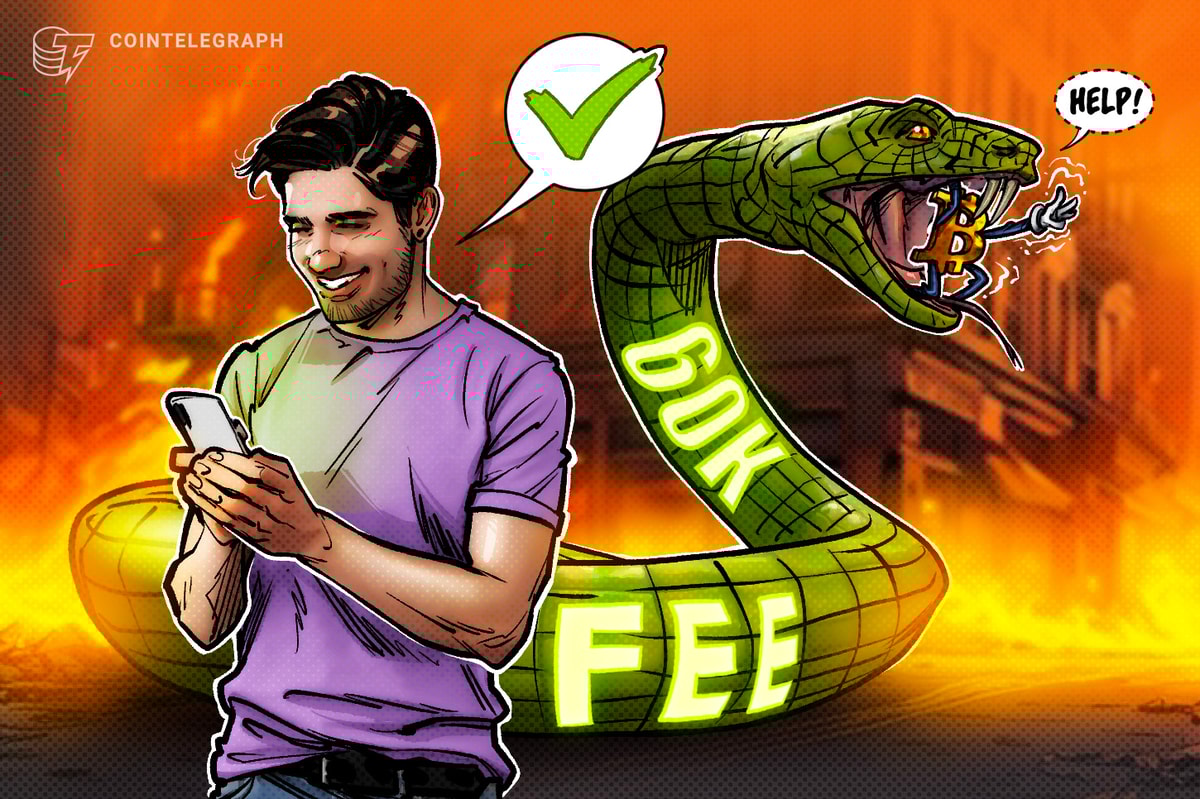
Bitcoin User Accidentally Sent $60,000 in Fees—Don’t Make the Same Mistake

by TheAdviserMagazine
8 months ago
in Cryptocurrency
Reading Time: 5 mins read
A A
Bitcoin User Accidentally Sent ,000 in Fees—Don’t Make the Same Mistake
Share on FacebookShare on TwitterShare on LInkedIn


Key takeaways

A misunderstanding of fee units led to an accidental overpayment worth more than $60,000 during a replace-by-fee transaction.

The user confused sat/vB (fee per byte) with total satoshis, leading to an extreme overpayment.

RBF replaces a transaction with a higher-fee version, while CPFP adds a new transaction to boost the original; each has different use cases and risks.

Use trusted wallets, double-check fee units, and let the wallet suggest optimal fees. Avoid panic, stay updated and always verify transactions before hitting “send.”

Around 00:30 UTC on April 8, 2025, a Bitcoin user attempted to expedite a pending transaction using replace‑by‑fee (RBF). But instead of a modest bump, their wallet mistakenly spent 0.75 Bitcoin (BTC), roughly $60,000–$70,000, purely on fees.

How does something like this happen? And more importantly, how can you ensure it doesn’t happen to you?

Let’s break it down.

Why did a Bitcoin user end up paying $60,000 in fees?

The user wanted to send 0.48 BTC (around $37,770 at that time) using Bitcoin’s RBF feature. This feature lets you resend a transaction with a higher fee if the original one is stuck in the mempool (the waiting area for unconfirmed transactions). In this case, things went wrong, very wrong.

The Timeline:

First transaction: Sent with a standard fee, not high enough to confirm quickly.

First RBF attempt: Doubled the fee and changed the recipient (output) address.

Second RBF attempt: Added a large unspent transaction output (UTXO), about 0.75 BTC, but forgot to redirect the change back to their own address.

The result? That 0.75 BTC was treated as a fee and sent to miners.

Anmol Jain, vice president of investigations at crypto forensics firm AMLBot, told Cointelegraph that the user likely started with a “default or conservative” transaction fee, which is nothing unusual. Then came the mistake: confusing how the fee was being measured.

Many Bitcoin wallets allow you to set fees in one of two ways:

Total fee in satoshis (the smallest Bitcoin unit, like cents to a dollar)

Fee per virtual byte (sat/vB), which measures how “heavy” the transaction is in data terms

Here’s where things went wrong, according to Jain:

“System reads it as 30 sats total fee, which is way too low, so user types 305000 thinking it means 30.5 sat/vB, and the wallet actually applies 305,000 sats/vB, which is insane.”

In simple terms, the user may have seen a warning that their fee, just 30 sats total, was too low for the transaction to be processed quickly. So, trying to fix it, they might have typed in 305,000, thinking it meant “30.5 sats per byte.”

But instead of adjusting the fee moderately, the wallet took that as 305,000 sats per byte, a monstrous fee that blew past any norm and resulted in a loss of more than $60,000.

Why it matters

This highlights how minor confusion between fee units can lead to major losses, especially when manually entering numbers quickly or using advanced wallet settings without fully understanding them.

So if you ever adjust Bitcoin fees, double-check the unit you’re setting. Whether it’s “total sats” or “sats per byte” makes a world of difference, as this costly mistake proves.

Did you know? In September 2023, a user paid a $500,000 fee for a single BTC transaction. It turned out to be an error by Paxos, a crypto infrastructure company.

Replace-by-fee (RBF): What Is It?

Bitcoin transactions aren’t final until they’re added to a block. If a transaction is stuck, you can use RBF to resend it with a higher fee to encourage miners to pick it up faster.

It was originally proposed by Bitcoin’s creator, Satoshi Nakamoto, and later formalized as “opt-in RBF” by developer Peter Todd, according to the BitGo Developer Portal.

How it works:

You enable RBF when sending the original transaction.

If the transaction remains unconfirmed, you can create a replacement with a higher fee.

Miners will likely choose the higher-fee version because they’re financially incentivized to do so.

But here’s the catch: if you mess up the inputs or outputs, especially the change address, it can cost you dearly.

Notably, RBF differs from child-pays-for-parent (CPFP) in that RBF replaces the original unconfirmed transaction with a higher-fee version, and only the sender can initiate it. In contrast, CPFP adds a high-fee child transaction to boost the parent’s confirmation, and can be initiated by either the sender or the receiver.

Replace-by-fee (RBF) vs. child-pays-for-parent (CPFP)

Why did the Bitcoin transaction fee spike so high?

There are a few theories behind what caused the absurd fee in this case:

Confusion over fee units: The fee spiked likely due to a misunderstanding of fee units. Instead of setting a reasonable rate per byte, the user may have accidentally entered a large absolute value, causing the wallet to apply an excessively high fee.

Common Bitcoin fee units explained

Automation gone wrong: If the wallet uses automated scripts or has bugs in how it processes RBF, a user’s input can be misread or, worse, executed without proper warnings.

Why RBF is controversial

The RBF feature has sparked years of debate within the crypto community. While it’s useful for fixing stuck transactions, critics like Mike Hearn (former Bitcoin developer) argued on Medium that it:

Enables double-spending attacks, especially for in-person merchant transactions.

Encourages miner-fraudster collusion.

Adds complexity, making user errors more likely.

Undermines finality, as unconfirmed transactions can be replaced.

To address this issue, Bitcoin Cash (BCH), for example, removed RBF support and says that unconfirmed transactions are final. However, due to how mempools work, similar RBF-like replacements can still happen, even on BCH.

Did you know? In November 2023, a 139 BTC transaction (worth millions) included a $3.1 million fee.

How to protect yourself from high Bitcoin transaction fees

You don’t need to fear RBF, but you do need to respect it. Here are some tips to avoid becoming the next viral fee fail:

Choose a secure Bitcoin wallet with transparent fee options: Choose reputable Bitcoin wallets that clearly display and explain fee types.

Understand Bitcoin fee units before sending: Learn the difference between sat/vB (satoshis per virtual byte) and total satoshis to avoid accidental overpayments.

Always double-check your transaction before confirming: Verify the recipient address, fee amount and the change address to ensure no funds are mistakenly used as miner fees.

Let the wallet suggest the fee, especially if you’re new: Most wallets offer dynamic fee recommendations based on network congestion, so use them instead of manually entering values.

Test with a small Bitcoin transaction first: Send a low-value test transaction to confirm everything is set correctly before sending a significant amount.

Monitor Bitcoin network fees in real time: Use websites like mempool.space to check current fee rates and choose the best time to send your transaction.

Avoid panicking over slow confirmations: Bitcoin transactions can take time. Wait before resending or replacing transactions unless you’re sure it’s necessary.

Stay informed about wallet updates and bugs: Follow your wallet provider for updates, as software bugs or interface changes can impact how fees are calculated or displayed.

If you skip the above precautions, you could pay hundreds or even thousands of dollars in unnecessary fees, with no way to recover the loss. When it comes to Bitcoin, one small mistake can become a costly lesson.

This article does not contain investment advice or recommendations. Every investment and trading move involves risk, and readers should conduct their own research when making a decision.



Source link

Tags: accidentallyBitcoinFeesDontMistakeuser
ShareTweetShare
Previous Post

Hong Kong’s Regencell Bioscience triples in latest surge for a speculative stock

Next Post

Sequoia-backed Crosby launches a new kind of AI-powered law firm

Related Posts

edit post
Michael Saylor Says Quantum Risk To Bitcoin Is a Decade Away, Describes it as ‘FUD’

Michael Saylor Says Quantum Risk To Bitcoin Is a Decade Away, Describes it as ‘FUD’

by TheAdviserMagazine
February 23, 2026
0

Strategy Executive Chairman Michael Saylor has said that quantum computing is not a threat to Bitcoin at the moment and...

edit post
Bitcoin selloff loses 0 billion as US tariff turmoil jolts markets

Bitcoin selloff loses $100 billion as US tariff turmoil jolts markets

by TheAdviserMagazine
February 23, 2026
0

Bitcoin's weekend selloff led to about $100 billion in crypto market value losses during the reporting period and was triggered...

edit post
XRP Faces Short-Term Risk As Whale Inflows Hit Binance

XRP Faces Short-Term Risk As Whale Inflows Hit Binance

by TheAdviserMagazine
February 23, 2026
0

XRP’s short-term setup is facing renewed pressure after a sharp burst of exchange inflows to Binance, with on-chain data showing...

edit post
Beyond US Markets: Why Latin American Equities Are Building a Secular Bull Market

Beyond US Markets: Why Latin American Equities Are Building a Secular Bull Market

by TheAdviserMagazine
February 23, 2026
0

While global investment flows focus on U.S. markets, excess liquidity has accumulated in emerging markets, causing Latin American exchanges to...

edit post
How Pig-Butchering Crypto Scams Turn Trust Into a Financial Weapon

How Pig-Butchering Crypto Scams Turn Trust Into a Financial Weapon

by TheAdviserMagazine
February 23, 2026
0

Key takeawaysUnlike phishing attacks that defraud victims quickly, pig-butchering scams build long-term emotional trust before introducing fraudulent crypto investment opportunities.From...

edit post
Bitcoin’s Quantum Risk Steals Spotlight At Ethereum Gathering

Bitcoin’s Quantum Risk Steals Spotlight At Ethereum Gathering

by TheAdviserMagazine
February 22, 2026
0

Trusted Editorial content, reviewed by leading industry experts and seasoned editors. Ad Disclosure Talk of quantum computers no longer sounds...

Next Post
edit post
Sequoia-backed Crosby launches a new kind of AI-powered law firm

Sequoia-backed Crosby launches a new kind of AI-powered law firm

edit post
Chase Sapphire Reserve Makes Major Changes: Higher Fee, New Rates, More Perks

Chase Sapphire Reserve Makes Major Changes: Higher Fee, New Rates, More Perks

  • Trending
  • Comments
  • Latest
edit post
Medicare Fraud In California – 2.5% Of The Population Accounts For 18% Of NATIONWIDE Healthcare Spending

Medicare Fraud In California – 2.5% Of The Population Accounts For 18% Of NATIONWIDE Healthcare Spending

February 3, 2026
edit post
North Carolina Updates How Wills Can Be Stored

North Carolina Updates How Wills Can Be Stored

February 10, 2026
edit post
Gasoline-starved California is turning to fuel from the Bahamas

Gasoline-starved California is turning to fuel from the Bahamas

February 15, 2026
edit post
Where Is My 2025 Oregon State Tax Refund

Where Is My 2025 Oregon State Tax Refund

February 13, 2026
edit post
2025 Delaware State Tax Refund – DE Tax Brackets

2025 Delaware State Tax Refund – DE Tax Brackets

February 16, 2026
edit post
Key Nevada legislator says lawmakers will push for independent audit of altered public record in Nevada OSHA’s Boring Company inspection 

Key Nevada legislator says lawmakers will push for independent audit of altered public record in Nevada OSHA’s Boring Company inspection 

February 4, 2026
edit post
Official House Bill Analysis Confirms Devastating Coverage Losses

Official House Bill Analysis Confirms Devastating Coverage Losses

0
edit post
Below zero: Fed governor wouldn’t be surprised at negative job growth number

Below zero: Fed governor wouldn’t be surprised at negative job growth number

0
edit post
Failed indictment of 6 Democratic lawmakers blamed on Jeanine Pirro-picked prosecutors

Failed indictment of 6 Democratic lawmakers blamed on Jeanine Pirro-picked prosecutors

0
edit post
Emerging Markets Soar While Argentina Waits

Emerging Markets Soar While Argentina Waits

0
edit post
Michael Saylor Says Quantum Risk To Bitcoin Is a Decade Away, Describes it as ‘FUD’

Michael Saylor Says Quantum Risk To Bitcoin Is a Decade Away, Describes it as ‘FUD’

0
edit post
Hundreds of Thousands of Accounts Compromised — How Criminals Are Using This Data to Target Retirees

Hundreds of Thousands of Accounts Compromised — How Criminals Are Using This Data to Target Retirees

0
edit post
Hundreds of Thousands of Accounts Compromised — How Criminals Are Using This Data to Target Retirees

Hundreds of Thousands of Accounts Compromised — How Criminals Are Using This Data to Target Retirees

February 23, 2026
edit post
Below zero: Fed governor wouldn’t be surprised at negative job growth number

Below zero: Fed governor wouldn’t be surprised at negative job growth number

February 23, 2026
edit post
Michael Saylor Says Quantum Risk To Bitcoin Is a Decade Away, Describes it as ‘FUD’

Michael Saylor Says Quantum Risk To Bitcoin Is a Decade Away, Describes it as ‘FUD’

February 23, 2026
edit post
5 Money Moves You Should Resist Even When the Pressure Is On

5 Money Moves You Should Resist Even When the Pressure Is On

February 23, 2026
edit post
*HOT* Weekender Bag only !

*HOT* Weekender Bag only $10!

February 23, 2026
edit post
Uber CEO predicts most rides could be robot-operated within 20 years

Uber CEO predicts most rides could be robot-operated within 20 years

February 23, 2026
The Adviser Magazine

The first and only national digital and print magazine that connects individuals, families, and businesses to Fee-Only financial advisers, accountants, attorneys and college guidance counselors.

CATEGORIES

  • 401k Plans
  • Business
  • College
  • Cryptocurrency
  • Economy
  • Estate Plans
  • Financial Planning
  • Investing
  • IRS & Taxes
  • Legal
  • Market Analysis
  • Markets
  • Medicare
  • Money
  • Personal Finance
  • Social Security
  • Startups
  • Stock Market
  • Trading

LATEST UPDATES

  • Hundreds of Thousands of Accounts Compromised — How Criminals Are Using This Data to Target Retirees
  • Below zero: Fed governor wouldn’t be surprised at negative job growth number
  • Michael Saylor Says Quantum Risk To Bitcoin Is a Decade Away, Describes it as ‘FUD’
  • Our Great Privacy Policy
  • Terms of Use, Legal Notices & Disclosures
  • Contact us
  • About Us

© Copyright 2024 All Rights Reserved
See articles for original source and related links to external sites.

Welcome Back!

Login to your account below

Forgotten Password?

Retrieve your password

Please enter your username or email address to reset your password.

Log In
No Result
View All Result
  • Home
  • Financial Planning
    • Financial Planning
    • Personal Finance
  • Market Research
    • Business
    • Investing
    • Money
    • Economy
    • Markets
    • Stocks
    • Trading
  • 401k Plans
  • College
  • IRS & Taxes
  • Estate Plans
  • Social Security
  • Medicare
  • Legal

© Copyright 2024 All Rights Reserved
See articles for original source and related links to external sites.