No Result
View All Result
SUBMIT YOUR ARTICLES
  • Login
Sunday, April 26, 2026
TheAdviserMagazine.com
  • Home
  • Financial Planning
    • Financial Planning
    • Personal Finance
  • Market Research
    • Business
    • Investing
    • Money
    • Economy
    • Markets
    • Stocks
    • Trading
  • 401k Plans
  • College
  • IRS & Taxes
  • Estate Plans
  • Social Security
  • Medicare
  • Legal
  • Home
  • Financial Planning
    • Financial Planning
    • Personal Finance
  • Market Research
    • Business
    • Investing
    • Money
    • Economy
    • Markets
    • Stocks
    • Trading
  • 401k Plans
  • College
  • IRS & Taxes
  • Estate Plans
  • Social Security
  • Medicare
  • Legal
No Result
View All Result
TheAdviserMagazine.com
No Result
View All Result
Home Market Research Business

The Iran war is accelerating plans for Southeast Asia to go nuclear. Experts say it won’t be easy

by TheAdviserMagazine
4 weeks ago
in Business
Reading Time: 4 mins read
A A
The Iran war is accelerating plans for Southeast Asia to go nuclear. Experts say it won’t be easy
Share on FacebookShare on TwitterShare on LInkedIn


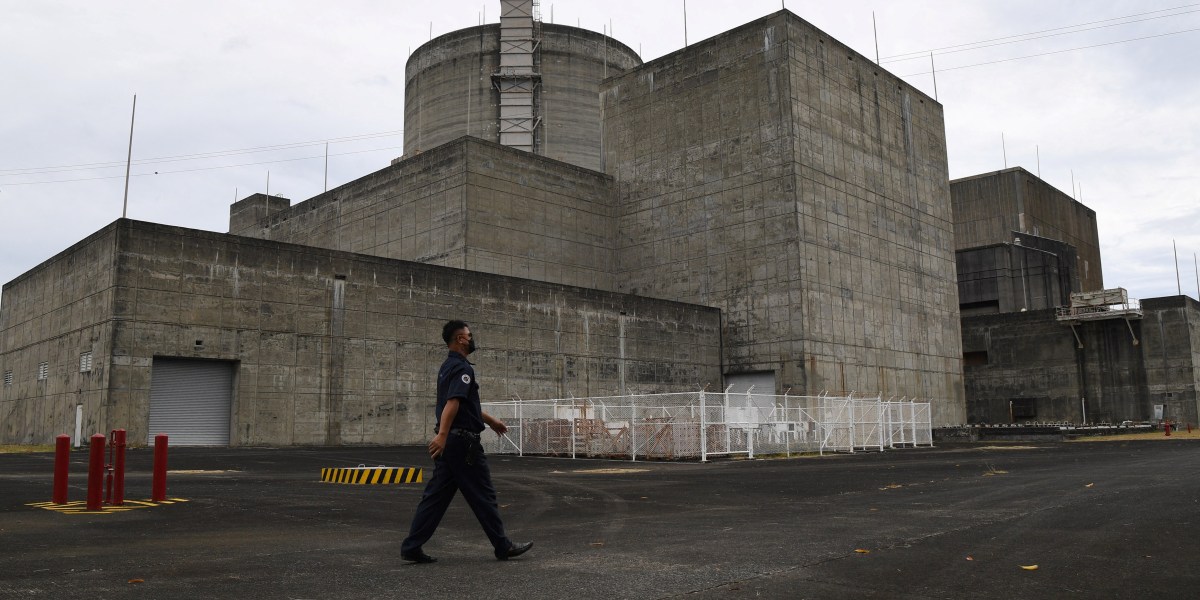
The last time an energy crisis pushed Southeast Asia to consider nuclear energy, it led to a $2.2 billion plant in the Philippines that never got switched on.

Half a century later, a new crisis is pressing the region to start thinking about nuclear again. Global oil and gas prices have surged since Iran closed the Strait of Hormuz, the world’s most critical energy chokepoint. Southeast Asia, comprised mainly of net energy importers, has been hit especially hard by rising energy prices, accelerating plans to drive down energy usage. 

On March 23, Vietnam and Russia signed a deal to build a nuclear power plant in Vietnam’s Ninh Thuan province. The plant, set to come online in a decade, will be Southeast Asia’s first modern nuclear power plant. Malaysia, Indonesia, Thailand, and the Philippines have also signaled their intention to build nuclear capacity.

“Previously, the clean energy transition in the region was mainly driven by economic considerations—particularly the growing expectations from companies for access to low-carbon electricity,” Tan-Soo Jie Sheng, a professor at the Lee Kuan Yew School of Public Policy in the National University of Singapore (NUS), tells Fortune. “However, geopolitical shocks like the Iran war bring the energy security dimension back into sharper focus.”

Southeast Asia’s previous attempt to go nuclear

The region’s first attempt at nuclear power, the Bataan Nuclear Power Plant, was built in the Philippines in 1976. Commissioned by President Ferdinand Marcos in the wake of the 1973 oil shock, the plant was completed in 1984 at a cost of roughly $2.2 billion. But the plant was never used, due to accusations of government corruption and waning public support for nuclear energy following the Chernobyl disaster in 1986. 

“Marcos’ successor said that the plant was corruption-tainted—which is true—and claimed it was substandard and too dangerous to operate,” says Julius Cesar I. Trajano, a research fellow at Singapore’s Nanyang Technological University.

In recent years, rising energy demand, spurred in part by an explosion of AI data centers, is pushing several Southeast Asian nations to start reconsidering nuclear energy. In 2024, data centers consumed 415TWh, or 1.5% of the world’s electricity, according to the International Energy Agency; the organization also noted power usage had risen by 12% annually over the past five years.

“Unlike weather-dependent renewables like solar and wind energy, nuclear gives round-the-clock low-carbon electricity,” explains Tan-Soo of NUS. “That matters in Southeast Asia because electricity demand is rising fast, grids are uneven and governments want cleaner power without sacrificing reliability.”

Indonesia added nuclear power to its energy plan last year, with hopes to build two small modular reactors (SMRs) by 2034. Thailand wants to add 600 MW of nuclear generating capacity by 2037. 

Advances in nuclear technology, like SMRs, have made modern nuclear plants safer, according to Alvin Chew, a senior research fellow at NTU. SMRs are reactors of up to 300 MW per unit, which are about one third the size of conventional large reactors. SMRs could be better suited to Southeast Asia, as they can be added to remote areas like islands and be connected to smaller or less-developed grids.

Major challenges

Yet experts caution against being too optimistic about nuclear power, due to gaps in technological and institutional development.

Many SMR designs are still in the early stages of commercialization, so “there is no guarantee they will be cheaper, more mobile and safer,” Ian Storey, a principal fellow from Singapore’s ISEAS-Yusof Ishak Institute, explains. “There are only two experimental SMRs in operation, one in China and one in Russia. The rest exist only on paper.”

Others, like Joshua Kurlantzick, a senior fellow at the Council on Foreign Relations, point to low public acceptance for nuclear. “In most of Southeast Asia, except the Philippines where there is very strong support for nuclear energy, members of the public remain cautious about it, especially in countries like Indonesia which have a history of earthquakes and tsunamis,” he explains.

A 2021 survey from NTU reported low support for nuclear energy among the region’s population. Indonesia was the most receptive to nuclear, with 39% support; Thailand had the lowest share of support, at just 3%.

Public concerns may rise once nuclear projects get started. “The public’s rating of the risks of nuclear energy will likely change dramatically when presented with an imminent reality closer to home,” suggests Catherine Wong, an environmental sociologist from the University of Amsterdam.

Nuclear plants are also capital-intensive and time-consuming to build. “Nuclear is hard to do well,” explains Tan-Soo. “It requires a capable regulator, long-term political continuity, strong utilities, grid readiness, emergency planning, waste arrangements, and financing discipline. For many countries, those institutional requirements are often more difficult than the technology itself.”

Finally, there’s the security dimension. “The 21st century era of drone and cyber warfare makes nuclear power even harder to secure,” Wong suggests. That’s in contrast to more decentralized renewable energy: “You can take out five or even fifty wind turbines, and there will still be hundreds more spread across the country supplying electricity to the population.”




Source link

Tags: acceleratingAsiaEasyExpertsIrannuclearplanssoutheastWarWont
ShareTweetShare
Previous Post

Why homeownership isn’t guaranteeing financial security for seniors

Next Post

Arizona Advances Crypto Bills to Allocate State Funds to Bitcoin

Related Posts

edit post
Trump uninjured after a shooter opened fire at White House correspondents dinner

Trump uninjured after a shooter opened fire at White House correspondents dinner

by TheAdviserMagazine
April 25, 2026
0

President Donald Trump was uninjured and other top leaders of the United States were evacuated from an annual dinner of White House...

edit post
From maritime trench warfare to a ‘sloppy peace’: Here’s how the Strait of Hormuz standoff could end

From maritime trench warfare to a ‘sloppy peace’: Here’s how the Strait of Hormuz standoff could end

by TheAdviserMagazine
April 25, 2026
0

Unless Iran’s regime collapses, the Strait of Hormuz will never be open like it was before the war, according to...

edit post
Morgan Stanley issues blunt take on Tesla stock after earnings

Morgan Stanley issues blunt take on Tesla stock after earnings

by TheAdviserMagazine
April 25, 2026
0

Morgan Stanley is still bullish on Tesla’s (TSLA) long-term story, but it doesn’t think investors should ignore the messy middle....

edit post
Russia economy minister says ‘reserves have largely been used up’ while lawmaker warns of revolution

Russia economy minister says ‘reserves have largely been used up’ while lawmaker warns of revolution

by TheAdviserMagazine
April 25, 2026
0

The Kremlin offered more indications that it’s acknowledging Russia’s economy is in trouble after years of relying on military spending...

edit post
Why Mueller Industries Stock Soared This Week

Why Mueller Industries Stock Soared This Week

by TheAdviserMagazine
April 25, 2026
0

Last week started on an inauspicious note for industrial parts manufacturer Mueller Industries (NYSE: MLI). Shares ended Monday's trading session...

edit post
The billion-barrel Hormuz oil shock is about to crash demand

The billion-barrel Hormuz oil shock is about to crash demand

by TheAdviserMagazine
April 25, 2026
0

The Strait of Hormuz oil shock has yet to crash demand as the rich world borrows from its stocks and...

Next Post
edit post
Arizona Advances Crypto Bills to Allocate State Funds to Bitcoin

Arizona Advances Crypto Bills to Allocate State Funds to Bitcoin

edit post
Readers Sound Off on Wage Garnishment, Work Requirements, and More

Readers Sound Off on Wage Garnishment, Work Requirements, and More

  • Trending
  • Comments
  • Latest
edit post
Illinois’ Paid Leave for All Workers Act Takes Effect — Every Employee Now Gets Guaranteed Time Off

Illinois’ Paid Leave for All Workers Act Takes Effect — Every Employee Now Gets Guaranteed Time Off

March 27, 2026
edit post
Virginia Permits ADULT MIGRANT MEN To Attend High School

Virginia Permits ADULT MIGRANT MEN To Attend High School

March 30, 2026
edit post
A 58-year-old left NYC for Miami to save on taxes — then retired early thanks to hidden savings. Here’s the math

A 58-year-old left NYC for Miami to save on taxes — then retired early thanks to hidden savings. Here’s the math

March 30, 2026
edit post
Tax Flight Accelerates In Massachusetts

Tax Flight Accelerates In Massachusetts

April 6, 2026
edit post
Property Tax Relief & Income Tax Relief

Property Tax Relief & Income Tax Relief

April 1, 2026
edit post
The Stevia Loophole Why Some Sweetened Drinks are Still SNAP-Legal While Others are Banned in Texas

The Stevia Loophole Why Some Sweetened Drinks are Still SNAP-Legal While Others are Banned in Texas

April 4, 2026
edit post
The advisory imperative: Tax advisory technology & strategies

The advisory imperative: Tax advisory technology & strategies

0
edit post
Southwest Airlines (LUV) Q1 2026: Record Revenue and Margin Comeback Face Fuel Cost Headwinds

Southwest Airlines (LUV) Q1 2026: Record Revenue and Margin Comeback Face Fuel Cost Headwinds

0
edit post
The 2026 Pharmacy Shift: Why Some Medications Now Require a Different Pickup Location

The 2026 Pharmacy Shift: Why Some Medications Now Require a Different Pickup Location

0
edit post
Is  million still enough for retirement? That depends entirely on you — here’s how to figure it out

Is $1 million still enough for retirement? That depends entirely on you — here’s how to figure it out

0
edit post
Why Representative Democracy Is Obsolete

Why Representative Democracy Is Obsolete

0
edit post
L&T Finance Q4 profit climbs 27 pc to Rs 807 cr

L&T Finance Q4 profit climbs 27 pc to Rs 807 cr

0
edit post
8 small habits of people who grew up with money worries and still flinch at the sound of a bill arriving even though they could pay it ten times over

8 small habits of people who grew up with money worries and still flinch at the sound of a bill arriving even though they could pay it ten times over

April 25, 2026
edit post
Trump uninjured after a shooter opened fire at White House correspondents dinner

Trump uninjured after a shooter opened fire at White House correspondents dinner

April 25, 2026
edit post
Software for Managing Channel Rebates: The 2026 Executive Guide to Automated Incentives

Software for Managing Channel Rebates: The 2026 Executive Guide to Automated Incentives

April 25, 2026
edit post
From maritime trench warfare to a ‘sloppy peace’: Here’s how the Strait of Hormuz standoff could end

From maritime trench warfare to a ‘sloppy peace’: Here’s how the Strait of Hormuz standoff could end

April 25, 2026
edit post
Morgan Stanley issues blunt take on Tesla stock after earnings

Morgan Stanley issues blunt take on Tesla stock after earnings

April 25, 2026
edit post
I’m 37 and I just realized my morning run isn’t about fitness, it’s the only 40 minutes nobody can reach me

I’m 37 and I just realized my morning run isn’t about fitness, it’s the only 40 minutes nobody can reach me

April 25, 2026
The Adviser Magazine

The first and only national digital and print magazine that connects individuals, families, and businesses to Fee-Only financial advisers, accountants, attorneys and college guidance counselors.

CATEGORIES

  • 401k Plans
  • Business
  • College
  • Cryptocurrency
  • Economy
  • Estate Plans
  • Financial Planning
  • Investing
  • IRS & Taxes
  • Legal
  • Market Analysis
  • Markets
  • Medicare
  • Money
  • Personal Finance
  • Social Security
  • Startups
  • Stock Market
  • Trading

LATEST UPDATES

  • 8 small habits of people who grew up with money worries and still flinch at the sound of a bill arriving even though they could pay it ten times over
  • Trump uninjured after a shooter opened fire at White House correspondents dinner
  • Software for Managing Channel Rebates: The 2026 Executive Guide to Automated Incentives
  • Our Great Privacy Policy
  • Terms of Use, Legal Notices & Disclosures
  • Contact us
  • About Us

© Copyright 2024 All Rights Reserved
See articles for original source and related links to external sites.

Welcome Back!

Login to your account below

Forgotten Password?

Retrieve your password

Please enter your username or email address to reset your password.

Log In
No Result
View All Result
  • Home
  • Financial Planning
    • Financial Planning
    • Personal Finance
  • Market Research
    • Business
    • Investing
    • Money
    • Economy
    • Markets
    • Stocks
    • Trading
  • 401k Plans
  • College
  • IRS & Taxes
  • Estate Plans
  • Social Security
  • Medicare
  • Legal

© Copyright 2024 All Rights Reserved
See articles for original source and related links to external sites.