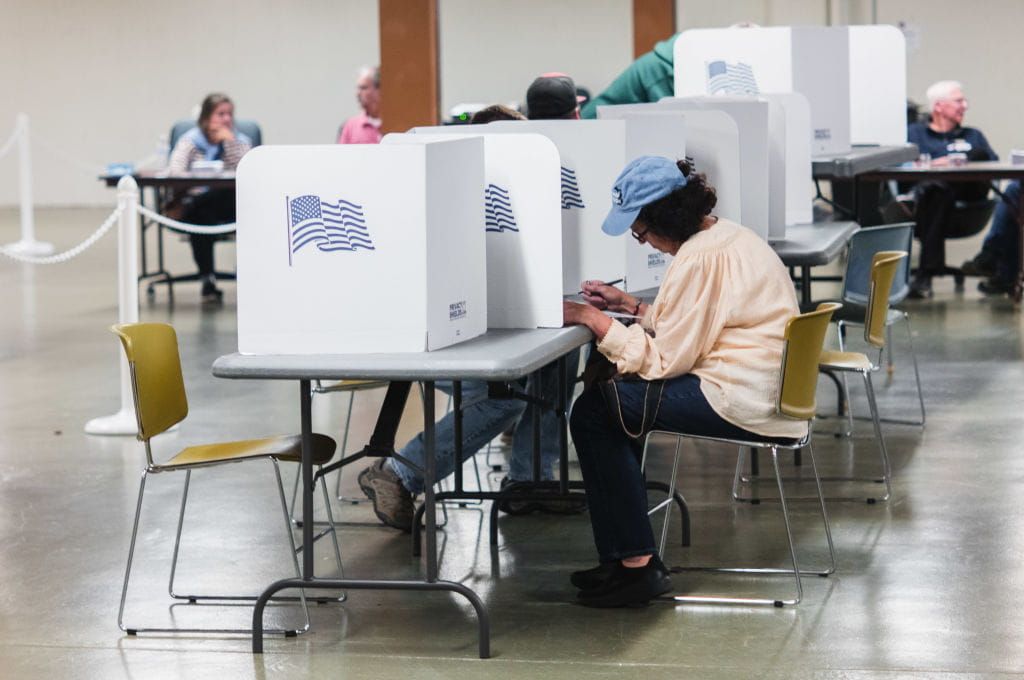
The Michigan Senate race is one of the most-watched contests in the country right now, partly because the Democratic primary has turned ugly and amplified fractures within the party. Progressives frame the race as a referendum on the Democratic Party, which views the matchup as a tipping point for its survival.
With only two weeks remaining until the primary, the contest is now down to two candidates, progressive Abdul El-Sayed, a former health official, and the establishment favorite Rep. Haley Stevens. Though far-left candidates have scored several primary victories this year, most were in deep-blue areas, and Michigan is one of the most purple states in the country, a must-win for a Senate majority next year. Overshadowing the race, however, is a larger fight, a civil war over the party’s future.
A Michigan Litmus Test
A major issue facing the party centers on “electability.” Both candidates in the Michigan primary argue they offer Democrats the best chance to defeat former Rep. Mike Rogers in November. To the establishment, however, progressive candidates are risky bets because their positions might alienate swing voters. Many Democrats see El-Sayed’s policy ideas – Medicare-for-all, for instance, and his past support for defunding the police – as too far left to win in the general election. The other side seems to think the former health official is a safer choice because establishment candidates often fail to energize the base and generate turnout. Meanwhile, national Democrats are increasingly worried that the current discourse endangers their chances of turning out the types of voters they need to win in the fall.
Thus, the race has become a litmus test for “electability,” not just for Michigan and the 2026 midterms but also for 2028. A win for progressives could set them up for success in a presidential primary. But the race is about more than who will better appeal to voters – it’s a national struggle for influence over the party, which is probably why so many heavy hitters have their fingers all over this race.
Neutral Gets a New Look
Not long after Sen. Bernie Sanders (I-VT) and Rep. Alexandria Ocasio-Cortez (D-NY) stumped in Michigan for El-Sayed last week, Sen. Elizabeth Warren (D-MA) put out a video endorsing the former health official, claiming, “Abdul is the only candidate in this race who can build the grassroots movement needed to win in November.” Warren’s original endorsement in the race went to state Sen. Mallory McMorrow (D), who recently ended her campaign. El-Sayed has also amassed support from other top Democrats, including Sen. Chris Van Hollen (D-MD) and Rep. Ro Khanna (D-CA).
Senate Minority Leader Chuck Schumer (D-NY), on the other hand, claims he’s neutral in the race, yet he privately backs Stevens and has asked party donors to support her. He even told Punchbowl News, “I think she has the best chance to win.” Stevens also has clinched support from a handful of Senate Democrats, including Sens. Ruben Gallego (AZ), Chris Coons (DE), and Gary Peters (MI), whose seat she’s trying to win.
A ton of outside money has boosted Stevens, too, much of it from a super PAC linked to the pro-Israel group AIPAC, a topic she reportedly tries to avoid discussing publicly, perhaps because El-Sayed has been sharply critical of Israel during his campaign. Stevens sees his criticism differently, telling Punchbowl News that he frequently “targets Israel’s right to exist” and undermines prospects for peace. Notably, she opposed an amendment to end US military aid to Israel last week, with more than half the Democratic Caucus supporting it. El-Sayed described Stevens’ vote as a “quid pro quo” due to AIPAC’s support for her.
“The idea that a super PAC allied to a foreign government is the biggest spender in this race should be shocking to everybody,” said El-Sayed. “She needs to explain that.”
If Stevens wins the primary, establishment Democrats will breathe a sigh of relief, seeing the victory as a sign that voters outside deep-blue enclaves aren’t interested in radical ideas and far-left candidates. Party leaders will likely go into November happy to have their preferred candidate face Rogers.
If El-Sayed wins, progressives, insurgents, and the Democratic Socialists of America might see it as validation of their theory that they’re more electable than centrist-type Democrats and that voters nationwide are ready to embrace radical change in the party and in the country. Regardless of which candidate faces Rogers in the fall, the party is ostensibly headed for darker days, and as the battle between the two groups escalates, the party could have more difficulty winning elections.




-1024x683.jpg "House GOP Approves Billion Budget Framework")