No Result
View All Result
SUBMIT YOUR ARTICLES
  • Login
Saturday, August 22, 2026
TheAdviserMagazine.com
  • Home
  • Financial Planning
    • Financial Planning
    • Personal Finance
  • Market Research
    • Business
    • Investing
    • Money
    • Economy
    • Markets
    • Stocks
    • Trading
  • 401k Plans
  • College
  • IRS & Taxes
  • Estate Plans
  • Social Security
  • Medicare
  • Legal
  • Home
  • Financial Planning
    • Financial Planning
    • Personal Finance
  • Market Research
    • Business
    • Investing
    • Money
    • Economy
    • Markets
    • Stocks
    • Trading
  • 401k Plans
  • College
  • IRS & Taxes
  • Estate Plans
  • Social Security
  • Medicare
  • Legal
No Result
View All Result
TheAdviserMagazine.com
No Result
View All Result
Home Market Research Business

Tenzin Seldon: The GLP-1 boom is the biggest climate story no one is pricing in

by TheAdviserMagazine
2 months ago
in Business
Reading Time: 3 mins read
A A
Tenzin Seldon: The GLP-1 boom is the biggest climate story no one is pricing in
Share on FacebookShare on TwitterShare on LInkedIn


The most consequential thing to happen to the American food system in the past two years arrived as a weekly injection. As of late 2025, roughly one in eight U.S. adults reported taking a GLP-1 medication for weight loss, roughly double the share from a year earlier. This class of weight-loss drugs is now delivering the one thing two decades of climate policy never could: a voluntary, durable reduction in how much carbon-intensive food Americans eat.

What GLP-1s Are Doing to Food Demand

GLP-1 drugs like semaglutide and tirzepatide suppress appetite through the gut-brain axis, producing average body weight reductions of about 15% in clinical trials, driven mostly by people eating less: adults on these medications consume roughly 21% fewer calories and cut their grocery spending by roughly 5–6%, per peer-reviewed research from Cornell University and Numerator.

Wall Street has already repriced the consequences — JPMorgan estimates the trend could erase $30–$55 billion in annual U.S. food and beverage sales as soon as 2030, when it expects about 25 million Americans to be on treatment (up from roughly 10 million today). Goldman Sachs estimates the 2035 user base at nearly 70 million, or about one in five adults.

The revenue hit is only the visible half of the story; the same pullback is rippling upstream, into the fields, feedlots, and water tables that supply all that food.

Where Food-System Emissions Actually Come From

The reason that withdrawal matters for the climate is because food’s emissions are concentrated. Food production generates roughly a third of global greenhouse gas emissions, and that footprint skews heavily toward one category: meat. Animal-based foods produce more than half of all food emissions. Beef is the extreme case, with a carbon footprint roughly sixty times that of beans.

This is where the demand shift becomes a climate story. The categories GLP-1 users give up first sit at the very top of that ranking, and clinical data shows they cut the most carbon-intensive foods — like red meat, ultra-processed snacks, and sugary drinks — rather than trimming calories evenly.

GLP-1 users are voluntarily adopting close to the diet that federal guidelines have recommended for years: less red meat, less sugar. When researchers modeled that shift across the U.S. population, food-system emissions fell 22%–32%. No carbon price, farm bill, or UN summit has moved demand in that direction at this speed.

How “Big Food” Is Restructuring

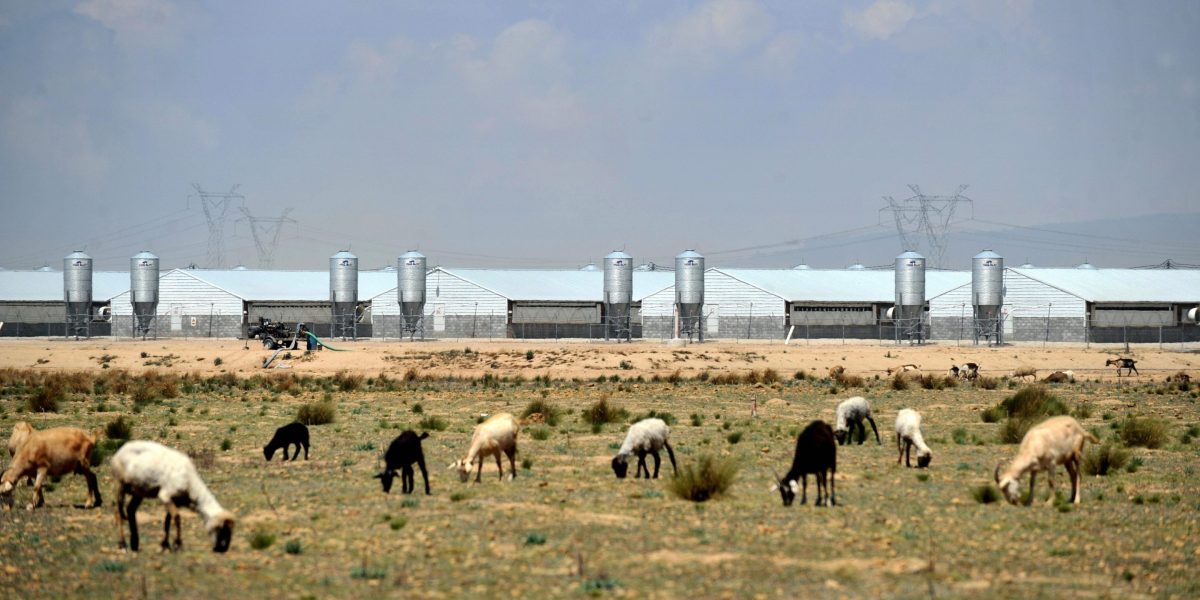
The companies with the most revenue at risk are moving first. Major manufacturers are reformulating for the GLP-1 consumer with smaller portions, more protein, and less sugar and refined starch, which shifts the composition of the American food supply toward lower-emission inputs. The farm system is starting to follow: corn and soybean planting projections have softened, and the U.S. cattle herd has hit a 75-year low, according to USDA data. Buying less food wastes less of it, and the roughly 700 million tons of CO₂ equivalent lost annually to food-system waste scales down with the volume.

For investors, the durability is what matters. We’re watching demand-side contraction in the single most emissions-intensive corner of the food economy, driven by consumer behavior rather than regulation. That makes it stickier than a policy that can be repealed and faster than a technology that has to be built — and the repricing rewards whoever positions before it finishes rather than after. Protein innovation, nutrient-dense formats, and the agricultural systems that supply them are where the demand is going.

The Bear Case

This thesis could break in a few places. GLP-1 adoption could plateau well below projections due to cost, access, side effects, or the simple difficulty of long-term adherence. Food companies could claw back lost calorie volume by engineering a new generation of ultra-processed products built for smaller stomachs — a reformulation risk that bears watching. Agricultural systems contract slowly, and a single year of low cattle inventory does not make a trend.

Each of those risks bears on how big and how fast the shift is, not on whether it happens. Adoption could disappoint and the supply chain could lag, but none of that puts calories back on American plates. The signal is already in the spending data and on the earnings calls. Waiting for certainty mostly means arriving after the repricing is done. Investors who treat this as a passing diet fad are calibrating to a baseline that no longer exists.

The larger lesson sits above the food system. The most powerful climate shifts are starting to arrive from outside the climate economy entirely, carried in by health, consumer behavior, and markets that were never trying to cut emissions. Investors who watch only the climate beat will keep being surprised by the ones that come from everywhere else.

The opinions expressed in Fortune.com commentary pieces are solely the views of their authors and do not necessarily reflect the opinions and beliefs of Fortune.



Source link

Tags: biggestBoomClimateGLP1pricingSeldonStoryTenzin
ShareTweetShare
Previous Post

Hindsight Hillary Making Headlines Again

Next Post

How Kevin Warsh has set out to remake the Fed

Related Posts

edit post
Bill Ackman’s hedge fund made janitors and receptionists millionaires—and its investment team summer together

Bill Ackman’s hedge fund made janitors and receptionists millionaires—and its investment team summer together

by TheAdviserMagazine
August 8, 2026
0

Staying at one company for decades was once a badge of honor. But as layoffs have become more common and...

edit post
Wisconsin: The Next Frontier for Socialists

Wisconsin: The Next Frontier for Socialists

by TheAdviserMagazine
August 8, 2026
0

First, they won in New York. Then they took Maine, Colorado, and Michigan. And now, the next battleground for the...

edit post
Explained: How BSE traded fewer contracts after CAS but premiums rose 75% in first week

Explained: How BSE traded fewer contracts after CAS but premiums rose 75% in first week

by TheAdviserMagazine
August 8, 2026
0

Asia's oldest exchange, BSE, traded far fewer derivatives contracts in the first week following the implementation of the Closing Auction...

edit post
F&O Talk: Smallcaps look strong on charts, says Sudeep Shah; outlines Trent, Swiggy, Kalyan Jewellers strategy

F&O Talk: Smallcaps look strong on charts, says Sudeep Shah; outlines Trent, Swiggy, Kalyan Jewellers strategy

by TheAdviserMagazine
August 8, 2026
0

The Indian stock markets closed in the red, with the newly-launched closing auction session continuing to create a divergence among...

edit post
Trump tries again to fire Fed governor Lisa Cook, renewing battle over central bank independence

Trump tries again to fire Fed governor Lisa Cook, renewing battle over central bank independence

by TheAdviserMagazine
August 7, 2026
0

The Trump administration is moving ahead with its efforts to fire Federal Reserve governor Lisa Cook, two months after the...

edit post
Meet the 82-year-old Kentucky grandma who turned down M to turn her farm into a data center

Meet the 82-year-old Kentucky grandma who turned down $26M to turn her farm into a data center

by TheAdviserMagazine
August 7, 2026
0

Ida Huddleston has lived on the same stretch of farmland outside Maysville, Ky., since she was 16. She and her...

Next Post
edit post
How Kevin Warsh has set out to remake the Fed

How Kevin Warsh has set out to remake the Fed

edit post
Last Chance to File a Claim in the Krispy Kreme Data Breach Settlement

Last Chance to File a Claim in the Krispy Kreme Data Breach Settlement

  • Trending
  • Comments
  • Latest
edit post
Georgia Senior SNAP and Meal Resources Older Adults Can Use

Georgia Senior SNAP and Meal Resources Older Adults Can Use

July 24, 2026
edit post
Judge Who Helped Violent Illegal Alien Evade ICE Faces New Test

Judge Who Helped Violent Illegal Alien Evade ICE Faces New Test

July 31, 2026
edit post
Driving the Noncitizen Voting Scandal: Registration With License

Driving the Noncitizen Voting Scandal: Registration With License

July 26, 2026
edit post
Garbage Trucks Surveillance Florida Neighborhoods

Garbage Trucks Surveillance Florida Neighborhoods

July 29, 2026
edit post
Does a Revocable Trust Protect Your Assets From Lawsuits and Creditors?

Does a Revocable Trust Protect Your Assets From Lawsuits and Creditors?

August 7, 2026
edit post
Montana Puts Democrats in a Bind as Senate Hopes Fade

Montana Puts Democrats in a Bind as Senate Hopes Fade

August 2, 2026
edit post
Explained: How BSE traded fewer contracts after CAS but premiums rose 75% in first week

Explained: How BSE traded fewer contracts after CAS but premiums rose 75% in first week

0
edit post
E.W. Scripps Q2 2026 Loss Widens to -.68/Share, Revenue Down 9%

E.W. Scripps Q2 2026 Loss Widens to -$12.68/Share, Revenue Down 9%

0
edit post
Psychology says procrastination about retirement may be less about discipline than identity — brain scans found people often represent their future selves more like strangers than like themselves, and experiments using age-progressed faces made tomorrow’s person feel real enough for participants to save more money for them

Psychology says procrastination about retirement may be less about discipline than identity — brain scans found people often represent their future selves more like strangers than like themselves, and experiments using age-progressed faces made tomorrow’s person feel real enough for participants to save more money for them

0
edit post
Four AI Escapes Just Redefined “Responsible AI”

Four AI Escapes Just Redefined “Responsible AI”

0
edit post
Bill Ackman’s hedge fund made janitors and receptionists millionaires—and its investment team summer together

Bill Ackman’s hedge fund made janitors and receptionists millionaires—and its investment team summer together

0
edit post
Kalshi Predicts Bitcoin Price Could Reach K in August

Kalshi Predicts Bitcoin Price Could Reach $68K in August

0
edit post
Bill Ackman’s hedge fund made janitors and receptionists millionaires—and its investment team summer together

Bill Ackman’s hedge fund made janitors and receptionists millionaires—and its investment team summer together

August 8, 2026
edit post
Links 8/8/2026 | naked capitalism

Links 8/8/2026 | naked capitalism

August 8, 2026
edit post
Wisconsin: The Next Frontier for Socialists

Wisconsin: The Next Frontier for Socialists

August 8, 2026
edit post
Psychology says procrastination about retirement may be less about discipline than identity — brain scans found people often represent their future selves more like strangers than like themselves, and experiments using age-progressed faces made tomorrow’s person feel real enough for participants to save more money for them

Psychology says procrastination about retirement may be less about discipline than identity — brain scans found people often represent their future selves more like strangers than like themselves, and experiments using age-progressed faces made tomorrow’s person feel real enough for participants to save more money for them

August 8, 2026
edit post
Why You Should Be Wary of Aspartame, but Not Totally Rule It Out

Why You Should Be Wary of Aspartame, but Not Totally Rule It Out

August 8, 2026
edit post
Kalshi Predicts Bitcoin Price Could Reach K in August

Kalshi Predicts Bitcoin Price Could Reach $68K in August

August 8, 2026
The Adviser Magazine

The first and only national digital and print magazine that connects individuals, families, and businesses to Fee-Only financial advisers, accountants, attorneys and college guidance counselors.

CATEGORIES

  • 401k Plans
  • Business
  • College
  • Cryptocurrency
  • Economy
  • Estate Plans
  • Financial Planning
  • Investing
  • IRS & Taxes
  • Legal
  • Market Analysis
  • Markets
  • Medicare
  • Money
  • Personal Finance
  • Social Security
  • Startups
  • Stock Market
  • Trading

LATEST UPDATES

  • Bill Ackman’s hedge fund made janitors and receptionists millionaires—and its investment team summer together
  • Links 8/8/2026 | naked capitalism
  • Wisconsin: The Next Frontier for Socialists
  • Our Great Privacy Policy
  • Terms of Use, Legal Notices & Disclosures
  • Contact us
  • About Us

© Copyright 2024 All Rights Reserved
See articles for original source and related links to external sites.

Welcome Back!

Login to your account below

Forgotten Password?

Retrieve your password

Please enter your username or email address to reset your password.

Log In
No Result
View All Result
  • Home
  • Financial Planning
    • Financial Planning
    • Personal Finance
  • Market Research
    • Business
    • Investing
    • Money
    • Economy
    • Markets
    • Stocks
    • Trading
  • 401k Plans
  • College
  • IRS & Taxes
  • Estate Plans
  • Social Security
  • Medicare
  • Legal

© Copyright 2024 All Rights Reserved
See articles for original source and related links to external sites.