No Result
View All Result
SUBMIT YOUR ARTICLES
  • Login
Saturday, August 1, 2026
TheAdviserMagazine.com
  • Home
  • Financial Planning
    • Financial Planning
    • Personal Finance
  • Market Research
    • Business
    • Investing
    • Money
    • Economy
    • Markets
    • Stocks
    • Trading
  • 401k Plans
  • College
  • IRS & Taxes
  • Estate Plans
  • Social Security
  • Medicare
  • Legal
  • Home
  • Financial Planning
    • Financial Planning
    • Personal Finance
  • Market Research
    • Business
    • Investing
    • Money
    • Economy
    • Markets
    • Stocks
    • Trading
  • 401k Plans
  • College
  • IRS & Taxes
  • Estate Plans
  • Social Security
  • Medicare
  • Legal
No Result
View All Result
TheAdviserMagazine.com
No Result
View All Result
Home Market Research Business

Sam Altman and Vinod Khosla agree: AI will break the tax code. Here’s their fix

by TheAdviserMagazine
4 months ago
in Business
Reading Time: 5 mins read
A A
Sam Altman and Vinod Khosla agree: AI will break the tax code. Here’s their fix
Share on FacebookShare on TwitterShare on LInkedIn


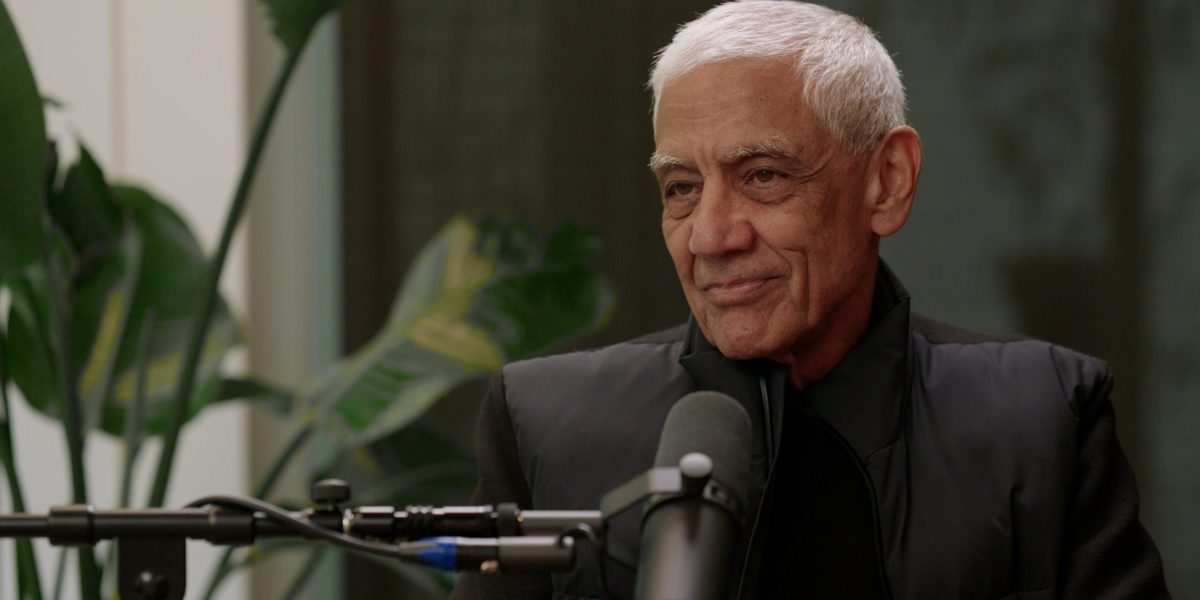
When Vinod Khosla sat down with Fortune editor-in-chief Alyson Shontell in March and floated the idea of wiping out federal income taxes for the roughly 100 million-plus Americans earning less than $100,000 a year, it sounded like the kind of provocation only a billionaire with nothing left to prove could get away with. “I can’t be fired. I’ve never worried about a career. I don’t need more money at age 71,” Khosla said. 

A month later, OpenAI has made it clear that Khosla’s thinking may be the emerging consensus of Silicon Valley’s most powerful voices on how to prevent artificial intelligence from tearing the social fabric apart.

On Monday, OpenAI released a 13-page policy paper titled “Industrial Policy for the Intelligence Age: Ideas to Keep People First,” in which Sam Altman’s company laid out a sweeping blueprint for economic reform on a scale it compared to the Progressive Era of the early 1900s and Franklin Roosevelt’s New Deal of the 1930s. The central thrust: as AI systems approach superintelligence—defined as capabilities that surpass the smartest humans—the existing tax code, labor market, and social safety net are all dangerously unprepared for what’s coming.

The overlap with Khosla’s vision is hard to miss.

The tax code as a battleground

Khosla’s March proposal on Fortune’s Titans and Disruptors of Industry podcast was elegant in its simplicity: eliminate the preferential tax rate on capital gains, tax all income—whether earned from a paycheck or an investment portfolio—at the same rate, and use the windfall to exempt everyone earning under $100,000 from federal income taxes entirely. He estimated that 40% of all capital gains taxes are paid by people earning more than $10 million annually, making the math work without increasing the overall tax burden.

OpenAI’s blueprint lands in the same territory, albeit through a slightly different door. The company’s paper calls for shifting the tax base away from payroll and labor income—the very revenue streams that AI threatens to hollow out—and toward corporate income and capital gains. It also floats what many have termed a “robot tax,” proposing levies on automated labor to capture a share of the productivity gains that would otherwise flow exclusively to capital owners.

Both Khosla and OpenAI framed the need for a major policy overhaul around the massive change arising from the implications of the exponential improvement in AI tools. OpenAI warns that as AI automates more work, the wage and payroll tax revenue that funds Social Security, Medicaid, SNAP, and housing assistance could collapse. Shifting to capital-based taxation isn’t just equitable, it argues, it’s fiscally necessary.

Both visions converge on the same uncomfortable assertion: the American tax system was designed for an economy where most value was created by human labor. That economy is disappearing.

From one billionaire’s idea to a corporate blueprint

Khosla is not a passive observer of OpenAI’s trajectory—he was an early investor in the company. His argument that AI could automate 80% of current jobs by 2030 provides the economic backdrop against which OpenAI’s policy paper reads less like corporate positioning and more like an alarm bell.

During his Fortune interview, Khosla situated the problem in terms that go beyond tax policy. In an AI-driven economy, he argued, the traditional balance of income between labor and capital will tilt dramatically. “Capitalism was about economic efficiency,” he said, “but if the need for efficiency goes away because of extreme abundance, then why focus on efficiency?”

OpenAI’s paper echoes that logic almost beat for beat. Its most radical proposal is a nationally managed public wealth fund, seeded in part by AI companies themselves, that would invest in diversified assets across the AI economy and distribute returns directly to American citizens—a mechanism designed to give every person a stake in the technology that might otherwise render their skills obsolete.

Khosla himself has endorsed the idea of a national wealth fund, and the symmetry between his individual advocacy and OpenAI’s institutional proposal suggests that a policy framework is crystallizing within the AI industry’s upper echelons.

Critics aren’t buying it

Still, the fact that a major VC and the company he invested in are singing the same tune hasn’t silenced the skeptics. Anton Leicht, a visiting scholar with the Carnegie Endowment for International Peace, called OpenAI’s paper “comms work to provide cover for regulatory nihilism”—big ideas floated to project responsibility while the company builds at full speed. The paper landed on the same day The New Yorker published a lengthy investigation raising questions about Altman’s trustworthiness on safety issues, a timing that did not go unnoticed.

And the political headwinds are fierce. Taxing capital gains at ordinary income rates is a proposal that pushed Marc Andreessen to back Donald Trump after President Biden floated a plan to tax unrealized gains in 2024. OpenAI’s paper conspicuously avoids specifying a corporate tax rate, a diplomatic omission that suggests the company knows where the political landmines are buried.

The California experiment

The irony of Khosla’s position is that he’s making a case for bold federal tax reform while fighting a rearguard action in his home state against what he considers a catastrophically misguided local experiment. California’s proposed Billionaire Tax Act would levy a one-time 5% tax on residents worth more than $1 billion—a measure Khosla has called the behavior of “a junkie” chasing a one-time fix while permanently damaging the state’s tax base.

By some estimates, more than $1 trillion in billionaire wealth has already left California in anticipation of the ballot measure. Google co-founders Larry Page and Sergey Brin have reportedly taken steps to sever ties with the state. Even Gov. Gavin Newsom has said the measure “makes no sense.”

Khosla’s counter-vision—federal reform that taxes capital more aggressively while relieving the burden on working Americans—is designed to be a policy that billionaires can live with and workers can vote for. As he put it: “They will vote for a candidate who says no taxes if you make less than $100,000.”

The clock is ticking

Both Khosla and OpenAI agree on at least one thing: the window for action is narrowing. Khosla predicted that structural tax reform will arrive before 2040 and could become a defining issue in the next presidential campaign cycle. OpenAI’s paper calls for automatic safety-net triggers that would expand benefits when AI displacement hits preset thresholds, an acknowledgment that the disruption may arrive faster than any legislative process can handle.

Goldman Sachs research has estimated that AI is already cutting roughly 16,000 U.S. jobs per month, with younger workers bearing a disproportionate share. OpenAI itself warns of scenarios where advanced AI systems become autonomous and self-replicating—systems that, in its own words, “cannot be easily recalled.”

Against that backdrop, the question is no longer whether the tax code needs to change but whether Washington can move fast enough. Khosla, for his part, is betting the real battle will be fought in Congress, not in Sacramento. And now, with OpenAI’s 13-page document in hand, he has the most powerful company in AI essentially co-signing his thesis.

Whether that amounts to genuine policy momentum or, as critics contend, an elaborate exercise in reputation management may be the defining question of the political economy of the AI age.

For this story, Fortune journalists used generative AI as a research tool. An editor verified the accuracy of the information before publishing.




Source link

Tags: agreeAltmanBreakCodefixHeresKhoslaSamtaxVinod
ShareTweetShare
Previous Post

Trump Accounts put Robinhood in front of the next generation of investors, says CEO Vlad Tenev

Next Post

Dividend Tax Rate: Ordinary vs Qualified Dividends –

Related Posts

edit post
Divi’s Labs Q1 Results: Net profit rises 66% YoY to Rs 902 crore, revenue up 28%

Divi’s Labs Q1 Results: Net profit rises 66% YoY to Rs 902 crore, revenue up 28%

by TheAdviserMagazine
August 1, 2026
0

Pharma player Divi's Laboratories on Saturday reported a consolidated net profit of Rs 902 crore for the April-June quarter of...

edit post
Bloomberg delays India’s entry to global bond index yet again

Bloomberg delays India’s entry to global bond index yet again

by TheAdviserMagazine
July 31, 2026
0

Mumbai: The highly anticipated inclusion of Indian government bonds in Bloomberg’s Global Aggregate Index has been deferred once again, with...

edit post
Trump orders Iran attack as soon as this weekend, WSJ says

Trump orders Iran attack as soon as this weekend, WSJ says

by TheAdviserMagazine
July 31, 2026
0

President Donald Trump has ordered the US military to carry out a new attack on Iran as soon as this...

edit post
LinkedIn adds ‘AI slop’ button after blocking billions of automated comment attempts

LinkedIn adds ‘AI slop’ button after blocking billions of automated comment attempts

by TheAdviserMagazine
July 31, 2026
0

While the rest of the online world is increasingly being shaped by AI, LinkedIn is making it easier to flag...

edit post
US stocks: US market ends higher as Amazon soothes AI jitters

US stocks: US market ends higher as Amazon soothes AI jitters

by TheAdviserMagazine
July 31, 2026
0

Wall Street ended higher on Friday, lifted by Amazon as the tech heavyweight's strong quarterly report bolstered investor confidence in...

edit post
Want to trade SpaceX for Apple? 1inch says skip the dollars

Want to trade SpaceX for Apple? 1inch says skip the dollars

by TheAdviserMagazine
July 31, 2026
0

1inch, a leading decentralized finance (DeFi) protocol, just announced the launch of it's new shared liquidity protocol, Aqua. It promises...

Next Post
edit post
Dividend Tax Rate: Ordinary vs Qualified Dividends –

Dividend Tax Rate: Ordinary vs Qualified Dividends -

edit post
Gautam Adani will seek to dismiss US SEC fraud case

Gautam Adani will seek to dismiss US SEC fraud case

  • Trending
  • Comments
  • Latest
edit post
Georgia Senior SNAP and Meal Resources Older Adults Can Use

Georgia Senior SNAP and Meal Resources Older Adults Can Use

July 24, 2026
edit post
New Jersey Tax-Relief Events: Three July Dates Near Seniors

New Jersey Tax-Relief Events: Three July Dates Near Seniors

July 13, 2026
edit post
Bristlecone pines growing in the White Mountains of California germinated before the Great Pyramid was built, and the oldest one alive today, nicknamed Methuselah, has been quietly adding rings for 4,855 years in soil so poor almost nothing else survives beside it

Bristlecone pines growing in the White Mountains of California germinated before the Great Pyramid was built, and the oldest one alive today, nicknamed Methuselah, has been quietly adding rings for 4,855 years in soil so poor almost nothing else survives beside it

July 8, 2026
edit post
Retail giant exits U.S. fashion after multi-million-dollar scandal

Retail giant exits U.S. fashion after multi-million-dollar scandal

July 1, 2026
edit post
Top Democrats Are Trapped in a Catch 22

Top Democrats Are Trapped in a Catch 22

July 6, 2026
edit post
2 judges suspended in separate cases after being indicted on criminal charges

2 judges suspended in separate cases after being indicted on criminal charges

July 9, 2026
edit post
LPL reclaims recruiting crown, sees new assets swell in Q2

LPL reclaims recruiting crown, sees new assets swell in Q2

0
edit post
Tax Relief Now: How to Get Tax Help ASAP

Tax Relief Now: How to Get Tax Help ASAP

0
edit post
This Chinese AI Chalkboard Is Blowing People’s Minds (English Translation)

This Chinese AI Chalkboard Is Blowing People’s Minds (English Translation)

0
edit post
Generation Capital wins battle for Shikun & Binui Energy

Generation Capital wins battle for Shikun & Binui Energy

0
edit post
Why I Find After-Hours Easy to Trade

Why I Find After-Hours Easy to Trade

0
edit post
Silver prices today, Friday, July 31, 2026: Silver briefly rises above  after U.S. pauses airstrikes

Silver prices today, Friday, July 31, 2026: Silver briefly rises above $59 after U.S. pauses airstrikes

0
edit post
Divi’s Labs Q1 Results: Net profit rises 66% YoY to Rs 902 crore, revenue up 28%

Divi’s Labs Q1 Results: Net profit rises 66% YoY to Rs 902 crore, revenue up 28%

August 1, 2026
edit post
Grayscale Sees 3,000 Onchain Vaults With B+ as Next Crypto Breakout

Grayscale Sees 3,000 Onchain Vaults With $7B+ as Next Crypto Breakout

August 1, 2026
edit post
Bloomberg delays India’s entry to global bond index yet again

Bloomberg delays India’s entry to global bond index yet again

July 31, 2026
edit post
6 Signs That World War III Is About To Get Even Larger

6 Signs That World War III Is About To Get Even Larger

July 31, 2026
edit post
Dalio calls AI the biggest bubble since 1929. Murata says the spending boom is ending

Dalio calls AI the biggest bubble since 1929. Murata says the spending boom is ending

July 31, 2026
edit post
This Chinese AI Chalkboard Is Blowing People’s Minds (English Translation)

This Chinese AI Chalkboard Is Blowing People’s Minds (English Translation)

July 31, 2026
The Adviser Magazine

The first and only national digital and print magazine that connects individuals, families, and businesses to Fee-Only financial advisers, accountants, attorneys and college guidance counselors.

CATEGORIES

  • 401k Plans
  • Business
  • College
  • Cryptocurrency
  • Economy
  • Estate Plans
  • Financial Planning
  • Investing
  • IRS & Taxes
  • Legal
  • Market Analysis
  • Markets
  • Medicare
  • Money
  • Personal Finance
  • Social Security
  • Startups
  • Stock Market
  • Trading

LATEST UPDATES

  • Divi’s Labs Q1 Results: Net profit rises 66% YoY to Rs 902 crore, revenue up 28%
  • Grayscale Sees 3,000 Onchain Vaults With $7B+ as Next Crypto Breakout
  • Bloomberg delays India’s entry to global bond index yet again
  • Our Great Privacy Policy
  • Terms of Use, Legal Notices & Disclosures
  • Contact us
  • About Us

© Copyright 2024 All Rights Reserved
See articles for original source and related links to external sites.

Welcome Back!

Login to your account below

Forgotten Password?

Retrieve your password

Please enter your username or email address to reset your password.

Log In
No Result
View All Result
  • Home
  • Financial Planning
    • Financial Planning
    • Personal Finance
  • Market Research
    • Business
    • Investing
    • Money
    • Economy
    • Markets
    • Stocks
    • Trading
  • 401k Plans
  • College
  • IRS & Taxes
  • Estate Plans
  • Social Security
  • Medicare
  • Legal

© Copyright 2024 All Rights Reserved
See articles for original source and related links to external sites.