Since the shekel-dollar rate broke through the NIS 3/$ level downwards a month ago, the trend has only continued. At the close of trading on Friday the rate was a little under NIS 2.94/$, which takes us straight to the bottom line: the foreign exchange market is a very deep market impacted by many factors, both global and local.
On the global side, these factors include the dollar’s strength or weakness versus the other major currencies, energy prices, the policy of the US central bank, the Federal Reserve, and sentiment on the US stock market. Locally, important factors are actions by the Bank of Israel, interest rate levels, the balance of payments, and political stability or otherwise.
Alongside all these is one factor that has an especially large impact, and that is the activity of financial institutions (investment houses and insurance companies) in Israel. Every year, these institutions receive another NIS 200 billion to manage, and every small change they make in their portfolios has a huge effect on the markets.
Change of policy
In a sense, all the stars are lined up at the moment on the side of a strengthening shekel. Israel’s risk premium is on the way down, the US dollar has weakened globally, US stock markets are breaking records, and interest rate cuts in Israel are stuck. Market sources say, however, that the financial institutions are having a decisive effect. In the past few days we have seen that even when stock indices on Wall Street have fallen and oil prices have soared, the shekel has continued to strengthen, contrary to historical patterns.
According to Bank of Israel figures, in the second half of 2025 the institutions sold more than $23 billion, an all-time record for a single half year. The amount is equivalent to 3.5% of Israel’s GDP.
Although there are no official figures yet for the beginning of 2026, the assessment on the market is that this trend has continued at full power. Behind this unprecedented sell-off of dollars is a change of concept on the part of the institutions and long-term retail investors. Data for 2025 show that almost all of them reduced the currency exposure in their investment portfolios.
In the general investment tracks of the advanced training funds, Altshuler Shaham reduced the exposure from 22.5% in 2024 to 17.3%; at Harel the exposure was reduced from 22.3% to 17.6%; and at More Investment House the reduction was from 26.5% to 19.2%. The only institution that maintained a similar level of exposure in both years was insurance company Menora Mivtachim. At the same time, these institutions are not necessarily reducing their overseas exposure, since the Israel market is too small to contain the amount of money that they manage. The result is that they have to hedge. The institutions are currently estimated to be hedged to the tune of some $90 billion.
The hedging deals are partly carried out with large international banks that, in effect, in exchange for payment, increase their shekel exposure by the amount of the hedged portfolio. In simple terms, they make massive purchases of shekels and sell dollars, which supports continued appreciation of the shekel. For their part, the Israeli institutions benefit from protection against exceptional currency fluctuations and their overseas investments are linked to the shekel.
Alongside hedging, there is an almost automatic mechanism that affects the activity of the institutions: the behavior of overseas markets. Bank Hapoalim chief markets strategist Modi Shafrir: “When overseas markets rise, the value of the institutions’ dollar assets rises, and so they sell foreign currency because they don’t want to increase their net currency exposure.” A daily correlation is thus created between trends on securities markets around the world and the shekel-dollar exchange rate.
The sharp fluctuations caused by the institutions have not escaped criticism, the chief one being their sheer power in the market. As we have seen, their reduction of their currency exposure has been sufficient to move the exchange rate. At present there are no restrictions on the institutions’ activity in this respect, and they are free to set their exposure to foreign currency.
The regulator won’t intervene
The body responsible for supervising the financial institutions (other than the banks) is the Capital Markets, Insurance and Savings Authority, headed by the commissioner Amit Gal. At least for the time being, the assumption is that the Authority will not intervene and will not impose new restrictions in the foreign currency sphere. The view on the market is that such intervention would be liable to open the way to unnecessary regulation that would hamper the freedom of action of investment managers and savers, who today can choose between a range of investment tracks, including S&P 500 tracks that are fully exposed to currency fluctuations.
Besides that, there is the question whether regulatory intervention and the introduction of rigid investment rules would not in the end be damaging. In reality, people retire, and sometimes switch between investment tracks, and in Israel the public benefits from the fact that when global trends reverse and markets fall, the damage to savers reduces when the shekel-dollar rate jumps. Intervention or limitations on the institutions would be liable to lead to a situation in which savers will be hurt when these things happen.
An interesting and unusual argument comes from another direction. Despite the current trend, the basic activity of the financial institutions over the years has actually tended to strengthen demand for the dollar. Whereas, two decades ago, their investments were mostly concentrated in the local market, the fact that since then they have sent capital abroad structurally weakens the shekel even if from time to time they change their hedging rates.
In the end, what determines the strength of the shekel is Israel’s balance of payments. Israel has a balance of payments surplus (essentially more exports than imports) because of its technology industry, which is the engine of the economy, and its exports of natural gas. This has been the case for over two decades, and the assumption is that as long as this strong force continues, the shekel will continue to strengthen.
Exporters seek compensation
More than 50% of Israeli industry is export oriented, according to the Manufacturers Association. Their complaint is that the decline in the shekel-dollar rate over time creates a pincer movement: dollar receipts are worth less while shekel-denominated inputs – salaries, water, municipal taxes, electricity – are rising. “Exporters who used to be profitable are falling into losses and are having to make tough decisions: halting production, closing production lines, or diverting investment to sites outside Israel,” says Manufacturers Association president Avraham (Novo) Novogrocki.
The empirical data bring home the problem. In the first quarter of this year in comparison with the corresponding quarter of 2025, exports rose 2% in dollar terms, but measured in shekels, the currency in which the companies present their financials, there was a 12% drop. When President Trump’s tariffs are taken into account, the problem deepens.
Novogrocki has three requests to make of the policy makers in order to stabilize the exchange rate. First of all, a 0.5% interest rate cut by the Bank of Israel. Secondly, that the Bank of Israel should buy dollars, or at least signal clearly to the market its readiness to buy at certain exchange rates.
Thirdly, he criticizes the Ministry of Finance for “standing aside” and calls for a substantial increase in the budget for supporting investment in plant and machinery, along the lines of what is done in the US and Europe. He warns of the loss of tax revenues and wages. He also points out the blow to manufacturers for the local market, as competing products from overseas become cheaper, although it must be remembered that manufacturers also import raw materials, and they too become cheaper as the shekel strengthens.
One of the most important payers in the foreign currency market is the Bank of Israel. Although it has foreign currency reserves of $228 billion, it will use this resource only in extraordinary circumstances. The last time it was used was after the Hamas attach in October 2023.
The other main tool is the interest rate. After two cuts, in December and January, the central bank stopped, mainly because of the war in the region and the uncertainty it created.
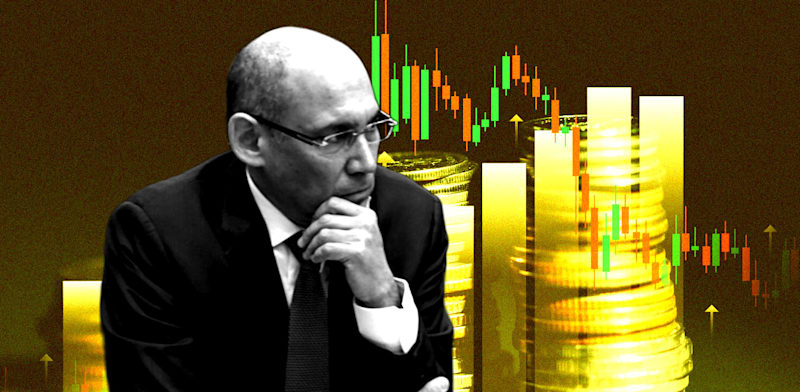
Market sources say that unless the Bank of Israel resumes interest rate cuts shortly, the downward pressure on the shekel-dollar exchange rate will continue. At a conference held by the Aaron Institute at Reichman University last week, Governor of the Bank of Israel Amir Yaron said that if the conflict with Iran ends, one or two further cuts will become possible, but he stressed that this would depend on developments. The market is currently pricing in two interest rate cuts over the coming year, to 3.5%.
The Bank of Israel has indicated that the damage to exporters is secondary in its considerations on whether to intervene in the foreign exchange market, the main ones being keeping inflation within the 1-3% target range, economic growth, and a stable financial system.
Published by Globes, Israel business news – en.globes.co.il – on May 4, 2026.
© Copyright of Globes Publisher Itonut (1983) Ltd., 2026.