No Result
View All Result
SUBMIT YOUR ARTICLES
  • Login
Tuesday, August 25, 2026
TheAdviserMagazine.com
  • Home
  • Financial Planning
    • Financial Planning
    • Personal Finance
  • Market Research
    • Business
    • Investing
    • Money
    • Economy
    • Markets
    • Stocks
    • Trading
  • 401k Plans
  • College
  • IRS & Taxes
  • Estate Plans
  • Social Security
  • Medicare
  • Legal
  • Home
  • Financial Planning
    • Financial Planning
    • Personal Finance
  • Market Research
    • Business
    • Investing
    • Money
    • Economy
    • Markets
    • Stocks
    • Trading
  • 401k Plans
  • College
  • IRS & Taxes
  • Estate Plans
  • Social Security
  • Medicare
  • Legal
No Result
View All Result
TheAdviserMagazine.com
No Result
View All Result
Home Market Research Business

AI experts return from China stunned: The U.S. grid is so weak, the race may already be over

by TheAdviserMagazine
1 year ago
in Business
Reading Time: 4 mins read
A A
AI experts return from China stunned: The U.S. grid is so weak, the race may already be over
Share on FacebookShare on TwitterShare on LInkedIn


“Everywhere we went, people treated energy availability as a given,” Rui Ma wrote on X after returning from a recent tour of China’s AI hubs. 

For American AI researchers, that’s almost unimaginable. In the U.S., surging AI demand is colliding with a fragile power grid, the kind of extreme bottleneck that Goldman Sachs warns could severely choke the industry’s growth.

In China, Ma continued, it’s considered a “solved problem.”

Ma, a renowned expert in Chinese technology and founder of the media company Tech Buzz China, took her team on the road to get a firsthand look at the country’s AI advancements. She told Fortune that while she isn’t an energy export, she attended enough meetings and talked to enough insiders to come away with a conclusion that should send chills down the spine of Silicon Valley: in China, building enough power for data centers is no longer up for debate.

“This is a stark contrast to the U.S., where AI growth is increasingly tied to debates over data center power consumption and grid limitations,” she wrote on X.

The stakes are difficult to overstate. Data center building is the foundation of AI advancement, and spending on new centers now displaces consumer spending in terms of impact to U.S. GDP—that’s concerning since consumer spending is generally two-thirds of the pie. McKinsey projects that between 2025 and 2030, companies worldwide will need to invest $6.7 trillion into new data center capacity to keep up with AI’s strain. 

In a recent research note, Stifel Nicolaus warned of a looming correction to the S&P 500, since it forecasts this data-center capex boom to be a one-off build-out of infrastructure, while consumer spending is clearly on the wane.

However, the clear limiting factor to the U.S.’s data center infrastructure development, according to a Deloitte industry survey, is stress on the power grid. Cities’ power grids are so weak that some companies are just building their own power plants rather than relying on existing grids. The public is growing increasingly frustrated over increasing energy bills – in Ohio, the electricity bill for a typical household has increased at least $15 this summer from the data centers – while energy companies prepare for a sea-change of surging demand. 

Goldman Sachs frames the crisis simply: “AI’s insatiable power demand is outpacing the grid’s decade-long development cycles, creating a critical bottleneck.” 

Meanwhile, David Fishman, a Chinese electricity expert who has spent years tracking their energy development, told Fortune that in China, electricity isn’t even a question. On average, China adds more electricity demand than the entire annual consumption of Germany, every single year. Whole rural provinces are blanketed in rooftop solar, with one province matching the entirety of India’s electricity supply. 

“U.S. policymakers should be hoping China stays a competitor and not an aggressor,” Fishman said. “Because right now they can’t compete effectively on the energy infrastructure front.”

China has an oversupply of electricty

China’s quiet electricity dominance, Fishman explained, is the result of decades of deliberate overbuilding and investment in every layer of the power sector, from generation to transmission to next-generation nuclear.

The country’s reserve margin has never dipped below 80%–100% nationwide, meaning it has consistently maintained at least twice the capacity it needs, Fishman said. They have so much available space that instead of seeing AI data centers as a threat to grid stability, China treats them as a convenient way to “soak up oversupply,” he added.

That level of cushion is unthinkable in the United States, where regional grids typically operate with a 15% reserve margin and sometimes less, particularly during extreme weather, Fishman said. In places like California or Texas, officials often issue warnings about red-flag conditions when demand is projected to strain the system. This leaves little room to absorb the rapid load increases AI infrastructure requires, Fishman ntoed. 

The gap in readiness is stark: while the U.S. is already experiencing political and economic fights over whether the grid can keep up, China is operating from a position of abundance.

Even if AI demand in China grows so quickly renewable projects can’t keep pace, Fishman said, the country can tap idle coal plants to bridge the gap while building more sustainable sources. “It’s not preferable,” he admitted, “but it’s doable.”

By contrast, the U.S. would have to scramble to bring on new generation capacity, often facing years-long permitting delays, local opposition, and fragmented market rules, he said. 

Structural governance differences

Underpinning the hardware advantage is a difference in governance. In China, energy planning is coordinated by long-term, technocratic policy that defines the market’s rules before investments are made, Fishman said. This model ensures infrastructure buildout happens in anticipation of demand, not in reaction to it.

“They’re set up to hit grand slams,” Fishman noted. “The U.S., at best, can get on base.”

In the U.S., large-scale infrastructure projects depend heavily on private investment, but most investors expect a return within three to five years: far too short for power projects that can take a decade to build and pay off.

“Capital is really biased toward shorter-term returns,” he said, noting Silicon Valley has funneled billions into “the nth iteration of software-as-a-service” while energy projects fight for funding. 

In China, by contrast, the state directs money toward strategic sectors in advance of demand, accepting not every project will succeed but ensuring the capacity is in place when it’s needed. Without public financing to de-risk long-term bets, he argued, the U.S. political and economic system is simply not set up to build the grid of the future.

Cultural attitudes reinforce this approach. In China, renewables are framed as a cornerstone of the economy because they make sense economically and strategically, not because they carry moral weight. Coal use isn’t cast as a sign of villainy, as it would be among some circles in the U.S. –  it’s simply seen as outdated. This pragmatic framing, Fishman argued, allows policymakers to focus on efficiency and results rather than political battles.

For Fishman, the takeaway is blunt. Without a dramatic shift in how the U.S. builds and funds its energy infrastructure, China’s lead will only widen.

“The gap in capability is only going to continue to become more obvious — and grow in the coming years,” he said.




Source link

Tags: ChinaExpertsgridracereturnstunnedU.Sweak
ShareTweetShare
Previous Post

Introducing: My Brand-New Course & Coaching Group!

Next Post

Supreme Court allows restrictions on children’s access to social media to remain in place

Related Posts

edit post
Bill Ackman’s hedge fund made janitors and receptionists millionaires—and its investment team summer together

Bill Ackman’s hedge fund made janitors and receptionists millionaires—and its investment team summer together

by TheAdviserMagazine
August 8, 2026
0

Staying at one company for decades was once a badge of honor. But as layoffs have become more common and...

edit post
Wisconsin: The Next Frontier for Socialists

Wisconsin: The Next Frontier for Socialists

by TheAdviserMagazine
August 8, 2026
0

First, they won in New York. Then they took Maine, Colorado, and Michigan. And now, the next battleground for the...

edit post
Explained: How BSE traded fewer contracts after CAS but premiums rose 75% in first week

Explained: How BSE traded fewer contracts after CAS but premiums rose 75% in first week

by TheAdviserMagazine
August 8, 2026
0

Asia's oldest exchange, BSE, traded far fewer derivatives contracts in the first week following the implementation of the Closing Auction...

edit post
F&O Talk: Smallcaps look strong on charts, says Sudeep Shah; outlines Trent, Swiggy, Kalyan Jewellers strategy

F&O Talk: Smallcaps look strong on charts, says Sudeep Shah; outlines Trent, Swiggy, Kalyan Jewellers strategy

by TheAdviserMagazine
August 8, 2026
0

The Indian stock markets closed in the red, with the newly-launched closing auction session continuing to create a divergence among...

edit post
Trump tries again to fire Fed governor Lisa Cook, renewing battle over central bank independence

Trump tries again to fire Fed governor Lisa Cook, renewing battle over central bank independence

by TheAdviserMagazine
August 7, 2026
0

The Trump administration is moving ahead with its efforts to fire Federal Reserve governor Lisa Cook, two months after the...

edit post
Meet the 82-year-old Kentucky grandma who turned down M to turn her farm into a data center

Meet the 82-year-old Kentucky grandma who turned down $26M to turn her farm into a data center

by TheAdviserMagazine
August 7, 2026
0

Ida Huddleston has lived on the same stretch of farmland outside Maysville, Ky., since she was 16. She and her...

Next Post
edit post
Supreme Court allows restrictions on children’s access to social media to remain in place

Supreme Court allows restrictions on children’s access to social media to remain in place

edit post
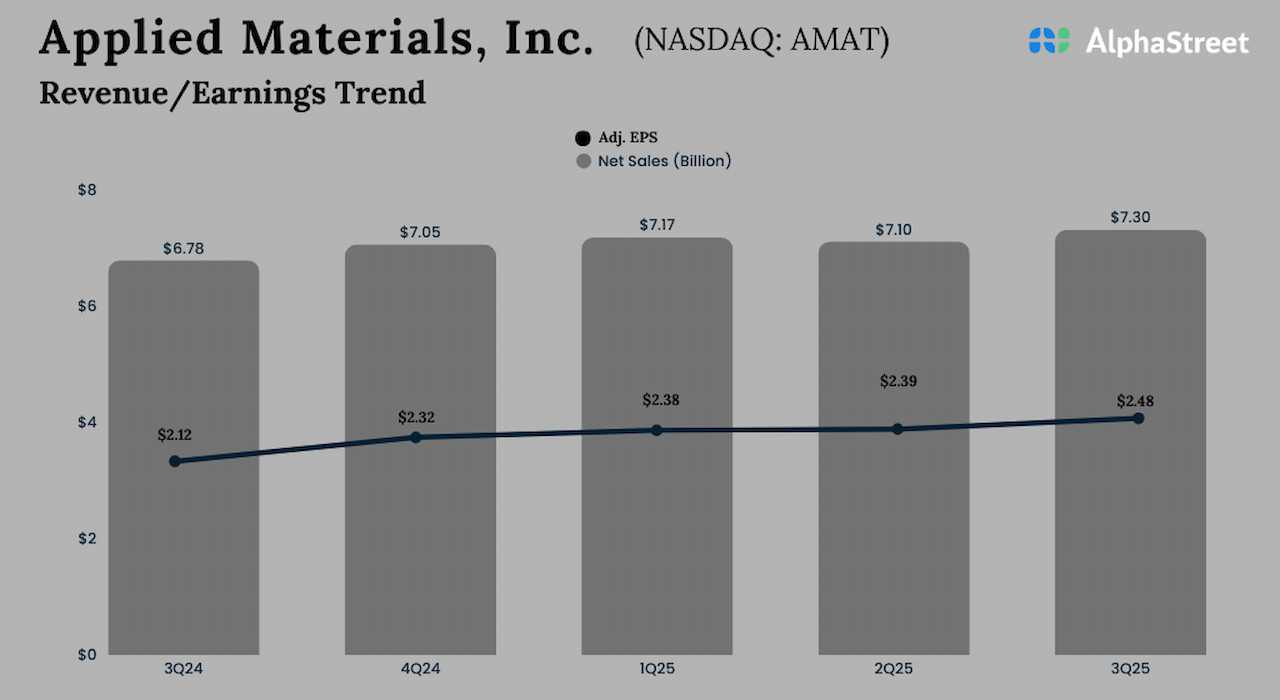
AMAT Earnings: Applied Materials Q3 revenue and profit beat estimates

AMAT Earnings: Applied Materials Q3 revenue and profit beat estimates

  • Trending
  • Comments
  • Latest
edit post
Judge Who Helped Violent Illegal Alien Evade ICE Faces New Test

Judge Who Helped Violent Illegal Alien Evade ICE Faces New Test

July 31, 2026
edit post
Garbage Trucks Surveillance Florida Neighborhoods

Garbage Trucks Surveillance Florida Neighborhoods

July 29, 2026
edit post
Does a Revocable Trust Protect Your Assets From Lawsuits and Creditors?

Does a Revocable Trust Protect Your Assets From Lawsuits and Creditors?

August 7, 2026
edit post
Driving the Noncitizen Voting Scandal: Registration With License

Driving the Noncitizen Voting Scandal: Registration With License

July 26, 2026
edit post
Montana Puts Democrats in a Bind as Senate Hopes Fade

Montana Puts Democrats in a Bind as Senate Hopes Fade

August 2, 2026
edit post
New Jersey’s PAS-1 Application Opens the Door to Three Senior Tax Relief Programs

New Jersey’s PAS-1 Application Opens the Door to Three Senior Tax Relief Programs

July 31, 2026
edit post
Explained: How BSE traded fewer contracts after CAS but premiums rose 75% in first week

Explained: How BSE traded fewer contracts after CAS but premiums rose 75% in first week

0
edit post
E.W. Scripps Q2 2026 Loss Widens to -.68/Share, Revenue Down 9%

E.W. Scripps Q2 2026 Loss Widens to -$12.68/Share, Revenue Down 9%

0
edit post
Psychology says procrastination about retirement may be less about discipline than identity — brain scans found people often represent their future selves more like strangers than like themselves, and experiments using age-progressed faces made tomorrow’s person feel real enough for participants to save more money for them

Psychology says procrastination about retirement may be less about discipline than identity — brain scans found people often represent their future selves more like strangers than like themselves, and experiments using age-progressed faces made tomorrow’s person feel real enough for participants to save more money for them

0
edit post
Four AI Escapes Just Redefined “Responsible AI”

Four AI Escapes Just Redefined “Responsible AI”

0
edit post
Bill Ackman’s hedge fund made janitors and receptionists millionaires—and its investment team summer together

Bill Ackman’s hedge fund made janitors and receptionists millionaires—and its investment team summer together

0
edit post
Kalshi Predicts Bitcoin Price Could Reach K in August

Kalshi Predicts Bitcoin Price Could Reach $68K in August

0
edit post
Bill Ackman’s hedge fund made janitors and receptionists millionaires—and its investment team summer together

Bill Ackman’s hedge fund made janitors and receptionists millionaires—and its investment team summer together

August 8, 2026
edit post
Links 8/8/2026 | naked capitalism

Links 8/8/2026 | naked capitalism

August 8, 2026
edit post
Wisconsin: The Next Frontier for Socialists

Wisconsin: The Next Frontier for Socialists

August 8, 2026
edit post
Psychology says procrastination about retirement may be less about discipline than identity — brain scans found people often represent their future selves more like strangers than like themselves, and experiments using age-progressed faces made tomorrow’s person feel real enough for participants to save more money for them

Psychology says procrastination about retirement may be less about discipline than identity — brain scans found people often represent their future selves more like strangers than like themselves, and experiments using age-progressed faces made tomorrow’s person feel real enough for participants to save more money for them

August 8, 2026
edit post
Why You Should Be Wary of Aspartame, but Not Totally Rule It Out

Why You Should Be Wary of Aspartame, but Not Totally Rule It Out

August 8, 2026
edit post
Kalshi Predicts Bitcoin Price Could Reach K in August

Kalshi Predicts Bitcoin Price Could Reach $68K in August

August 8, 2026
The Adviser Magazine

The first and only national digital and print magazine that connects individuals, families, and businesses to Fee-Only financial advisers, accountants, attorneys and college guidance counselors.

CATEGORIES

  • 401k Plans
  • Business
  • College
  • Cryptocurrency
  • Economy
  • Estate Plans
  • Financial Planning
  • Investing
  • IRS & Taxes
  • Legal
  • Market Analysis
  • Markets
  • Medicare
  • Money
  • Personal Finance
  • Social Security
  • Startups
  • Stock Market
  • Trading

LATEST UPDATES

  • Bill Ackman’s hedge fund made janitors and receptionists millionaires—and its investment team summer together
  • Links 8/8/2026 | naked capitalism
  • Wisconsin: The Next Frontier for Socialists
  • Our Great Privacy Policy
  • Terms of Use, Legal Notices & Disclosures
  • Contact us
  • About Us

© Copyright 2024 All Rights Reserved
See articles for original source and related links to external sites.

Welcome Back!

Login to your account below

Forgotten Password?

Retrieve your password

Please enter your username or email address to reset your password.

Log In
No Result
View All Result
  • Home
  • Financial Planning
    • Financial Planning
    • Personal Finance
  • Market Research
    • Business
    • Investing
    • Money
    • Economy
    • Markets
    • Stocks
    • Trading
  • 401k Plans
  • College
  • IRS & Taxes
  • Estate Plans
  • Social Security
  • Medicare
  • Legal

© Copyright 2024 All Rights Reserved
See articles for original source and related links to external sites.