No Result
View All Result
SUBMIT YOUR ARTICLES
  • Login
Saturday, August 15, 2026
TheAdviserMagazine.com
  • Home
  • Financial Planning
    • Financial Planning
    • Personal Finance
  • Market Research
    • Business
    • Investing
    • Money
    • Economy
    • Markets
    • Stocks
    • Trading
  • 401k Plans
  • College
  • IRS & Taxes
  • Estate Plans
  • Social Security
  • Medicare
  • Legal
  • Home
  • Financial Planning
    • Financial Planning
    • Personal Finance
  • Market Research
    • Business
    • Investing
    • Money
    • Economy
    • Markets
    • Stocks
    • Trading
  • 401k Plans
  • College
  • IRS & Taxes
  • Estate Plans
  • Social Security
  • Medicare
  • Legal
No Result
View All Result
TheAdviserMagazine.com
No Result
View All Result
Home Legal

Justices reject “rigid” rule punishing omissions by bankrupt debtors

by TheAdviserMagazine
2 months ago
in Legal
Reading Time: 3 mins read
A A
Justices reject “rigid” rule punishing omissions by bankrupt debtors
Share on FacebookShare on TwitterShare on LInkedIn


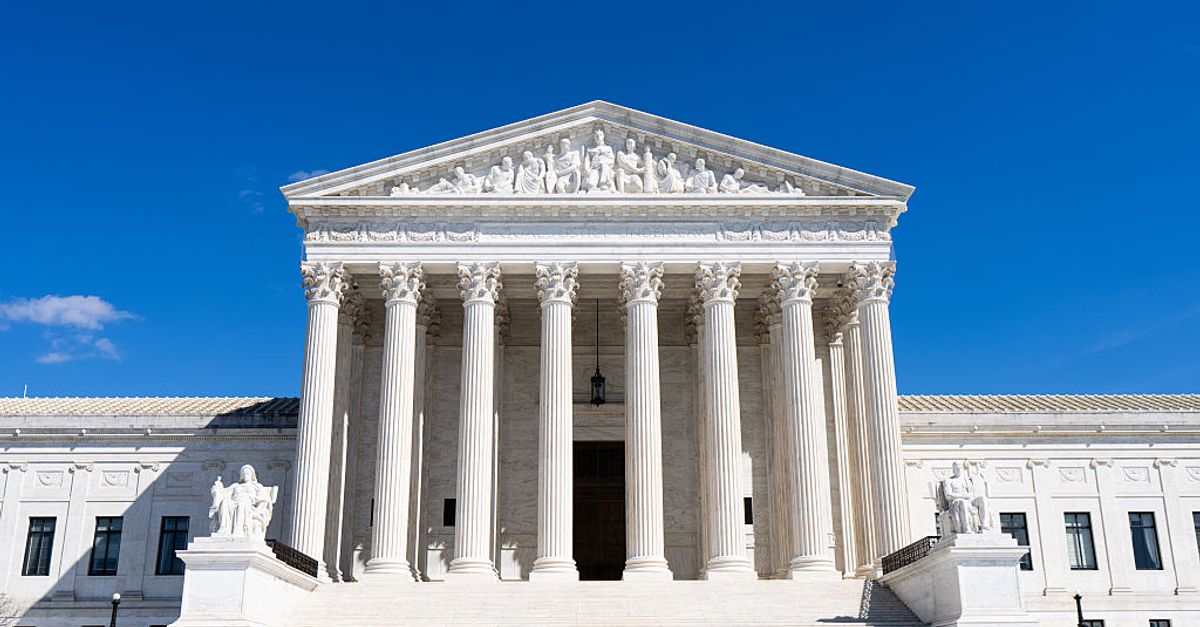
Yesterday’s decision in Keathley v. Buddy Ayers Construction squarely rejected a “rigid” rule adopted by the lower court to punish the failure of a debtor in bankruptcy to mention one of its assets to the court.

The case involves a bankrupt debtor who failed to disclose to the bankruptcy court the possibility that a car accident he was in after the bankruptcy filing might produce additional assets for his creditors. Under a rule of “judicial estoppel” in the lower courts, the lawsuit by Keathley (the bankrupt debtor) against the other driver was dismissed on the theory that Keathley improperly benefited in his bankruptcy by failing to call the accident to the attention of the bankruptcy court – although he disclosed it to his attorney. The idea is that because Keathley had a possible incentive to hide the incident – it might have produced money for his creditors if he disclosed it – he is conclusively presumed to have acted wrongfully when he did not disclose it.

Ketanji Brown Jackson’s opinion for a unanimous court is narrow and succinct. She characterizes judicial estoppel as “an ‘equitable doctrine’ ‘intended to protect the integrity of the judicial process’ … by ‘prohibiting parties from deliberately changing positions’” and explains that “courts that apply judicial estoppel to claims in the bankruptcy context view the debtor’s failure to disclose a particular claim as an ‘implicit representation’ that the claim does not exist.” Then, on that view, “when the debtor files a lawsuit based on that claim, he has taken inconsistent positions in the two judicial proceedings ‘by asserting in the civil lawsuit that he has a claim … while denying … in the bankruptcy proceeding that the claim exists.”

Jackson repeatedly emphasizes how little the court is deciding. For one thing, the parties do not dispute whether the debtor “has a continuing duty to disclose assets that arise after the initial filing of the bankruptcy,” and the justices thus “do not opine on whether such a duty exists.” Similarly, she notes that “this Court has never applied judicial context in the bankruptcy context,” and so “assume[s] without deciding that judicial estoppel can apply in the bankruptcy context and that ‘inadvertence or mistake’ can function as an exception to that application.”

The only thing the opinion resolves, then, is whether in the application of judicial estoppel it makes sense to conclusively presume that estoppel applies, and that a litigant cannot be forgiven on the grounds of “inadvertence or mistake,” if the litigant had any motive to hide the information. On that point, Jackson rejects the lower court’s “understanding of ‘inadvertence or mistake’ [a]s simultaneously too rigid and too broad.”

On the first point, she points to the lower court’s “failure to fully recognize that ‘judicial estoppel is an equitable doctrine.’” She points to earlier opinions stating that equity “eschews mechanical rules; it depends on flexibility” and that equitable inquiry should proceed “on a case-by-case basis.” As Jackson sees it, the lower court limits analysis to “only two circumstances”: “whether the debtor knew of the underlying ‘facts’ … and whether there was a potential motive to conceal the claim.” For Jackson, “[t]hat rigidity is out of step with equity,” and the lower court instead “should have examined the totality of the circumstances surrounding Keathley’s failure to report his personal-injury claims earlier.”

On the second point, she suggests that the lower court’s rule “is not only overly rigid; it is also overly broad,” as it “holds that an omission falls outside the exception any time a debtor … could potentially benefit from non-disclosure.” That makes little sense to her, because “a debtor will almost always hypothetically benefit from not revealing such a claim to his creditors.” In sum, such a “one-size-fits-all test” is “patently incompatible” with traditional equitable analysis, “which suggests that circumstances—and outcomes—may vary.”

In a brief concurrence, Justice Clarence Thomas, joined by Justice Neil Gorsuch, questions the doctrine of judicial estoppel altogether – going much farther than the majority’s ruling narrowing the doctrine from the breadth accepted by the court below.

Given that holding’s narrowness, Keathley is probably a good candidate for least significant decision of the term. It does resolve a circuit conflict, but it does not even establish that the doctrine applies in the bankruptcy context or, most importantly, whether debtors have an ongoing duty to disclose assets that accrue to them long after confirmation of a plan in bankruptcy. The lower courts have divided on those questions, which seem much more important than the issue resolved yesterday. Perhaps the most notable thing about it is that it buttresses the U.S. Court of Appeals for the 5th Circuit’s lead as the most-reversed circuit at the Supreme Court this term.



Source link

Tags: BankruptdebtorsjusticesomissionsPunishingrejectrigidRule
ShareTweetShare
Previous Post

How Much Can the State Garnish Your Wages? 

Next Post

The case for charging flat fees instead of AUM

Related Posts

edit post
Appeals court blocks White House ballroom, says only Congress can authorize it – JURIST

Appeals court blocks White House ballroom, says only Congress can authorize it – JURIST

by TheAdviserMagazine
August 7, 2026
0

A US federal appeals court ruled Friday that President Donald Trump likely lacks legal authority to demolish and rebuild portions...

edit post
Partial Retreat: Ten Months of § 101 Data After the Surge

Partial Retreat: Ten Months of § 101 Data After the Surge

by TheAdviserMagazine
August 5, 2026
0

by Dennis Crouch This is the third post tracking Section 101 reversals at the PTAB. The first, PTAB Doubles Section...

edit post
Thomson Reuters Says Its Homegrown AI Model Now Rivals the Frontier Labs – I Take A Closer Look At the Benchmarks

Thomson Reuters Says Its Homegrown AI Model Now Rivals the Frontier Labs – I Take A Closer Look At the Benchmarks

by TheAdviserMagazine
August 4, 2026
0

Thomson Reuters says the large language model it has been quietly building in-house now performs competitively with the best general-purpose...

edit post
Twenty-five States, Led by Oregon, File Lawsuit Challenging Trump’s Section 301 Tariffs

Twenty-five States, Led by Oregon, File Lawsuit Challenging Trump’s Section 301 Tariffs

by TheAdviserMagazine
August 3, 2026
0

Today, twenty-five largely Democratic-controlled state governments filed a lawsuit challenging Donald Trump's massive new Section 301 tariffs. The complaint, filed...

edit post
Bar Exam Meltdown And Summer Bonuses – See Generally

Bar Exam Meltdown And Summer Bonuses – See Generally

by TheAdviserMagazine
August 2, 2026
0

Yakima, We Have A Problem: Washington scrapped its entire July NextGen administration after a convention center hardware failure left roughly 645...

edit post
Trademark violations alleged by NASCAR in suit targeting counterfeit merch sellers

Trademark violations alleged by NASCAR in suit targeting counterfeit merch sellers

by TheAdviserMagazine
July 31, 2026
0

Home Daily News Trademark violations alleged by NASCAR in… Trademark Law Trademark violations alleged by NASCAR in suit targeting counterfeit...

Next Post
edit post
The case for charging flat fees instead of AUM

The case for charging flat fees instead of AUM

edit post
It’s Not Just Social Security: Medicare’s Squeeze Starts in 2033

It’s Not Just Social Security: Medicare’s Squeeze Starts in 2033

  • Trending
  • Comments
  • Latest
edit post
Georgia Senior SNAP and Meal Resources Older Adults Can Use

Georgia Senior SNAP and Meal Resources Older Adults Can Use

July 24, 2026
edit post
Judge Who Helped Violent Illegal Alien Evade ICE Faces New Test

Judge Who Helped Violent Illegal Alien Evade ICE Faces New Test

July 31, 2026
edit post
Driving the Noncitizen Voting Scandal: Registration With License

Driving the Noncitizen Voting Scandal: Registration With License

July 26, 2026
edit post
Garbage Trucks Surveillance Florida Neighborhoods

Garbage Trucks Surveillance Florida Neighborhoods

July 29, 2026
edit post
Does a Revocable Trust Protect Your Assets From Lawsuits and Creditors?

Does a Revocable Trust Protect Your Assets From Lawsuits and Creditors?

August 7, 2026
edit post
Montana Puts Democrats in a Bind as Senate Hopes Fade

Montana Puts Democrats in a Bind as Senate Hopes Fade

August 2, 2026
edit post
Explained: How BSE traded fewer contracts after CAS but premiums rose 75% in first week

Explained: How BSE traded fewer contracts after CAS but premiums rose 75% in first week

0
edit post
E.W. Scripps Q2 2026 Loss Widens to -.68/Share, Revenue Down 9%

E.W. Scripps Q2 2026 Loss Widens to -$12.68/Share, Revenue Down 9%

0
edit post
Psychology says procrastination about retirement may be less about discipline than identity — brain scans found people often represent their future selves more like strangers than like themselves, and experiments using age-progressed faces made tomorrow’s person feel real enough for participants to save more money for them

Psychology says procrastination about retirement may be less about discipline than identity — brain scans found people often represent their future selves more like strangers than like themselves, and experiments using age-progressed faces made tomorrow’s person feel real enough for participants to save more money for them

0
edit post
Four AI Escapes Just Redefined “Responsible AI”

Four AI Escapes Just Redefined “Responsible AI”

0
edit post
Bill Ackman’s hedge fund made janitors and receptionists millionaires—and its investment team summer together

Bill Ackman’s hedge fund made janitors and receptionists millionaires—and its investment team summer together

0
edit post
Kalshi Predicts Bitcoin Price Could Reach K in August

Kalshi Predicts Bitcoin Price Could Reach $68K in August

0
edit post
Bill Ackman’s hedge fund made janitors and receptionists millionaires—and its investment team summer together

Bill Ackman’s hedge fund made janitors and receptionists millionaires—and its investment team summer together

August 8, 2026
edit post
Links 8/8/2026 | naked capitalism

Links 8/8/2026 | naked capitalism

August 8, 2026
edit post
Wisconsin: The Next Frontier for Socialists

Wisconsin: The Next Frontier for Socialists

August 8, 2026
edit post
Psychology says procrastination about retirement may be less about discipline than identity — brain scans found people often represent their future selves more like strangers than like themselves, and experiments using age-progressed faces made tomorrow’s person feel real enough for participants to save more money for them

Psychology says procrastination about retirement may be less about discipline than identity — brain scans found people often represent their future selves more like strangers than like themselves, and experiments using age-progressed faces made tomorrow’s person feel real enough for participants to save more money for them

August 8, 2026
edit post
Why You Should Be Wary of Aspartame, but Not Totally Rule It Out

Why You Should Be Wary of Aspartame, but Not Totally Rule It Out

August 8, 2026
edit post
Kalshi Predicts Bitcoin Price Could Reach K in August

Kalshi Predicts Bitcoin Price Could Reach $68K in August

August 8, 2026
The Adviser Magazine

The first and only national digital and print magazine that connects individuals, families, and businesses to Fee-Only financial advisers, accountants, attorneys and college guidance counselors.

CATEGORIES

  • 401k Plans
  • Business
  • College
  • Cryptocurrency
  • Economy
  • Estate Plans
  • Financial Planning
  • Investing
  • IRS & Taxes
  • Legal
  • Market Analysis
  • Markets
  • Medicare
  • Money
  • Personal Finance
  • Social Security
  • Startups
  • Stock Market
  • Trading

LATEST UPDATES

  • Bill Ackman’s hedge fund made janitors and receptionists millionaires—and its investment team summer together
  • Links 8/8/2026 | naked capitalism
  • Wisconsin: The Next Frontier for Socialists
  • Our Great Privacy Policy
  • Terms of Use, Legal Notices & Disclosures
  • Contact us
  • About Us

© Copyright 2024 All Rights Reserved
See articles for original source and related links to external sites.

Welcome Back!

Login to your account below

Forgotten Password?

Retrieve your password

Please enter your username or email address to reset your password.

Log In
No Result
View All Result
  • Home
  • Financial Planning
    • Financial Planning
    • Personal Finance
  • Market Research
    • Business
    • Investing
    • Money
    • Economy
    • Markets
    • Stocks
    • Trading
  • 401k Plans
  • College
  • IRS & Taxes
  • Estate Plans
  • Social Security
  • Medicare
  • Legal

© Copyright 2024 All Rights Reserved
See articles for original source and related links to external sites.